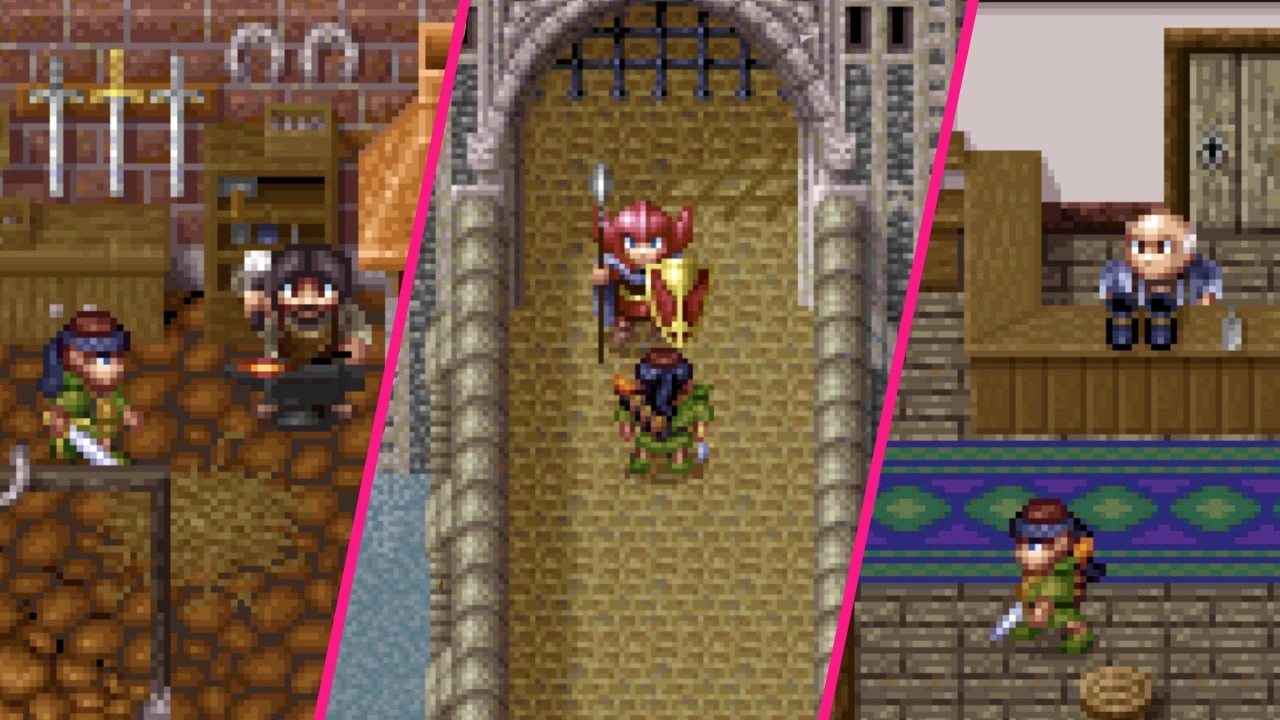
Once upon a time, there was an ambitious project brewing in the corridors of Team17, a UK-based games developer and publisher renowned for the classic Worms franchise. This project was an RPG named Witchwood, a game intended to take on the mighty Legend of Zelda in the 90s. It was the era when RPGs were blossoming, and the advent of Zelda had set a high benchmark for the genre. Team17, associated with action-packed titles, was now delving into the realm of role-playing games with an exciting new venture.
The genesis of Witchwood dates back to 1994—a time when Team17 announced its partnership with a relatively unknown developer, Synergy Software. The game promised a rich fantasy world, intriguing storyline, and complex gameplay aimed to not only emulate but surpass Zelda in subtle craftsmanship. It was set to captivate PC gamers, with potential versions planned for Amiga, Playstation 1, Sega Saturn, and Atari Jaguar platforms.
From the onset, Witchwood was conceived as an adventure of epic proportions. Players would assume the role of a young hero battling against an evil witch who, after being executed, returned in the form of a sylvan menace. The game was showcased in various magazines, tantalizing gamers with the prospect of a new, immersive experience. However, development faced many challenges leading to its eventual abandonment.
The stir Witchwood created in the industry had settled, and the game gradually became whispers of a legend that never was. In the years that followed, the only remnants of its existence were the scattered images and elusive reports until 2012, when a VHS trailer emerged online. The trailer was followed by a tech demo and—in 2019—an informative video from YouTuber Perifractic, shedding light on what could have been but was ultimately left behind.
However, it was later revealed that Team17 was not actually the main force behind Witchwood. Instead, Synergy Software, sitting quietly in Fleet, Hampshire, was orchestrating the project's development. Interviews with former Synergy developers unveiled the background of this little-known company and its connection to the RPG that never came to be.
Synergy was formed in 1991 by Martin Severn and his brother, rising from the ashes of Interceptor Micros' defunct 8-bit budget label, Players Software. The studio aimed to take on work-for-hire projects, gathering a team of programmers and artists left jobless by Players Software's closure. Witchwood emerged as Synergy's own conceptual child and its maiden venture into original game development.
Inspired by The Legend of Zelda: A Link to the Past, the team at Synergy set out to craft an RPG that not only matched its muse but also addressed the frustrations commonly associated with RPGs of the time. Dumb AI, repetitive NPC dialogues, and static game worlds were targets for innovation in Witchwood. The developers planned to introduce smarter enemies, variable decision trees, and a world that remembered the player's actions.
As the game took shape, it was to be infused with British folklore and mythology. The narrative centered on an antagonist witch, executed by villagers and reborn as a malevolent arboreal force. As Pip, the game's protagonist, you'd journey through a land tainted by this dark influence, working to lift the curse and unveil the mystery behind the witch's vendetta.
Interaction with NPCs was to be refreshingly diverse, drawing from British culture and media influences, including characters reminiscent of Hammer Horror film characters and even voice acting inspired by celebrities like cricket commentator Richie Benaud.
The development of Witchwood progressed through 1994, but concerns about the slow pace led to decisions that saw Synergy working more closely with Team17. Increased collaboration meant more hands on deck, with Team17 contributing additional cutscenes and a soundtrack that was a blend of electronic and folk music, tailored to the game's setting.
Despite the collaboration, the game's trajectory did not improve. Feature creep, a common development pitfall where new features continually extend a project's deadlines, and the lack of a clear finishing point, hindered Witchwood's progress. The unexpected success of Worms shifted Team17's focus considerably.
Acknowledging the need to prioritize resources, Team17 made the difficult decision to cancel Witchwood in 1995. The people behind the project—both in Synergy and Team17—understood the reasons behind the cancellation. Features and story development remained nebulous, and the company's faith in Worms as a proven hit meant that Witchwood had to be let go.
Team17's decision to cancel numerous projects at that time reflected a strategic focusing on what worked, as attested by Debbie Bestwick, Team17's owner, in an interview with MCV. Witchwood became another footnote in the annals of ambitious but unrealized video game projects, its potential never realized, its adventure left incomplete.
Despite its cancellation, Witchwood has managed to retain a sort of cult status among gaming historians and enthusiasts. The labor of individuals like Perifractic and Jason Scott helped preserve pieces of the game, and today, the curious gamer can experience the Witchwood tech demo on the Internet Archive, offering a glimpse into an RPG that dared to dream big but remained a fable.

You must be logged in to post a comment!
