
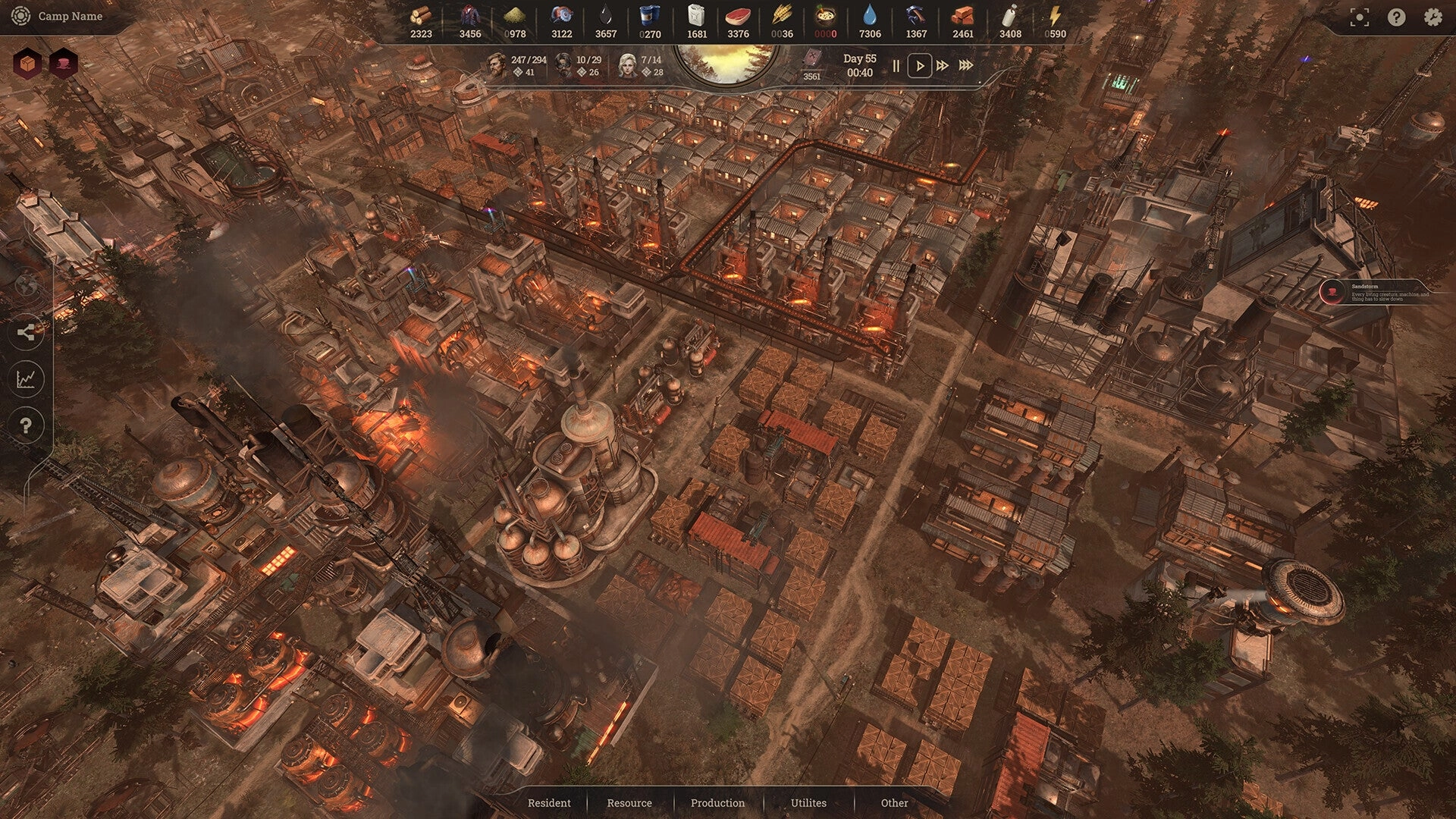
In the realm of video gaming, a captivating new overview trailer has emerged, introducing gamers to "New Cycle," an innovative city management game set in a post-apocalyptic, dieselpunk universe. Developed by Core Engage and Daedalic Entertainment, the game takes players on a journey through a world teetering on the brink, questioning whether a future beyond mere survival is feasible or if humanity is constrained to an endless loop of resource exploitation and looming disaster.
The gameplay arc of New Cycle is an odyssey from humble beginnings to technological advancement, echoing the historical trajectory from agrarian societies to industrial powerhouses. It begins simply, with players establishing camps to collect wood and digging wells for water—critical for satisfying the basic necessities of survival. The game tasks players with foraging for simple food, like mushrooms, and acknowledges the complexities introduced by the changing seasons.
As players advance, wood harvested in the wild is processed into lumber at mills, enabling the construction of buildings and the intricate layout of connecting paths. A continuous endeavor throughout the game is the recovery of lost knowledge from the world before the apocalypse. Players dedicate themselves to research, unlocking technologies that once shaped civilizations.
Despite the grim, dusty atmosphere indicative of a planet scarred by solar flares, New Cycle offers an array of carefully designed structures and engaging non-player character animations. People in this desolate landscape engage in various activities like cart pulling, log hauling, and, during lighter moments, stumbling home after a night at the pub.
The quest for progress leads players to rediscover the marvels of coal-powered electricity, a beacon in the darkness, enabling the rise of more sophisticated settlements and industries, such as paper manufacturing. Nonetheless, the game doesn't shy away from renewable solutions, introducing windmills as part of its technological repertoire. These advancements not only facilitate production but also serve as a catalyst for public morale, injecting hope and joy into a populace that has known only struggle for far too long.
But with increased knowledge and comfort comes increased demands. The once appreciative citizens now expect more from their leader: healthcare, warm clothing, a variety of foods, and forms of entertainment. Players face moral dilemmas, caught between granting additional rights or prioritizing productivity by enacting stringent laws.
New Cycle evokes comparisons to city management games like Frostpunk, but it stakes out its territory with a focus on the nuances of factory management and resource extraction in the late game. With a wide array of resources, from the common to the scarce, the game encourages players to consider automation—employing conveyor belts to streamline production—and to appoint specialized craftspeople to supervise advanced facilities.
However, the path of progress isn't without its pitfalls. As players navigate their society's expansion, they may deplete local resources or exhaust water supplies, compelling them to reach out to untapped regions. There, they must construct railways, enabling them to access vital raw materials from afar. Whether this expansion involves a new map or continued development within the existing one remains a point of curiosity.
Semi-random disasters add to the complexity of city management. Players must contend with further solar flare events, wildfires, meteor strikes, and disease outbreaks. Furthermore, the game hints at the presence of hostile human factions, possibly necessitating a consideration of military defense, although the specifics of such interactions are left to the player's imagination.
City management games have increasingly incorporated themes of environmental disaster, societal exploitation, and the ramifications of unchecked industrial growth, perhaps more directly than other strategy game genres. They represent a struggle between nostalgia for the era of massive industrial metropolises and anxiety about the direction such growth inherently takes.
Those interested in the philosophical underpinnings of the dieselpunk aesthetic—coined by Lewis Pollak in 2001—might find the game an intriguing exploration of the genre's themes. New Cycle is launching into early access on January 18th, inviting players to experience this complex tapestry of civilization building and cultural reflection on the Steam platform.
Watch the game in action and explore the intricacies of dieselpunk city management in New Cycle's overview trailer here:
New Cycle promises to be more than a mere simulation of survival; it invites players to ponder the possibility of renewal and resurgence in a world that has seen better days, challenging them to become architects of hope amidst the ruins of a former civilization.
