

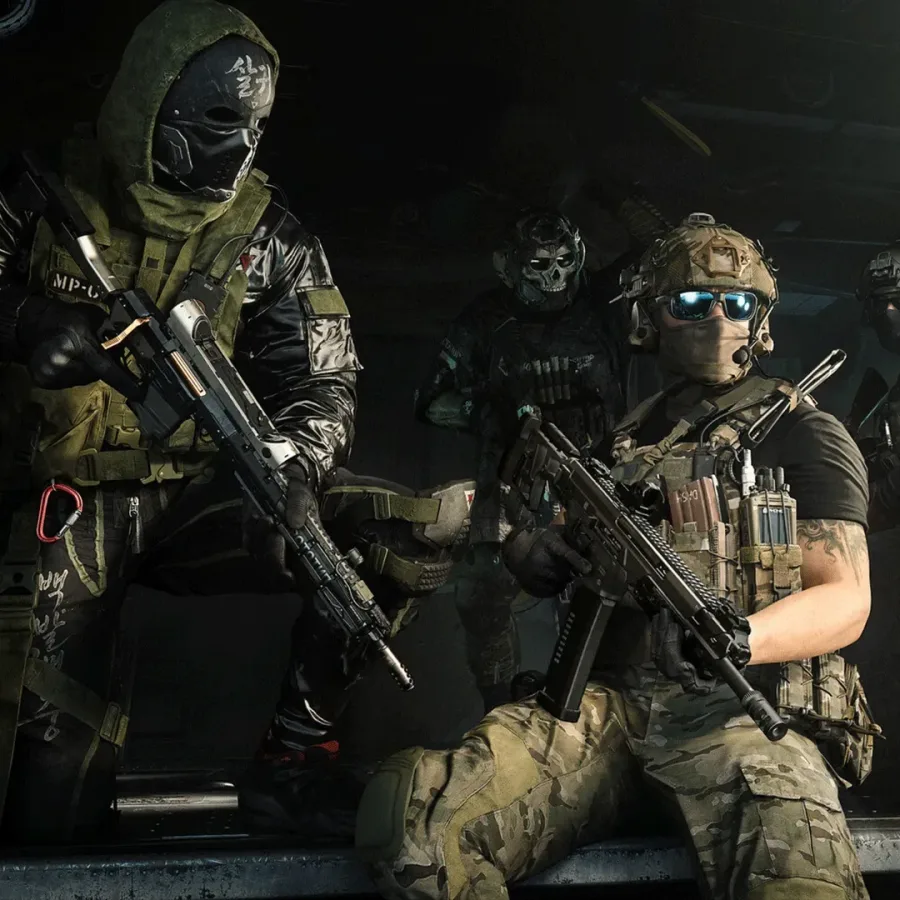
Call of Duty's anti-cheat team has offered a clearer explanation of one of the community's most controversial enforcement tools: limited matchmaking, more commonly called a shadow ban.
Players who believe they have been shadow banned are typically not told they have received a conventional suspension. Instead, their accounts may be placed into a separate matchmaking pool while further checks take place. That can mean unusually long waits for a match, lobbies populated by other restricted accounts, or a general inability to play normally. For a competitive shooter with enormous daily player counts, the lack of immediate clarity has made the practice a persistent source of frustration.
David Andrews, senior director of game security for Call of Duty, says the temporary restriction exists because a suspicious signal is not always enough to justify an irreversible punishment. Ricochet can isolate an account quickly, then use that time to examine a wider set of information before deciding whether the player should return to the standard population or face stronger enforcement.
"We have limited matchmaking that we will put a suspicious account into to isolate them while other checks are either running or we're waiting on other data," Andrews said. He described the process as a more holistic review of an account, intended to establish what is actually happening before an outcome is chosen.
For useful background on this topic, read Crash Bandicoot Turns 30: A Guide to Celebrating Three Decades of Spins, Wumpa Fruit and Platforming.
Why Call of Duty does not immediately ban every suspicious account
The basic logic is a balance between speed and certainty. A system that waits too long to act risks leaving suspected cheaters in normal public matches, where they can undermine games for everyone else. A system that permanently removes every player at the first suspicious indicator, however, could severely punish legitimate players when the evidence is incomplete or a detection proves inaccurate.
Limited matchmaking functions as an interim step between doing nothing and issuing a permanent account suspension. The account can be moved away from the broader player base immediately, while Ricochet's teams continue to review the situation. If the evidence does not hold up, the player can be restored. If additional data supports the original suspicion, Call of Duty has several escalation options.
Andrews characterized the measure as a stopgap that prevents an immediate permanent or otherwise irrevocable impact on a player's account. That distinction is important because anti-cheat software, despite its growing sophistication, is not infallible. False positives remain a risk across multiplayer games, particularly when automated detection must interpret a vast range of hardware configurations, software behavior, player performance, and account activity.
For affected players, that nuance may not make the experience less inconvenient. Being unable to find regular games can feel functionally similar to a ban, especially when there is no exact explanation of the trigger or guaranteed timetable for a review. But the stated purpose is not to treat the restriction as a final verdict. It is to create space for investigation without allowing a potentially harmful account to remain in unrestricted matchmaking.
Ricochet has more than one enforcement tool
Call of Duty's response to cheating is not limited to permanent bans. Andrews said the security team can choose from a range of penalties and restrictions depending on the behavior involved, the confidence of the detection, and whether more research is required.
- Limited matchmaking for suspicious accounts while checks continue.
- Ranked Play bans.
- Remote play bans.
- Temporary account suspensions.
- Permanent account suspensions.
- Hardware bans.
That menu of actions reflects the fact that cheating is not a single problem with a single answer. Some cases may involve clear, severe, or repeat violations that warrant a permanent response. Others may require time to determine whether software or behavior actually violates the rules. A ranked-specific punishment can be relevant when competitive integrity is the immediate concern, while a hardware ban represents a more forceful measure intended to make returning to the game more difficult.
Andrews also said limited matchmaking can be used as part of what he called rehabilitation. In those situations, the idea is that a player can be told that the behavior they engaged in is unacceptable and allowed to return if it stops. The team evaluates the circumstances surrounding a particular group or style of cheating rather than applying one automatic consequence to every account.
"Can they be rehabilitated? Are we ultimately 100% confident in this? Is more research required?" Andrews said, describing the questions that inform the appropriate enforcement choice.
The mention of rehabilitation may draw mixed reactions from the community. Players who regularly encounter blatant cheating often want swift, permanent removals and may see any softer response as insufficient. Yet the approach also recognizes that enforcement decisions carry different levels of certainty and that a game's security team needs proportionate tools rather than an all-or-nothing system.
The difficult problem behind a "shadow ban"
Shadow bans have become a catch-all phrase among Call of Duty players, but the term can hide important distinctions. A player might associate a sudden matchmaking issue with a restriction, while the actual cause could be unrelated. Conversely, accounts that have been placed into limited matchmaking may not know the specific signal being reviewed. Security teams are often reluctant to publicly detail every trigger because that information can help cheat developers and bad actors adapt.
That tension is central to anti-cheat work. Players understandably want transparency, especially if they believe they have been incorrectly flagged. Developers also need to protect detection methods from people attempting to bypass them. Providing enough information to reassure legitimate users without exposing the mechanics of the system is a difficult line to walk.
Call of Duty has faced those pressures for years, with cheating concerns particularly visible in Warzone, the franchise's free-to-download battle royale. Free access helps bring in an enormous audience, but it can also complicate enforcement when banned users attempt to return through new accounts. The broader Call of Duty ecosystem has consequently become a high-profile testing ground for the ongoing struggle between game security teams and cheat sellers.
Activision has invested substantial time and resources into that conflict, including legal action against cheat makers. Even so, no large online shooter can realistically claim that the problem has been solved permanently. Cheat tools change, detection systems evolve, and each side adjusts to the other. The result is an ongoing contest rather than a one-time technical fix.
Modern Warfare 4 testing puts scrutiny on Ricochet
Anti-cheat performance is expected to be a major point of attention around the launch of Call of Duty: Modern Warfare 4, which is due next month. Infinity Ward has said it aims to be receptive to player feedback, and Ricochet's implementation for the game was tested during the recent beta.
That beta also demonstrated why the anti-cheat team emphasizes caution before applying permanent penalties. A former professional player was accidentally banned during the test period. Call of Duty's communications team later confirmed that the ban had been an error and corrected the issue.
One mistaken ban does not invalidate the broader need for aggressive anti-cheat systems, particularly in a franchise where cheating has long been one of the loudest community complaints. It does, however, underline the reason for an investigative layer such as limited matchmaking. A temporary isolation process can still be disruptive, but it gives the team an opportunity to validate evidence before taking the most severe action available.
For Call of Duty players, the explanation does not necessarily answer every question about individual restrictions. It does establish the intended role of the system: limited matchmaking is designed to remove a suspicious account from regular play while Ricochet gathers or evaluates more information. It is neither automatically a declaration of guilt nor a promise of eventual clearance.
As Modern Warfare 4 approaches, that distinction will matter. The community will expect Ricochet to keep cheaters out of normal matches quickly, but it will also expect the security team to avoid punishing legitimate accounts without adequate evidence. Call of Duty's current model is an attempt to do both, using limited matchmaking as the buffer between an initial warning sign and a final enforcement decision.
Community
Discussion
Start the conversation.
No comments have been posted yet.