

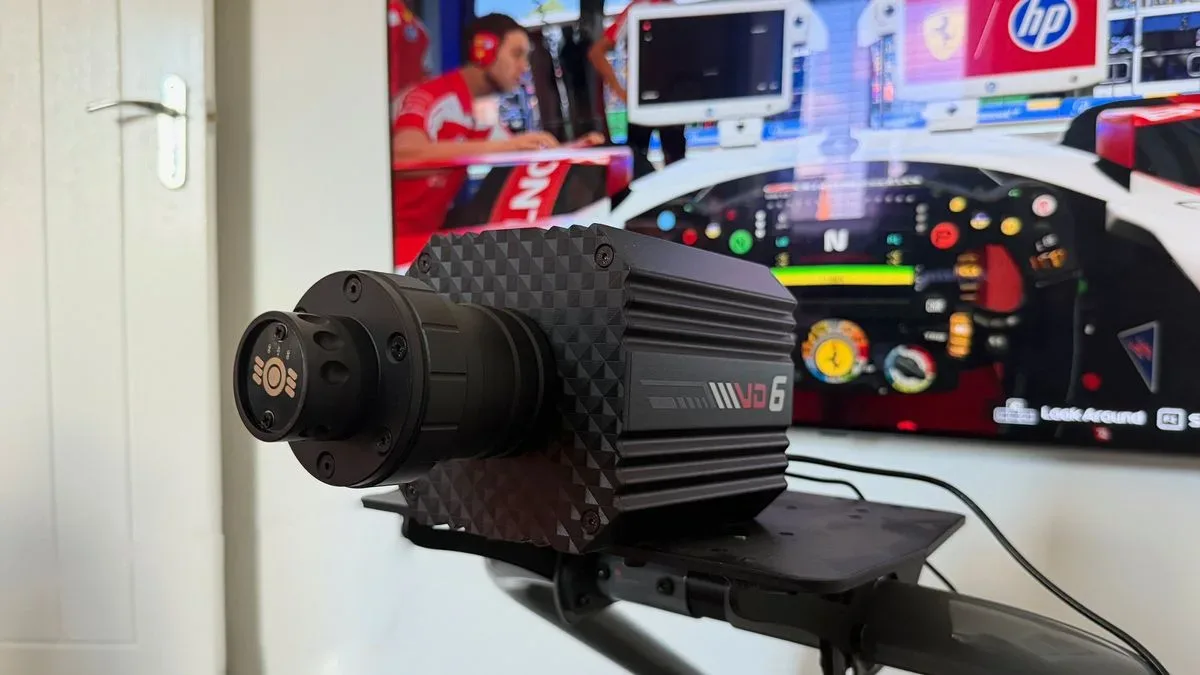
The PXN VD6 Bundle makes a persuasive argument that direct-drive sim racing no longer has to be reserved for expensive enthusiast rigs. At $379/£409, the package combines a 6Nm wheelbase, a 280mm round wheel, a two-pedal set, and a desk clamp at a price that lands directly among the more accessible options from established sim-racing names. Its strongest component is unmistakably the wheelbase itself: a solid, well-built unit with enough torque and feedback detail for most PC racers. Reaching that point, however, may demand patience with firmware, manual control mapping, and potentially awkward rig mounting.
The separately sold PXN GT ONE wheel improves the experience considerably. It is more premium, more simulation-minded, and vastly more satisfying than the standard rim. But it also changes the financial picture. A VD6 and GT ONE bundle costs $469/£469 without pedals, and adding the PD HM pedals takes a complete setup to roughly $560/£560. That remains a viable route into direct drive, but the value advantage becomes less clear when competing systems offer smoother software, easier compatibility, or more advanced braking hardware.
A wheelbase that outperforms its price bracket
PXN's current direct-drive range includes the 4Nm VD4, 6Nm VD6, and 10Nm VD10. The VD6 occupies the sensible middle ground. It produces 6Nm of constant torque, peaks at 7Nm, and uses a 24-bit encoder for steering precision. For newcomers moving up from a gear- or belt-driven wheel, that is a substantial upgrade without becoming intimidating or requiring an especially heavy-duty setup.
Six Newton metres is a practical sweet spot for casual and aspiring sim racers. It offers meaningful weight through long corners, enough resistance to make a car feel planted, and sufficient strength to communicate rough surfaces, kerbs, gravel, and moments when grip begins to disappear. More powerful wheelbases can deliver more force, but they are not essential for satisfying day-to-day racing. The VD6 has ample muscle for the audience it targets.
For useful background on this topic, read Capcom Reaffirms Film and Media Expansion Plans After Street Fighter's Opening Weekend.
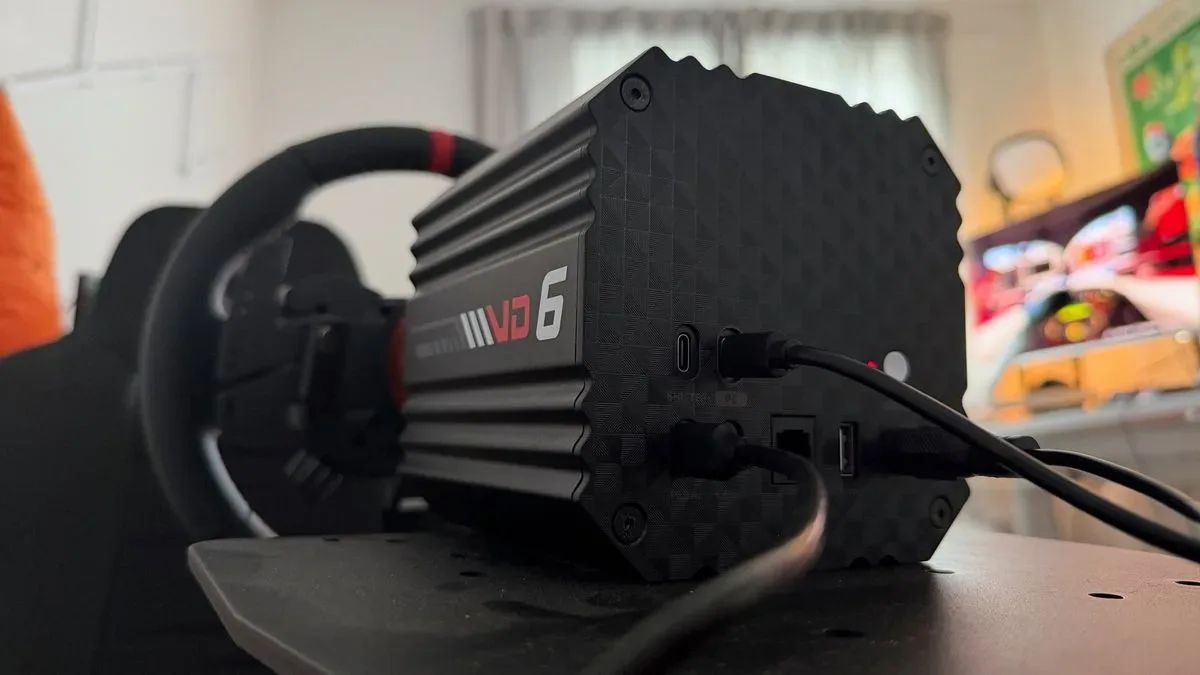
The base also feels reassuringly substantial. Its black aluminium shell is plain but effective, with cooling-oriented fins on either side, rear-facing inputs, and a front quick-release mechanism. There is little visual extravagance here, yet the no-nonsense design works. More importantly, the aluminium construction gives the base a premium solidity that is not always expected at this price.
Two spare USB connections at the back, in addition to the pedal connection, make the wheelbase a useful central point for accessories such as a shifter or button box. That practical expansion potential matters for racers planning to build a broader PC setup over time rather than replacing an entire ecosystem later.
The standard bundle makes compromises
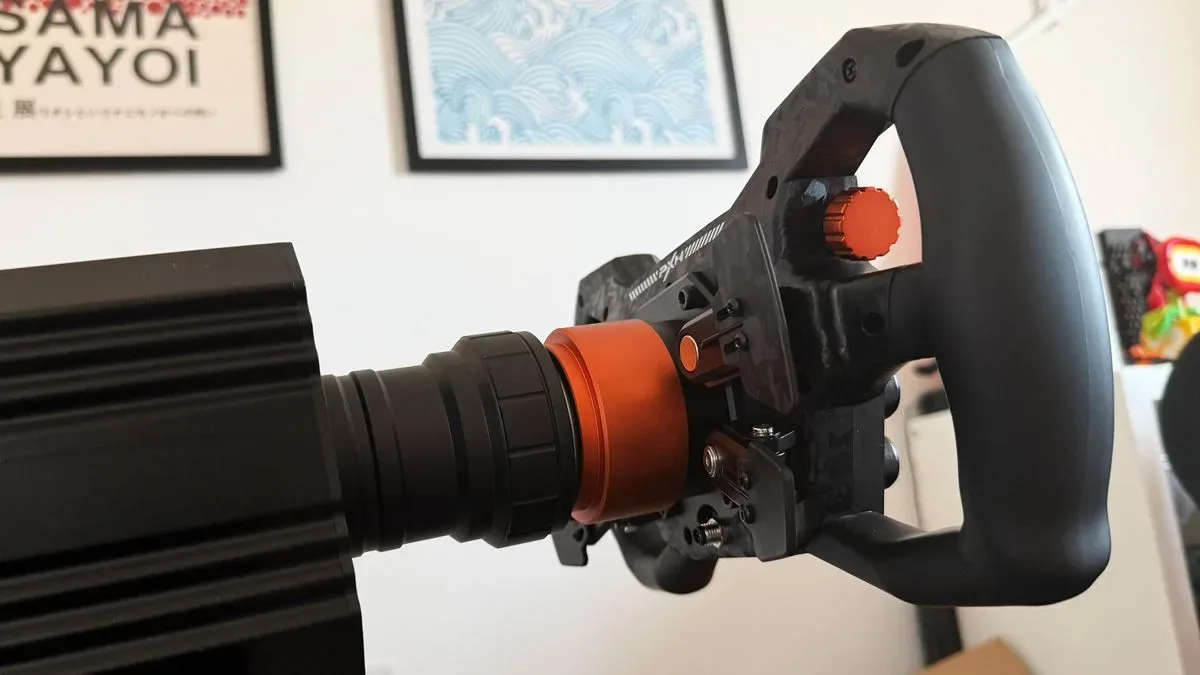
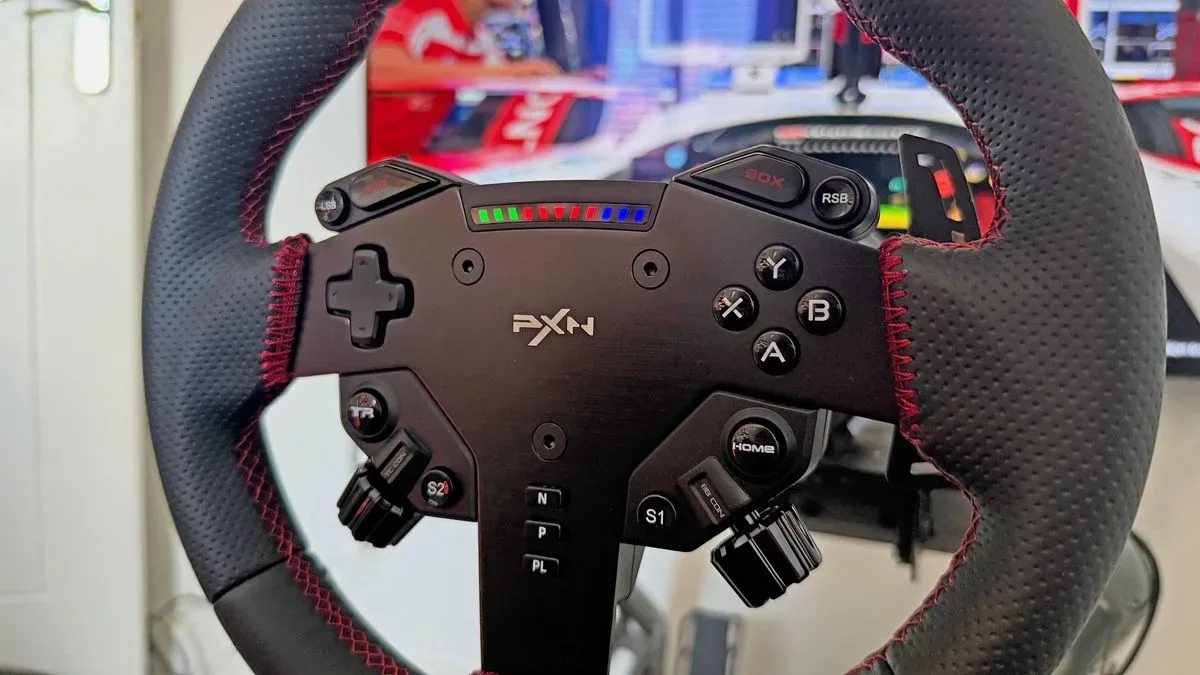
While the VD6 base is impressive, the rest of the $379/£409 package more clearly reflects its entry-level positioning. The included W AS round wheel is functional rather than exciting. It provides 12 buttons, a D-pad, two rotary encoders, RPM lights, and aluminium shift and clutch paddles using Hall Effect sensors. That is a respectable feature list on paper, especially considering the Hall Effect paddles, but the overall presentation and feel do not rise to the level set by the base.
The control layout leans closer to a conventional gaming controller than a dedicated motorsport wheel. For general road cars, rally driving, or anyone simply beginning their sim-racing journey, it is adequate. Yet it lacks the tactile confidence and authentic placement that make a wheel feel like a centerpiece of a serious racing rig.
The PD HM pedals are similarly basic. They use Hall Effect sensors and offer a two-pedal configuration, with an optional clutch available separately. Hall Effect sensing is a welcome inclusion for durability and consistency, but there is no load-cell brake. Pedal resistance is relatively light, which may be approachable for beginners but provides less of the firm, progressive braking sensation many dedicated racers seek. The pedals do their job; they simply do not elevate the bundle.
GT ONE is the wheel this base deserves
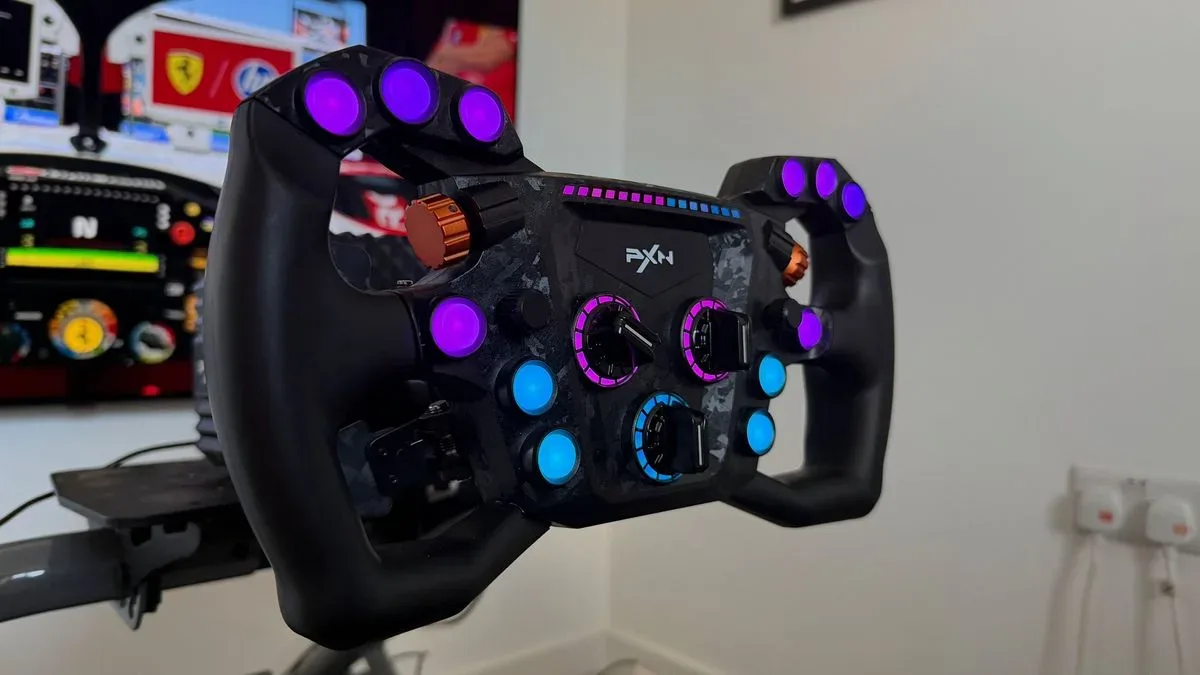
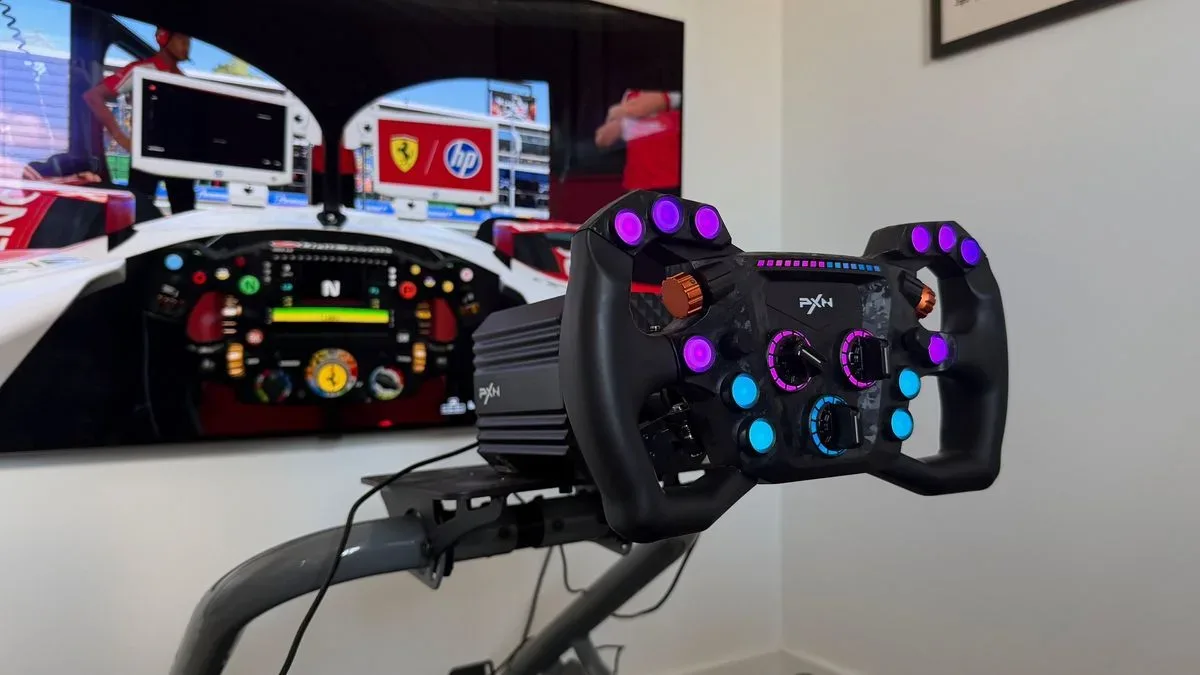
The 300mm GT ONE wheel feels like the natural companion to the VD6. At $219/£219 when bought alone, it is not a trivial purchase, but the difference in quality is immediately apparent. The grips use comfortable rubber instead of the standard wheel's textured faux leather, while the rim carries more satisfying weight and solidity. Its buttons are larger, fully backlit, and arranged in a more authentic GT- or formula-inspired layout.
It retains 12 buttons but significantly expands control options with three face-mounted rotary encoders, two thumb encoders, two directional sticks, magnetic shift paddles, Hall Effect clutch paddles, and a strip of RPM LEDs across the top. PXN also supplies a sticker sheet for labelling buttons, a small but useful detail for racers who want quick access to pit, differential, brake-bias, or camera controls.
The brass-colored thumb encoders are particularly appealing, though they would be more versatile if they could also be pressed as inputs. The three front rotary encoders are less convincing. They are light enough to make single-step adjustments easy to overshoot, a drawback when precise in-race setting changes are needed. Even with that caveat, the GT ONE is a dramatic step up from the bundled rim and the more compelling choice for circuit-focused players.
Configuration is the scenic route
The primary obstacle is not driving performance but getting everything ready to drive. Firmware updates across the wheelbase, pedals, and GT ONE can become needlessly complicated. Components may be recognized and then not recognized, the GT ONE may not appear until the base is updated, and an update to one piece of hardware can lead the companion app to report that another has rolled back. This process can take around an hour of troubleshooting before the configuration finally holds.
Once updated, later wheelbase updates may proceed more smoothly, but the first impression is still less polished than it should be. This is where the appeal of paying more for a market-leading ecosystem becomes clear. Hardware is only half of the sim-racing experience; software, firmware, presets, and compatibility determine whether the equipment feels welcoming or exhausting.
PXN lists games such as EA SPORTS F1 25: 2026 Season Pack, Forza Horizon 6, and EA WRC as compatible, and the VD6 does function reliably with them once controls are mapped. Yet each game may require manual button assignment despite prior setup in the PXN SimRacing app. Forza Horizon 6 can also require a fair amount of experimentation with settings before the driving balance feels right. Such tuning is not unique to PXN hardware, but buyers should not expect plug-and-play simplicity.
Respectable feedback where it counts
With setup complete, the VD6 delivers the core qualities a direct-drive wheel should. Force feedback is clear, stable, and strong enough to support immersion without overwhelming the driver. Kerbs and gravel are easy to identify, while changes in surface texture communicate useful information about what the car is doing. Feedback over smooth tarmac is less detailed than the leading alternatives, but it remains present and more engaging than some lower-tier competing hardware.
It does not match the best available force feedback. Logitech's RS50 and G Pro systems retain an edge through TRUEFORCE, along with smoother software integration. But the PXN base produces enough variation between surfaces and enough steering detail to keep racers connected to the track. At this price, that is the important result.
Mounting and platform considerations
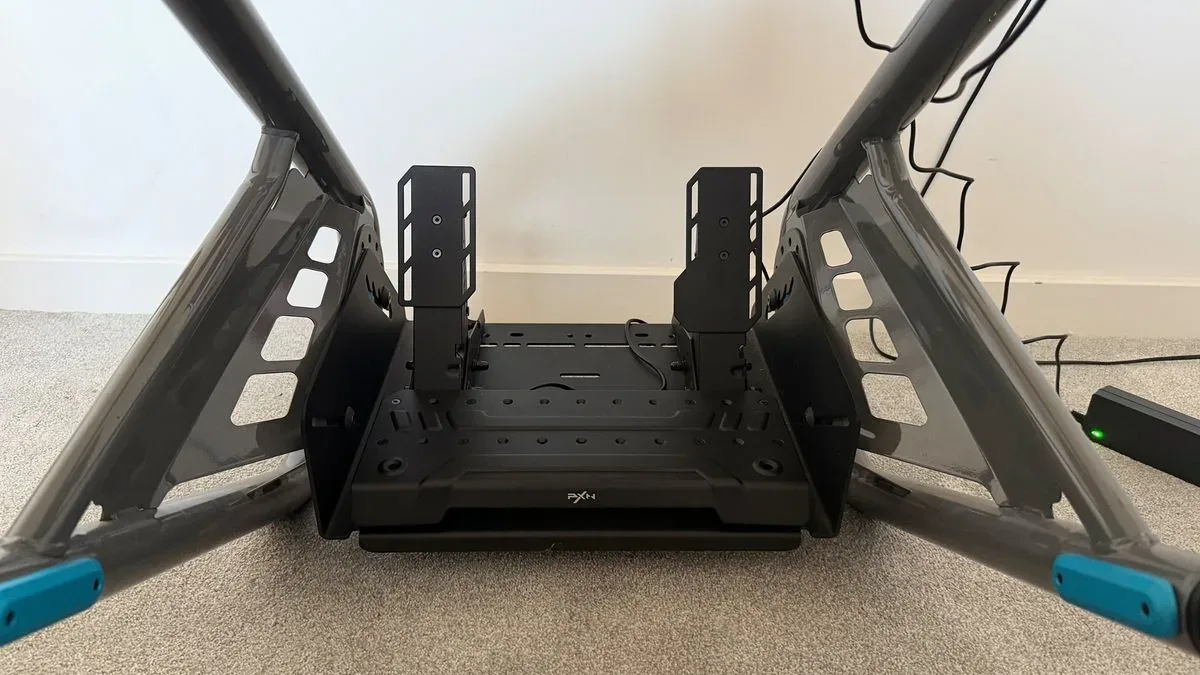
The VD6 ships with a desk clamp, but rig users should check mounting compatibility before committing. On a Playseat Trophy Logitech G Edition, the four mounting holes on the bottom of the PXN base do not neatly align with the plate's available hole patterns. It is possible to secure only a couple of bolts in certain positions, which can hold well enough but is not ideal. The pedals can also exhibit some play under heavy braking.
One practical installation note: connect all pedal cables before bolting the pedals to a rig. Their placement can make connecting them afterward unnecessarily fiddly.
This is strictly a PC product. Despite direct-drive racing hardware increasingly appearing across multiple gaming ecosystems, the PXN VD6 Bundle has no console support. Anyone looking to race on PlayStation, Xbox, or Nintendo platforms should look elsewhere.
Who should buy the PXN VD6 + GT ONE?
The standard VD6 Bundle is best for PC racers who want to leave gear- or belt-driven wheels behind without paying premium direct-drive prices. It is especially appealing for buyers comfortable with tweaking settings, applying firmware updates, and mapping controls manually. The base is good enough to serve as the foundation of a longer-term setup, even if the included wheel and pedals are eventually replaced or supplemented.
The GT ONE is recommended for drivers focused on track racing who can accept the increased total cost. It makes the VD6 feel like a more complete, confident system. However, at around $560/£560 with pedals, shoppers should carefully compare alternatives. In the UK, that figure approaches the price of a Logitech RS50 bundle with a track wheel and pedals, which brings a load-cell brake, easier software experience, and superior TRUEFORCE feedback. Pricing is less favorable for that competing setup in the US, where it is substantially more expensive.
Final takeaway
PXN has built a better wheelbase than its budget-oriented reputation might suggest. The VD6 is sturdy, capable, and gratifying once it is dialed in, with 6Nm of direct-drive force that should satisfy the vast majority of PC sim racers. The standard package reaches its low price through understandable compromises in the wheel and pedals, while the GT ONE proves PXN can deliver a much more premium control interface.
The catch is the journey. Firmware frustrations, manual mappings, and mounting limitations mean this is not the most effortless way into sim racing. Racers willing to put in that work will find a genuinely good-value direct-drive setup at the end of it. Those who prioritize seamless software, easy compatibility, and a load-cell brake may prefer to spend more. For patient PC drivers chasing convincing direct-drive racing without a premium price tag, the PXN VD6 is a strong contender.
Community
Discussion
Start the conversation.
No comments have been posted yet.