

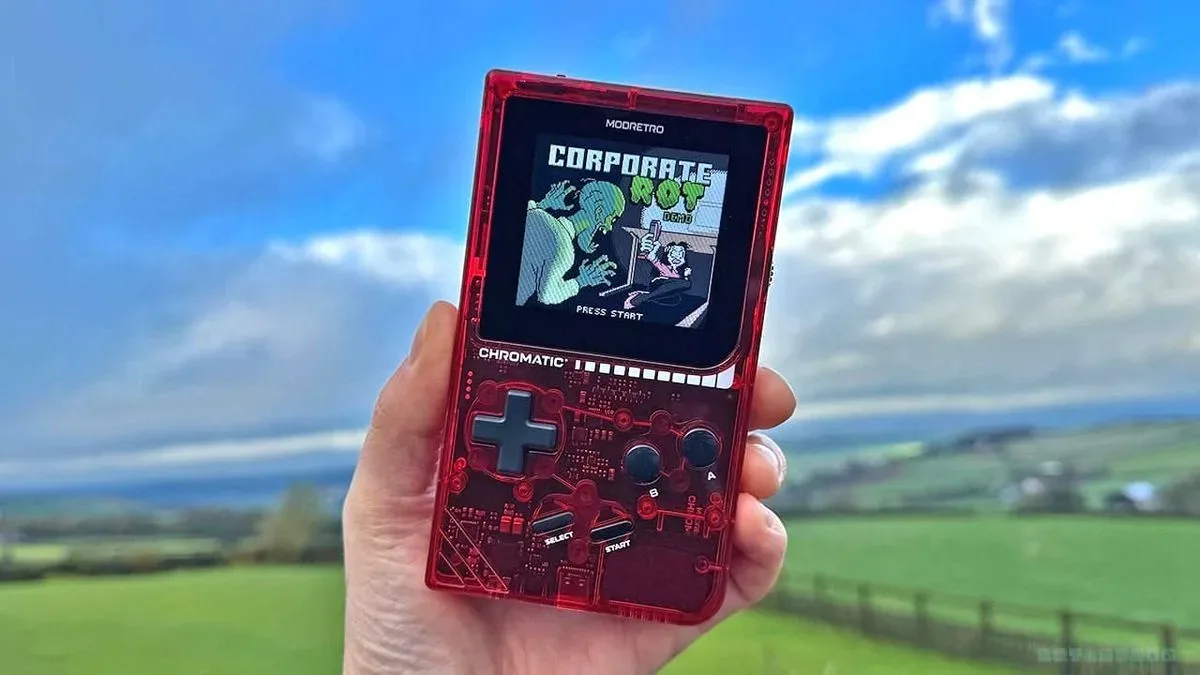
Corporate Rot takes the everyday monotony of office life and pushes it into a far more alarming direction: a building packed with zombies, improvised weaponry, unreliable break-room supplies, and no safety net when a run goes wrong. The new Game Boy Color project from developer Mike Bedsole is built around quick room-clearing action, but its deliberately punishing permadeath structure means every stapler swing, vending-machine purchase, and dash toward the next weapon can decide the entire attempt.
Bedsole may already be familiar to players who have spent time with Kero Kero Cowboy, his action game starring a pistol-wielding frog cowboy. With Corporate Rot, the setting has shifted from the frontier to a workplace overrun by the undead, while the emphasis remains on immediate, readable combat designed for a classic handheld format. The game is currently on Kickstarter, and a playable demo is also available through itch.io for players who want to test its frantic survival loop.
An Office Building Where Everything Can Be a Weapon
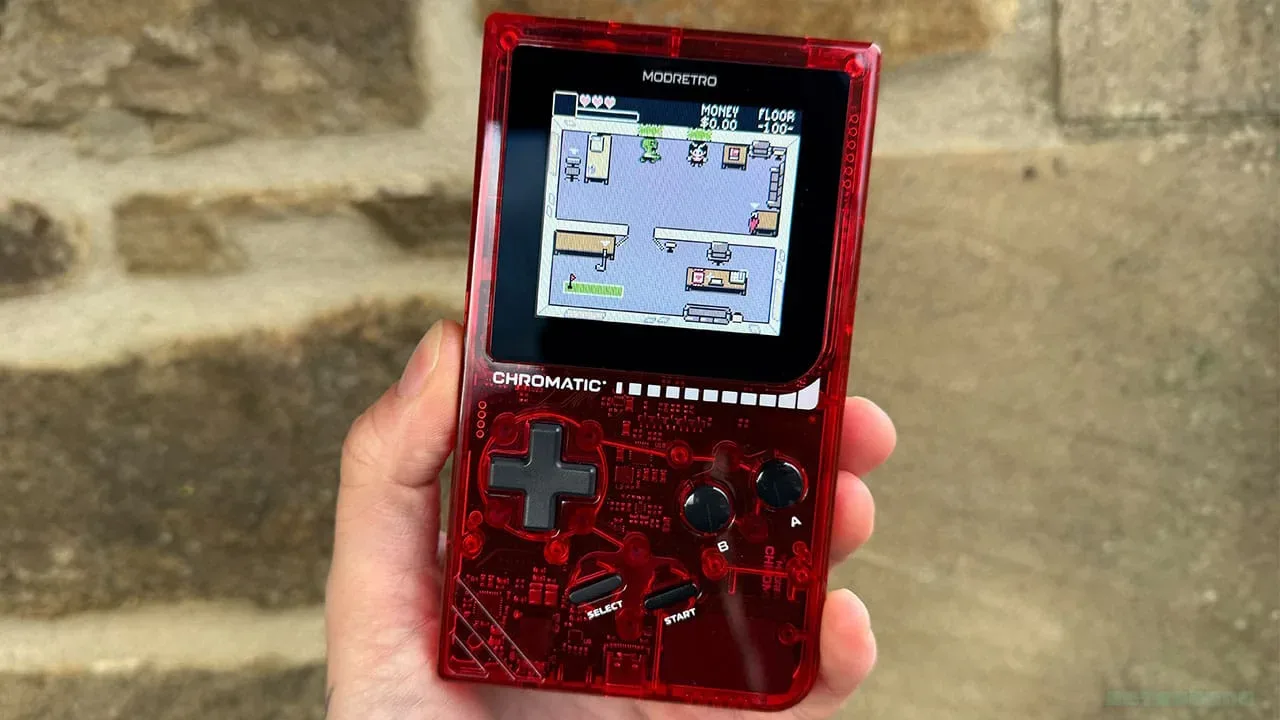
The basic premise is simple, though the game's moment-to-moment pressure is anything but. Players control an office worker pushing through room after room while zombie waves close in. Instead of relying on a fixed arsenal, survival depends on scavenging whatever happens to be lying around the workplace. Computer monitors, lamps, office chairs, golf clubs, and staplers can all become makeshift tools for holding back the infestation.
That choice of weaponry gives Corporate Rot much of its personality. It is a zombie game framed through the clutter of an ordinary office rather than military hardware or post-apocalyptic scavenger gear. A chair is no longer furniture when the hallway is full of undead. A monitor may be useful as a weapon, but it can also become part of the danger: some zombies can hide in computer monitors, effectively gaining a layer of protection before they can be properly dealt with.
For useful background on this topic, read Azahar Ends Support for ANBERNIC Devices After Unofficial Fork Emerges.
The project is planned to include dozens of these office-supply weapon types. Just as important, weapons are not permanent solutions. Their durability can run down, forcing players to remain alert for replacements. That creates a useful tension between aggression and resource management. Clearing a room quickly is valuable, but using up a favorite item too early can leave a player scrambling when the next group arrives.
It is this constant need to adapt that makes the office setting more than a visual gag. The rooms are both battlefields and scavenging spaces. Players need to read their surroundings, identify what can be used, decide whether an item is worth carrying, and avoid being cornered while doing so. On Game Boy Color-style hardware, where clarity and speed are especially important, that direct approach looks well suited to short but high-stakes sessions.
One Hundred Floors, Three Lives, and No Checkpoints
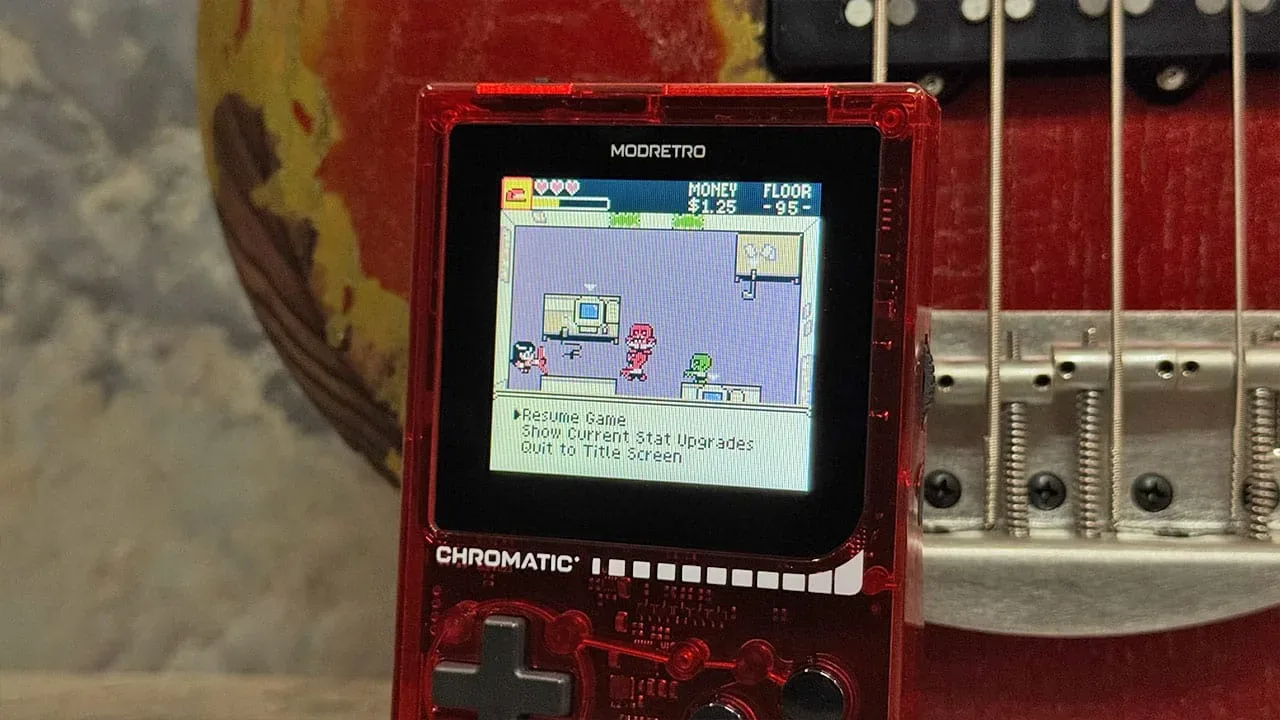
Corporate Rot is designed around 100 floors of office-based zombie survival. Reaching the end will require far more than simply clearing an early string of rooms, because the game uses a full permadeath system. Players begin with three lives, but losing them means returning to the beginning. There are no saves, passwords, or checkpoints to soften the blow.
For another perspective on this story, read Corporate Rot Brings Office Zombie Survival and Permadeath to Game Boy Color.
That is an uncompromising structure, especially for a game intended to evoke the Game Boy Color era. It also gives every run a roguelike rhythm. A player may make meaningful progress, learn how particular enemies behave, discover which upgrades are most effective, and then lose everything after one poor encounter or a moment of hesitation. The reward is the knowledge carried into the next run rather than any permanent spot deep in the building.
For some players, that degree of punishment will be the main attraction. Classic handheld action games often demanded repetition, pattern recognition, and patience, and Corporate Rot leans into that tradition rather than avoiding it. The 100-floor goal gives the game a large target, while the absence of checkpoints ensures that even an apparently routine room can become significant.
The format also makes the developer's item durability system more threatening. If a weapon is on its last legs, players cannot simply wait for an ideal moment. They need to locate another object, manage the zombies already in the room, and avoid wasting precious health during the switch. The pressure rises naturally as weapons wear out, particularly when tougher enemy types begin to appear.
Different Zombies Demand Different Responses
The undead are not presented as a single interchangeable mob. Early impressions point to several zombie categories, with color helping signal their threat. Green zombies appear to serve as standard grunts, yellow ones are faster, and red enemies are more difficult to put down. That immediately gives players a visual shorthand for prioritizing targets when several creatures are on screen.
Other enemy variations make the office floors more hazardous. Zombies that spew bile begin showing up after roughly 20 rooms, adding a more dangerous ranged or area-based threat to the mix. The monitor-hiding zombies further disrupt the player's usual attack routine by using the environment as protection. More enemies are expected deeper in the game, though their exact behavior remains to be discovered during longer runs.
That gradual introduction of threats is particularly important in a permadeath game. Players need an opportunity to understand the rules before those rules start combining in difficult ways. A quick standard zombie might be manageable alone; a fast enemy alongside a bile-spewing threat and a damaged weapon could turn a room into a disaster. The depth of Corporate Rot will likely come from how often it asks players to solve those overlapping problems with limited gear and limited time.
The Kickstarter campaign's planned feature list includes a wide range of enemy types and five boss battles. Bosses should provide major milestones across the climb through the building, although details on their individual designs have not been outlined. If the game maintains its emphasis on improvised office combat, those encounters could become key tests of whether players have spent their cash wisely and entered the fight with enough supplies.
Cash, Vending Machines, and Uncertain Supplies
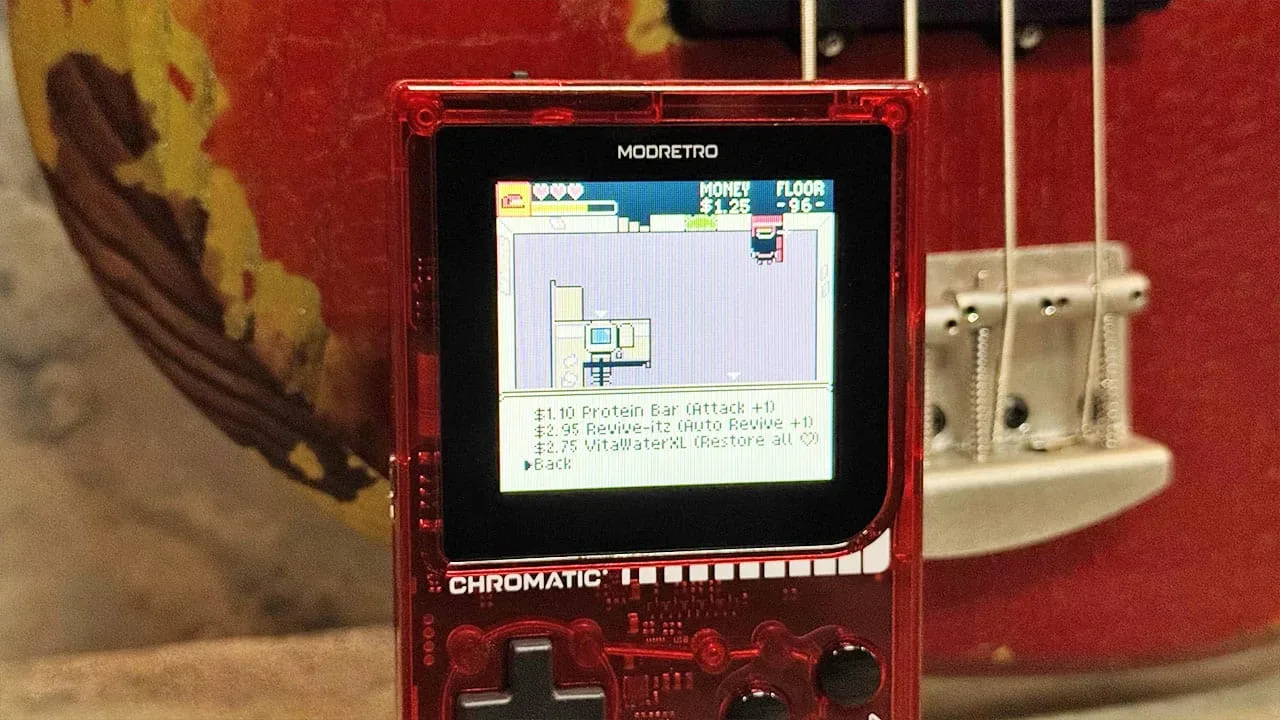
Defeated zombies drop cash, and that money gives players a second layer of decision-making beyond picking up weapons. Vending machines can sell items that improve attack, defense, or speed. Other purchases can restore health, while some offer an automatic revival after death. These upgrades are part of what turns a run from a purely reflex-driven challenge into a risk-management exercise.
Automatic revives appear especially valuable because they can protect a strong run from ending abruptly. At the same time, saving money for one may mean passing on a useful stat boost or a health-restoring item that could prevent the fatal mistake in the first place. The best choice will depend on a player's current condition, the gear available, and how far they believe they can push into the office tower.
Not every helpful object is reliable, either. The layout and contents of rooms can change from run to run. A water cooler may be full on one attempt, offering health, and empty on another. The boss's table might contain cola during one run and candy in another, with each option providing a different stat effect. Fridges can also sometimes hold food.
These randomized details are a smart fit for the premise. An office building is full of small, familiar objects, and changing their usefulness helps keep repeated attempts from becoming completely scripted. Players can learn broad strategies without being able to rely on every room offering the same rescue. The result should be a game where an empty water cooler is not just background scenery; it can be the bad break that changes a run's outcome.
A Compact Retro Concept With Big Replay Value
There is a pleasing contrast at the heart of Corporate Rot. Its visual foundation and handheld inspiration point toward an approachable, compact arcade experience, yet its 100 levels, enemy variety, bosses, randomized supplies, upgrades, and total-run failure state give it a much harsher edge. The game is not simply about surviving a few zombie encounters with a funny office weapon. It is about trying to master a long climb in which even small choices can become expensive.
The campaign lists 10 unique upgrade and consumable types alongside its intended 100 levels, broad weapon selection, numerous enemies, and five bosses. Those pieces suggest a project that wants players to return after defeat with a better sense of what matters: which weapons are dependable, when health is worth spending money on, how much to save for a revival, and which enemy combinations require caution.
For retro enthusiasts, the appeal is clear. Corporate Rot uses the Game Boy Color aesthetic for a game that values immediacy, replayability, and mechanical clarity instead of treating the platform as decoration alone. For roguelike fans, it offers a concentrated challenge where randomness changes the details but careful play still matters. And for anyone who has ever looked at a stapler during a long workday and wondered whether it could save their life, it offers a rather specific fantasy.
With its Kickstarter campaign underway and a demo available to try, Corporate Rot is shaping up as an office survival game that understands the value of escalation. The zombies get nastier, the supplies become less certain, the weapons break, and defeat sends players all the way back to the lobby. In this workplace, clocking out is easy. Making it to floor 100 is the real job.
Community
Discussion
Start the conversation.
No comments have been posted yet.