

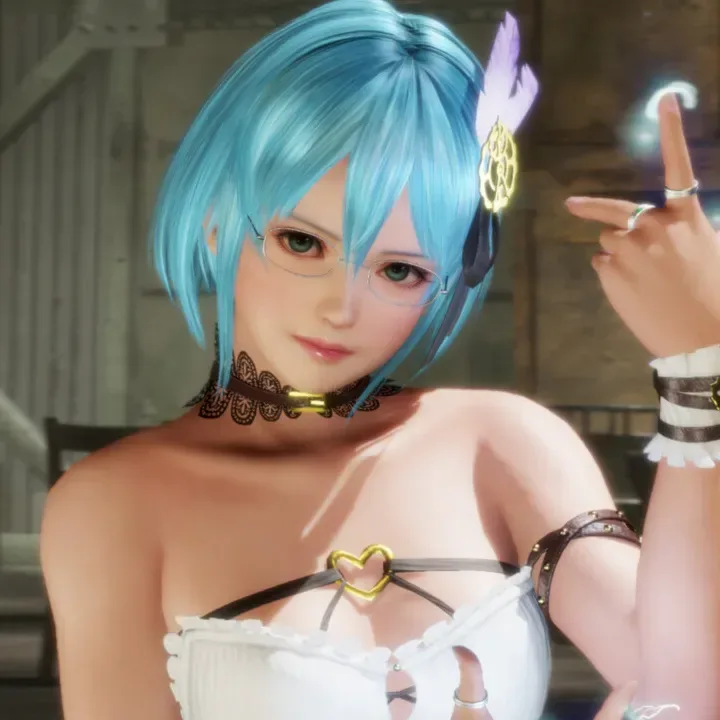
Dead or Alive 6 Last Round is facing a fresh round of community debate after Koei Tecmo explained that it is deliberately reducing the emphasis on sexy costumes in future character outfit design. The discussion has become especially heated because it arrives alongside the reveal of Minato, a new roster addition whose fighting style has already drawn comparisons to established character Honoka.
Dead or Alive has always occupied a distinctive place in the fighting game genre. It has a committed player base, a long-running competitive identity, and mechanics that reward careful reads, counters, movement, and knowledge of individual matchups. Yet the series is also inseparable, for many players, from its fanservice-oriented reputation. Bouncy character physics, swimsuit costumes, highly stylized alternate outfits, and dating-sim-focused spinoffs have all helped define the public perception of the brand over the years.
That history makes the current costume direction more than a minor cosmetic decision. For some fans, less revealing apparel is a reasonable attempt to create character designs that feel useful and comfortable in serious play. For others, it signals a move away from a major part of Dead or Alive's identity. The disagreement has put the team's priorities under close scrutiny as Dead or Alive 7 remains in development without a confirmed release date.
Embedded X/Twitter post
Embedded X/Twitter post
Embedded X/Twitter post
Competitive use is shaping costume decisions
Project Manager Tsuyoshi Iuchi addressed the subject in a September 9 interview with Famitsu, acknowledging that there are players who want sexy costumes. His explanation, however, was that those costumes often see less use in competitive settings because some players feel embarrassed selecting them, even when playing ranked matches online.
For useful background on this topic, read Why PlayStation May Have Walked Away From Hideo Kojima's Physint.
Iuchi pointed to swimsuit-style outfits as an example, noting that players do not often encounter opponents using them in ranked competition. The stated goal for the current costume strategy is to make apparel that fans of a particular fighter will want to continue using over time. In that framework, more overtly sexy elements are being naturally limited rather than positioned as the main attraction.
It is an argument with some precedent across fighting games. Tournament organizers have, at times, banned or limited especially revealing costumes in a variety of competitive titles. Rules can differ greatly between events, organizers, and regions, but the broader issue is familiar: a costume designed for casual collection and personalization may not always fit the environment organizers want for a streamed bracket, local event, or esports broadcast.
Even so, the response from Dead or Alive fans shows why this is not simply a question of tournament presentation. The series has spent decades building a visual style that many players see as intentionally flamboyant, playful, and unapologetically provocative. To those fans, minimizing that side of the game risks making Dead or Alive feel less distinct in a crowded genre filled with increasingly polished fighters.
Others see the decision differently. A wardrobe built around designs that better communicate personality, fighting background, or fashion appeal could give characters stronger long-term identities. The key concern will be whether the team can offer a wide variety of appealing costumes without treating either the competitive audience or the franchise's longtime fanservice audience as an afterthought.
Minato reveal adds another point of contention
The costume discussion is happening just after Minato was announced for Dead or Alive 6 Last Round. Her arrival has not been universally welcomed. A segment of the community has argued that the schoolgirl fighter looks too much like Honoka in both concept and gameplay, leading to accusations that the new character is too close to a copy-and-paste addition.
Director Akihiro Nakamura addressed the overlap by explaining that Minato and Honoka may use similar techniques, but their reasons for doing so differ within the game's fiction. Honoka's established trait is an innate ability to copy techniques immediately after seeing them. Minato, by contrast, studies moves through a device and through hard work.
Nakamura also distinguished the two characters through their preferences. Honoka's interest in martial arts and professional wrestling informs the techniques she chooses for her own enjoyment. Minato's learning process is instead connected to the visual appeal and dance-like enjoyment of the moves she adopts.
That explanation may help clarify the intended narrative difference, but it has not eliminated concerns about how distinct Minato will feel in actual matches. In a fighting game, character identity is ultimately tested in motion. Players will look beyond backstory and ask practical questions: Does Minato have unique routes? Does she approach neutral differently? Does her rhythm, spacing, combo structure, and risk-reward profile create matchups that feel separate from Honoka's?
Those are especially important questions in a roster where returning players have already invested time learning legacy fighters. Shared techniques can be an interesting premise, particularly when two characters use them for different thematic reasons, but the final result needs enough mechanical contrast to justify each character's place. If Minato feels meaningfully different once players get hands-on time with her, the early criticism may soften. If not, the comparison will likely continue.
A community concerned about more than cosmetics
Online reactions have shown frustration extending beyond costumes and Minato's moveset. Some players have used the moment to voice broader anxiety about the direction of Dead or Alive, including whether future games will properly address technical and feature expectations that are now central to the fighting game community.
Dead or Alive 6 Last Round received middling reception after its June launch. Among the recurring concerns were the lack of rollback netcode and the lack of cross-platform play at launch. Both subjects matter enormously for modern fighting games, where a healthy online population depends on reliable connections and the ability to find opponents across separate platform ecosystems.
Rollback netcode has become a particularly important standard because it can make online matches feel more responsive and consistent than older delay-based approaches, especially for players who live far apart. Cross-platform play, meanwhile, can keep matchmaking pools active and make it easier for friends to play together regardless of hardware. Neither feature alone guarantees a successful fighting game, but their absence can shape player perception for years.
That context explains why a costume decision has become a wider argument about trust. Fans who are disappointed by the reduced focus on sexy outfits are not necessarily reacting only to wardrobe choices. Some are combining that disappointment with lingering concerns about online infrastructure, feature support, character design, and whether feedback from dedicated players is reaching the people making decisions.
There is also a more practical concern around paid content. When a new character is perceived as highly similar to an existing roster member, players may question the value of that addition. The criticism from some Japanese fans likewise reflects worries about what content or customization carries forward and whether the current game provides enough flexibility, including options such as hair color changes.
Dead or Alive 7 has an opportunity to answer the bigger questions
With Dead or Alive 7 still in active development, the reaction to Dead or Alive 6 Last Round is likely to be watched closely. The next game has a chance to establish what the series wants to be in a fighting game landscape where competitive standards, casual customization, accessible onboarding, and social presentation all matter at once.
For the competitive community, strong online play, rollback netcode, cross-platform support, clear balance work, and robust training tools will remain key expectations. For longtime Dead or Alive fans, personality-rich costumes, expressive character animation, and the series' signature visual energy are not side issues; they are part of why the franchise has endured.
Those goals do not have to be mutually exclusive. A game can provide tournament-appropriate default presentation while also giving players extensive cosmetic options for casual matches, offline play, lobbies, photo modes, or personal collections. Likewise, a new fighter can share a broad concept with an older one while still earning a place through distinctive mechanics and a sharply defined game plan.
For now, Koei Tecmo's comments have made one thing clear: the team is consciously rethinking the role of overtly sexy costumes in Dead or Alive 6 Last Round. Whether that approach becomes a durable part of the franchise's future will depend on how players respond to the content that replaces them, how convincingly Minato differentiates herself from Honoka, and how fully Dead or Alive 7 addresses the competitive and technical demands fans have been raising.
The debate is unlikely to end soon. Dead or Alive's identity has always been shaped by a tension between high-level fighting game competition and unabashed spectacle. The latest controversy shows that both sides of that identity still matter deeply to the people who play it.
Community
Discussion
Start the conversation.
No comments have been posted yet.