

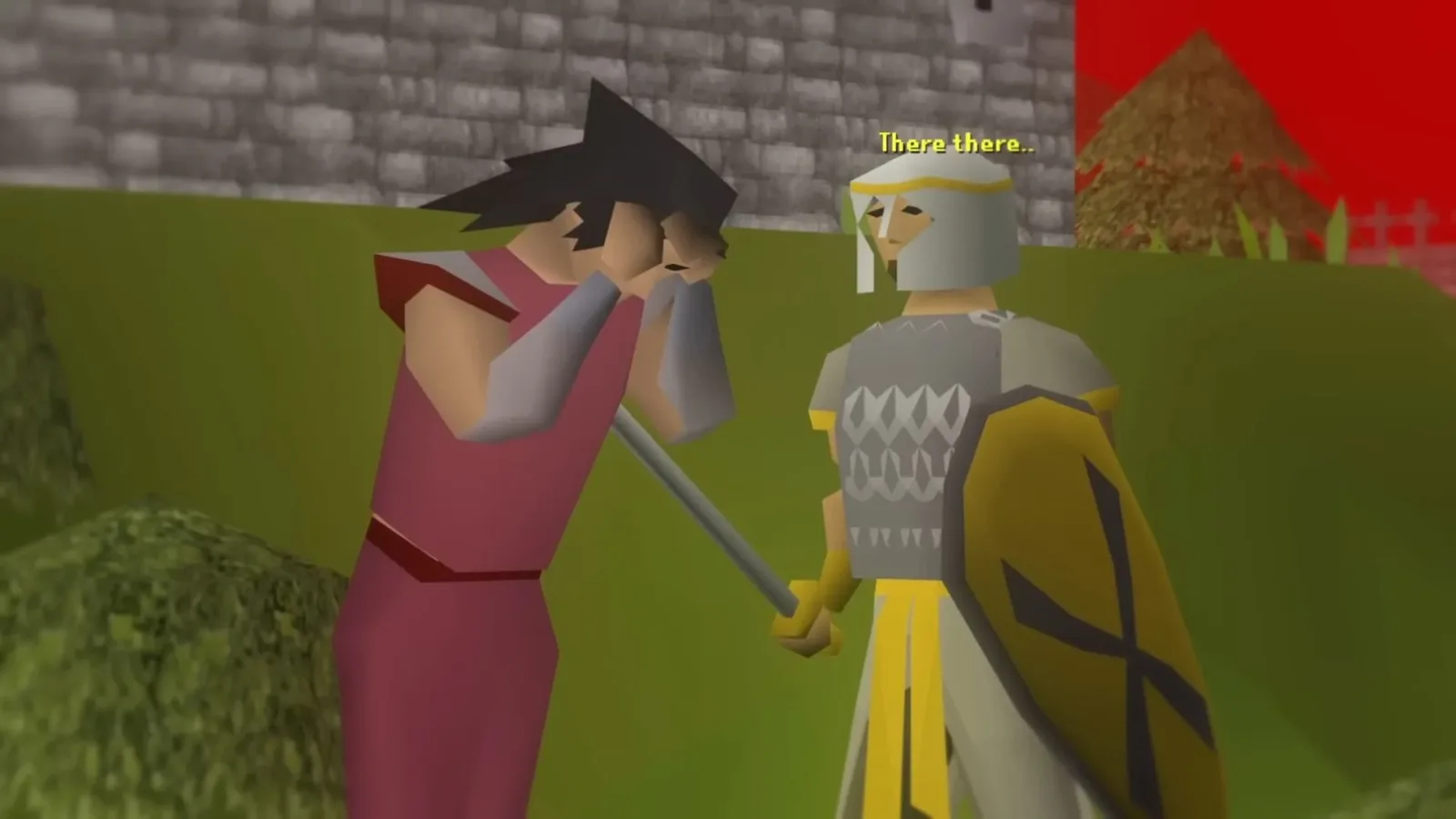
Elderwood, a short-lived multiplayer game openly described by its creator as a "RuneScape clone," has been discontinued after a legal notice from Jagex. The project emerged publicly on September 6 and was no longer available by September 9, making for an exceptionally brief run that nevertheless stirred a wider debate around generative AI, game development, imitation, and the boundaries between inspiration and direct copying.
The game was created by Rohan Varma, an employee working on OpenAI's Codex coding tool who previously worked at Palantir. Varma presented Elderwood as a "vibe-coded" multiplayer game: a project developed through AI-assisted prompting and coding workflows rather than a conventional, lengthy production process. In describing the experiment, Varma said he had asked GPT-6 Astra in Codex to build RuneScape and deploy it through a ChatGPT Site.
That framing quickly became a central issue. Elderwood did not merely evoke the broad idea of an old-school fantasy MMO. Videos and posts shared around the project showed a game closely modeled on the look, structure, terminology, items, skills, and locations associated with early RuneScape and Old School RuneScape. The visible similarities included familiar skill names such as Woodcutting, gold pieces identified as GP, party hats, and place names including Varrock and Falador.
Embedded X/Twitter post
Jagex Notice Ends Elderwood's Brief Run
Jagex, the developer of RuneScape and Old School RuneScape, sent a notice requesting that the Elderwood website be removed. Following that notice, the project's site confirmed that operations would end and that the game would no longer be playable.
For useful background on this topic, read Steam's Australian R18+ Age Check Requires a Credit Card, Creating a Barrier for Adult Players.
"Elderwood has closed. We received a notice from Jagex asking us to take down the website. Following that notice, we are discontinuing Elderwood's operation, and the game is no longer available."
The closure statement also thanked players who had spent time in the game, citing their level progress, chat interactions, feedback, and patience with bugs. It said high scores would remain available as a record of the community's activity. That farewell message presented Elderwood in the language of a small online world reaching its natural conclusion, though the project's shutdown was directly tied to the legal request from the company behind the game it resembled.
There has been no indication in the available statement that Elderwood will return in a revised form. Its status is simply closed, and its public lifespan appears to have lasted only a few days.
Why the RuneScape Comparisons Were So Immediate
Games can take inspiration from established genres, mechanics, visual eras, and progression systems without necessarily creating legal problems. The MMO space in particular is built on shared conventions: gathering professions, crafting, combat levels, tradable currency, fantasy towns, quests, and communal social spaces are all commonplace ideas. But Elderwood's problem was that the comparisons extended well beyond shared genre fundamentals.
Its presentation reportedly mirrored the visual language of early RuneScape extremely closely, while its use of recognizable naming and item conventions made the connection difficult to miss. Varrock and Falador are not generic fantasy labels; they are iconic RuneScape locations. GP and party hats similarly carry an especially clear association with RuneScape's economy and player culture. When those details appear alongside a broadly matching interface and structure, calling a game merely "inspired by" another title becomes much harder to defend in the eyes of players.
That distinction is important for any developer using AI tools. A prompt that requests a game "like" an existing hit may produce familiar genre features. A prompt that explicitly asks for a named game, however, can lead a system toward reproducing protected expression, recognizable terminology, or an overall presentation that is too close to the referenced work. AI-generated code, art, menus, text, and design concepts do not remove the responsibility of the person publishing the result.
In Elderwood's case, the project was also presented publicly as a clone rather than a distant homage. That made the legal and reputational risks unusually conspicuous from the start.
Old School RuneScape Players Push Back
The closure was met with enthusiastic reactions from many members of the Old School RuneScape community. Posts discussing Elderwood focused heavily on the belief that the game had crossed from inspiration into copying, while others criticized the broader concept of deploying an AI-generated clone of an active, commercially supported MMO.
Some players objected to the use of the phrase "inspired by," arguing that the similarities shown in footage were too extensive for that characterization. Others took aim at the project's AI-assisted development process and the goodbye statement, with commenters speculating that generative tools may have been involved in writing the announcement as well. Varma had previously said he used ChatGPT in demonstrating the project, but there is no confirmed attribution for how the closure message itself was written.
The reaction reflects a larger frustration among game communities: many players do not see rapid AI production as a substitute for deliberate design, original art direction, technical polish, or a game's own identity. For a long-running online game such as RuneScape, that feeling can be even stronger. RuneScape is not just a ruleset or a visual style; it has decades of history, a distinct economy, memorable locations, community rituals, and an active player base invested in its continued support.
Elderwood's apparent use of that identity as a shortcut was therefore always likely to generate a fierce response. The game may have attracted attention through novelty and speed, but it also put itself directly in front of one of the most protective and recognizable MMO communities on the internet.
AI Tools Do Not Solve the Originality Problem
The Elderwood episode arrives during an ongoing industry argument over generative AI. Developers, artists, writers, performers, publishers, and players are still working through what these tools can contribute to production and where they create ethical, legal, or creative problems.
Supporters often point to AI coding assistants as a way for small teams or individual creators to prototype more quickly. A tool can help generate boilerplate code, troubleshoot technical problems, create placeholder assets, organize systems, or turn a rough idea into a playable test. Used carefully, that can lower barriers for experimentation.
But speed is not the same thing as ownership, originality, or quality assurance. A game still needs a coherent creative direction, rights-cleared material, testing, security work, server planning, moderation, accessibility consideration, and an understanding of its audience. Multiplayer games add another layer of responsibility because creators are asking players to spend time in an online service that may involve accounts, communities, data, and ongoing maintenance.
Most importantly, a developer cannot avoid infringement concerns by saying an AI tool generated the content. If a finished game includes names, assets, visual arrangements, or other elements too closely associated with another company's work, the party releasing that game is still exposed to consequences. The same practical lesson applies whether a project is made with a code assistant, a traditional engine, a commissioned art team, or hand-written tools.
Prototype Fast, Then Build Something Distinct
For creators interested in AI-assisted game development, the safer lesson is not that rapid prototyping is impossible. It is that a prototype should be treated as the beginning of a process, not a justification for publishing a recognizable copy. A fantasy MMO can use gathering skills, quests, trading, combat, guilds, and stylized low-poly visuals without borrowing the specific identifiers that make another game unmistakable.
- Create original world names, currencies, items, factions, and lore.
- Develop a visual style that has its own shapes, colors, interface conventions, and character design.
- Use prompts centered on mechanics and broad themes instead of requesting a named commercial game.
- Review generated material before release, especially text, art, UI layouts, and terminology.
- Seek legal guidance when a project is intended for public distribution or commercial use.
Those steps are not glamorous, and they do not produce a viral demo overnight. They are, however, part of making a game that can stand on its own merits rather than relying on another game's established identity.
A Cautionary End to a Very Fast Experiment
Elderwood's rise and fall is a compact example of both the promise and the pitfalls of the current AI development moment. It demonstrated how quickly someone can assemble and deploy a multiplayer prototype using modern tools. It also demonstrated that a project's speed of creation does not exempt it from copyright concerns, community scrutiny, or the basic need for original creative work.
Jagex's request brought the experiment to an end before it could become anything more substantial. For RuneScape players, the shutdown was viewed as a defense of a game and community they care about. For developers experimenting with AI, it is a reminder that the fastest path to a playable project is not always a viable path to a publishable one.
As it stands, Elderwood is offline, its high-score record is the only element said to remain, and the project's legacy is likely to be less about an enduring MMO than about a highly visible warning: building quickly is one thing, but building something recognizably your own is still the work that matters.
Community
Discussion
Start the conversation.
No comments have been posted yet.