

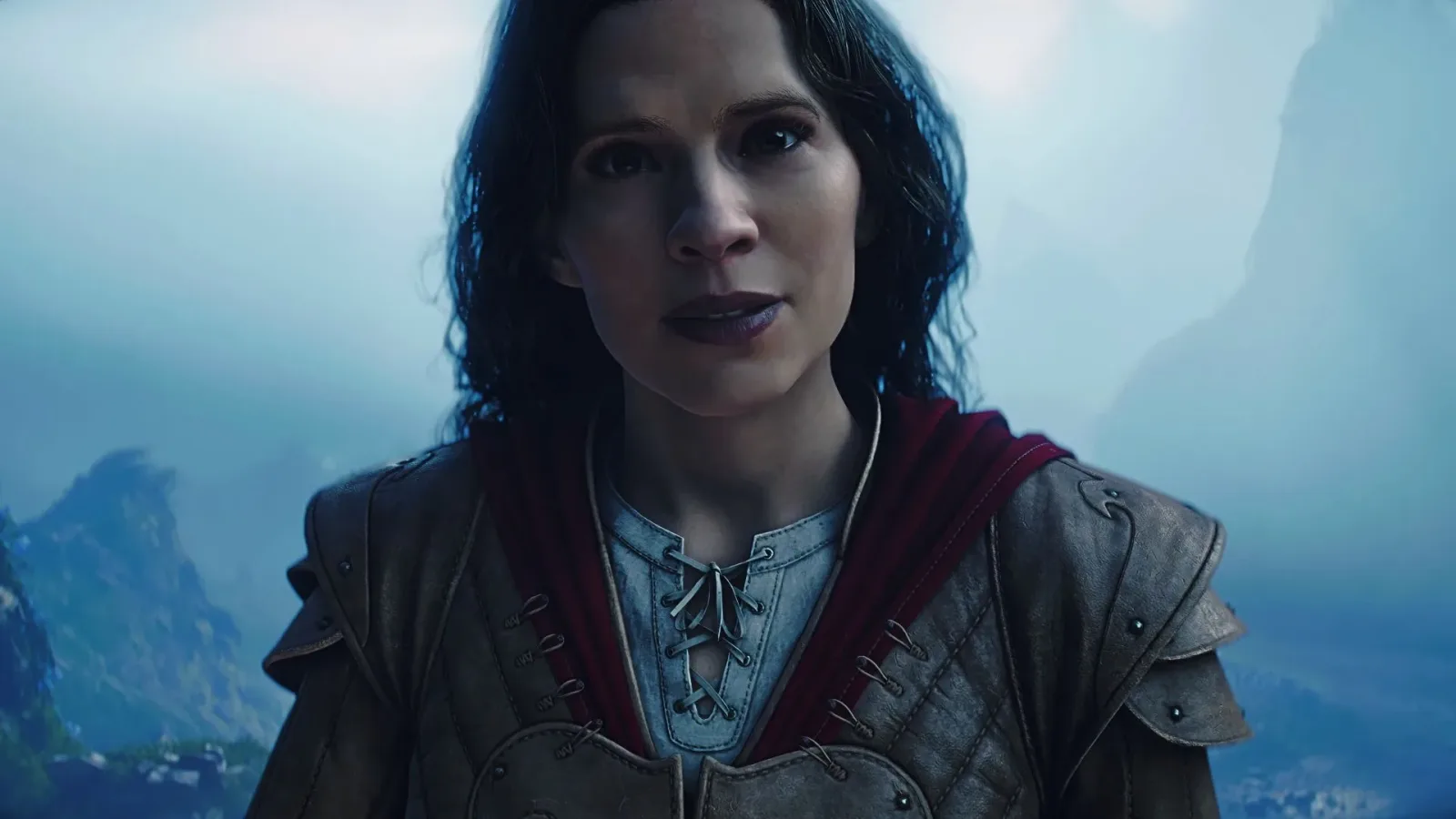
After a 16-year gap between mainline installments, Fable faces a challenge that goes beyond simply bringing Albion back. The new game needs to speak to players who remember the original trilogy's playful fantasy world, expressive morality, and approachable action-RPG battles, while also standing alongside contemporary role-playing games with far more elaborate combat systems and player-build options.
Playground Games appears fully aware of that balancing act. Associate game director Will Kennedy has discussed an approach to combat designed to preserve a defining quality of the older Fable games: players could quickly understand how to fight and have fun with the system. At the same time, the studio does not intend to recreate a combat model frozen in the era of Fable III, which arrived in 2010. The goal is familiarity without stiffness, accessibility without a lack of options, and modern mechanical depth without losing the series' welcoming personality.
That philosophy is especially important because the next Fable is not merely another sequel arriving a few years after its predecessor. It is a revival of a major RPG name after a long absence, developed by a studio best known for a different kind of game. Expectations will inevitably come from several directions: longtime fans hoping for an authentic continuation of the franchise's identity, newcomers discovering Albion for the first time, and players accustomed to the responsiveness and customization expected from current action RPGs.
An accessible foundation remains central
Kennedy said the team's discussions around being faithful to the older franchise repeatedly returned to the combat's accessibility. The earlier games did not demand exhaustive mastery before they became enjoyable. Players could use melee weapons, ranged options, and magic without treating every encounter as a technical test, leaving room for Fable's humor, exploration, character choices, and eccentric setting to take center stage.
For useful background on this topic, read Professor Layton and the Curious Village Remake Set for 2027 on Switch, PC, and PS5.
That legacy matters. Fable has never been defined exclusively by complex combo routes or punishing combat encounters. Its appeal has historically come from the sense that a player could shape a hero and then take that hero into a storybook world full of consequences, oddball characters, and heroic or villainous possibilities. Combat needed to be enjoyable, but it also needed to support the broader fantasy of becoming whoever the player wanted to be.
For Playground Games, keeping that low barrier to entry does not mean treating simplicity as the only virtue. Kennedy stressed that the team is making a game for the way people play today. That statement points to the central tension behind the reboot: mechanics that felt natural in an earlier generation may not meet the expectations of players in 2027, particularly after years of action games refining movement, animation transitions, loadout design, and build expression.
The objective, then, is not to choose between a "classic" Fable and a "modern" one. It is to find a version where the two ideas reinforce each other. Players should be able to pick up the basics quickly, but those who want to experiment should have meaningful room to do so.
Style-weaving is intended to create fluid fighting
The term Playground Games has used for its combat direction is "style-weaving". Kennedy described this as a system focused on moving smoothly and easily from one action to another. Rather than locking a player into a single combat identity, the design is meant to encourage transitions between different moves and approaches.
That concept aligns naturally with the historical structure of Fable combat. Across the previous games, heroes generally had access to physical attacks, ranged attacks, and magical abilities. The new game's language suggests that Playground Games wants those tools to feel less like isolated categories and more like components that can be combined in the moment. A player may be able to approach an encounter in one style, switch tactics as circumstances change, and make those shifts feel deliberate instead of cumbersome.
How far that fluidity goes has not been detailed. There is no full explanation yet of individual weapon classes, timing mechanics, enemy behavior, spell interactions, or the exact control layout. Still, the emphasis on smooth transitions provides a useful indication of the studio's priorities. Responsiveness and flexibility appear to be as important as raw damage or spectacle.
For returning fans, that could be a promising middle ground. The original games gave players several broad paths, but the new Fable has an opportunity to make swapping among those paths feel more immediate. For new players, the same approach could help combat remain readable: experimenting with a spell or a different weapon should not require rebuilding an entire character or relearning the game from scratch.
Loadouts and spells offer room for personal expression
Player expression is another key part of the pitch. Kennedy said players will be able to edit their loadouts "from the top down," with four spell slots available for experimentation. That structure suggests that building a hero will not be limited to a single permanent specialization. Instead, players will have a set of choices they can adjust to discover combinations that suit their preferred style.
Four dedicated spell slots could be especially significant for Fable's identity. Magic has always been one of the clearest ways to make a hero feel distinct in the series, whether a player leaned toward direct damage, crowd control, protective effects, or more theatrical powers. The new system's value will depend on the spells themselves and on how freely they can interact with other equipment and attacks, details that remain unannounced. Even so, multiple slots immediately imply that the game wants players to think in terms of a spell kit rather than one occasional magical trick.
The emphasis on loadouts also supports the broader style-weaving idea. If a player can tailor a collection of tools rather than commit rigidly to one path, fights can become opportunities for adaptation. A build may favor close-range aggression while retaining magic for control or support. Another may prioritize ranged tactics but carry abilities that create openings when enemies close the distance. The important point is not that every player will use every option identically; it is that the system is being designed to let players find their own preferred rhythm.
Kennedy indicated that players will gain access to a broad and substantial range of choices relatively early in the experience. That could help Fable avoid a common problem in RPG progression, where a game advertises build variety but withholds the interesting tools until late in the campaign. If the suite of combat options opens up early enough, players can begin shaping their hero well before the endgame.
Depth should not come at the cost of approachability
The most revealing aspect of Playground Games' description may be its insistence that depth and accessibility are not opposing concepts. Kennedy said the studio is proud of how satisfying the RPG feels, with the team believing it has reached a place where the game remains approachable while still offering the depth it wants.
That is a difficult target for any action RPG, and it is even harder for a returning franchise with such a recognizable tone. Too little depth could leave longtime players feeling that the new game has reduced Fable to surface-level nostalgia. Too much complexity could make Albion feel unwelcoming to players who are drawn to its charm but do not want a dense mechanical learning curve.
A successful version of this plan would make the essential actions intuitive while allowing greater expertise to emerge naturally. Players who simply want to adventure should be able to do so without friction. Players who enjoy testing spell combinations, revising equipment, and finding efficient tactics should see their investment rewarded. The best outcome would be a system that scales with a player's interest rather than demanding the same level of system knowledge from everyone.
It is also worth remembering that combat is only one portion of what players will judge when Fable returns. The franchise's reputation rests on its world, humor, choices, social systems, and sense of consequence as much as on any individual battle mechanic. A flexible combat model could strengthen those other elements by giving players another way to express the kind of hero--or villain--they are becoming.
A new chapter arrives in February 2027
Fable is scheduled to arrive in February 2027. There is still plenty that has not been revealed about how its combat systems will work in practical terms, and it will take hands-on play to determine whether style-weaving delivers on its promise. Yet Playground Games' current message is clear: the studio does not see faithfulness as copying every old mechanic exactly as it was.
Instead, it is treating the earlier games' accessibility and freedom as core principles worth carrying forward. The modern layer comes through smoother transitions, adaptable loadouts, a four-slot spell setup, and a desire to offer a richer set of options without overwhelming players. For a series returning after such a long break, that may be the most sensible route: preserve the spirit that made Fable memorable, while building a combat experience capable of feeling at home in the current RPG landscape.
Community
Discussion
Start the conversation.
No comments have been posted yet.