

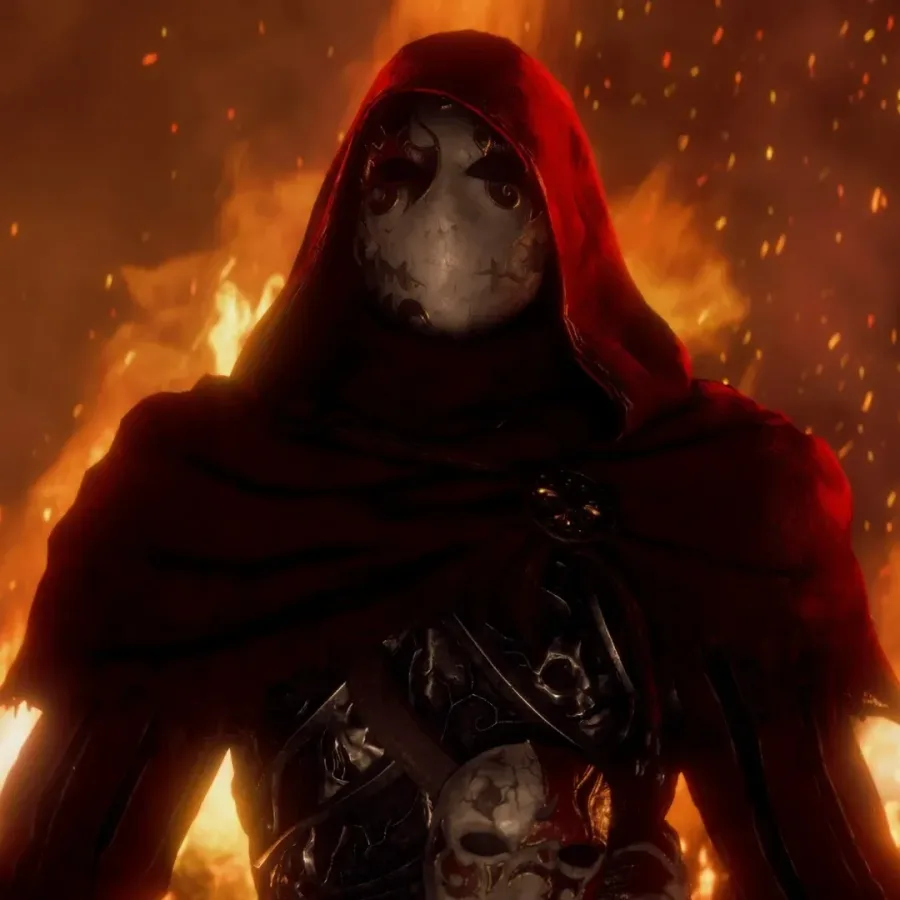
Playground Games' Fable reboot has spent an unusually long time in development, but the studio's challenge has gone beyond simply bringing back one of Xbox's most recognizable fantasy series. The landscape around it changed dramatically. In the years since the project reportedly began in 2016, open-world action RPGs have grown larger, more detailed, and more ambitious, reshaping what players expect from a major adventure in the genre.
Ralph Fulton, Playground Games co-founder and general manager on Fable, has explained that the team could not rely solely on the earlier Lionhead-developed trilogy as its creative foundation. The original games remain central to the franchise's identity, but the reboot is arriving in a market influenced by titles such as CD Projekt's The Witcher 3: Wild Hunt and Ubisoft's newer, RPG-focused Assassin's Creed games.
That changing standard helps explain both the project's extended timeline and the difficult balancing act facing Playground. The developer has been tasked with making a new entry in a beloved role-playing franchise while also moving into a genre very different from the racing games for which it is best known.
The open-world RPG bar moved during Fable's development
Fulton singled out The Witcher 3, released in 2015, as a landmark for open-world action RPG design. Its combination of a large fantasy setting, quest-driven storytelling, memorable characters, player choices, and dense side content established a standard that has had a lasting effect on the genre. For any fantasy RPG entering production after that point, it became difficult to ignore what players had come to expect from the breadth and reactivity of an open world.
For useful background on this topic, read RTX 5070 Ti Gaming PC Drops to $2,799.99 in a Black Friday Deal.
He also pointed to Assassin's Creed and its evolution through Origins, Odyssey, and Valhalla. Those games shifted a long-running action series toward progression systems, equipment, expansive maps, quests, and RPG-like character building. Even though their approach differs from Fable and The Witcher, their popularity helped make those systems feel increasingly normal in blockbuster open-world games.
"In 2015, The Witcher 3 redefined what an open-world action RPG looks like and became the gold standard," Fulton said. He added that later Assassin's Creed games further changed the shape of the market and continued to raise player expectations.
The practical implication is clear: a modern Fable cannot simply recreate the structure of its predecessors at higher visual fidelity. The new game needs to retain the series' distinct personality while offering an experience that feels substantial alongside today's biggest open-world adventures. Fulton's view is that treating the original trilogy as the only reference point would not be enough to meet the expectations of a contemporary audience.
That does not mean the reboot is trying to become a copy of The Witcher 3 or Assassin's Creed. Instead, those games represent the wider shifts Playground had to account for: a higher demand for richer worlds, more involved combat, meaningful exploration, and role-playing mechanics with enough depth to support a full-scale adventure.
A new genre for a studio known for racing
The transition is especially significant because Playground Games built its reputation on the Forza Horizon series. Those games have earned acclaim for open environments, visual presentation, driving feel, and a sense of freedom, but a fantasy action RPG requires a very different set of design disciplines. Narrative systems, character interaction, combat, quests, role-playing choices, creature design, and the rules governing a living fantasy world all demand expertise beyond a driving game's core priorities.
Playground established a separate team for Fable while continuing its work on Forza Horizon. Fulton has characterized the situation as something close to a first game for that part of the company: the studio had an established name and technical experience, but it was stepping into a genre it had not previously made.
That context gives the reboot's long gestation a different perspective. Building a new internal team, adapting technology and production processes, and defining a modern version of an established property are all major undertakings. Doing so while expectations for the genre keep climbing makes the job even more demanding.
It is also worth noting that Fable has survived a turbulent period for the wider Xbox organization. Microsoft's gaming business has experienced major layoffs and restructuring, and several expensive projects across the industry have faced delays, cancellations, or studio closures. Playground's reboot has endured through that uncertainty and is now nearing release, a notable result for a project that began roughly a decade before its planned launch.
Longer than the original trilogy, without chasing unlimited scale
One of the more interesting details around the new Fable is that its scope reportedly became smaller over time. Fulton said the project initially carried "an enormous potential scope," suggesting the team had to refine its ambitions as development progressed. That is not necessarily a negative outcome. For open-world RPGs, a clear focus can be just as important as map size or total hours.
Playground confirmed in August that the main story will take approximately 20 hours to complete. Players seeking side activities and open-world exploration can expect another 15 to 20 hours of content. Taken together, that points to an adventure potentially running between 35 and 40 hours for players who want to engage more deeply with the world.
Those estimates would make the reboot the longest Fable game so far. The first Fable, released in 2004, has a main-story completion time of roughly 12 and a half hours. Fable II is around 13 hours, while Fable III is slightly longer at about 13 and a half hours for its main quest.
The difference reflects the changing standards Fulton described, but it may also suit the series better than an attempt to make an endlessly sprawling RPG. The earlier games were not defined solely by their length. Their appeal came from Albion's whimsical tone, moral decisions, exaggerated British humor, player expression, and the promise that choices could alter a hero's path. A larger game has to preserve those traits rather than bury them beneath a checklist of generic open-world tasks.
A 20-hour main narrative could give Playground space to tell a more developed story than its predecessors while keeping the central journey manageable. The added exploration time, meanwhile, suggests that players who want to roam Albion and pursue optional activities will have room to do so. The ultimate question will be how naturally those elements fit together: whether the world feels like a place built around Fable's particular charm rather than an assortment of modern RPG features added because the genre now expects them.
Inspiration without losing Fable's identity
The risk for any legacy reboot is confusing modernization with replacement. Fable has always stood apart from darker fantasy RPGs through its playful presentation and a world that could be absurd, warm, and occasionally cruel in the same moment. Its morality systems, social interactions, property ownership, relationships, transformations, and offbeat humor gave players an unusual kind of authorship over their character.
Playground's task is to identify which of those ideas remain essential and then build them into a game that can stand alongside the modern competition Fulton mentioned. Better combat, more polished exploration, broader quests, and a more convincing world are likely expectations. But players will also be watching for the elements that made Albion feel unmistakably like Albion.
The studio's experience with Forza Horizon could still be relevant here. Although the genres differ, the racing series has consistently emphasized accessible exploration and environments designed to encourage movement and discovery. That knowledge may help Playground create an open world that is inviting rather than overwhelming. The harder part is ensuring that exploration supports role-playing, story, and consequence instead of functioning as scenery between missions.
Fulton's comments indicate that Playground recognizes this tension. Looking beyond the original trilogy does not mean dismissing it; it means acknowledging that a 2027 audience has been shaped by more than two decades of open-world design. The reboot needs to honor what came before while responding to the games that changed the category around it.
Fable's release is now in sight
Fable launches February 23, 2027 for PC, PlayStation 5, Xbox Series X, and Xbox Series S. Its arrival on PlayStation is part of a broader era in which Xbox has brought selected games to additional platforms, and it means the franchise's return will reach a wider audience than past mainline entries.
After around 10 years of development, the reboot will face intense scrutiny. Players who grew up with the original trilogy will want reassurance that its humor, heart, and sense of consequence remain intact. Newcomers will judge it as a fresh open-world action RPG competing in a demanding market. Playground Games has to satisfy both groups without allowing either goal to compromise the other.
The development team's stated approach makes that challenge easier to understand. The older Fable games provide the soul of the series, but the modern open-world RPG landscape defines the standard it must now reach. Whether Playground has found the right balance will become clear when Albion opens its doors again in February 2027.
Community
Discussion
Start the conversation.
No comments have been posted yet.