

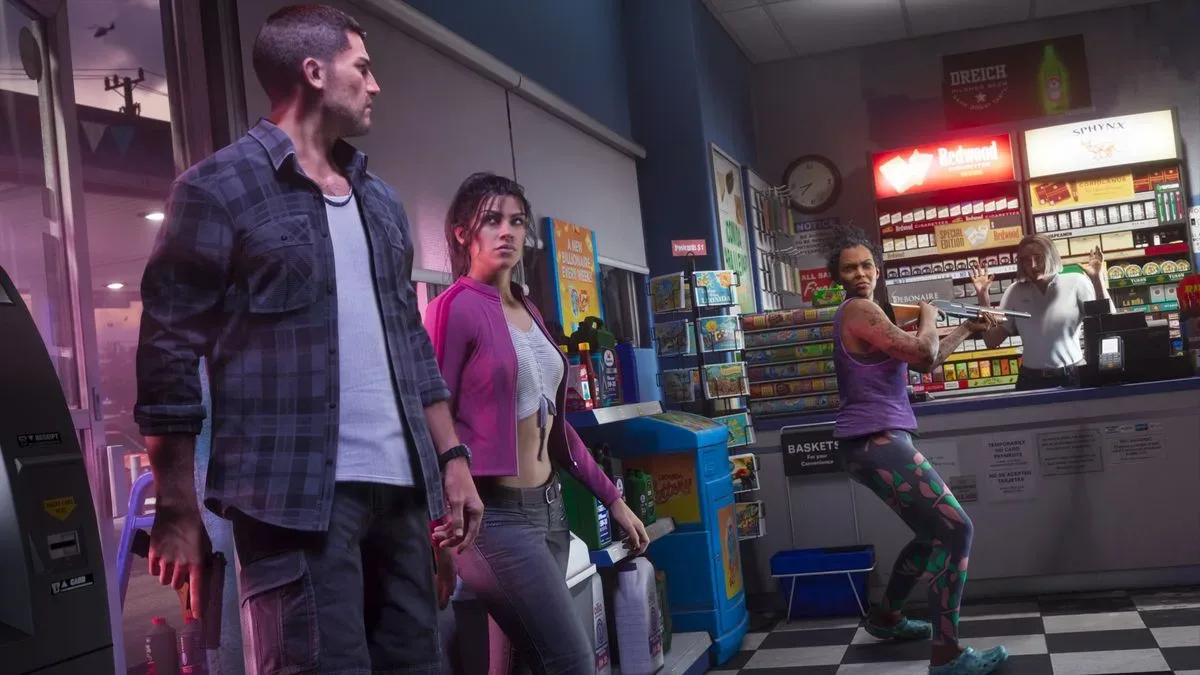
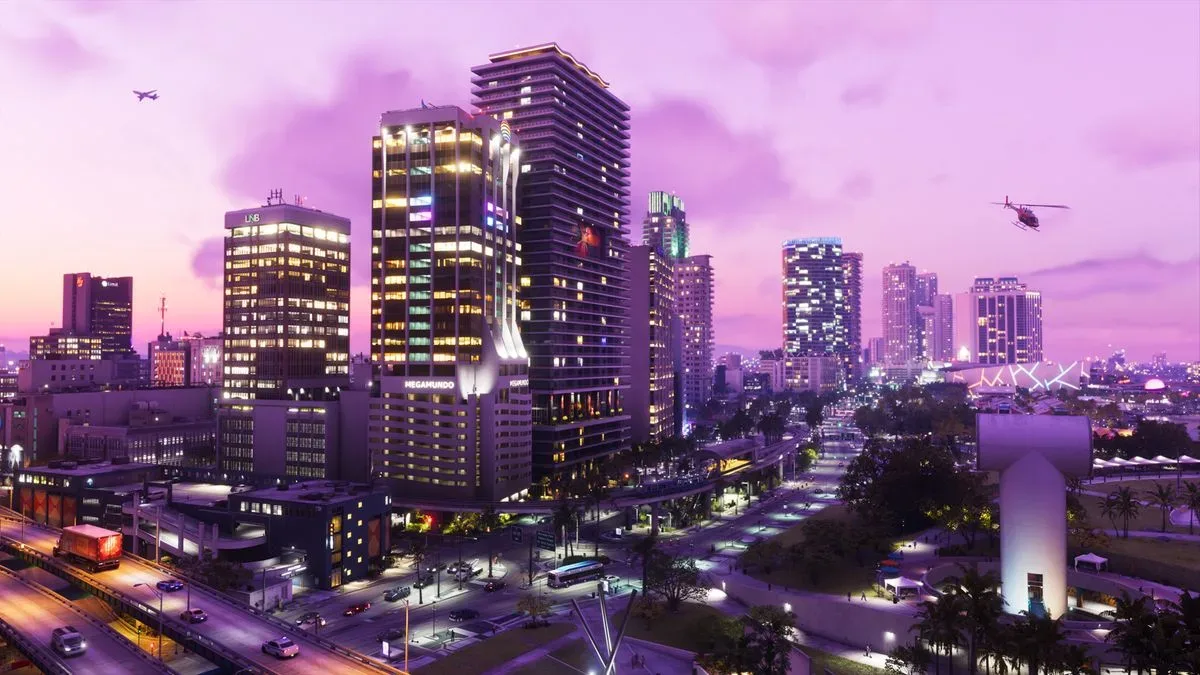
GTA 6 is not simply a bigger Grand Theft Auto. It is a more deliberate, more grounded, and more interconnected version of Rockstar's crime-world fantasy. Set across the state of Leonida, with Vice City at its vibrant center, it builds a sandbox so dense with activity, reactions, systems, and small human details that it feels designed to absorb an extraordinary amount of time. The result is an open world that does not merely accommodate chaos; it makes players consider its consequences, then offers a remarkable number of ways to live with them.
Launching on November 19, 2026, GTA 6 arrives after a long wait and carries the impossible weight of expectation that comes with the series. It meets that pressure by refining virtually every foundational element: shooting has more precision and heft, driving asks for greater control, police pressure is more intelligent, and everyday exploration is filled with meaningful friction. The experience is not always as immediately reckless as GTA 5, and that change will be controversial for some. But the greater sense of risk, role-play, and spontaneity makes Leonida feel like a true place rather than an oversized stage for mayhem.
A Crime Story Built Around Two People
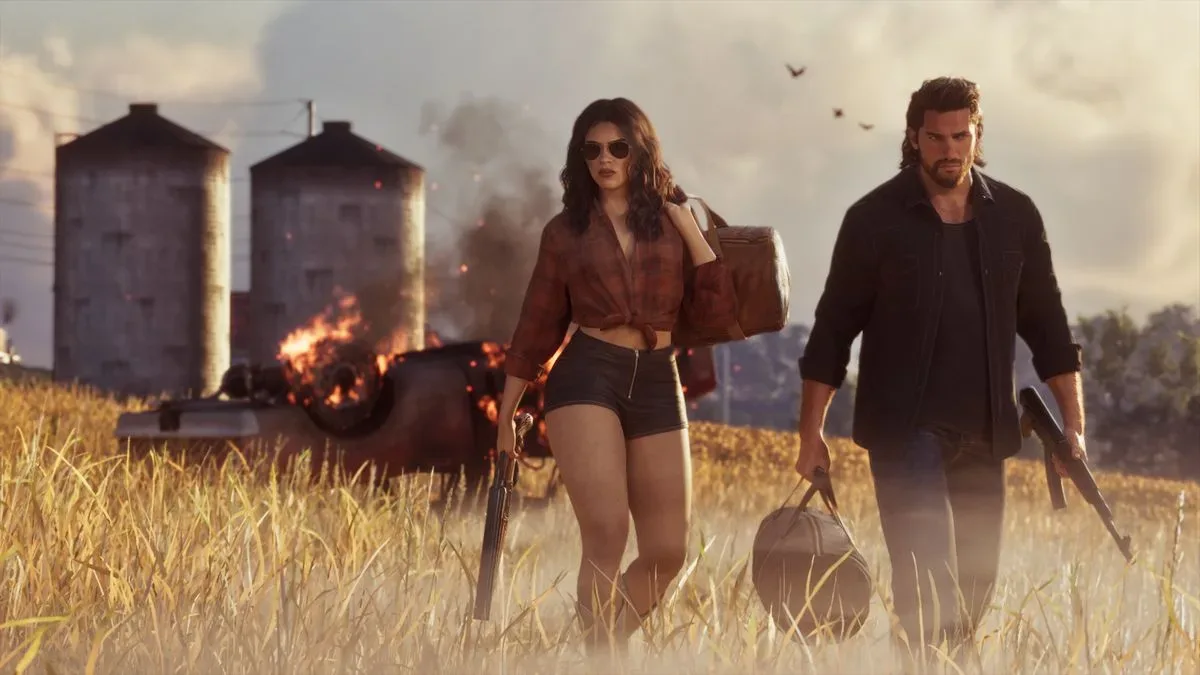
Jason Duval and Lucia Caminos are the heart of GTA 6, and the dual-protagonist structure is far more than a convenient excuse to switch perspectives. Their partnership gives the story emotional weight, presenting two people entangled in a criminal conspiracy that quickly becomes larger than either of them understands. The writing, performances, and intricate character animation give their relationship an unusual degree of maturity for a game of this scale.
What makes the pairing especially effective is that their connection extends beyond cutscenes and mission dialogue. Small actions can reinforce or strain their bond. They can check in by phone, go to the gym, drink at bars, and take part in criminal jobs together, but quieter gestures matter too. Even holding hands is part of the interaction vocabulary. The relationship is not reduced to an obvious checklist; it is expressed through empathy, attention, and the choices made during the ordinary spaces between major jobs.
For useful background on this topic, read Weird Al Yankovic Is a Vice City FM Host in Grand Theft Auto 6.
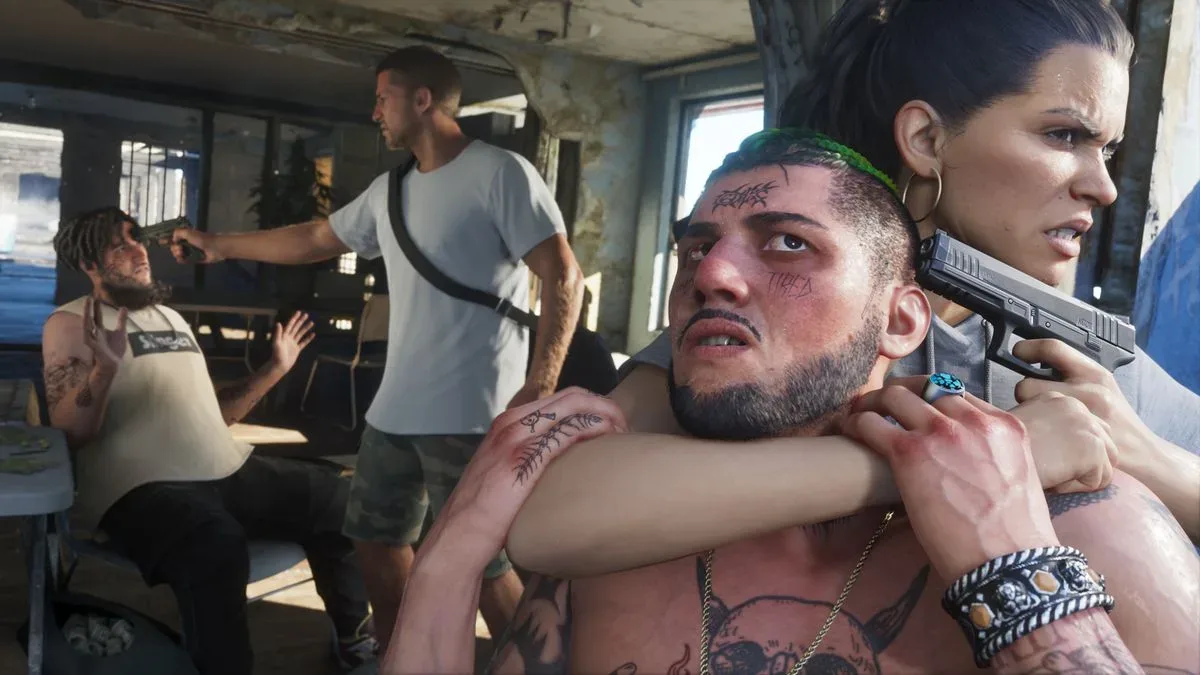
That grounding reshapes the overall tone. GTA 5 often played like an explosive action movie, while GTA 6 is more interested in pressure, character, and the slow escalation of dangerous decisions. It is still funny, absurd, and capable of spectacular action, but it is more considered about how action begins and how it can spiral. Radio broadcasts, stray conversations, chance encounters, and mysteries hidden in the world can all feed the feeling that Leonida has stories running independently of the main plot.
Leonida Is a Sandbox of Consequences
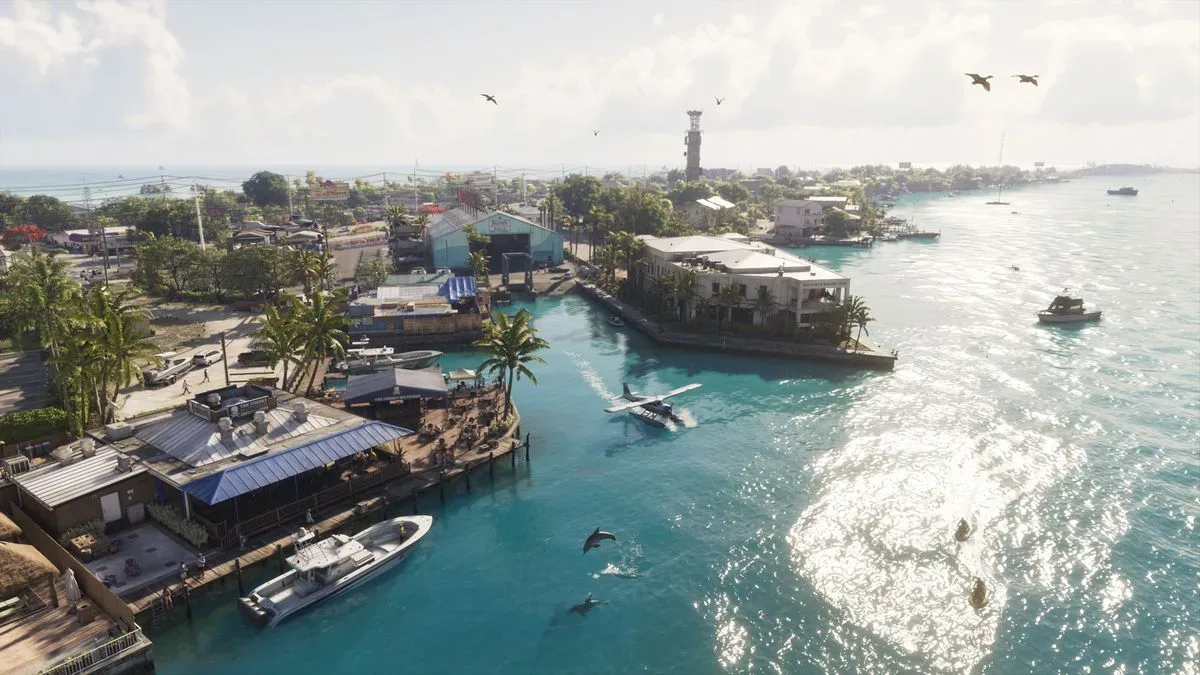
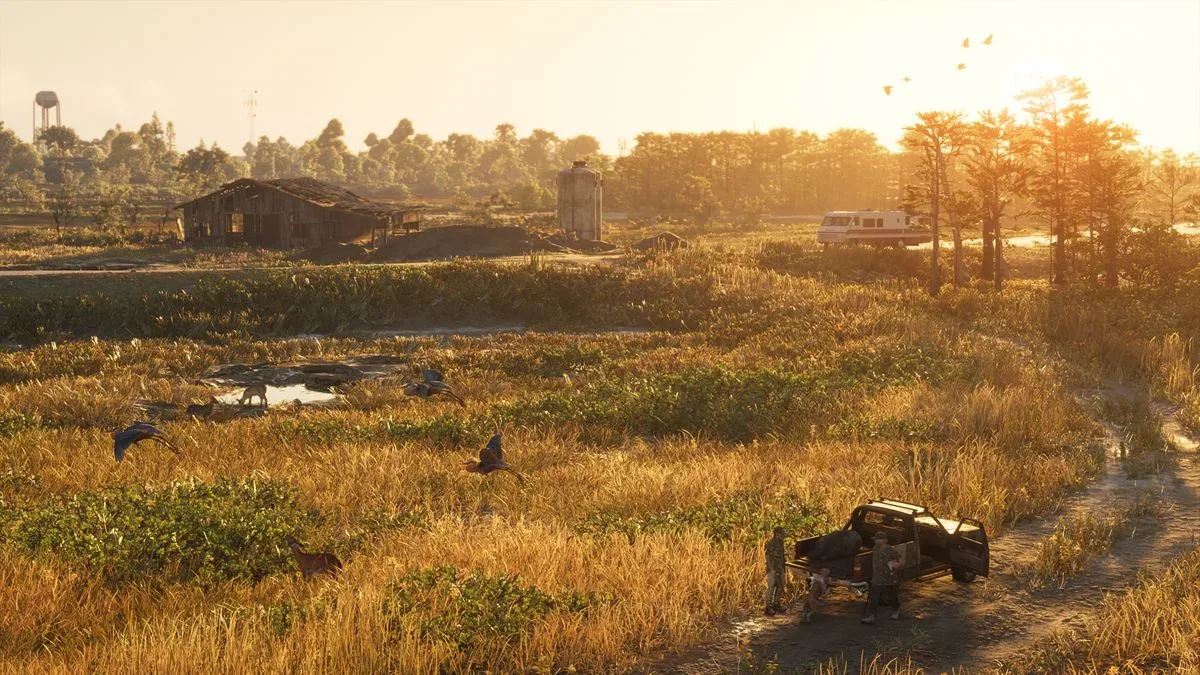
The sheer scale of Leonida is impressive, but its quality is more important than its square mileage. Vice City's packed streets, the Florida-inspired Keys, Port Gellhorn, Ambrosia, and the more remote northern areas all have their own texture. A long drive can become a miniature journey through changing weather, road conditions, accents, police vehicles, local behavior, and landscapes. The transition from coastal city life to farmland and dense forests gives the state a sense of contrast that rewards wandering.
Crucially, the world is built to respond. Citizens react more naturally to visible weapons and suspicious behavior. Ecological details and population density add life without seeming to exist only as decoration. There are shops to visit, diversions to pursue, random conflicts to stumble into, and opportunities for minor crimes to explode into much larger problems. GTA 6 excels when an unplanned decision--robbing a gas station, smashing display cases in a jewelry store, or taking a wrong turn after a traffic collision--turns into a desperate, player-authored story.
This is also where the revised Wanted and Heat systems make their biggest impact. Police do not operate as a simple vision cone that can be escaped by driving around a corner. They can account for appearance, clothing, vehicles, visible weapons, an accomplice's look, criminal history, and even CCTV footage. Loot also matters: stolen jewelry, marked bills, and narcotics are not automatically safe just because a player escaped the scene. They must be handled properly through fences or risk being lost.
The system introduces useful friction. After a robbery, survival can mean hiding weapons in a vehicle trunk, changing clothes, stealing another car, shutting off the headlights and engine, then waiting silently while police patrol nearby. That level of improvisation makes successful escapes thrilling. At the same time, Heat can be frustrating when smaller infractions draw an overly forceful response, particularly at low Wanted levels. This is a bolder, less forgiving version of Grand Theft Auto, and players who want frictionless rampages may need to adjust.
Freedom With More Purpose
GTA 6's Criminal Profile system further encourages players to establish their own approach. Reputation develops gradually, ranging from Professional to Irredeemable, based on the way crimes are committed and pressure is handled. It does not lecture the player about morality, but it does make behavior part of the world's ongoing perception. Non-lethal takedowns, careful escapes, and a disciplined approach can support a Professional profile, while a more destructive path has its own consequences.
This system works well because the tools for different playstyles are stronger than before. The Focus ability draws smartly from ideas associated with precision slow-motion shooting and situational awareness. Stealth is a legitimate option, allowing careful movement through cover, rooftop approaches, patrol observation, and quiet incapacitations. Equally, weapon handling has enough individual weight and feedback to make a louder approach satisfying. Guns require real placement and control, while movement and cover are important to staying alive.
Loadout restrictions add to the grounded approach. Jason and Lucia can carry two handguns and two long guns at a time, rather than an unlimited arsenal. Vehicles become more important as mobile storage, and the possibility of fuel running low adds another variable to travel. Cars can also be extensively modified, while tighter streets demand more confident driving. These changes slow the rhythm slightly, but they make success feel earned rather than automatic.
Mission Design Still Loves the Spectacle
Rockstar has also made a clear effort to provide more flexibility in missions and reduce frustrating fail states. Objectives may still be cinematic and largely linear, but there is typically more room to decide how to enter an encounter, handle its threats, and escape its aftermath. The ability to manually retry from the last checkpoint is a welcome practical improvement.
Heists remain major highlights, even if debate will continue over how their best moments compare with the series' most famous past jobs. More importantly, GTA 6 understands that some of its greatest heists are not formal missions at all. A player's decision to rob a bank, prepare a vehicle, distribute stash bags, and identify an escape route can produce stories with the tension of a scripted set piece--except the solution belongs entirely to the player.
Artificial intelligence also strengthens these moments. Partners and NPCs behave more capably, enabling sequences such as having Jason drive while Lucia leans out of a window to fire at pursuing police. The improved simulation is present in both big pursuits and quieter interactions, giving the game a level of cohesion that makes its systems feel like parts of one world rather than separate features.
PlayStation 5 Pro Performance and Who Should Play
The available performance assessment is based on PlayStation 5 Pro. On that platform, GTA 6 targets 30 frames per second and is reported to maintain that target without noticeable fluctuations. Loading screens are scarce, character switching is quick, and pop-in is minimal, only becoming more noticeable during exceptionally long sessions. The PlayStation 5 Pro's enhanced ray tracing also gives Vice City's nighttime lighting and shadows a particularly striking look.
Performance on other platforms is not assessed here, so expectations beyond the PlayStation 5 Pro should remain cautious until more platform-specific information is available. Even within the reviewed version, the scope of the simulation makes the stability and visual consistency notable.
GTA 6 is ideal for players who want an open world they can inhabit rather than merely clear. It will especially suit those drawn to emergent stories, patient criminal planning, exploration, and a more character-focused narrative. Those looking only for the untethered, instantly explosive tone of GTA 5 may find the greater consequences and slower balance divisive. Yet that is exactly why this entry feels so significant.
Final Takeaway
GTA 6 delivers one of the most convincing virtual places in games. Its greatest accomplishment is not just that Leonida is huge, beautiful, and packed with things to do. It is that its storytelling, relationship systems, combat, driving, police response, reputation, and spontaneous encounters all reinforce one another. Every system seems to push toward the same goal: making a criminal life feel thrilling, precarious, and personal. It is a new high-water mark for the open-world sandbox.

Community
Discussion
Start the conversation.
No comments have been posted yet.