

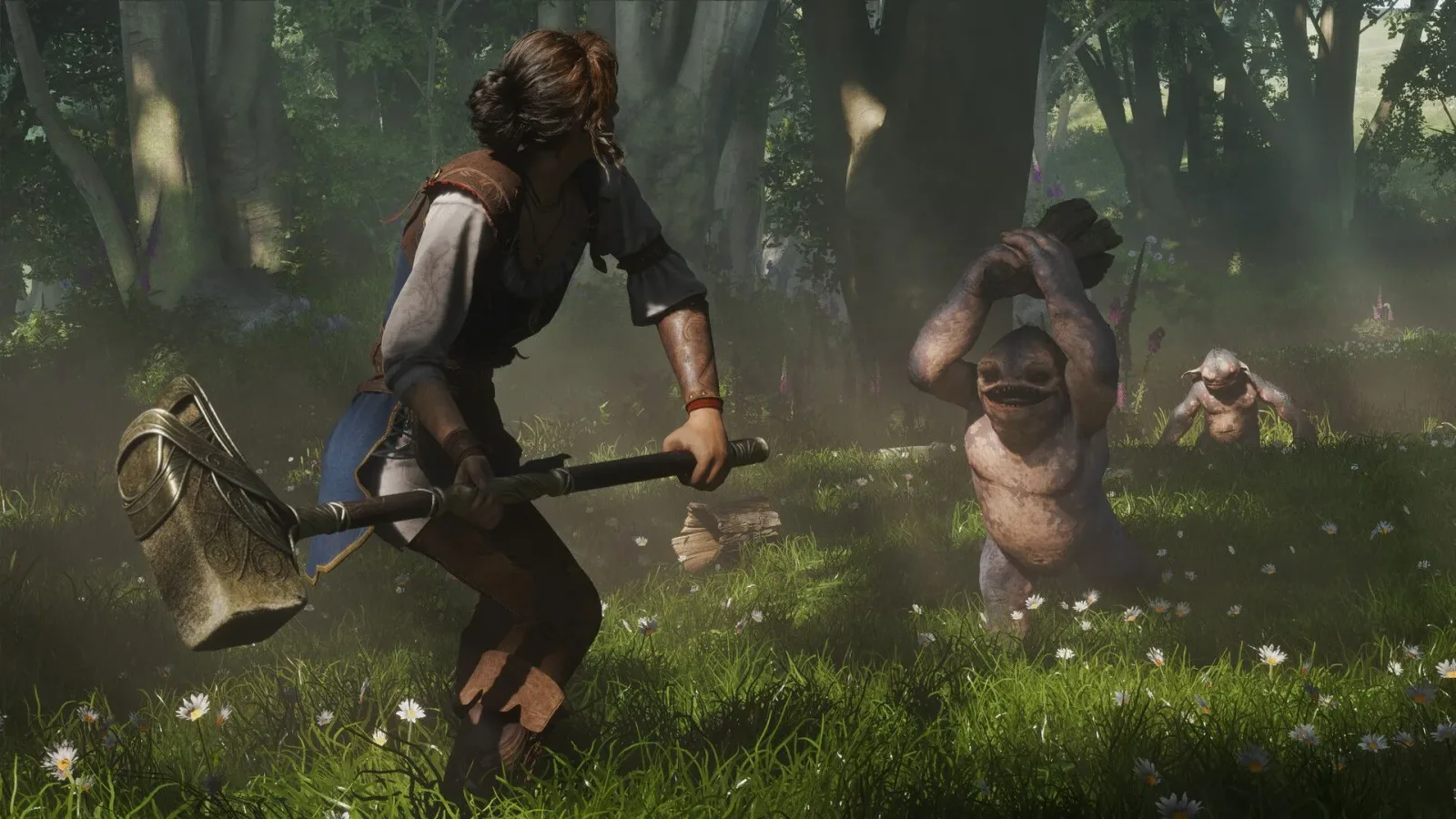
The next Fable is looking to preserve one of the most important traits of the original series: combat that feels inviting rather than intimidating. The new role-playing game is not being built around punishing, Soulslike-style duels, but that does not mean its fights will be shallow. Playground Games' developers have described an action system designed to be easy to understand at first glance while allowing players to discover more tactical, reactive details as they experiment.
That philosophy is especially fitting for Fable. Since the first game, the series has mixed swordplay, ranged attacks and magic with a deliberately playful fantasy tone. Its combat has traditionally supported different character styles without demanding a huge barrier to entry, letting players swap between melee weapons, bows and spells as the situation requires. The new game appears set to follow that same broad direction, while expanding the ways enemies respond to what players do.
Accessibility remains central to Fable's combat
Associate director Will Kennedy explained that the original games established a reputation for being approachable, and that legacy was kept in mind during development of the new combat system. The message is clear: players should not expect every encounter to be structured as a severe test of timing, endurance and repeated failure.
That distinction matters because modern action RPGs frequently take inspiration from demanding combat models. Precise dodge timing, harsh death penalties and boss encounters that require extensive memorization have become familiar parts of the genre. Fable is choosing a different path. Its goal appears to be immediate readability and a sense that players of varying experience levels can participate in its action.
For useful background on this topic, read Star Wars: Galactic Racer Leads a Packed Week of Indie Game Releases and Reveals.
Approachability, however, should not be confused with a lack of options. A combat system can welcome newcomers while still rewarding awareness, imagination and experimentation. The examples shared by the development team suggest that Fable is trying to make its complexity feel natural rather than overwhelming. Players may not need to master an enormous catalogue of systems simply to survive, but they can gain advantages and enjoy unexpected outcomes by paying close attention to enemies and combining their tools.
Targeted arrows can change how enemies behave
One of the clearest examples comes from the bow. Players can aim arrows at specific parts of an enemy's body, creating consequences beyond straightforward damage. Against an undead enemy known as a Hollow, a shot to the leg can knock it down and leave it crawling toward the player.
This is a small detail with potentially meaningful tactical implications. Bringing an opponent to the ground could create breathing room, reduce its ability to pressure the player or offer a chance to focus on a more dangerous threat nearby. It also gives ranged combat a more expressive role than simply standing back and reducing an enemy's health bar.
Headshots appear to have even stranger effects. Associate director Craig Littler noted that decapitating a Hollow leaves it unable to determine where it should go. When this happens to a ranged opponent, the result can be chaotic: it fires in every direction rather than accurately targeting the player.
Those reactions fit the personality Fable has always brought to fantasy violence. The game can support practical combat decisions while keeping its tone eccentric and humorous. Shooting the leg of a supernatural enemy is useful; removing its head and watching a confused ranged attacker spray arrows or attacks around the area is useful in a different, more unpredictable way. The value is not only in efficiency, but also in the stories that emerge from a player's choices.
Magic is built for playful interactions, not just damage
The developers' comments also point toward a magic system with room for comedy and experimentation. The Befowl spell transforms enemies into chickens, continuing one of Fable's most recognizable traditions. Yet the spell will not produce exactly the same result against every creature.
When used on Hollows, Befowl turns them into undead chickens. That variation suggests the game is paying attention to an enemy's underlying nature rather than treating every spell effect as a one-size-fits-all status condition. It is a deliberately silly outcome, but one that reinforces the setting's willingness to react to player actions in specific ways.
There is another layer to the chicken-based chaos. Fireball used on a chicken creates a roast chicken. Kennedy described these as part of the many smaller details included in the game. Whether players use such interactions for strategy, curiosity or sheer amusement, they point to a combat design that wants players to test the boundaries of their abilities.
That is a promising direction for Fable because the series has never been at its best when it is merely imitating darker fantasy adventures. Its identity comes from the collision of heroic quests, morality, absurdity and a world that seems ready to indulge a player's odd impulses. A spell that makes a chicken out of an enemy is memorable already. A world that acknowledges whether that enemy was undead, and then lets fire produce a roast version, feels more reactive.
Variety beyond fighting is equally important
Combat is only one part of the new Fable's broader design. Littler also emphasized that not every quest will depend on fighting. Some will lean on dialogue choices or the game's reputation system, while others will include exploration and puzzles.
This approach is important for an RPG that wants players to feel involved in the stories it tells. If every major problem is resolved by defeating an enemy, the choices around character identity can become limited. Dialogue and reputation systems offer other ways to shape outcomes, potentially allowing a player to be diplomatic, notorious, admired or otherwise recognized by the world around them.
The developers have highlighted quests that are broader in scope, combining activities rather than relying on a single combat sequence. Exploration can give the world a stronger sense of place. Puzzles can slow the pace and ask players to observe their surroundings. Dialogue can introduce social consequences. Reputation can make actions feel as though they carry beyond one isolated mission.
Fable's original games made moral decisions and public perception major parts of their appeal, often presenting good and evil in deliberately exaggerated fashion. The new entry's use of a reputation system suggests that player conduct will again have a meaningful place alongside fighting. The precise extent of those systems has not been detailed, but the stated focus on activity variety indicates the developers are aiming for quests with multiple textures and possible approaches.
A combat system that supports the world's personality
For Playground Games, the challenge is not simply creating satisfying sword swings, arrows and spells. It is creating combat that belongs in Fable. A mechanically demanding action game could be impressive on its own terms, but it would not necessarily suit a series known for charm, accessibility and mischievous consequences.
The described systems show a useful balance. Targeting a Hollow's leg or head gives players tactical agency. Befowl and Fireball interactions add comic surprise. The ability to handle some quests through conversation, reputation, exploration or puzzles prevents violence from becoming the only language the game speaks.
Crucially, these features do not sound like complexity for complexity's sake. Players can understand the basics quickly: attack enemies, use ranged weapons and cast spells. Then, as they become more curious, they can learn that a precise shot changes an undead foe's movement, a decapitated enemy loses its direction, and magic can create unusual outcomes based on the target. That is an accessible form of depth because it is discovered through play rather than buried behind an intimidating wall of rules.
What the new Fable needs to deliver
There are still many unanswered questions about the final balance of Fable's combat, its quest structures and its reputation mechanics. The ideas discussed by Kennedy and Littler establish an appealing foundation, but the full test will be how consistently those ideas appear across the game. Reactive enemy behavior is most exciting when it remains relevant beyond a few showcase situations, and non-combat quest solutions are strongest when they feel genuinely supported rather than secondary.
Even so, the direction is encouraging. Fable does not need to become a punishing action RPG to feel modern. Its opportunity is to refine what made the series distinctive: freedom to play with combat tools, a fantasy world with a sense of humor, and adventures that leave room for decisions beyond the blade.
If the finished game can make its approachable combat feel responsive, varied and full of surprising interactions, it may capture the spirit of Fable without simply repeating its past. The prospect of crippling a Hollow with a well-placed arrow, confusing it with a decapitation, or turning it into an undead chicken is exactly the kind of strange flexibility that could make Albion's return feel memorable.
Community
Discussion
Start the conversation.
No comments have been posted yet.