

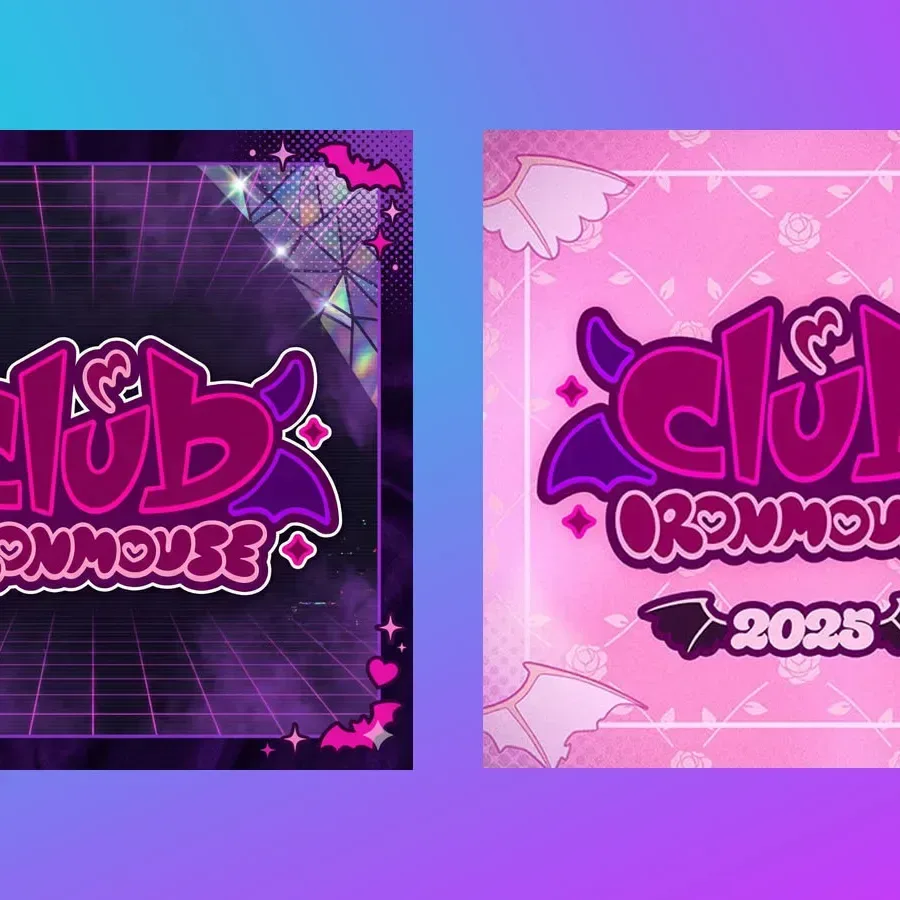
Fortnite has updated the in-game artwork used for "Meow," the music track by Ironmouse, Sleeping Forest, and HalaCG, after players noticed that its previous image included a visible Google Gemini watermark. The original art appeared in Fortnite after the track was added last month, with the watermark visible in the lower-right corner. It attracted far broader attention over the weekend, sparking discussion across social media and Reddit about AI-generated images and their place in one of gaming's largest live-service games.
As of October 5, the image shown in Fortnite has been replaced with an alternative version that does not display the Gemini mark. The change was made quietly, without a public statement explaining the swap. But the wider context is important: the watermark was not unique to Fortnite's presentation of the song. The original cover art for "Meow" on Spotify also includes the same Gemini branding, indicating that Epic Games had incorporated pre-existing track artwork rather than necessarily creating the image itself for use in Fortnite.
That distinction has not stopped the replacement from becoming a point of interest for the Fortnite community. The game has been at the center of recurring arguments over generative AI artwork, quality control, and the expectations players have for visual material inside a constantly updated virtual world. In this case, the swift removal of an obvious AI-related label suggests Epic Games did not want a Gemini watermark remaining in a highly visible piece of storefront or music-related presentation.
What Changed in Fortnite
"Meow" was added to Fortnite's growing music catalog last month. As with other tracks integrated into the game's ecosystem, its accompanying art was available to players as part of the music experience. Initially, the asset displayed an image with a Google Gemini watermark in the bottom-right corner. That small detail went largely unnoticed at first, before players began circulating screenshots and comparing the artwork over the past weekend.
For useful background on this topic, read Marvel Unlimited to Close in December as Webtoon-Powered Comics App Takes Over.
The currently displayed replacement art removes that identifying watermark. While it may seem like a modest visual revision, such alterations can quickly gain attention in Fortnite because nearly every cosmetic, promotional image, loading screen, music asset, and event graphic is subject to intense player scrutiny. Fortnite's audience is accustomed to examining updates closely, particularly when an image seems to have been produced with generative tools or contains an unusual visual flaw.
Importantly, the available evidence points toward the track's original cover art as the source of the Gemini watermark. The same marked image appears with the song on Spotify. That means the issue is more accurately connected to whoever initially made or supplied the music artwork, not proof that Epic Games generated this particular asset with Gemini.
Even so, Fortnite's decision to use a new version still matters. A visible watermark is an unusually direct indication that an image has been through a specific AI service, and it is the kind of element likely to draw criticism regardless of who created the art. Replacing the image removes the most conspicuous part of the debate while allowing the track itself to remain part of the game.
Why AI Artwork Remains a Sensitive Issue
Generative AI has become an increasingly contentious subject across games, particularly where player-facing artwork is concerned. Developers and publishers may use a wide range of tools during planning and production, but fans often make a sharp distinction between internal experimentation and imagery that is placed directly in a finished game.
For Fortnite, that discussion is amplified by the scale and frequency of its updates. The battle royale is no longer only a competitive shooter; it is also a platform for music, branded crossovers, user-created islands, limited-time events, cosmetics, and social experiences. That broad scope means Fortnite needs a constant stream of visual material. Players expect that material to meet a polished standard, especially when it is attached to creators, licensed songs, or products that may be purchased or collected.
Past community conversations have focused on examples that players believed looked suspiciously AI-generated. One frequently cited case involved an in-game poster with a hammock character that appeared to have nine toes. Details like extra digits, inconsistent anatomy, odd lettering, and mismatched objects are often associated with lower-quality generative imagery, though an awkward visual alone does not definitively establish how an image was made.
In a more direct look at its development practices, Epic Games has also shown that it experiments with AI during conceptual work on characters and locations. Concepting is a different stage from finalized in-game art. Teams across many creative industries use temporary references, mood boards, sketches, placeholder images, and digital tools while they explore ideas. The difficult question for audiences is where a studio draws the line between experimentation behind the scenes and finished work presented to players.
Epic has not consistently confirmed that any particular disputed Fortnite asset was generated by AI. That lack of definitive answers has left room for speculation whenever players find an image that looks off. The "Meow" artwork situation differs from many of those earlier examples because the Gemini watermark was plainly visible. It did not require players to infer a tool from anatomy or image quality; the branding itself was on the asset.
A Quality-Control Question as Much as an AI Debate
The replacement also raises a broader quality-control issue. Whether an image is AI-assisted, entirely AI-generated, human-made, or a combination of methods, a visible third-party watermark is not something players generally expect to see in a premium live-service game. It can make an asset feel unfinished, improperly licensed, or insufficiently reviewed, even when the artwork was supplied as part of a legitimate music release.
That is why the update can be read as a practical response rather than a definitive statement on Epic's AI policy. Removing the watermark avoids leaving a distracting label on a piece of music art and prevents the conversation from overwhelming discussion of the track and its artists. It does not establish that Fortnite will never display AI-assisted work, nor does it reveal the company's standards for every external asset brought into the game.
Still, the change may reassure players who are concerned about the visibility of AI-created images in Fortnite. There is a meaningful difference between a disputed illustration that fans believe has visual mistakes and an image with a recognizable AI watermark in plain sight. By switching to an unmarked alternative, Epic has shown a willingness to address a particularly obvious example once it became widely noticed.
Fortnite has so far avoided a high-profile visual error on the level of some recent industry embarrassments, including promotional game art that appeared to depict a six-fingered Santa. Such incidents have become cautionary examples because they suggest a breakdown in basic review processes. The "Meow" artwork was less grotesque, but the Gemini mark created its own problem: it immediately turned an otherwise routine music-art asset into a public flashpoint.
What the Update Does--and Does Not--Confirm
Players should be careful not to treat the revised artwork as a complete answer to every question around AI and Fortnite. The evidence available here supports a relatively narrow conclusion: Fortnite initially used existing art for "Meow" that included a Gemini watermark, and Fortnite later replaced that in-game image with another version without the watermark.
It does not prove that Epic Games created the original image, nor does it confirm the precise extent of AI involvement in the cover's production. The presence of Gemini branding strongly connects the original image to that service, but the process behind a single image can involve editing, retouching, compositing, artist direction, or other work that is not visible from the final file alone.
Likewise, the asset swap does not amount to a newly announced company-wide rule. Epic has not publicly detailed a broad change in policy alongside the revised art. The most immediate takeaway is simply that an image containing a highly visible AI watermark is no longer being used for this Fortnite music track.
Fortnite's Expanding Creative Ecosystem
The discussion arrives as Fortnite continues to operate at the intersection of games, music, entertainment, and user-driven creation. Its music offerings place songs and artist imagery in front of a massive audience, meaning the presentation of those assets can matter as much as the track selection itself. A cover image that may have seemed unremarkable on a streaming service can receive much greater scrutiny once it appears inside Fortnite's tightly watched ecosystem.
That scrutiny is unlikely to fade. Players remain interested in how art is made, who is credited, whether human artists are being replaced or supported, and what safeguards are used before a visual goes live. Those questions extend beyond Fortnite, but the game's enormous cultural reach makes it a particularly visible test case.
For now, "Meow" remains available with updated artwork, while the initial Gemini-marked version has been removed from Fortnite. The episode is a small change in the game's vast stream of updates, yet it illustrates how quickly a single asset can become part of a larger debate over AI, authorship, presentation, and trust in live-service games.
Community
Discussion
Start the conversation.
No comments have been posted yet.