

For plenty of families, a board-game gathering still means one thing: someone unfolds a worn Monopoly board, distributes the cash, and everybody quietly prepares for a very long evening. There is nothing wrong with returning to a familiar classic now and then, but Monopoly's combination of player elimination, drawn-out turns, runaway leaders, and punitive luck can make it a difficult fit for a relaxed holiday get-together.
The good news is that modern tabletop games offer an enormous range of alternatives. The problem, particularly for people who have not played much beyond the longstanding household staples, is knowing where to start. A shelf full of intimidating boxes and unfamiliar rulebooks can make the hobby seem more complicated than it is.
That is where gateway games come in. The term generally describes games that are easy to teach and welcoming to newcomers, while still giving players enough interesting decisions to keep the experience engaging. They tend to avoid the feeling that the winner was determined entirely by a die roll, yet they do not demand an entire afternoon spent learning rules.
Four especially useful entry points are Catan, Harmonies, Ticket to Ride, and 7 Wonders. Each approaches strategy differently: negotiation, tile placement, route building, and card drafting. Together, they make a strong starter lineup for anyone hoping to upgrade a family game night without turning it into a rules seminar.
For useful background on this topic, read Star Wars Black Series Helmets Get Major Prime Day Discounts.
What makes a good beginner board game?
Accessibility is about more than a short rulebook. A successful first modern board game needs to give players a clear goal, an understandable turn structure, and choices that feel meaningful almost immediately. It should also provide enough room for different personalities at the table. Some groups enjoy trading and friendly interference; others would rather focus on their own developing board with limited direct conflict.
Replayability matters too. A game can be simple without becoming repetitive if the board, available cards, objectives, or starting conditions change from session to session. That variation is one reason these games can feel like a better investment than a traditional roll-and-move title. Players can learn the central system once, then find new tactical wrinkles over repeated plays.
Most importantly for family occasions, gateway games usually keep everyone involved. They minimize the stretches where one person waits helplessly while another takes an elaborate turn, and they make it possible for a player who has fallen behind to still pursue a satisfying personal goal. Winning is nice, but a great game night should be enjoyable before scores are counted.
Catan remains a foundational modern classic
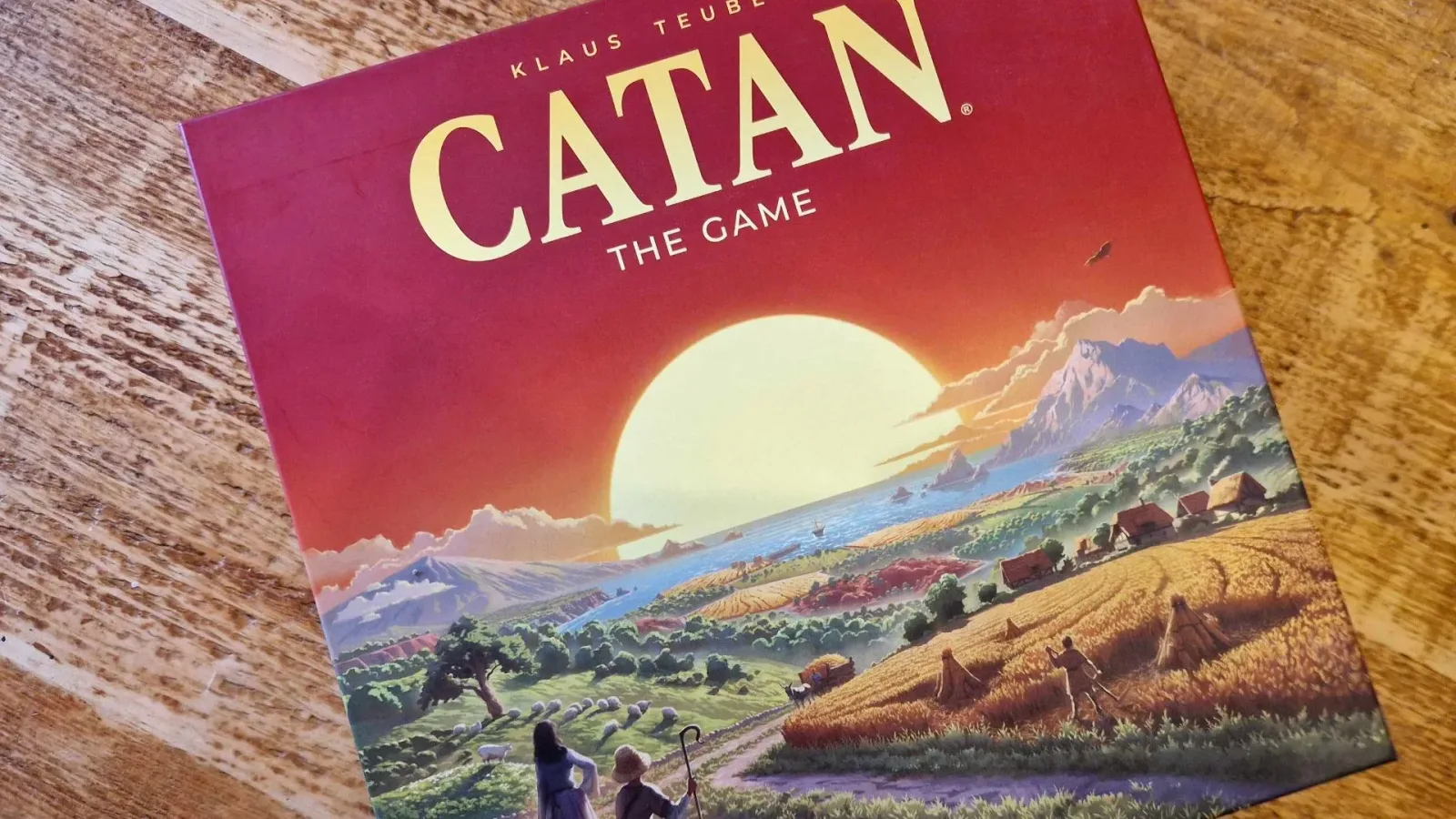
Catan, once widely known as Settlers of Catan, is still one of the most recognizable names in modern board gaming for a reason. Players establish settlements and roads on an island made from variable terrain tiles. Those terrain spaces produce resources such as wood, brick, grain, ore, and wool, which are then used to expand a player's presence and earn victory points.
The basic idea is easy to grasp: collect what you need, build what improves your position, and be the first to reach the target score. Yet Catan creates much more conversation than that simple outline suggests. No player can expect to produce every resource efficiently, so trading is central. A player with excess grain may desperately need brick, while someone else might have exactly the opposite problem.
That interaction is why Catan works so well for groups that want a social game rather than a silent optimization exercise. Deals, counteroffers, and changing alliances create memorable moments, while the randomized map means that no two sessions begin in precisely the same way. Placement decisions at the start are also important, introducing strategy before the first resources arrive.
Luck is present, because dice determine which terrain produces on a given turn, but it is not the whole story. Sensible settlement placement, resource management, trading awareness, and planning for different paths to points all matter. Players can pursue development cards, build the longest road, expand their settlement network, or aim for a mix of approaches.
There is a caveat for highly competitive families: Catan's trading can become pointed, especially when everyone knows who is close to winning. For many groups, though, that is part of its appeal. It is an excellent choice when the table wants lively discussion and a straightforward introduction to strategic planning.
Harmonies brings a calmer, more visual kind of strategy
For a gentler experience, Harmonies offers a notably different mood. It asks players to build attractive, dreamlike landscapes that can support different animals. Rather than competing for territory on a shared map, participants create their own evolving worlds, placing pieces to form terrain and fulfill the requirements of the wildlife they hope to attract.
The immediate draw is its presentation. Harmonies is visually inviting, and the act of constructing a personal landscape makes it approachable even for people who might normally hesitate at the word "strategy." The game's appeal is not merely decorative, however. Every placement affects what can fit next, what scores well, and whether a carefully planned animal pattern can actually be completed.
This is a game of spatial puzzles and competing priorities. A player may see an ideal way to score one animal card, only to realize it disrupts the terrain layout needed for another. The available pieces and objectives encourage adaptation instead of a fixed routine, so players are continually deciding whether to commit to an existing plan or shift direction.
Harmonies is particularly well suited to families that prefer low-conflict play. Everyone is working in the same overall framework, but the primary challenge lies on each player's own board. That means there is less chance of a single aggressive move feeling personal, while there is still plenty to discuss as landscapes take shape.
It is also a strong pick for people who enjoy a satisfying final reveal. By the end of a session, each player has made something tangible and distinct. Even someone who does not win can look across the table at a landscape full of forests, water, mountains, and animals and feel that they created a successful little world.
Ticket to Ride is route-building at its most approachable
Ticket to Ride is perhaps the easiest recommendation for a mixed-age group. In its well-known North American version, players collect colored train cards and spend matching sets to claim railway routes across a map. They also receive destination tickets asking them to connect particular cities, creating private objectives that guide their decisions.
Turns are wonderfully clean. Draw cards, claim a route, or take additional destination tickets. That is essentially the whole structure, and new players generally understand it within minutes. The strategy arrives naturally as the board fills up. A short connection may be worth taking now because another player could use it soon; a longer route might score more but consume cards that are needed elsewhere.
The result is a game that feels like a welcoming puzzle with a gentle competitive edge. Building a continuous cross-country railway is satisfying on its own, but watching opponents' trains creep toward a crucial junction adds tension. The interaction is present without requiring constant negotiation or direct attacks.
Ticket to Ride also handles differing experience levels well. Newcomers can focus on completing a few obvious tickets and still have a good time, while returning players can think harder about route efficiency, blocking risks, hand management, and the timing of the game's end. Those layered considerations are what make it more than a children's activity, even though its rules are friendly enough for younger players to follow.
For a holiday group that wants a game with immediate momentum, colorful components, and a clear sense of progress every turn, Ticket to Ride is difficult to beat. It replaces Monopoly's property collecting with a more active race to complete a personal network.
7 Wonders opens the door to deeper strategy
7 Wonders is the recommendation for a group ready to take one more step into strategy gaming. Players lead ancient civilizations across successive ages, selecting cards that develop resources, commerce, military power, scientific progress, civic structures, and their signature wonder. The core mechanism is card drafting: choose one card from a hand, play it, then pass the remaining cards to a neighboring player.
That system has two major advantages for family gatherings. First, everybody chooses simultaneously, so there is little downtime. Second, the rules create meaningful decisions without asking players to predict every move several turns in advance. You look at what is available, consider your growing civilization, and decide what is most valuable now.
There are multiple viable routes to a strong score. A player can invest in military cards to contest neighboring civilizations, pursue scientific symbols, construct expensive civic buildings, build commercial advantages, or concentrate on completing their wonder. The best approach changes with the cards that appear and the resources available nearby.
Because everyone passes cards, players also have to pay attention to what they might be giving away. Taking a card for yourself can be excellent; denying a perfect card to a neighbor can be just as important. That interaction is more subtle than Catan's negotiation or Ticket to Ride's contested routes, making 7 Wonders a useful bridge toward heavier strategy games.
It can look more daunting than the other games on this list at first because of its iconography and the number of card types. Once a round is underway, though, the rhythm becomes intuitive. A brief teach and a willingness to explain symbols during the opening age can pay off with a fast-moving game that supports a larger table than many traditional strategy titles.
Choosing the right game for the group
The best replacement for Monopoly depends on what your family actually enjoys. There is no need to start with the most complex option just because it has a reputation among hobby players. Pick the game that suits the atmosphere you want.
- Choose Catan for a talkative group that enjoys bargaining, shared tension, and reacting to changing fortunes.
- Choose Harmonies for a relaxed, visually pleasing session built around personal puzzles and limited confrontation.
- Choose Ticket to Ride for the clearest all-purpose family pick, with simple turns and satisfying competition.
- Choose 7 Wonders for a bigger gathering that wants simultaneous play and several strategic paths to explore.
These games do not need to replace every old favorite forever. They simply demonstrate that family tabletop time can offer more than rolling dice, paying rent, and waiting for a game to finally end. With the right gateway game, newcomers can find tactical choices, shared laughter, and the desire to play again--without anyone having to argue over a hotel on Boardwalk.
Community
Discussion
Start the conversation.
No comments have been posted yet.