

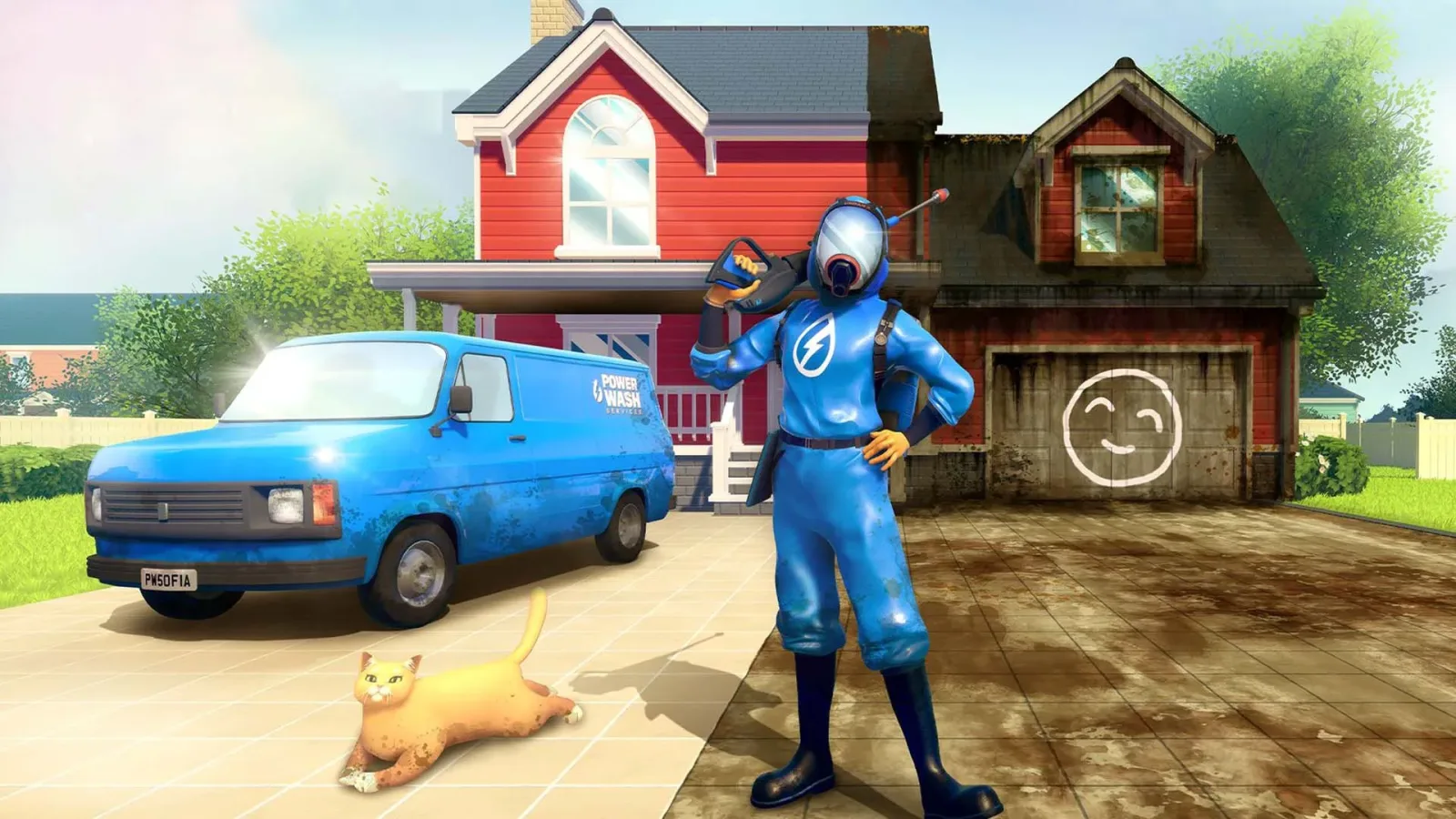
FuturLab, the studio best known for PowerWash Simulator, has reportedly laid off seven developers following the cancellation of an unannounced project that had been in pre-production. The shelved game was said to be unrelated to the studio's signature pressure-washing series, and its projected development costs reportedly exceeded what the company expected it could earn back.
The reported reductions are another difficult example of the instability facing game developers, including teams associated with successful and widely loved releases. PowerWash Simulator has developed a substantial audience through its calming cleaning gameplay, ongoing updates, and crossover content. Yet the situation illustrates a reality that has become familiar across the industry: a recognizable hit and a functioning studio do not necessarily insulate individual workers from cuts when a new project is deemed financially unviable.
Separate accounts of the process have also raised concerns about how the layoffs were communicated internally. Sources speaking to This Week In Games alleged that direct managers and team leads for affected staff were intentionally not informed in advance. When the job losses were later shared with the wider company, employees were reportedly asked not to describe the situation as "redundancy" and instead refer to those who had lost their jobs as "the leavers."
A project cancelled before full production
Reports indicate FuturLab had been developing the unnamed project during pre-production, the phase in which a studio typically establishes a game's direction, scope, technology requirements, staffing plan, budget, and broader commercial case before committing to full-scale development.
For useful background on this topic, read Playdate Season 3 Showcase Set for September 9 With Game Lineup and Release Date Promised.
That project was reportedly not another game about power washing. Its cancellation was tied to a financial assessment that the title would cost more to make than it was likely to generate. In an era when game budgets and development timelines can grow rapidly, studios are increasingly facing decisions to reduce scope, pause projects, or cancel them outright before costs become even larger.
For the seven developers affected, however, the distinction between a project-level business decision and a personal loss of employment offers little comfort. Pre-production teams are often made up of people with specialized responsibilities, from design and art to production and technical work. When an initiative ends early, those roles may not have a ready place elsewhere in a studio, particularly if its active teams are already fully staffed.
The reports do not indicate that the layoffs were connected to a cancellation or reduction in support for PowerWash Simulator itself. Instead, the cuts were reportedly the result of the separate project no longer moving forward. No additional details about the game's setting, gameplay, intended platforms, or stage of development have been disclosed.
Questions over the reported internal messaging
The allegations around communication have drawn attention because layoffs are not only a financial event for the people whose positions are eliminated. They also affect managers who must support their teams, coworkers who remain, and a studio's broader sense of trust.
Sources alleged that immediate managers and team leads were kept out of the loop before the layoffs in an effort to avoid giving them guilt. The stated reasoning, as described in those claims, was also connected to preventing other staff from experiencing the anxiety of uncertainty around their own positions. That approach, if accurately characterized, places managers in a difficult position: they may be expected to help affected employees navigate an abrupt change without preparation or an opportunity to offer context.
The reported request to use "the leavers" rather than "redundancy" has become an especially contentious element of the story. Corporate language surrounding job cuts often attempts to soften blunt realities, using terms such as restructuring, workforce adjustment, transition, or separation. Critics of that language argue that it can obscure the fact that people have involuntarily lost their work, income, and daily professional community.
Words matter in these moments because they establish whether a company is directly acknowledging what has happened. "Leavers" can describe anyone departing an organization, including someone who resigned voluntarily. In the context of layoffs, the term may be interpreted as blurring the distinction between a choice to leave and a role being removed.
There is also an emotional impact on staff who stay. Workers who see colleagues suddenly depart can be left questioning whether their own job is secure, whether future projects are adequately funded, and whether leadership will be transparent if conditions change again. The game industry's recent waves of layoffs have made those concerns increasingly common, even at studios with strong creative reputations.
A familiar pattern across the games business
Job losses have continued to affect developers, publishers, support teams, and adjacent game-industry businesses at an alarming pace. The current pattern has generated strong public scrutiny in part because layoffs do not always occur at companies in obvious financial distress. Teams can be attached to major franchises, celebrated new games, or popular live-service products and still face reductions amid changing forecasts, cancelled projects, altered strategies, mergers, or pressure to reduce operating costs.
This context has changed how communities react when studios announce cuts. Fans are more likely to ask how a company's public success aligns with workforce reductions, while developers increasingly share accounts of the professional and personal consequences. A game's popularity does not guarantee that a studio has enough projects in development to retain every employee, nor does it reveal the cost structure and revenue expectations guiding leadership decisions behind the scenes.
Still, the frequency of these announcements has made many workers skeptical of explanations framed solely around necessity. When a project is cancelled because its anticipated return does not justify its expected cost, that may reflect a practical business assessment. But it also exposes a harsh side of project-based creative work: staff can spend months helping define a potential game only to lose their roles when the idea is judged too risky to pursue.
For studios, the challenge is not limited to whether a difficult decision must be made. It is also about how that decision is communicated, what support is made available to affected people, and how candidly leadership addresses the concerns of those who remain.
What this means for PowerWash Simulator fans
PowerWash Simulator remains FuturLab's most visible game and has become a fixture across PC and console platforms, including Nintendo, PlayStation, and Xbox systems. Its central loop is deliberately simple: players restore dirty vehicles, buildings, playgrounds, and unusual environments with increasingly capable washing equipment. The game's appeal comes from the satisfying visual transformation of grime disappearing under a spray of water, coupled with a low-pressure pace that contrasts sharply with the turbulence of the industry around it.
That success has given FuturLab a distinct place among developers. Its game turned a seemingly mundane activity into a popular digital pastime, and its collaborations have helped it reach audiences beyond a conventional simulation-game crowd. The reported cancellation concerned a separate, power-washer-free title, meaning the available information does not establish any direct change to the series itself.
However, the cuts are a reminder that studios can struggle to convert the success of one project into security for every future experiment. Building something outside a breakout formula can require investment before an audience is proven. If projected costs rise beyond expected revenue, even a studio with a recognizable hit may decide that moving ahead is too dangerous.
FuturLab's reported layoffs involve seven people, a smaller figure than some of the mass reductions seen elsewhere in games. Each number in a layoff announcement still represents an individual developer whose work, experience, and livelihood have been disrupted. The reaction to the reported terminology and communication choices shows why the human side of such decisions remains central to the conversation.
The need for clearer language and better support
There is no easy way to deliver news that someone's role is ending. But clarity is generally more respectful than euphemism. Employees need to understand whether they are being laid off, why the decision was made, what practical support will follow, and how they can access references, benefits information, and opportunities elsewhere.
Managers also need enough information to help their teams through a difficult period. Keeping them uninformed may reduce the number of people who know about an imminent decision, but it can leave them unable to respond effectively once the news is public inside the company. It can also make affected staff feel that their immediate leadership was excluded from a process with direct consequences for them.
The reported FuturLab cuts are ultimately part of a larger industry reckoning over risk, growth, and worker security. As studios pursue new ideas while facing tighter financial expectations, project cancellations may remain common. The way companies handle those moments will help determine whether employees view them as unavoidable setbacks managed with honesty or as evidence that even successful teams can offer little stability.
For now, the known details are limited: a non-PowerWash Simulator project reportedly failed its financial test, seven developers were reportedly laid off, and the alleged internal wording around those losses has intensified criticism. The episode is another sobering reminder that behind every cancelled game are the people asked to build it.
Community
Discussion
Start the conversation.
No comments have been posted yet.