

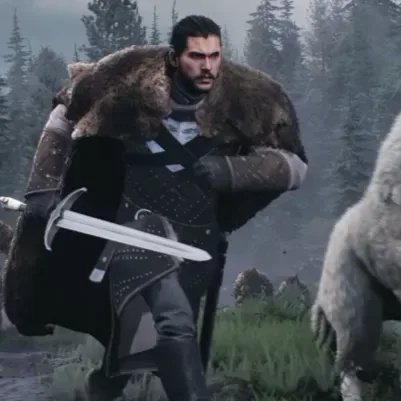
Game of Thrones: War for Westeros faces an unusual but potentially exciting challenge when it arrives on PC next year. It is being built as a real-time strategy game, a genre with an audience that often values intricate economy management, rapid decision-making, army control, and deep faction knowledge. But it also carries one of entertainment's most recognizable fantasy names, meaning a considerable share of its audience may be coming to Westeros for Jon Snow, House Stark, dragons, and the Lannisters--not because they already know how to optimize a build order.
Developer PlaySide is planning around that split audience from the start. Its goal is not to flatten the strategy mechanics into something unrecognizable for RTS regulars. Instead, the team is focusing on the way players are introduced to those mechanics, reducing some of the genre's habitual busywork and giving newcomers space to understand battles before asking them to perform at a competitive level.
That is a meaningful distinction for a game based on a property with reach far beyond the strategy genre. The original Game of Thrones television series remains a cultural fixture, while HBO's continued expansion of the setting through shows including House of the Dragon and A Knight of the Seven Kingdoms keeps Westeros in front of a broad audience. For many players, War for Westeros may be their first proper RTS rather than simply their next one.
Approachability Without Removing Strategy
Game director Ryan McMahon described approachability as the development team's central concern. In his view, accessibility is not about making a good RTS less demanding in every respect. It is about making sure players can understand the experience, steadily learn its systems, and reach the compelling parts of a match without immediately being buried beneath a long list of management tasks.
For useful background on this topic, read SteelSeries Aeon Pro Launches for Xbox and PC With Premium Features and a $259.99 Price.
That philosophy will be supported by a substantial tutorial experience at launch. Players will be taught the fundamentals needed for skirmish play, while the campaign is intended to introduce systems over time. The gradual structure is important. RTS games can ask players to monitor resources, construction, unit production, map control, scouting, combat positioning, special abilities, and enemy movements at once. Even people who enjoy that eventual complexity can be intimidated if all of it arrives in the opening minutes.
PlaySide's solution includes a key economic change: workers and builders will not demand constant micromanagement after they have constructed a structure. In more traditional RTS designs, workers may need to be repeatedly assigned to resource gathering or given a new job the moment a previous job ends. That creates a continual background workload. Skilled players can turn those small efficiencies into an advantage, but it is also one of the first sources of pressure for newcomers.
In War for Westeros, resource-producing buildings will gather resources automatically once they are built. The studio calls this a "set and forget" approach. Players still need to decide what to construct and where to place it, but they are not expected to perpetually cycle workers through resource duties.
The result should be a lower cognitive burden at the most basic level of play. Rather than splitting attention between idle workers and an unfolding fight, players can spend more time considering their army composition, their heroes, their building placement, and the dramatic confrontations that are likely to define a Game of Thrones strategy game. That could mean maneuvering cavalry, reinforcing a frontline, planning an ambush, or directing powerful dragons into a decisive battle.
Single-Player Is Meant to Build Confidence
Automated resource structures do not mean War for Westeros is abandoning depth. The intent is to shift early attention away from repetitive labor management and toward the larger strategic choices that make matches memorable. The game will still have enough complexity for players who want to advance beyond the basics, particularly for those eventually interested in fighting other people online.
To help players reach that point, the game's AI is being tuned to give them room to learn in single-player. Rather than treating the campaign and offline modes as a harsh test that newcomers must somehow survive, PlaySide wants them to be a path toward broader familiarity with the game. By the time a player considers trying multiplayer or joining friends, they should have encountered layers of the system naturally rather than being required to master everything before they can enjoy themselves.
That is an especially sensible approach for a licensed game with a potentially enormous range of player experience. A long-time RTS enthusiast may be eager to learn faction matchups and optimize an opening strategy. Another player may simply want to command House Stark for the first time, see familiar figures take the field, and make a dragon attack an opposing army. The game's onboarding needs to serve both motivations without making either group feel that it has chosen the wrong title.
Heroes Must Support the Army, Not Replace It
The recognizable characters of Westeros are naturally central to that appeal. War for Westeros features major figures using likenesses based on the HBO series, though dialogue is performed by soundalike actors rather than the television cast. McMahon noted that using the original actors would be expensive and that their availability would not always align with the production schedule.
Jon Snow is among the confirmed characters, with actor Kit Harington having approved his likeness. PlaySide also revealed Gregor "The Mountain" Clegane and Arya Stark at gamescom. The Mountain is recruitable by House Lannister and is positioned as an intimidating force capable of breaking battle lines through his immense physical strength. Arya serves House Stark as an assassin shaped by her training with the Faceless Men at the House of Black and White.
Yet the team's internal playtests suggest that fame alone does not decide who gets picked once players understand the game. McMahon said Tywin Lannister and Robb Stark have become the most popular choices among the development team. Their appeal is tied in part to cavalry mobility, but also to commander-focused kits that strengthen the units around them.
That preference reflects a broader balancing direction. Earlier in development, Jon Snow and Jaime Lannister saw heavy use because they were particularly powerful heroes. As the game has matured, the emphasis has moved toward keeping ordinary units important and ensuring that commanders have value because of how they reinforce an army, rather than because one famous individual can defeat overwhelming numbers alone.
It is a promising direction for the setting. Westeros is full of larger-than-life warriors and legendary names, but its conflicts are also shaped by leadership, banners, cavalry charges, political loyalties, and vast armies. A hero system that makes commanders meaningful without letting them trivialize an entire army can preserve the fantasy of leading iconic characters while maintaining the tactical foundation expected from an RTS.
Internal Tournaments Are Feeding Balance Decisions
PlaySide is not relying only on theory to shape that balance. The studio holds weekly Friday playtests, then stages internal tournaments at the end of each milestone. Developers compete in a bracket, with the winner receiving a trophy that moves from desk to desk after each tournament.
These sessions provide direct experience with the game, but they also produce useful data. The team tracks faction win rates, hero spawn rates, and building-placement heat maps. That information is informing map design, faction balance, and the way heroes are positioned against rival forces.
Heat maps are particularly revealing in an RTS because where players build can say as much as which units they choose. If one location becomes overwhelmingly favored, it could indicate a map layout that limits meaningful choices. If a faction routinely wins through a particular deployment pattern, the developers have a clear area to investigate. The same applies to popular heroes: a frequent pick may be a fan favorite, genuinely effective, or potentially overtuned.
For now, internal players appear to be choosing commanders based on battlefield effectiveness more than personal attachment. That is unsurprising in a tournament environment, where competitive value tends to outweigh sentiment. Once the game reaches the public, however, the calculation may change. Jon Snow's enduring popularity alone makes him a likely candidate to attract a great many first-time selections, regardless of where he lands in the competitive hierarchy.
A Westeros RTS for Two Audiences
War for Westeros has a difficult balance to strike, but its current design priorities make sense. Dedicated RTS players need strategic tension, faction variety, meaningful unit control, and reasons to keep improving. Game of Thrones followers who are less experienced with the genre need a clear way into that world--one that does not ask them to become worker-management experts before they can enjoy commanding their favorite house.
By automating routine resource collection after construction, building a robust tutorial and campaign onboarding path, and allowing players to learn against an AI that leaves room to breathe, PlaySide is targeting the obstacles most likely to discourage RTS newcomers. At the same time, commander synergies, faction balance work, internal competitive testing, and the prospect of multiplayer point toward a game that still wants strategy fans to find lasting depth.
Whether that balance holds up in the final release will be one of the biggest questions surrounding Game of Thrones: War for Westeros. But for a fantasy franchise with such a wide audience, welcoming players into the genre may be just as important as faithfully recreating its famous houses, characters, and battles.
Community
Discussion
Start the conversation.
No comments have been posted yet.