

Gears of War: E-Day revisits one of the darkest moments in the series' timeline: the opening days of the Locust invasion, when humanity is caught almost completely unprepared for an enemy erupting from beneath the surface. The prequel brings Marcus Fenix and Dominic Santiago back to the center of the action, supported by new squadmates Mags and Lucas, and uses its campaign to depict the chaos and devastating human cost of Emergence Day.
It is an effective setup for a Gears story. The campaign runs roughly 12 to 15 hours and spends much of that time showing the initial shock of the invasion and the desperate struggle across the following couple of days. There are familiar Locust threats throughout, including drone soldiers, boomers, and wretches, all of which help establish that this is recognizably Gears of War even as it travels back to an earlier period.
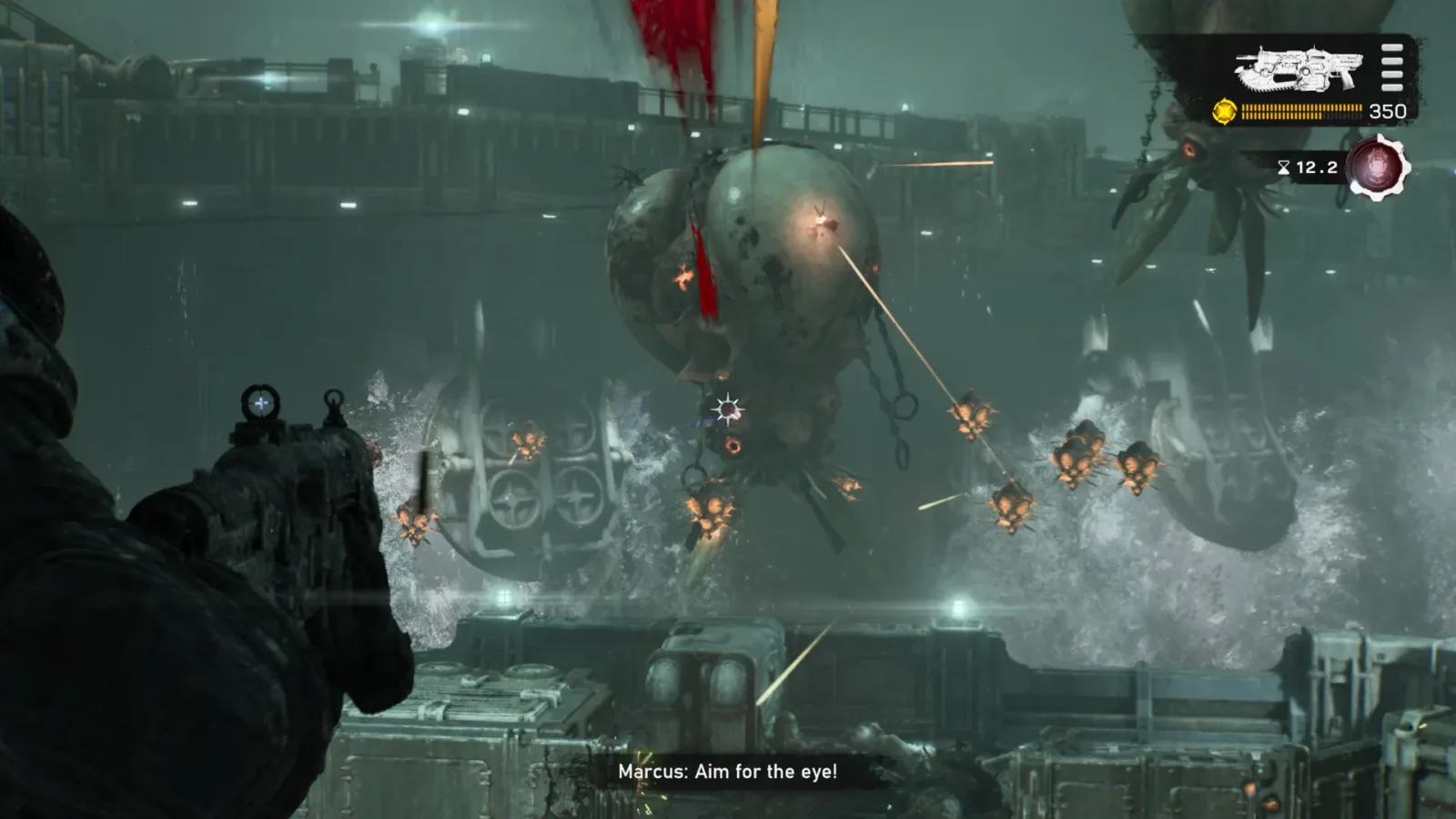
But E-Day also adds at least one enemy that feels far less familiar: the Spore Maiden. These huge floating creatures immediately stand apart from the rest of the Locust horde, both in silhouette and in combat function. They hover overhead, absorb an astonishing amount of gunfire, and produce smaller airborne spores that fire needles at players. The result is an enemy designed to disrupt the usual rhythm of cover shooting--and one that can become deeply frustrating when several arrive at once.
A new airborne problem for Marcus and Dom
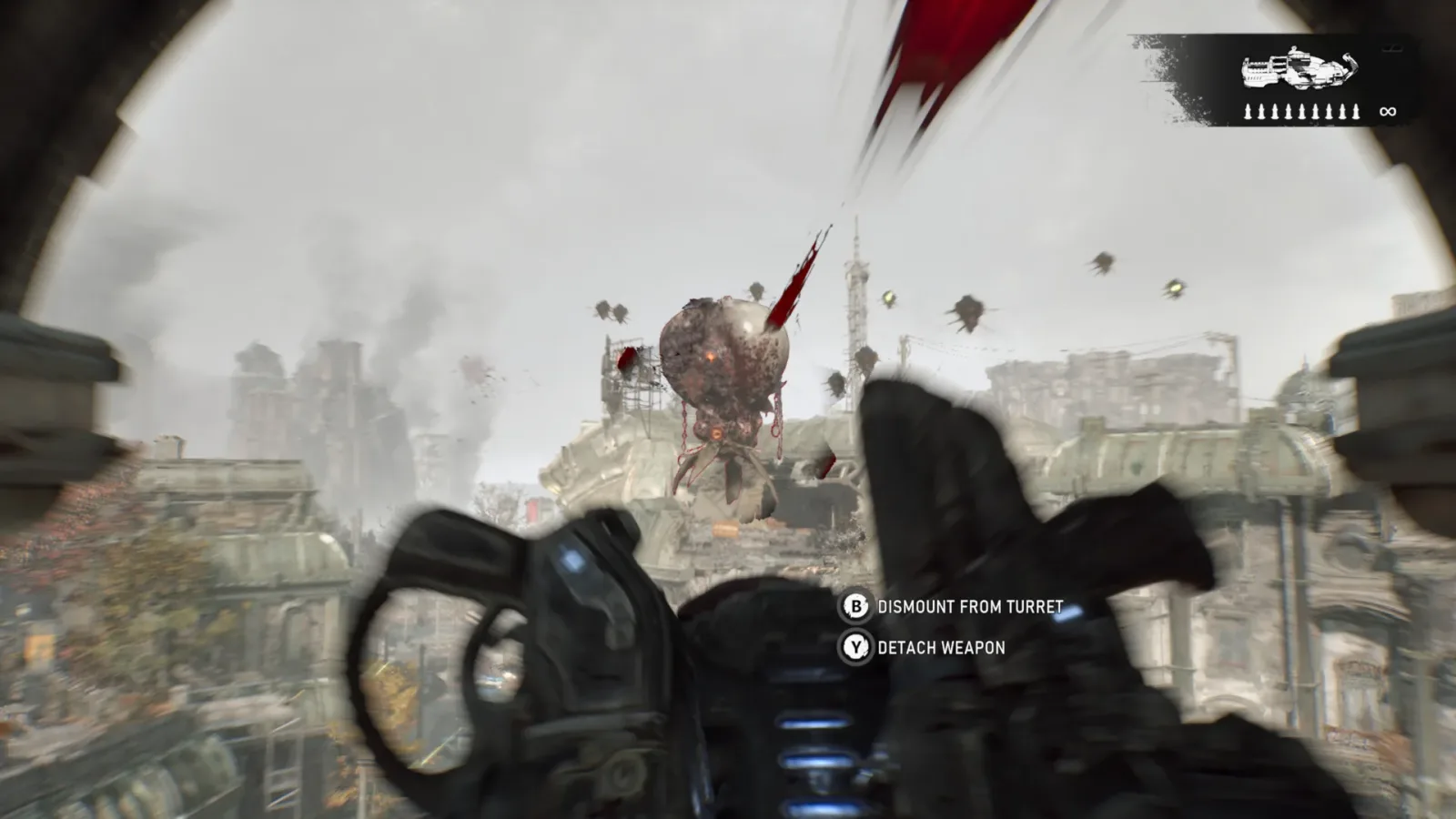
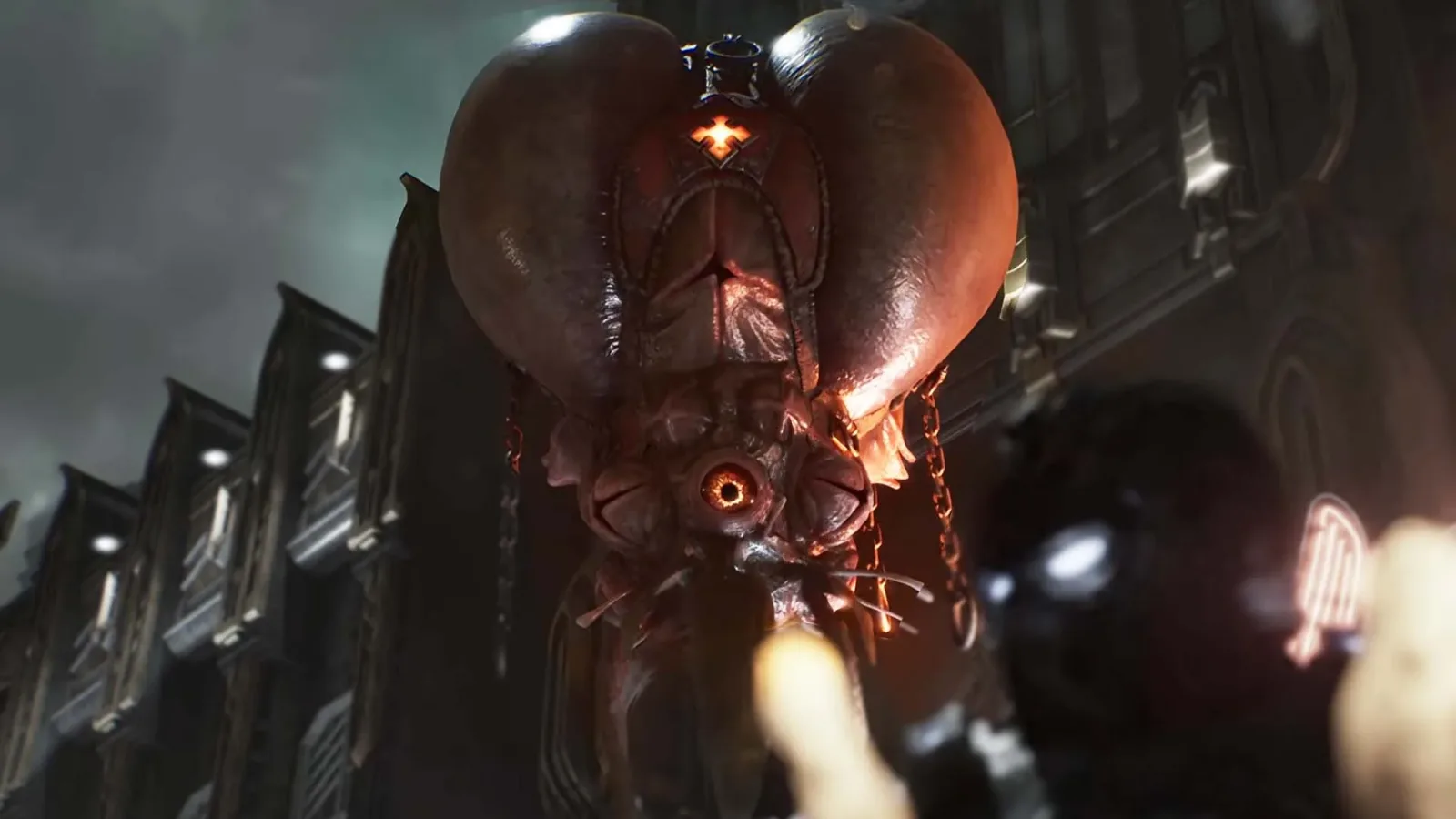
The Spore Maiden is difficult to ignore. It is a large, swollen, organic-looking creature that floats above the battlefield and presents what appears to be a vulnerable body. At a glance, it seems like the sort of target that should pop quickly under concentrated rifle fire. In practice, it is among the toughest enemies in the campaign.
For useful background on this topic, read LG's 83-Inch C6 OLED Drops to $3,499 for Big-Screen Gaming Setups.
On standard difficulty, bringing one down can require more than 200 Lancer rounds. The creature does have an apparent weak point in the form of its eye, but targeting that spot does not turn the encounter into a quick execution. Players still need to commit substantial ammunition and attention to finish the job.
That contrast is central to why the enemy can feel so aggravating. Gears of War has always featured durable opponents, especially larger Locust units that force a squad to reposition or bring out heavier weapons. Boomers, for example, are imposing, heavily built enemies whose resilience is immediately legible. A Spore Maiden's balloon-like biological design communicates something very different. Its survivability can seem at odds with its appearance, creating a disconnect between what the player expects and what the encounter demands.
In a game built around rapid threat assessment, visual clarity matters. Players see an enemy, identify its weapon or armor, and decide whether to press forward, take cover, flank, or save ammunition. The Spore Maiden complicates that instinct. Its body looks exposed, yet it is able to absorb a punishing amount of damage before falling.
The spores are the real source of pressure
High health alone would make the Spore Maiden a substantial target, but that is only half of its battlefield role. While it remains alive, it releases smaller floating spores that attack with needle projectiles. These miniature threats can accumulate quickly, changing the entire shape of an encounter.
Gears combat traditionally encourages smart use of chest-high cover, carefully timed movement, and a constant balancing act between aggressive pushes and defensive positioning. Needle-firing spores undermine that comfort. With hostile projectiles coming from the air, players can no longer treat a solid wall as a reliable answer to the danger in front of them. The fight becomes more chaotic as attention is divided between the central Locust force, the hovering Spore Maiden, and a growing collection of airborne attackers.
That creates a snowball effect. If players are occupied by drones, wretches, or larger ground units for too long, the Spore Maiden continues creating new problems. By the time the squad turns its fire upward, the sky may be cluttered with floating needle-spores, each contributing to the sustained pressure. NPC allies can be downed amid that barrage, adding revives to an already overloaded list of priorities.
The Spore Maiden therefore demands immediate focus in a way that not every Gears enemy does. The game is effectively asking players to identify it as the highest-priority threat, devote ammunition to it, and eliminate it before its smaller creations make the rest of the battle unmanageable. That can be satisfying in theory: a support enemy that must be removed before it overwhelms the field is a well-established combat design idea. The frustration comes from the sheer amount of time and ammunition required to act on that priority.
Explosives become less of a choice
Because Lancer fire can feel inefficient against Spore Maidens, explosive weapons become especially valuable. Grenades and other high-damage options offer a way to cut through the enemy's durability more quickly, limiting the number of spores it has time to release. In intense encounters, this makes explosive ammunition feel less like a resource to be held for a later emergency and more like the expected solution.
That is not inherently a bad thing. Gears of War is at its best when the player's arsenal creates meaningful tactical choices. A difficult enemy should encourage experimentation with grenades, heavy weapons, environmental tools, and cooperative squad fire. Yet a distinction exists between encouraging a choice and making a choice feel mandatory. When the enemy arrives alongside multiple conventional Locust threats, using explosives on the Spore Maiden can feel necessary rather than strategic.
This pressure becomes more noticeable in multi-enemy encounters. One Spore Maiden is already a drain on bullets and focus. Two or more can overwhelm the pace of a fight, especially if they are simultaneously releasing needle-spores. A side mission featuring several of the creatures in succession can turn into a lengthy endurance battle where ammunition conservation, reviving allies, and controlling the airspace all compete for attention.
For players who enjoy Gears at its most hectic, that may be exactly the point. E-Day's version of Emergence Day should feel unstable and desperate, and an enemy that makes cover unreliable can reinforce that atmosphere. But a difficult encounter needs to feel coherent as well as intense. The Spore Maiden's combination of surprising toughness, constant add-spawning, and aerial harassment can push past tense into tiresome.
A strange fit for a prequel
There is also a larger lore question attached to the Spore Maiden. E-Day is set before the original Gears of War trilogy, and many of its enemies are familiar precisely because players know they will become lasting parts of the Locust army. Drones, boomers, and wretches belong naturally to that historical picture.
The Spore Maiden is harder to place. Its floating anatomy and spore-based attacks give it a distinct identity, but it is not a creature players associate with the later events of the series. That absence is conspicuous because the enemy is so dangerous. If the Locust had access to massive airborne organisms capable of generating swarms of needle-firing spores during the very first days of the war, it raises the obvious question of why those creatures do not appear to remain part of the horde's arsenal.
Prequels can introduce previously unseen threats without breaking a setting, particularly when the story is exploring a chaotic and poorly documented moment in history. Still, the more dramatic an addition is, the more noticeable its later absence becomes. The Spore Maiden is not a minor variant tucked into one chapter; it is an eye-catching, high-priority foe whose abilities can dominate an entire battlefield.
Its visual design also contributes to the feeling that it sits slightly apart from the traditional Locust lineup. Gears monsters often mix brutal industrial menace with subterranean horror. The Spore Maiden leans much more heavily into bizarre biological fantasy, with an appearance that feels closer to a strange airborne creature from another kind of dark-action game. That difference may be intentional, especially for a prequel eager to show the invasion at its most unfamiliar. It nevertheless makes the creature feel like an odd fit beside the series' better-known enemy types.
A memorable enemy, even when it is unwelcome
The Spore Maiden succeeds at one important thing: it is memorable. It changes player behavior, forces a quick reassessment of the arena, and makes routine cover positions less dependable. Those are meaningful contributions to a campaign enemy roster, especially in a series with decades of recognizable Locust designs behind it.
However, memorability does not automatically equal balance. The creature's durability can make its fragile-looking design feel misleading, while its ability to continually fill the air with smaller needle-firing threats can turn a hard fight into an exhausting one. More visible armor, a clearer damage-state system, or a tighter limit on the number of spores it can produce could have made its role easier to read without removing the danger.
As it stands, the Spore Maiden is a fitting symbol of E-Day's early-war chaos: strange, alarming, difficult to contain, and capable of making a bad situation much worse in seconds. Players venturing through Marcus and Dom's earliest battles should be ready to look up, spend ammunition freely when necessary, and make these floating threats a priority before the battlefield becomes crowded with spores.
Community
Discussion
Start the conversation.
No comments have been posted yet.