

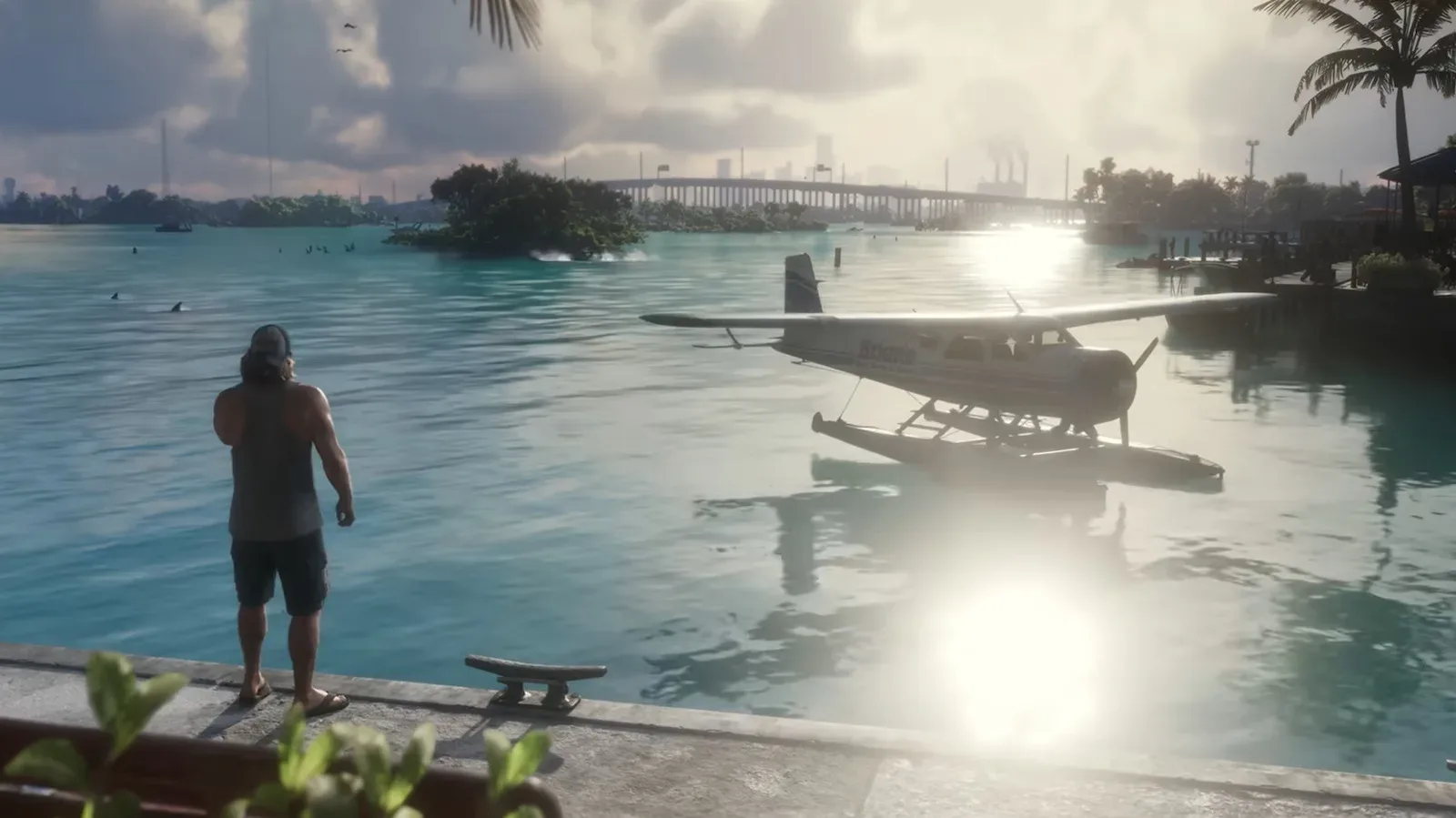
Grand Theft Auto 6 begins by keeping much of its enormous Leonida setting hidden behind the familiar fog-of-war effect. Players can uncover the map in the usual fashion by progressing through the story, taking road trips, and gradually visiting every newly accessible stretch of land. But there is a substantially faster option for anyone who simply wants to see the shape of the world: take to the air.
A plane found close to Jason's early home in Key Lento can be used to reveal vast portions of the map in only a few minutes. The method is straightforward, requires little setup, and turns what could be a lengthy sightseeing project into a short series of flights. It does come with a few caveats, however. Aircraft fuel is limited, and one part of the map is guarded closely enough to turn a peaceful exploration run into a high-level police chase.
Leonida's scale makes early exploration a project
GTA 6's map is described as being roughly twice the size of the one in Grand Theft Auto V. That creates a lot of ground to cover, from Florida-inspired commercial strips to swampy regions inhabited by alligators. At the beginning of the game, players are positioned in a comparatively isolated area modeled after the Florida Keys. The broader map is not immediately visible in full detail, with unexplored areas blanketed by fog.
That design gives exploration a natural rhythm. As Jason travels into a district, the surrounding geography is added to the map. Following missions will therefore reveal regions over time, while driving out on an impromptu journey can do the same job without waiting for story beats. The game also does not automatically raise a wanted level merely because a player crosses into a new part of the map, making a northbound drive a viable low-pressure approach.
For useful background on this topic, read Baldur's Gate 3: Shadowheart Prequel Novel Set for June 2027.
Driving, though, is not the efficient answer when the goal is total map visibility rather than discovering every roadside activity in detail. Roads curve around water, city blocks, wetlands, and other obstacles. A vehicle also reveals terrain only along the route it physically travels. Flying has the advantage of speed and a broad, direct path across the landscape, allowing players to cut across much more territory before needing to turn around.
Where to find the early aircraft
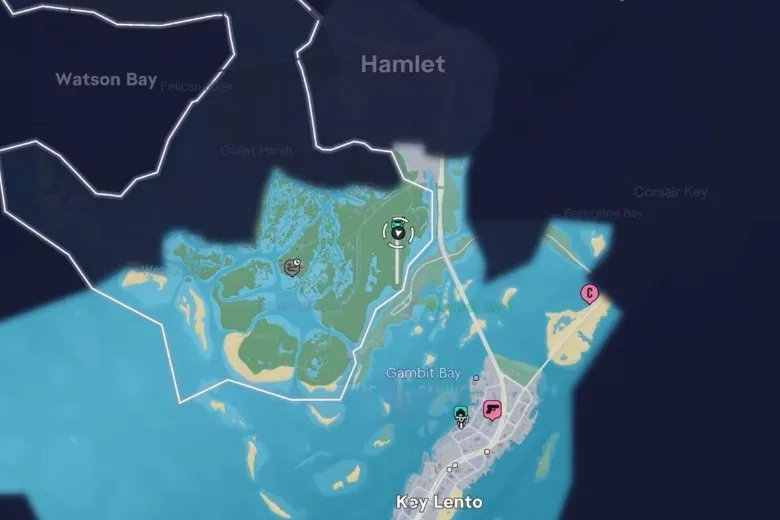
The key vehicle is a duster plane located at Southpoint Airfield, a short distance north of Jason's first house in Key Lento. Reaching the airfield is relatively simple. Players can take the western bridge across the Shoeless Keys, then continue west toward the runway. The location is difficult to overlook once players are in the area, thanks to its clear runway layout.
Southpoint Airfield is marked as a restricted location, which might make it sound like a dangerous early-game destination. In practice, it is largely abandoned, so players should not expect the kind of immediate armed response that can accompany more heavily secured locations. The duster can be found waiting at the airfield, ready for a quick getaway and an aerial survey of the state.
It is worth preparing before taking off. A fast map-reveal flight does not need to be a precision stunt, but it does demand basic awareness of altitude, direction, and remaining fuel. Players who immediately fly in a straight line without checking where they are headed may waste valuable time retracing ground or unintentionally enter a much more dangerous section of the map.
How the map-reveal route works
Once airborne, the central idea is simple: fly over the fogged portions of the map rather than attempting to reach them by road. The plane's high speed makes newly visited zones register quickly. One sustained flight can expose a large number of previously hidden areas, especially when crossing broad stretches of land that would take considerably longer to reach in a car.
The limitation is fuel. A single pass may not be enough to uncover Leonida in its entirety, so players should not assume they can leave Southpoint, circle the entire state, and return without interruption. Instead, it is more practical to treat the process as several short flights. Head out in one direction, uncover as much as the fuel supply safely allows, then return to the airfield.
The useful detail is that planes regenerate at airfields after one has departed. That means Southpoint can function as a reliable base of operations. Land or return to the area, let another aircraft become available, and set out again along a new heading. By dividing the map into sections, players can cover the remaining fog efficiently without relying on a single perfect route.
A practical flight plan
- Travel from Key Lento toward Southpoint Airfield using the western bridge over the Shoeless Keys.
- Locate the duster plane on or near the runway and take off.
- Choose one broad direction and fly across unexplored territory rather than following roads.
- Watch fuel closely and turn back before the aircraft becomes difficult to recover.
- Return to Southpoint, then use a newly available plane for another pass in a different direction.
- Leave the most heavily guarded southwest airspace until the rest of the map has been uncovered.
This approach is less about finding an exact pixel-perfect route and more about using the aircraft's speed intelligently. A flight northward can reveal a long corridor of land. A later pass toward another edge of the map can fill in the gaps. Since the fog disappears as regions are visited, players can watch their coverage expand and choose subsequent routes based on what remains obscured.
Why returning to the airfield matters
The temptation, particularly after seeing how quickly the duster travels, is to keep going until every visible edge of the state has been crossed. Fuel makes that unreliable. Pushing too far can turn a convenient discovery tool into a crash recovery problem, potentially leaving Jason stranded far from the preferred starting point or forcing an unnecessary search for another vehicle.
Returning to Southpoint provides a cleaner loop. The airfield is close to the initial region, easy to identify, and suited to repeat departures. Each outing can be targeted toward a different unexplored zone. The system of aircraft regeneration removes the pressure to preserve one specific plane for the entire operation.
There is also a broader benefit to taking separate trips: it gives players a chance to assess the map after each flight. Rather than blindly covering the same territory twice, they can identify remaining fog banks and head directly toward them. The result is a much quicker full-map reveal than wandering on the ground, while still retaining control over how aggressively they explore.
Mile Zero Air Station is the danger zone
One location demands special caution: Mile Zero Air Station, positioned at the lower-left portion of the map. Flying into its airspace immediately produces a four-star wanted rating. That is a serious escalation for an exploration flight, especially because law enforcement can pursue the player with helicopters.
A plane may feel like the ideal escape vehicle, but it is not automatically safe once airborne police are involved. The duster is useful for quick sightseeing, not necessarily for surviving a sustained aerial pursuit. Players hoping only to remove fog from the map should avoid treating Mile Zero like any other blank patch of territory.
For the smoothest map-clear run, uncover everything else first, then make Mile Zero the final objective and leave its airspace as soon as the fog has lifted.
That sequence minimizes the consequences if the wanted level becomes difficult to shake. By saving the restricted base until last, players ensure that a messy final escape does not interrupt the rest of the exploration plan. The air station contains notably fast aircraft, but acquiring them may not be worth the early trouble for players whose priority is simply revealing the map.
A shortcut for visibility, not a replacement for exploration
Using the Southpoint duster does not eliminate the value of traveling Leonida properly. Flying over a district reveals its place on the map, but it does not replace the close-up experience of learning roads, finding hidden activities, or encountering the events that make GTA's open worlds feel alive. Players will still have plenty of reasons to return to places they first saw only from above.
What the plane technique offers is freedom. Those who dislike staring at an incomplete map can quickly remove the visual barrier, plan future trips with a better understanding of the state's layout, and decide which destinations interest them most. It is also an appealing option for players who want to appreciate the sheer scale of GTA 6's setting early in their playthrough.
The safest version of the strategy is therefore uncomplicated: use Southpoint Airfield as a repeatable launch point, make several fuel-conscious flights over the main map, and reserve Mile Zero's restricted skies for the end. With that plan, the fog covering Leonida can disappear far faster than it would through ordinary driving alone.
Community
Discussion
Start the conversation.
No comments have been posted yet.