

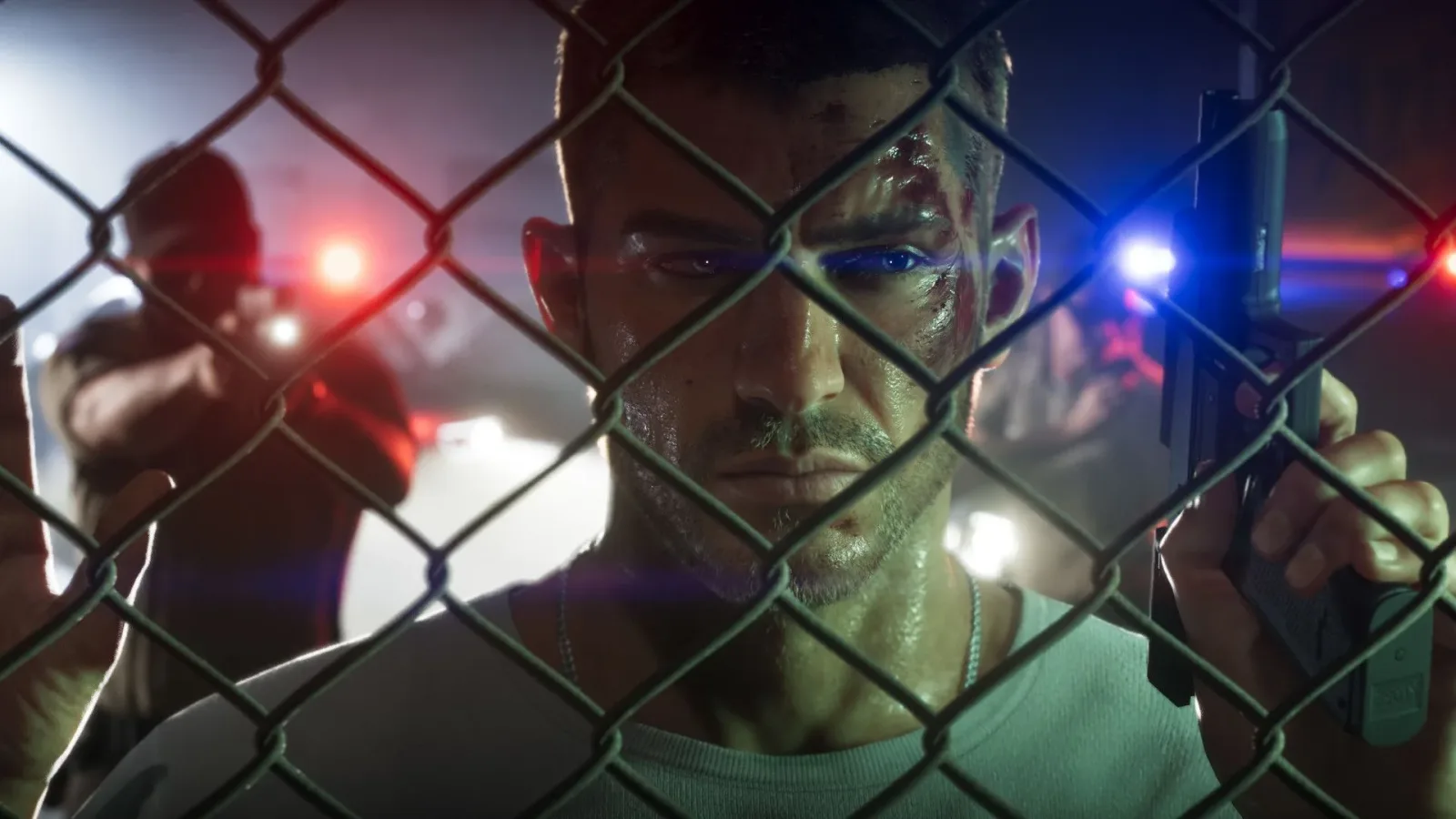
Grand Theft Auto 6 has arrived to an extraordinary reception, with early records and an apparent position as the highest-rated game ever after its first day placing it among the most successful launches the medium has seen. Yet one former games-industry finance executive believes that even a blockbuster on this scale may not protect Rockstar Games from further job cuts once the immediate work of shipping the game has passed.
Jacob Novak, formerly a financial lead at Square Enix, has argued that significant layoffs at Rockstar are likely following the release of GTA 6. His view is based not on the game's critical reception or apparent commercial momentum, but on the usual production cycle for giant games: a studio needs a vast workforce to finish a massive project, then may not need that same number of people to support it after launch.
It is important to stress that this is a prediction, not a confirmed plan from Rockstar Games or parent company Take-Two Interactive. Neither company has announced a new round of layoffs connected to GTA 6's release. Still, the discussion has drawn attention because it comes amid continuing anxiety about job security across the games business--and because Rockstar has already faced criticism over layoffs in 2025.
Embedded X/Twitter post
Why a huge launch does not necessarily mean job security
Novak's central argument is that the workforce required to build and ship GTA 6 would be larger than the workforce needed for its post-launch phase. Rockstar has spent years creating what is widely regarded as one of the largest and most expensive games ever made. That sort of project requires extensive teams across programming, animation, art, design, quality assurance, production, writing, audio, marketing, infrastructure, and many other specialisms.
For useful background on this topic, read Doja Cat Reacts to GTA 6 Radio Snub With a Very Public Message to Rockstar.
Once a game is released, however, work does not disappear--it changes. Some employees can move to online content, future downloadable expansions, technical updates, bug fixes, community support, and preparations for Rockstar's next major production. But live-service support and DLC development may not demand the same staffing levels as the final push to complete a full-scale open-world release.
"Part of the team will move onto GTA 6's online mode, part to DLC, but the team size required to ship this is not the team size required to build continuous content," Novak wrote while discussing the prospect of cuts.
That assessment reflects a difficult reality of modern AAA development. Publishers frequently scale teams up for the costly, labor-intensive final years of a game's creation. After release, they may seek to reduce operating costs, even when the game itself has performed well. In other words, a hit game can generate substantial revenue while individuals who helped make it still face redundancy if executives decide the company's post-launch staffing structure should be smaller.
The possibility is particularly unsettling in GTA 6's case because the game's success has been so immediate. A record-setting launch can make layoffs appear especially contradictory from the outside: players see sales, acclaim, and cultural attention, while workers may still be confronted by financial targets and organizational restructuring. But the relationship between a game's launch performance and corporate headcount is rarely straightforward.
A prediction focused on early 2027
Novak suggested that Rockstar may have avoided any major reduction before GTA 6's launch in order to prevent disruption during one of the most important periods in the company's history. In his view, management would have little incentive to introduce a major negative news cycle while reviews were arriving, players were entering the game, and Rockstar was establishing its post-release plans.
"It's likely that Rockstar has been waiting until after the game ships, not wanting the layoffs to impact the news cycle or distract in reviews," Novak said. "My guess is early Q1 next year with a consulting period starting in the UK."
As the comments were made in November 2026, that estimate points to the opening months of 2027. The mention of a consultation period in the United Kingdom is meaningful because UK employment law can require formal consultation procedures for larger-scale redundancies. That does not establish that a process is happening, nor does it confirm which Rockstar offices or roles could be affected. It only describes Novak's expectation of how any potential cuts might unfold.
The prediction emerged while concern about possible redundancies was already circulating following comments from animation programmer Nestor Uriarte. The broader concern is not difficult to understand. Rockstar has a reputation for operating at an enormous scale, and GTA 6's development has been one of the industry's most closely watched projects for years. The question now is whether the company will use the game's launch as a bridge into a sustained period of growth, or as a point to reassess the size and makeup of its workforce.
Take-Two's financial pressures remain part of the debate
Novak also pointed to Take-Two Interactive's finances when explaining why he believes job reductions could be on the table. In a follow-up comment, he highlighted search results indicating that Take-Two's most recent profitable quarter was in 2022. His conclusion was blunt: he expects Take-Two leadership to prioritize recovering losses rather than allowing staffing costs to absorb revenue generated by GTA 6.
That framing is one interpretation of Take-Two's financial position, and it should not be treated as an official statement of company strategy. A quarterly profit figure can be influenced by many factors, including development spending, marketing, acquisitions, accounting treatment, release timing, and recurring revenue performance. The arrival of a game as consequential as GTA 6 could also change the company's financial picture substantially.
Even so, the underlying concern is familiar. Major publishers increasingly operate in an environment where enormous development budgets, long production schedules, and investor expectations create pressure to control costs. A record launch is not always an instant cure for years of spending, particularly when the title itself may have required unprecedented investment before it ever reached players.
For Take-Two, GTA 6 is both an opportunity and a financial turning point. The game has the potential to provide massive revenue through initial sales and whatever long-term online ecosystem follows. At the same time, its scale means the company has spent years carrying the costs associated with its development. How leadership balances reinvestment, staffing, shareholder expectations, and plans for future games will be closely watched.
Rockstar's recent history makes the concern more serious
The speculation lands against the backdrop of Rockstar's 2025 layoffs, which were widely described as ruthless. That earlier episode means fears of post-launch cuts cannot simply be dismissed as an abstract business theory. Employees and observers have already seen the studio make difficult staffing decisions, and the industry as a whole has endured sustained layoffs across developers, publishers, and support companies.
This wider context matters. For years, the games industry expanded rapidly, building larger teams and investing in increasingly ambitious projects. More recently, many companies have shifted toward consolidation, budget reductions, canceled projects, studio closures, and redundancies. The result is a painful disconnect between the public image of games as a thriving entertainment business and the precarious circumstances facing many of the people who make them.
GTA 6 is perhaps the clearest possible test of that disconnect. If a game with unparalleled attention, stellar reviews, and record-level launch visibility cannot guarantee stability for its developer, it would reinforce the fear that no level of creative or commercial success is enough to shield workers from a corporate decision to reduce costs.
What comes next for GTA 6 and Rockstar
For now, GTA 6's early success remains the concrete story. Players are engaging with one of the year's biggest releases, and Rockstar has delivered a game whose critical standing is already exceptional. The company also has substantial work ahead, whether through online features, additional content, performance support, and the inevitable long-term planning that follows a release of this magnitude.
Those needs could create opportunities for many teams to remain involved, and Novak's forecast may not come to pass. Rockstar and Take-Two have not confirmed that layoffs are planned, let alone provided a date, scale, or regional breakdown for any prospective reductions. Until an official announcement is made, claims of imminent cuts remain speculation.
Still, the conversation serves as an uncomfortable reminder that launch success and workforce security are not the same thing. GTA 6 may be a landmark achievement for Rockstar, but the months after launch will reveal whether the studio treats that achievement as a foundation for continued investment in its people--or whether the end of its colossal production cycle brings another round of painful contraction.
Community
Discussion
Start the conversation.
No comments have been posted yet.