

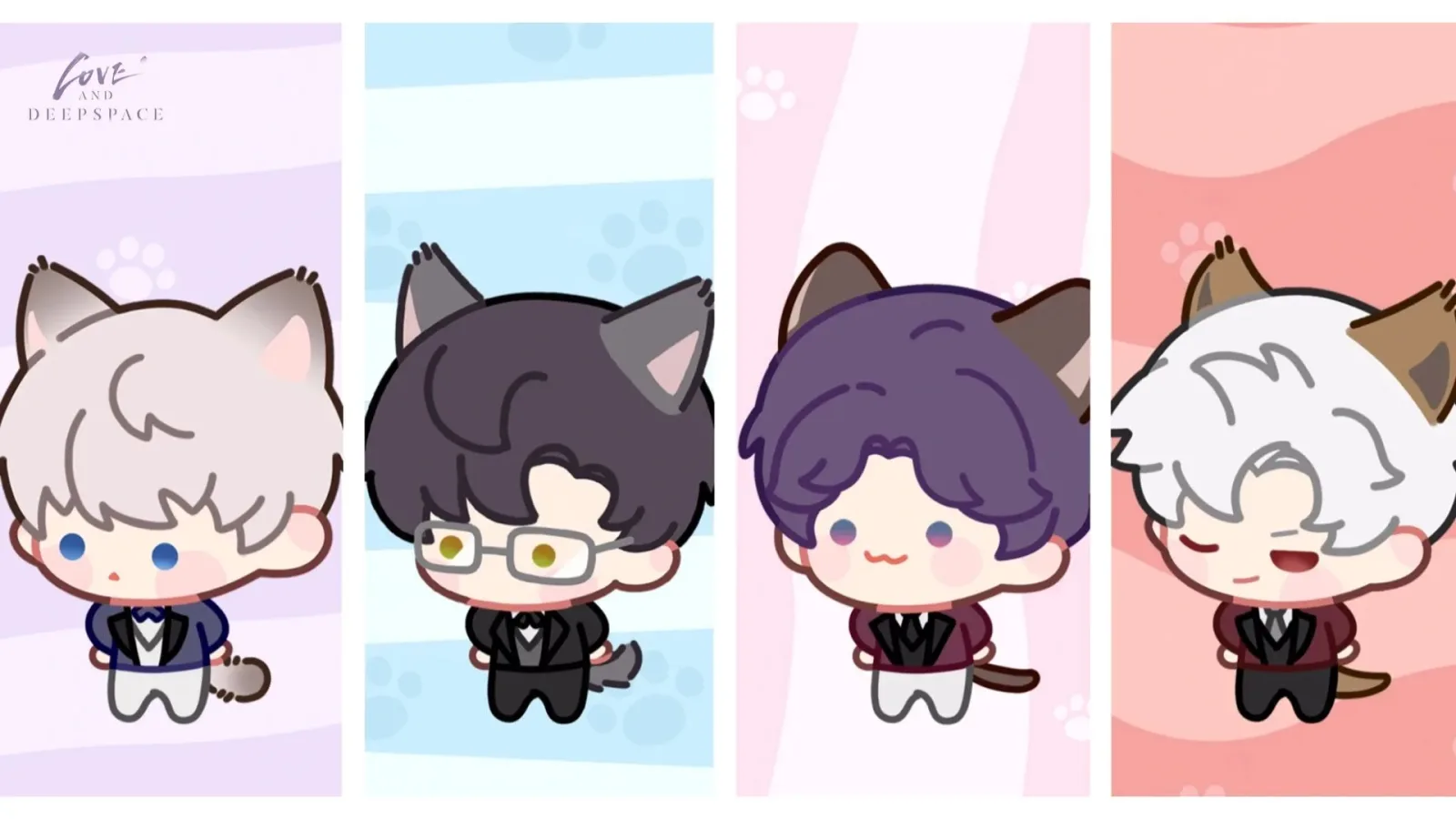
Love and Deepspace is leaning into two of the qualities that have made it a standout in the mobile romance-game space: elaborate character fantasy and highly targeted fan service. The game has brought back a widely celebrated event in which its male leads become catlike companions, while also setting up a substantial story update for Sylus that will explore his dragon form in the current timeline.
Neither move is subtle. The returning event places the game's five central love interests in magical cat transformations, complete with ears, tails, affectionate behavior, and the sort of knowingly suggestive tone that has become familiar to the game's audience. The Sylus material, meanwhile, promises a more story-heavy reveal involving one of the title's most popular characters and a form that already carries considerable significance in the game's lore.
Together, the updates look like a concerted effort to give established players a reason to return and to remind prospective players exactly what Love and Deepspace does best. In a crowded period for games competing for attention, a catboy rerun and a half-dragon romantic lead are very deliberate choices.
Embedded X/Twitter post
Embedded X/Twitter post
A fan-favorite event returns
Love and Deepspace is a gacha-driven romance game, meaning limited events are closely tied to opportunities for players to spend currency on pulls. Those pulls can award character Memories: collectible story content that typically offers new scenes, interactions, and romantic moments with the game's leads.
For useful background on this topic, read Aurzen E1R Roku projector deal Drops Portable Big-Screen Gaming Setup to $90.
The revived cat transformation event is especially notable because of its reputation among the community. Rather than simply giving a character a new outfit, its premise turns the leads into supernatural catboys. The appeal is direct and broad for the game's audience: cute visual design, physical affection, playful roleplay, and dialogue that can make the most of an inherently flirtatious setup.
Reruns are normal in live-service gacha games. They allow newer players to pursue content they missed and give longtime fans another chance at limited Memories. Love and Deepspace has previously revisited events centered on individual characters, so returning to a larger, multi-character event carries a different kind of weight. It puts multiple popular characters back in the spotlight and revives a theme with unusually strong emotional recognition among fans.
The event's design also reflects the game's understanding of its own strengths. Love and Deepspace is not built solely around collecting units or improving combat performance. Its commercial model is deeply connected to attachment: the chance to see a favorite character in a new scenario, hear new voice work, unlock a particular visual, or experience a more intimate side story. A cat-themed magical transformation is almost perfectly engineered for that format.
The larger context around the rerun
The timing has prompted discussion among players because Love and Deepspace has faced a more unsettled stretch than usual. Community dissatisfaction connected to the cancellation of Valko has continued for months, with the boycott referenced by players now entering its fifth month. Whether that sentiment translates into a measurable long-term effect on revenue or active users is not publicly clear, but it has remained an important part of the game's community conversation.
That background makes the decision to revisit such a popular event easier to read as more than routine scheduling. A rerun of beloved content can be an effective retention tool in any gacha game, particularly when its audience has been disappointed by recent decisions or feels that newer events have not matched earlier highs.
There is also the wider issue of attention. Major releases and cultural events affect almost every live-service game, even those that do not appear to share an audience at first glance. Games built around daily check-ins, limited banners, and time-sensitive rewards depend on routine. When players spend their time discussing or playing something else, that routine can break quickly.
Grand Theft Auto 6 is one of the most visible games in the broader conversation, and its presence has become a point of comparison for titles seeking to keep players engaged. On the surface, Rockstar's crime drama and a mobile sci-fi romance gacha do not seem like direct rivals. Yet the overlap may be more meaningful than genre labels suggest.
Discussion around Grand Theft Auto 6 has highlighted Jason and Lucia's relationship, including domestic moments, gifts, dates, customization, emotional support, and romantic interactions. Those details have encouraged many players to view Jason not just as a protagonist in an open-world crime story, but as a potential virtual boyfriend figure. That is a role Love and Deepspace has spent its entire existence refining through its own cast.
For players primarily invested in romantic character dynamics, the competition is less about whether two games share combat systems or platforms. It is about time, emotional investment, and the appeal of a new fictional relationship. A game that offers a stylish, responsive male lead and relationship-focused scenes can draw interest from the same people who enjoy dating-sim-adjacent storytelling, regardless of its larger genre.
Sylus and the power of a dragon reveal
The catboy event is not the only major character-focused development. Sylus is receiving a significant story update involving his dragon aspect. The form has been encountered before by the female protagonist, but in a different timeline. The upcoming material is positioned as the first time that aspect of Sylus will be acknowledged in the story's current timeline.
For anyone outside the game's lore, timeline distinctions in Love and Deepspace can sound complicated. For its devoted audience, however, this kind of narrative return is exactly the material that can generate excitement. A character's alternate form is not merely an aesthetic variation. It can reshape how players understand his identity, his connection with the protagonist, and the implications of prior story events.
Sylus is widely regarded by fans as one of the game's most popular love interests, which makes the choice of character particularly important. Adding a dragon-focused plot point to a major Sylus update gives the game a powerful combination of narrative escalation and visual appeal. It also taps into a fantasy-romance tradition that remains enormously popular: dangerous, powerful, supernatural men whose intimidating qualities are balanced by devotion and vulnerability in a romantic context.
That fantasy has a natural audience among readers of dragon-shifter and romantasy fiction. Love and Deepspace has consistently demonstrated a sharp sense of the archetypes its players enjoy, whether it is the protective companion, the mysterious figure with hidden power, or the affectionate lead placed in a playful fantasy scenario. Sylus' dragon reveal is another extension of that approach, but one with bigger lore implications than a costume or standalone event.
The visual presentation and voice performance surrounding such an update matter as much as the plot summary. Character games live or die by execution: a striking illustration, a memorable delivery, or a moment of restrained romantic tension can become the thing fans circulate and discuss for weeks. The game's developers appear to understand that a reveal of this scale needs to feel like an event, especially after a stretch in which some players have found the lineup less exciting.
Why this strategy matters
The catboy rerun and Sylus update serve different needs. One offers immediate nostalgia and a proven crowd-pleaser. The other offers novelty, lore progression, and a reason for fans of a specific character to pay close attention. Combined, they create a broader pitch: return for something you loved, then stay for something you have not seen before.
That is a familiar live-service strategy, but Love and Deepspace is applying it through the highly personal language of romance fandom. It is not attempting to win interest through a new competitive mode, a balance overhaul, or an abstract promise of more content. Instead, it is foregrounding the things players are most likely to form attachments around: beloved men, fantasy transformations, emotionally loaded story revelations, and limited scenes built to reward investment.
There is no guarantee that even the strongest event lineup can resolve every concern within a community. Players upset by the Valko situation may not be persuaded by a return to fan-favorite content, and a game's financial performance cannot be determined simply from social-media enthusiasm. Gacha communities are also diverse; what delights one segment may leave another wanting more meaningful changes.
Still, the choices are revealing. Love and Deepspace is turning toward some of its most reliable romantic hooks at a moment when retaining attention appears particularly important. Catboys may be a playful answer, but they are paired with a serious effort to capitalize on Sylus' popularity and one of the game's most potent supernatural character fantasies.
For fans, the immediate question is whether the returning event and the dragon storyline deliver on their considerable promise. For the game, the more consequential question is whether this concentrated wave of nostalgia, romance, and spectacle can restore momentum after months of visible community tension. The answer will likely depend not just on the appeal of cat ears and dragon wings, but on whether players feel the game is once again giving them the kind of events worth coming back for.
Community
Discussion
Start the conversation.
No comments have been posted yet.