

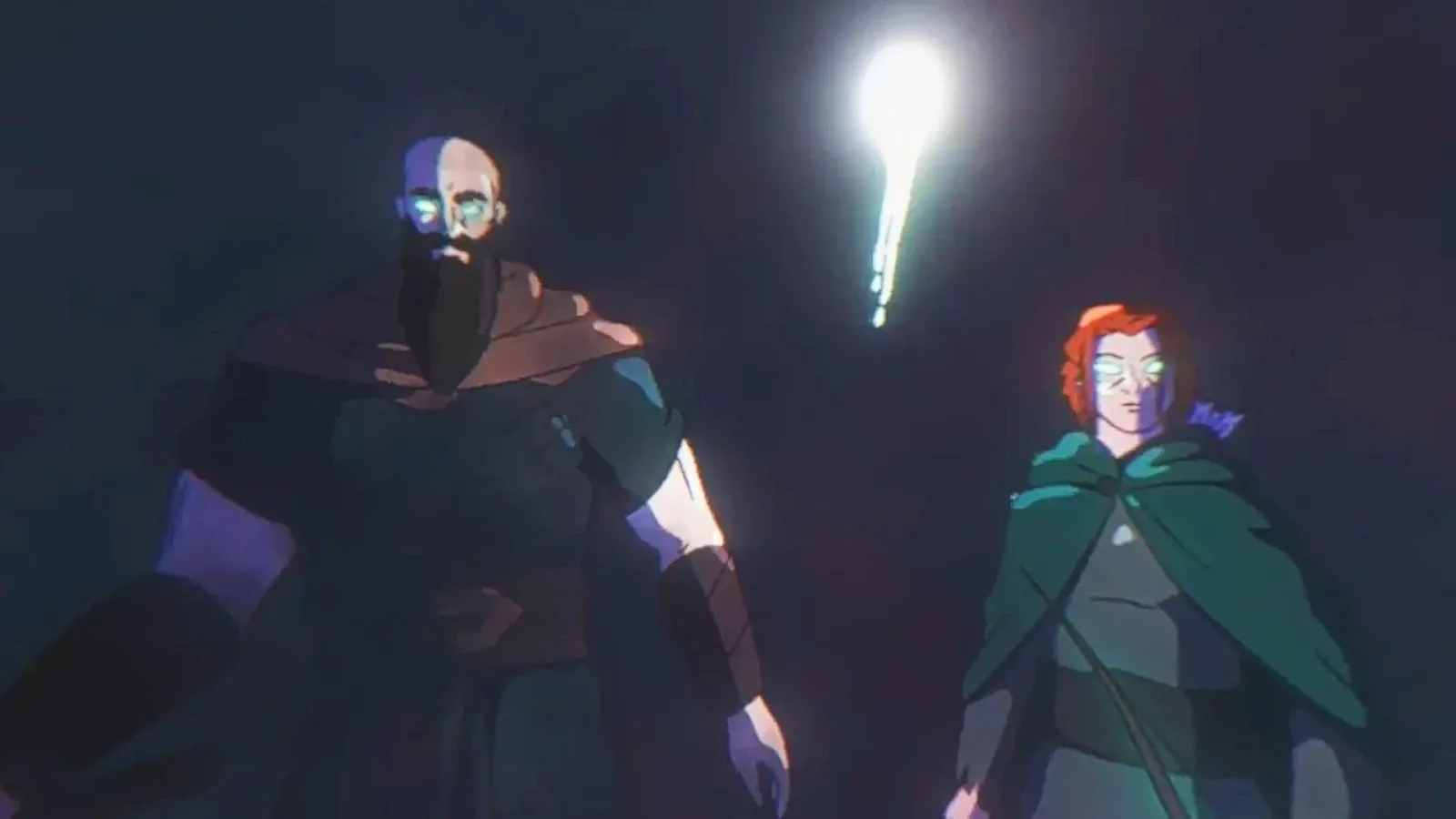
Valheim has reached version 1.0, a landmark moment for one of the most recognizable survival games of the last several years. The Viking-themed sandbox first arrived in early access in 2021 and became a major fixture of the genre during the years that followed. Now, after five years of continued development and growth, Iron Gate Studio's game has crossed the line into its full 1.0 release.
The occasion has drawn congratulations from another prominent name in survival gaming. Pocketpair, the studio behind Palworld, used the game's official social account to celebrate the milestone and offer warm praise to Valheim's creators.
"Congratulations to Iron Gate Studio on their 1.0 release of Valheim," Pocketpair wrote. "You are an inspiration to everyone in the genre!"
Embedded X/Twitter post
The message also said that Pocketpair was spinning up a server for the occasion, signaling that the developers intended to mark the release by heading back into Valheim themselves. The post was accompanied by artwork depicting a Pal equipped with a helmet and sword styled for a journey through Valheim's dangerous wilderness.
For useful background on this topic, read The Blood of Dawnwalker Hotfix 1.0.4 Removes Rogue Pipes, Talkative Corpses and Runaway Torches.
It is a brief exchange, but it highlights the standing Valheim has earned within the broader survival-game community. Pocketpair and Iron Gate Studio work in a space built around many of the same core ideas: gathering materials, establishing secure bases, exploring hostile environments, managing resources, and overcoming escalating threats. Those shared foundations make the congratulatory note especially notable. These games may compete for players' time, yet the recognition reflects how influential genre-defining successes can shape the work and ambitions of other development teams.
Five years in early access, one major milestone
Valheim's move to 1.0 may come as a surprise to players who have treated it as a complete experience for years. It has been widely discussed, played, updated, and recommended throughout its early-access run, to the point that its unfinished label could be easy to overlook. The game has long carried the presence of an established survival staple rather than that of a newly emerging project.
That long road also says something important about the nature of survival-game development. Games in this category often depend on systems that need to work together over long play sessions: construction, crafting, combat, progression, world exploration, resource loops, and multiplayer social dynamics. A game can establish a compelling premise very quickly, but refining how all of those parts interact is an ongoing process. Reaching 1.0 represents a major formal milestone after years spent building on that foundation.
For Valheim, the core pitch has always been unusually direct and evocative. Players enter a world informed by Norse mythology, set out across wilderness and sea, gather what they need to survive, and create footholds in an environment that can be both beautiful and punishing. The concept combines the practical appeal of a sandbox survival game with a grander mythic atmosphere. A simple shelter can become the starting point for longer expeditions, larger settlements, and increasingly ambitious journeys.
That blend helped Valheim stand out. Survival games regularly ask players to turn scarcity into stability, but Valheim frames that familiar process through a Viking-themed world and a strong sense of adventure. The work of collecting wood, acquiring materials, and preparing equipment is tied to the prospect of pushing farther into unknown territory. Its systems encourage preparation, yet they also provide reasons to take risks beyond the safety of a carefully built home.
Why Valheim became a survival fixture
Valheim found success by bringing together elements players already value in the genre while giving them a cohesive identity. Base-building is central to the experience, allowing players to make a place of safety and utility within the world. Resource management supplies the practical rhythm of play, as expeditions and construction projects require thought about what to gather and how to use it. Exploration provides the forward momentum, inviting players to test the limits of the map and discover what lies beyond familiar ground.
The game's world design also plays a major role in that appeal. Survival sandboxes need to give players space to make their own goals, but they also need enough structure and danger to make progress feel meaningful. Valheim's environment supports that balance. It gives players room to build and roam while retaining the sense that the wilderness must be understood, respected, and prepared for.
Its Norse inspirations distinguish the experience from games that lean toward purely contemporary, post-apocalyptic, or horror-focused survival settings. The Viking theme does more than decorate the game's crafting and combat loops. It gives the world a particular mood: one of forests, oceans, harsh landscapes, legendary threats, and journeys into places that feel larger than the player. That sense of scale helps make exploration feel consequential even when the player is focused on the basic survival tasks that define the genre.
Valheim also arrived at a moment when audiences were already familiar with major survival games such as Rust and The Forest. Rather than simply repeating their formulas, it took recognizable ideas and arranged them around its own mythology, progression, and world. The result was a game that could feel approachable to veterans of the genre while offering a setting and tone with a distinct identity.
That combination of recognizable systems and a memorable setting is likely a large part of why the game remained relevant throughout its extended development period. A strong early-access game needs more than an initial burst of attention if it is going to remain part of the conversation for years. Valheim's building, exploration, management, and adventure loops gave players reasons to continue engaging with it as it evolved.
A meaningful nod from Palworld's creators
Pocketpair's congratulatory message is significant precisely because Palworld occupies adjacent territory. It, too, is associated with the survival genre, and that means many players will naturally compare the two games at the broadest level. Both invite discussion around the enduring appeal of gathering, crafting, building, exploration, and the emergent stories that happen when players attempt to establish themselves in demanding worlds.
Still, genres do not have to be treated as a zero-sum contest. The survival category is broad enough to support games with different tones, creatures, structures, and priorities. Individual studios can learn from the games that came before them while creating experiences that pursue their own identities. Pocketpair's description of Valheim as an inspiration recognizes that wider relationship.
It is also a reminder that developers often appreciate the work behind major milestones in ways players do not always see. A version 1.0 launch is not simply a label applied to a game. It represents years of design decisions, revisions, testing, additions, and the challenge of maintaining a coherent vision as a project grows. For another studio working in related territory, that accomplishment has a particular weight.
The image shared alongside Pocketpair's message adds a playful touch to the celebration. A Pal dressed for a Valheim-like excursion turns the congratulation into a small crossover-style gesture without suggesting any formal collaboration. It communicates enthusiasm in a language players of both games can immediately understand: gearing up, entering the wild, and seeing what happens when a new journey begins.
What 1.0 means for the road ahead
The full release does not erase Valheim's history as an early-access success; if anything, it confirms how substantial that history has been. The game has already spent years at the forefront of survival gaming, and its 1.0 launch provides a new moment for both longtime players and curious newcomers to look at what Iron Gate Studio has built.
For returning players, the milestone is an opportunity to revisit a world that has steadily developed since its 2021 debut. For newcomers, the 1.0 designation may provide a useful signal that the journey has reached a major point of completion. And for the genre as a whole, it is a chance to recognize a game that helped demonstrate the lasting appeal of a carefully constructed survival sandbox with a strong thematic hook.
There is an understandable temptation to view version 1.0 as a final full stop. In practice, the more immediate importance is that Valheim now has a formal release milestone matching the stature it has already earned. It has spent five years becoming synonymous with Viking-flavored survival, rewarding exploration and careful preparation while allowing players to shape their own stories through building and adventure.
Pocketpair's message captures that achievement in simple terms. Valheim's influence reaches beyond its own player base, and its arrival at 1.0 has been noticed by fellow creators working in the same field. After years as a major early-access presence, Iron Gate Studio's survival world has taken an important step forward--and even rival-adjacent studios are joining the celebration.
Community
Discussion
Start the conversation.
No comments have been posted yet.