

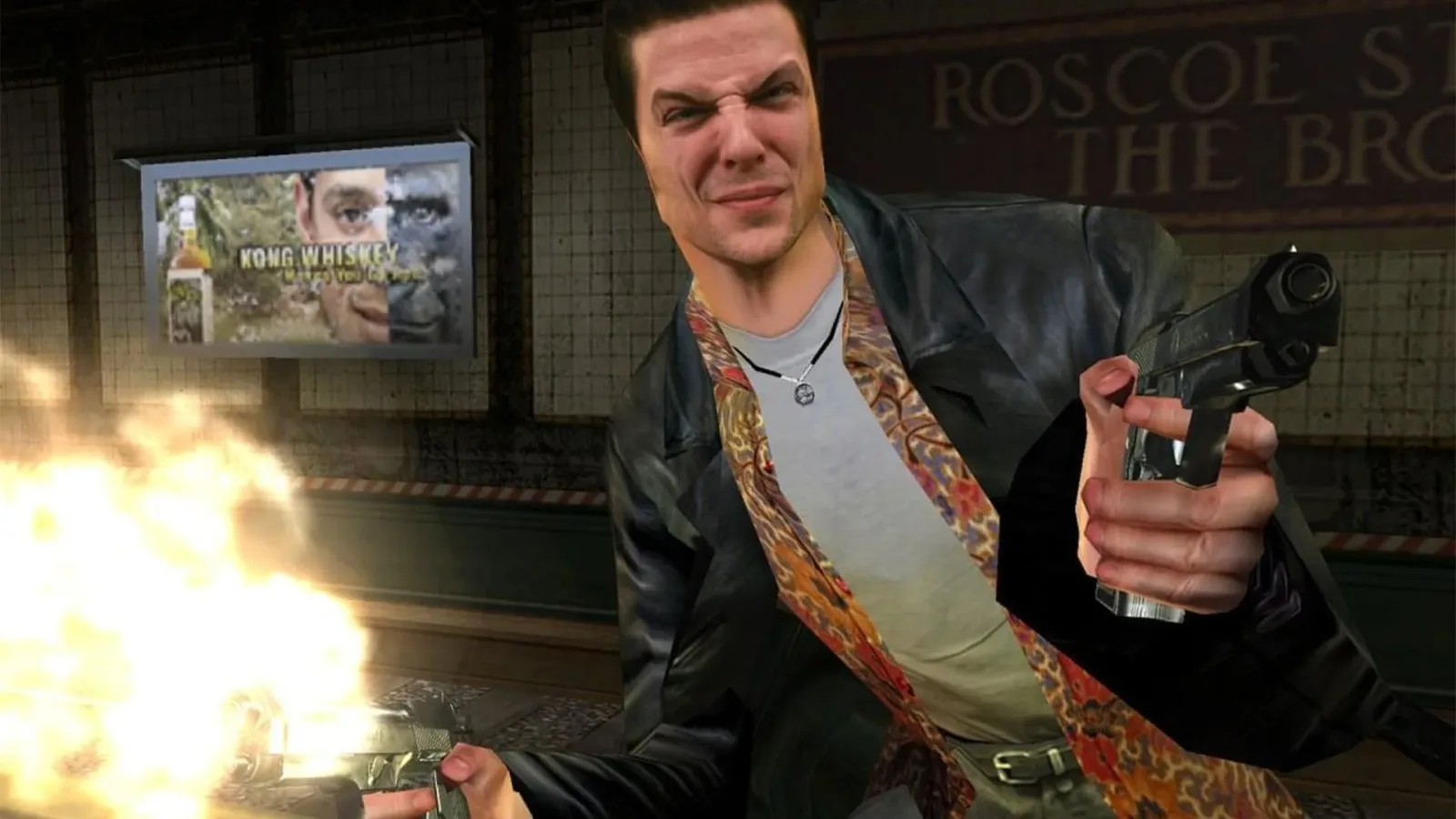
Remedy Entertainment's work on the Max Payne 1 & 2 remakes continues with a notable vote of confidence from the studio's leadership. CEO Jean-Charles Gaudechon has spoken warmly about the team's collaboration with Rockstar Games, describing the relationship as respectful, constructive, and unusually positive for a major game-development partnership.
The remake project brings Remedy back to the noir action series that helped establish the Finnish developer as a major name in the industry. Rockstar is involved as the project's publisher and financier, while Remedy is developing the modern retellings of the first two Max Payne games. Although a launch window has not been announced, Gaudechon's comments suggest that the arrangement between the companies remains on solid ground as production moves forward.
"Honestly, it's been great," Gaudechon said when discussing the collaboration. He attributed that experience to Rockstar being "super respectful" of Remedy, later calling the company an "awesome partner."
A reunion built on Max Payne history
The partnership is not simply a new business arrangement. Remedy and Rockstar share a history that stretches back to the original era of Max Payne. Remedy created the first game, which introduced detective Max Payne, its hard-boiled narration, graphic-novel presentation, and slow-motion "bullet time" gunfights to players in 2001.
For useful background on this topic, read Edenfall: Legacy of the First Wardens Brings Shapeshifting Adventure to Steam on December 8, 2026.
Rockstar was involved with ports of the first Max Payne and went on to publish Max Payne 2: The Fall of Max Payne. That shared history gives the remake effort a different foundation from the typical outside licensing deal. The companies are returning to a property they both helped bring to prominence, albeit with very different roles and scales than they had during the series' early years.
It also makes the pairing especially meaningful for fans who have followed Remedy's evolution. The studio has gone from the original Max Payne through projects including Alan Wake, Quantum Break, and Control, building a reputation for atmospheric action games and highly stylized storytelling. Revisiting Max Payne gives Remedy an opportunity to apply its current experience and technology to two games that were central to its early identity.
Rockstar, meanwhile, remains one of the industry's biggest publishers and developers. Its own output has increasingly centered on giant releases from the Grand Theft Auto and Red Dead Redemption franchises. Supporting a remake of Max Payne 1 and 2 gives Rockstar a chance to revisit another important part of its catalog without shifting the project away from the original creator.
What is known about the remake project
Remedy and Rockstar announced the Max Payne remake initiative in 2022. Rather than treating the first and second games as unrelated releases, Remedy is developing them as a single new project. The stated plan has been to rebuild both titles with Remedy's Northlight engine, the technology associated with the studio's more recent games.
That approach sets expectations beyond a straightforward remaster. The original Max Payne games have distinctive mechanics, environments, voice performances, and storytelling structures that reflect their time, but they were designed around hardware and production methods from more than two decades ago. A full remake can potentially modernize presentation and gameplay systems while confronting the difficult question at the center of every revival: which older qualities must remain untouched?
For Max Payne in particular, style is likely to matter as much as technical improvement. The first two games are remembered for their bleak urban mood, comic-panel storytelling, dramatic internal monologue, and bullet-time combat. Updating models, animation, lighting, controls, and environments may be expected in a contemporary release, yet the series' identity is tied closely to its deliberately pulpy, surreal noir voice.
Neither Remedy nor Rockstar has announced a release date or release window for the remakes. Specific target platforms have also not been confirmed. As a result, there is still no official answer on when players will see the project in action, how closely it will follow the originals, or what new features may be introduced.
Respect matters in a high-profile remake
Gaudechon's emphasis on respect is significant because remake development can involve competing priorities. A publisher has commercial goals, franchise expectations, and a responsibility to manage a recognizable brand. The developer must make creative decisions about tone, systems, and the degree of change appropriate for a beloved older game. Those pressures can become more complicated when a series has passed through multiple developers and publishers over its lifetime.
In this case, Remedy's position as the original creator gives it a particularly important perspective. The studio is not being asked to reinterpret a series with which it has no prior connection; it is returning to work that helped define its creative reputation. Rockstar's financial and publishing involvement, combined with Remedy's development leadership, appears to be functioning well from the CEO's point of view.
That does not reveal the day-to-day decisions behind the project, nor does it guarantee any particular design direction. Still, it is a reassuring signal for players concerned that Max Payne's return could lose the qualities that made it distinctive. The comments indicate that Remedy feels supported rather than constrained in its work with the franchise's current publisher.
Remedy's busy slate and Rockstar's enormous year
The timing of the comments also comes during a busy period for both companies. Remedy has continued expanding its wider body of work following Alan Wake 2, while Control: Resonant is no longer occupying the same place in the studio's active slate. That could allow more attention and resources to move toward Max Payne as the remake project progresses, though Remedy has not outlined a detailed allocation plan.
For Rockstar, the Max Payne remakes arrive alongside the enormous attention surrounding Grand Theft Auto 6. The new Grand Theft Auto has been described as the biggest launch in PlayStation history, with Sony reporting more than 39 million unique players on PlayStation 5. Against that scale, Max Payne is a much different kind of project: a return to a focused, linear action series rather than another sprawling open-world event.
That contrast could ultimately be part of the remakes' appeal. Max Payne's earlier games were defined by momentum and atmosphere. They told concentrated stories and used their central combat mechanic to give every encounter a cinematic edge. In a market crowded with massive games, a polished remake of that tightly structured style could offer something notably different from Rockstar's flagship releases.
Patience remains necessary
Fans should nevertheless be cautious about reading too much into positive partnership comments. Good relations between companies are encouraging, but they are not a substitute for footage, platform details, a release window, or a clear look at the redesigned games. The remakes have been in development since around 2022, and modernizing two interconnected action games is a substantial undertaking.
There are also major expectations surrounding every aspect of Max Payne's return. Players will be watching for how bullet time feels, whether the narrative atmosphere survives the transition to a new engine, and how Remedy handles the visual language that made the original games memorable. The creative challenge is not merely to make the games look newer; it is to make them feel like Max Payne while meeting modern standards.
For now, Gaudechon's remarks provide one of the clearest public indications that Remedy is happy with Rockstar's role in the process. The two companies' shared past makes the collaboration a natural fit, and the CEO's praise suggests that their reunion is proceeding with trust intact. Until Remedy and Rockstar are ready to reveal more, the Max Payne 1 & 2 remakes remain one of the most intriguing unanswered projects in the studios' respective lineups.
Community
Discussion
Start the conversation.
No comments have been posted yet.