

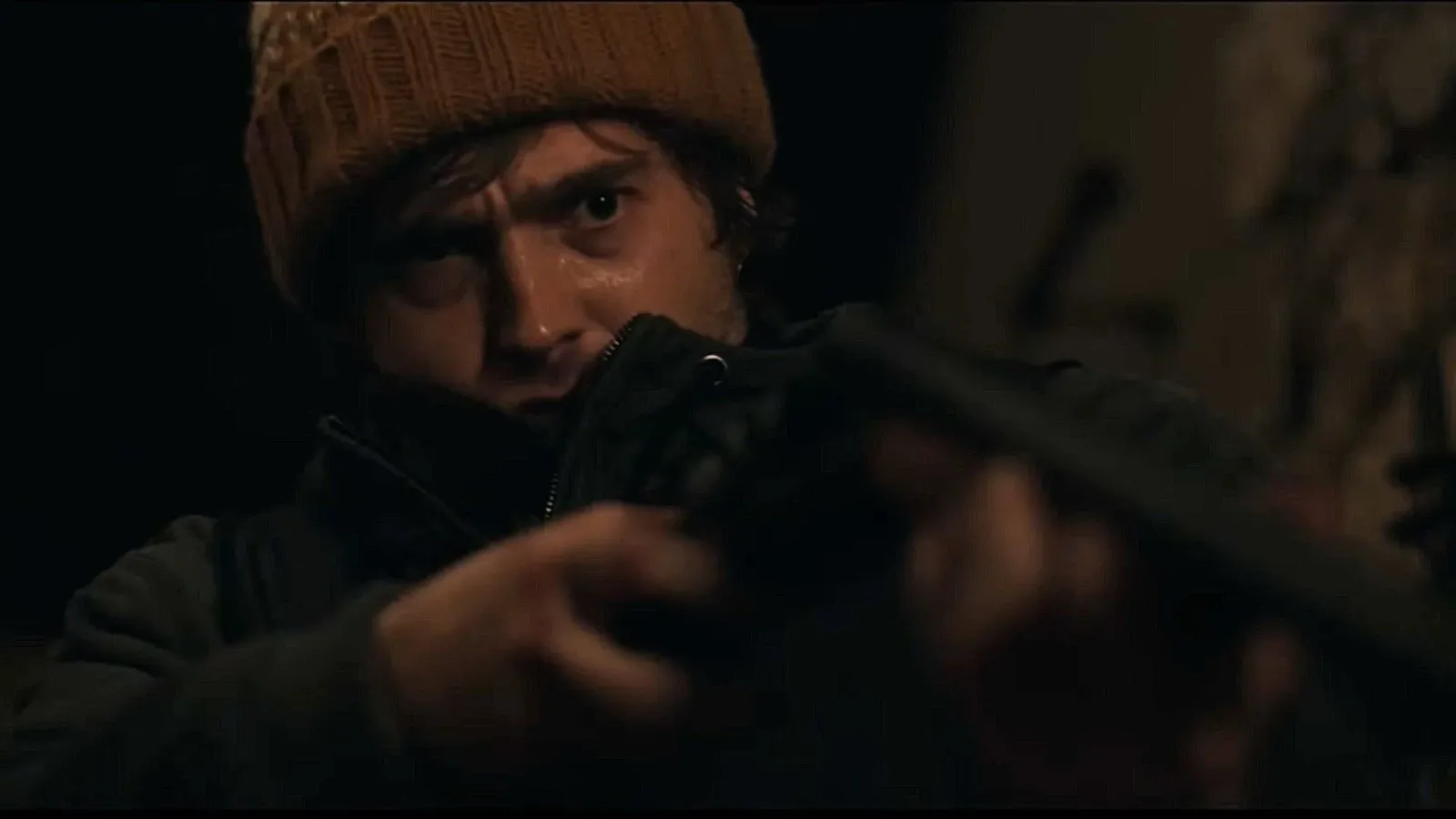
Zach Cregger's upcoming Resident Evil movie is aiming to make one of the series' most familiar survival-horror mechanics matter in a new medium: the number of bullets left in the protagonist's weapon.
During a live Resident Evil Reddit AMA, Cregger explained that the resource-management tension associated with Capcom's games was a central priority for his adaptation. The director said viewers will be able to track how much ammunition Austin Abrams' character, Bryan, has available. More importantly, he wants a missed shot to carry real emotional weight for the audience.
"I love the resource management aspect of the games, and it was really important to me to bring that to the movie," Cregger said. "You will know how many bullets are in his gun. YOU will care when he misses a shot."
That is an ambitious promise for a franchise adaptation. In a game, ammunition totals are plainly visible in an inventory screen or heads-up display, and players directly feel the consequences of spending too freely. A missed handgun round can turn a manageable encounter into a desperate escape, especially when enemies are closing in and the nearest safe room feels far away. Translating that sensation to a theatrical feature means the film will need to communicate Bryan's options, limitations, and danger with enough clarity that viewers can do the mental math alongside him.
For useful background on this topic, read Anime Fighting Simulator Codes for September 2026: Active Shards, Boosts and Tokens.
Cregger also indicated that bullets will not be the only survival metric audiences are expected to monitor. He said he wants viewers to remain "keenly aware" of Bryan's health as the character moves through the story. That suggests the film's approach to danger may emphasize accumulating damage and dwindling capacity rather than treating every action sequence as a clean reset before the next scare.
A survival-horror rulebook for the big screen
Resource scarcity is one of the defining features that separates Resident Evil from a more straightforward zombie action story. The games often give players weapons capable of stopping threats, but they rarely provide enough ammunition to eliminate every enemy without thought. Healing items create similar decisions. Using one at the wrong time can leave a player vulnerable later, while holding onto it for too long can be equally disastrous.
That push and pull is fundamental to Resident Evil's tension. Players are constantly weighing whether to fight, flee, conserve supplies, search another room, or risk passing through an area that may no longer be safe. Cregger's comments indicate that his movie does not simply want to borrow familiar creatures and locations; it wants to recreate the pressure created by those gameplay decisions.
For Bryan, a limited number of rounds could turn a single encounter into a running problem rather than a momentary obstacle. If viewers understand that he has only a few shots remaining, the stakes of a creature appearing in a corridor change immediately. If he misses, the loss is not abstract. It becomes a visible reduction in his chances of making it through whatever comes next.
The same principle could apply to health. Resident Evil protagonists are frequently battered by enemies, traps, and environmental hazards, yet their condition remains an important part of the experience because the player knows how close they are to danger. By keeping Bryan's injuries and stamina in the audience's mind, the film may frame survival as something that becomes harder over time.
That does not necessarily mean the movie will use a literal game-style heads-up display, inventory menu, or health bar. Cregger's remarks focus on audience awareness rather than a specific visual device. The exact filmmaking technique remains unclear, but the stated goal is direct: viewers should understand Bryan's limited resources well enough to worry about every wasted round and every new wound.
A new lead instead of a direct game retelling
The film is not adapting one particular Resident Evil game story, and it is not centered on longtime series figure Leon Kennedy. Instead, Abrams plays Bryan, a medical courier whose workday takes him toward Raccoon City General Hospital in the middle of the zombie apocalypse. His assignment is to deliver a package, a premise that immediately places an ordinary job inside an extraordinary crisis.
Bryan's role as a courier is especially compatible with the resource-management idea Cregger described. He is not introduced as a special agent with a large arsenal, extensive military training, or a guaranteed route out of the disaster zone. A delivery that might once have been routine becomes a survival mission as Raccoon City collapses around him. The character's practical objective also gives the story a clear forward drive: he needs to get somewhere, and the shrinking amount of ammunition and deteriorating health can make that journey increasingly difficult.
The setting places the movie during the events of Resident Evil 2, a period closely associated with Raccoon City's outbreak and the franchise's shift from isolated mansion horror to a citywide catastrophe. Raccoon City General Hospital offers a location naturally suited to Resident Evil's atmosphere: tight interiors, uncertain corridors, medical spaces that can become threatening, and a setting where an infection disaster has especially grim implications.
While the film is connected to the Resident Evil 2 era, Cregger has also pointed to Resident Evil 4 and Resident Evil 7 as inspirations, though in different ways. That combination leaves room for a movie that draws from several corners of the series without recreating a single campaign beat for beat.
Why the game inspirations matter
Resident Evil 2 is an obvious touchstone for a story in Raccoon City during the outbreak. Its survival-horror pacing, police-station exploration, and emphasis on vulnerable characters navigating an increasingly hostile urban disaster have made it one of the franchise's defining entries. Even without following Leon, a movie set in that timeframe can use the same sense of panic: systems have failed, escape routes are uncertain, and every building may contain a threat.
Resident Evil 4 is a different kind of reference point. It is widely known for its more aggressive tempo, carefully staged confrontations, and moments where positioning and ammunition management are inseparable. It still asks players to value their resources, but it often does so while applying more immediate pressure. The mention of Resident Evil 4 could signal an influence on the movie's escalation or its handling of encounters, rather than a claim that Bryan will repeat Leon's mission from that game.
Resident Evil 7, meanwhile, brought the series back toward close-quarters unease and a more intimate first-person survival-horror perspective. Its influence could be especially relevant to Cregger's wish to put viewers close to Bryan's physical condition and limited inventory. The film's exact visual language has not been detailed, but the focus on making an audience feel a character's remaining bullets and health fits the kind of claustrophobic, personal tension associated with Resident Evil 7.
Together, those reference points suggest a project interested in the series' mechanics and atmosphere rather than its continuity alone. The important question is not just which monster appears or which familiar name is mentioned. It is whether the movie can make a dark hallway, an unopened door, and a nearly empty firearm feel as dangerous as they do when a player is holding the controller.
The challenge of making viewers feel the missed shot
Movies and games create suspense differently. A player feels responsibility for a missed shot because they pulled the trigger. A film viewer does not have that agency, so Cregger's approach will depend on creating a strong understanding of Bryan's circumstances before the crisis peaks. The audience needs to know what he has, what he has already lost, and why another mistake could be catastrophic.
That could make the film's action more selective than a conventional outbreak blockbuster. If ammunition is truly valuable, then extended scenes of effortless gunfire would undercut the premise. The most meaningful confrontations may be the ones in which Bryan has to choose whether firing is worth it at all. A threat he cannot safely eliminate may be more frightening than one dispatched quickly.
It also creates opportunities for suspense outside of combat. If Bryan is injured, isolated, and short on rounds, even basic tasks can gain urgency. Searching for an exit, crossing a room, helping another survivor, or deciding whether to investigate a noise can become difficult choices. Resident Evil has long excelled when danger is created not only by enemies, but by uncertainty and imperfect information.
Cregger's status as a self-described Resident Evil super fan is apparent in the specificity of his comments. Rather than speaking only in broad terms about honoring the games, he has singled out the mundane but essential systems that shape the player experience. The fear of discovering an enemy when only two bullets remain is not a piece of lore; it is a feeling. His stated ambition is to make that feeling work in a theater.
Resident Evil heads to theaters September 18
The new Resident Evil movie arrives in theaters on September 18. Abrams' Bryan will carry the story through Raccoon City's outbreak as he attempts to complete his delivery to Raccoon City General Hospital, facing the kind of escalating danger that has defined the game series for decades.
There are still many details to be revealed about the adaptation, including exactly how its ammunition and health tracking will be communicated on screen. But Cregger has established a clear creative target. This is intended to be a Resident Evil movie where survival is measured, supplies are precious, and one inaccurate shot can make the difference between escaping the nightmare and being swallowed by it.
Community
Discussion
Start the conversation.
No comments have been posted yet.