

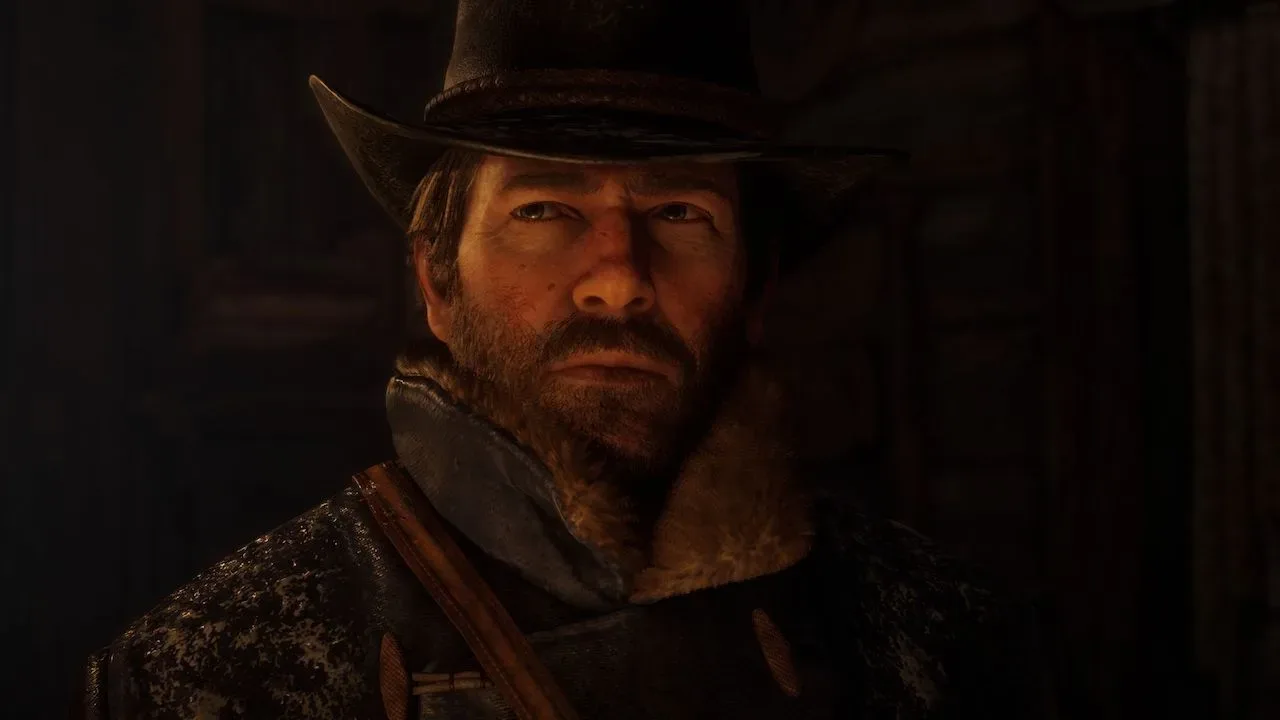
Arthur Morgan's decline is one of the most difficult elements of Red Dead Redemption 2 to sit through. Rockstar's sprawling western asks players to spend dozens of hours with a hardened outlaw who gradually reveals a more compassionate side, only to place his future under the shadow of tuberculosis. The change is communicated through writing, animation, mission design, and an increasingly strained vocal performance from actor Roger Clark.
Clark has now shed more light on why parts of that performance can sound so uncomfortable and immediate. During an interview with YouTuber and games journalist Cade Onder, the actor explained that some of Arthur's illness was informed by a very practical reality: the enormous production lasted five years, and Clark caught plenty of colds during that time. Rather than simply waiting for those illnesses to pass, he sometimes saw an opportunity to record Arthur's more sickly dialogue while his voice naturally carried the right texture.
The result was not a case of an actor forcing every rough breath or hacking cough through sheer vocal strain. Clark said there was "a lot of data" captured during the production that felt genuinely authentic, because the recording sessions occasionally coincided with him being ill. It is a revealing detail about one of gaming's most celebrated performances, and it helps explain why Arthur's condition can feel less like a conventional dramatic effect and more like an inescapable physical burden.
A performance shaped over five years
Major games often have long recording schedules, especially when a project contains the scale of Red Dead Redemption 2. Arthur is present throughout an extensive story, speaks in camp conversations, cinematic missions, optional encounters, ambient travel dialogue, and countless variations that players may never hear in a single playthrough. That kind of production creates a huge volume of material to record, revise, and revisit.
For useful background on this topic, read Tim Cain Says Game Development Has Never Been a Stable Career.
For Clark, the five-year span also meant that the most demanding coughing scenes did not need to be handled all at once. He said those sequences were not as punishing as people might expect because they were distributed over the full production. When a particularly intense coughing moment was planned, the team would generally place it at the end of a recording day. That approach gave the actor room to perform the more abrasive material without worrying as much about preserving his voice for a long list of additional lines.
It is a sensible studio practice, but it also highlights the care behind the performance. Repeatedly manufacturing severe coughs can be difficult on an actor's throat. Saving those moments for late in the day allowed Clark to prioritize the scene without making the rest of the session harder to complete. More importantly, it reflects an awareness that Arthur's worsening condition had to feel consistent across an enormous amount of recorded dialogue.
That consistency matters because Arthur's illness is not confined to a small number of cutscenes. Players hear it while riding between locations, speaking to fellow gang members, taking part in story missions, and moving through the world. His breathing, pauses, and coughs become part of the game's atmosphere. They are reminders that the character cannot simply outrun what is happening to him, even in a game built around freedom, movement, and escape.
Using an unfortunate real-world advantage
Clark's account suggests that the production found a use for an inconvenient circumstance. Over five years, colds were inevitable. When he was sick, however, Clark would let the team know that he could record material suited to Arthur's declining health. The actor described effectively volunteering himself for those sessions when the symptoms gave his voice a naturally congested, phlegmy quality.
There is a clear distinction between a common cold and tuberculosis, and Clark was not suggesting that his own illness matched Arthur's diagnosis. What the real colds could provide was vocal detail: a raw edge in the throat, impaired breathing, congestion, fatigue, and coughs that do not need to be entirely recreated through performance technique. Those qualities can be difficult to imitate for hours at a time without sounding exaggerated or damaging the voice.
In a medium where motion-capture and voice performances are frequently separated from the polished final result, small realities like this can make a major difference. A real cough often has irregular timing and an imperfect quality that is hard to choreograph. It interrupts speech rather than neatly punctuating it. It can affect rhythm, volume, and breath support. Those imperfections are precisely what make illness sound believable.
Clark explained that genuine material was captured over the lengthy recording process, with colds providing opportunities to record dialogue that benefited from Arthur sounding physically unwell.
The detail may be unpleasant to think about, especially for players who remember how vividly Arthur's coughs cut through quiet camp scenes. Yet it also demonstrates Clark's commitment to finding truthful textures inside a fictional role. He was not simply delivering dialogue about a sick character; he was looking for moments when his own voice could lend the character a more natural sense of discomfort.
Why Arthur's illness hits so hard
Arthur contracts tuberculosis near the beginning of Red Dead Redemption 2, turning the story into something more mournful than a standard outlaw adventure. He begins as an enforcer for Dutch van der Linde's gang, a man capable of intimidation and violence, but he is also someone whose choices can reveal loyalty, regret, generosity, and a desire to do better. His diagnosis reframes the journey around consequence and time.
The writing gives Arthur plenty to say about those concerns, but Roger Clark's voice makes them difficult to ignore. As the illness progresses, the performance does not rely on one giant emotional switch. Instead, it uses accumulating signs: harsher coughs, tired pauses, a worn-down delivery, and moments where speaking appears to take more effort than it once did. The effect is especially potent because players may spend long stretches simply riding, hunting, exploring, or listening to incidental dialogue. Arthur's voice remains close by even when the main plot is not moving forward.
That gradual approach makes the illness feel embedded in the character rather than added on for a climactic twist. Arthur is still capable, still dangerous, and still recognizably himself. But his body is steadily imposing limits. The authenticity Clark brought to the smaller vocal moments supports that larger narrative idea: there is no clean pause button on deterioration.
It also explains why the performance has continued to resonate with players years after release. Audiences can recognize when a game's dialogue is technically impressive, but a performance becomes memorable when it gives a character a sense of physical presence. Arthur's coughs are not just audio cues telling the player that the plot is serious. They are intrusive, uncomfortable, and human.
A reminder of the craft behind game voice acting
Clark's comments offer a useful reminder that voice acting in games is often built from an enormous number of individual decisions. Players experience Arthur Morgan as one complete person, but the performance was assembled across years of sessions, varying health conditions, changing story contexts, and an immense amount of dialogue. The final game makes that process invisible, which is part of why it works so well.
There is also an element of restraint in the recording strategy. The team did not apparently demand that Clark spend an entire day imitating severe illness. The toughest coughing scenes were saved for the end of sessions, while naturally sick days could be used to capture material that benefited from the added roughness in his voice. It is a practical production solution that also served the artistic goal.
For players returning to Red Dead Redemption 2 on PC, PlayStation, or Xbox, the knowledge may make Arthur's sickest scenes feel even more visceral. Some of the audible distress behind the performance was shaped by the actor's real colds, captured during a marathon five-year effort. It is not the whole explanation for why Arthur Morgan feels real, but it is one unusually vivid piece of the puzzle.
And while it may make those coughing fits a little harder to hear without wincing, it underlines the dedication involved in bringing Arthur's final journey to life. Clark turned an unavoidable part of a long recording process into material that strengthened one of the medium's most affecting character performances.
Community
Discussion
Start the conversation.
No comments have been posted yet.