

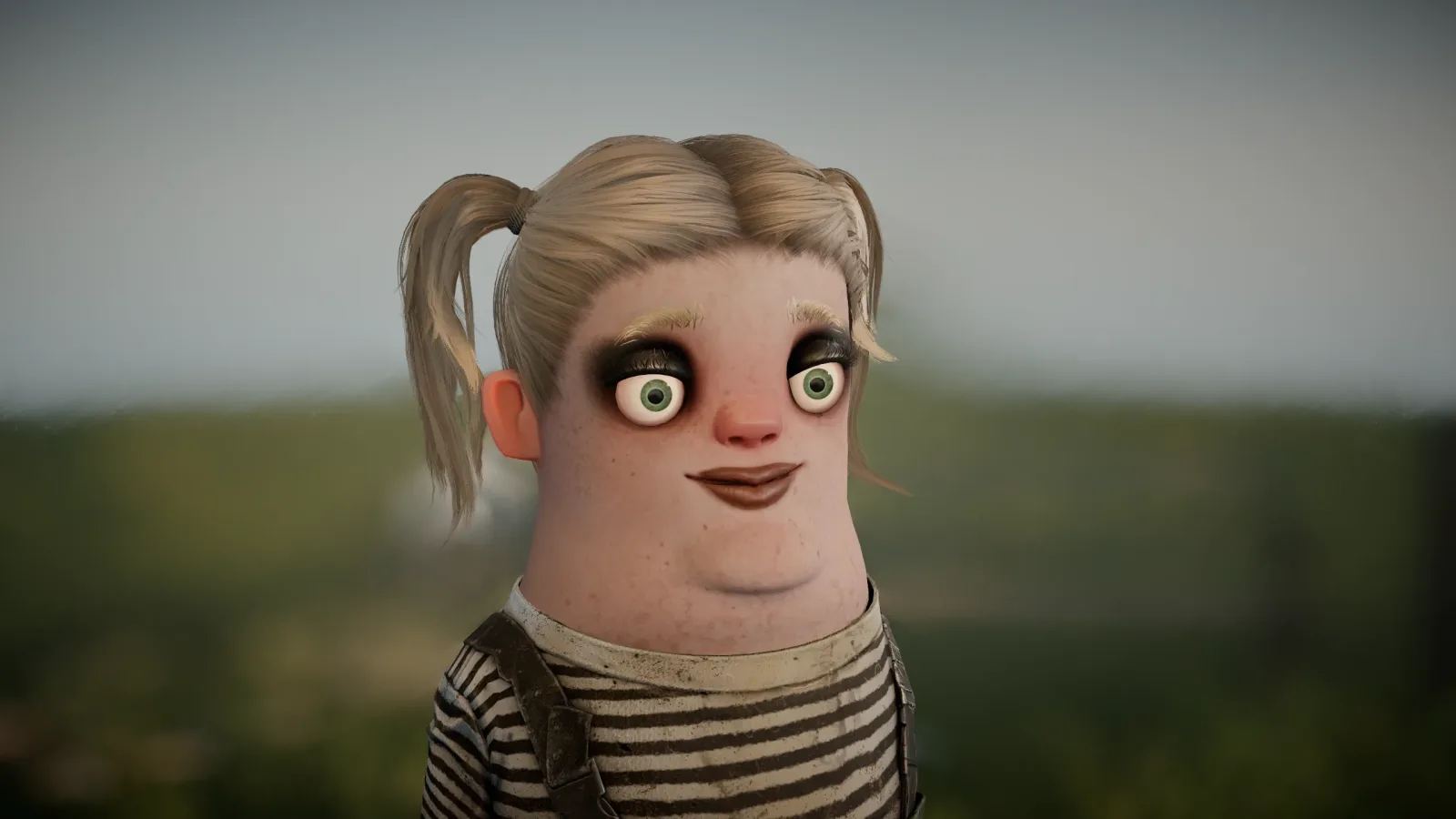
S&box creator Garry Newman has delivered an unusually blunt assessment of the sandbox platform's early months. In comments addressing criticism of the game, Newman said both the initial launch and a subsequent free weekend had gone badly, acknowledging the damage done to player sentiment and to the relationship between S&box and the community surrounding Garry's Mod.
The central issue, in Newman's view, is not simply a shortage of things to play. It is the opposite: S&box has too many pieces of content presented too indiscriminately. The platform may already contain worthwhile games and experiments, but Newman believes they are difficult to locate when surrounded by a much larger selection of unfinished projects, lightweight clickers, and other low-value creations. That problem has become especially visible as generative AI-made material adds further noise to the browsing experience.
Newman's response offers a clear picture of where the PC platform stands after its troubled start: the team sees the issues, accepts responsibility for them, and intends to change the way players discover community-made games. It also signals a substantial visual shift, with the peculiar sausage-like characters associated with S&box set to be de-emphasized in favor of human characters.
Too much content, not enough curation
Platforms built around user creation have always faced a difficult balancing act. Their appeal comes from openness: players can build unusual modes, prototypes, social spaces, toys, and full games without waiting for a conventional studio pipeline. But openness also means that quality varies wildly. A player arriving for the first time needs a reliable route to the best material, otherwise the quantity itself becomes a barrier.
For useful background on this topic, read Pet Store Tycoon Codes for October 2026: Free Deluxe Pet Packs and Cash.
Newman directly identified that challenge in his comments. "There being too much content is a problem," he said, arguing that a platform is not helped by having a handful of strong games if those games are effectively lost among hundreds of less developed experiences. In other words, the issue is not merely that S&box needs more standout projects. It needs better ways to make its standouts visible.
That distinction matters for a game whose identity is tied to creation. Removing the ability to experiment would run counter to the entire idea behind S&box. Players need room to make small tests, strange jokes, early prototypes, and niche projects. Yet a public storefront or browser that puts those projects on broadly equal footing with polished work can make the platform seem unfinished, even if there is excellent content somewhere inside it.
The stated solution is a move toward a Steam Workshop-style model for games. Newman contrasted that with the current approach of showing users a very large list of games and asking them to choose. A Workshop-like system could potentially give creators clearer channels for publishing and subscribing to experiences, while allowing players to find recommendations, follow creators, and build libraries around the kinds of games they actually want.
Exactly how that revised system will work has not been detailed, but the direction is significant. It suggests that S&box is treating discovery as a core product problem rather than assuming an expanding catalog will solve everything on its own. For a creation platform, the most valuable feature may be less about adding another tool and more about ensuring players can quickly reach a reason to use those tools.
A frank response to launch criticism
Newman did not try to soften his view of the rollout. "The launch was shit. The free weekend was shit," he wrote. The team had hoped to launch quietly and develop the platform without attracting overwhelming scrutiny immediately, but that did not happen. Instead, S&box arrived under considerable attention, accumulated negative Steam feedback, and struggled to establish a positive first impression.
That is especially difficult for a project so often viewed through the lens of Garry's Mod. Garry's Mod is one of PC gaming's most enduring social sandboxes, a game remembered for its physics antics, multiplayer modes, machinima culture, role-playing servers, modding, and the sheer unpredictability of player-driven sessions. A successor in the same creative orbit is inevitably going to be compared not only with Garry's Mod as it exists today, but with years of accumulated memories and an enormous back catalog of community material.
Newman acknowledged that the early response has "burnt bridges," angered players, created a negative perception of S&box, and turned parts of the Garry's Mod community against the newer project. He also said the team could not simply move past those mistakes, using strong language to accept that it had mishandled the situation.
That admission does not automatically repair the damage, but it is more direct than the standard promise that feedback is being monitored. The comments recognize a problem many live-service and creator-focused games confront: first impressions become part of the product. A free weekend is supposed to be an invitation, a chance for hesitant players to test the experience and perhaps recommend it to friends. If newcomers instead encounter confusing discovery tools or an unconvincing selection of content, the promotion can reinforce criticism rather than counter it.
For S&box, the next steps will be judged less by the frankness of the apology than by whether returning players can notice practical changes. Better surfacing for quality games, clearer signals of what is complete or recommended, and a browser that does not overwhelm new users would all address the concerns Newman raised.
The end of the sausage characters?
Content discovery is not the only point of friction. S&box's character designs have also attracted criticism. The stylized figures have been described by players as sausage-like, and some have compared their odd, fleshy look to the kind of deliberately uncomfortable aesthetic associated with Mr. Meaty. For some players, that visual identity has been memorable; for others, it has become a distraction from the platform's tools and potential.
Newman defended the original creative reasoning behind the characters, saying he still liked their look and that they gave S&box an identity. His argument is that an unknown independent studio might have been given more latitude for a strange mascot design, whereas S&box is being measured against expectations associated with Half-Life 2 and the broader legacy around Source-engine sandbox games.
Still, he indicated that the team is prepared to move on. Newman said he had wanted to keep developing the characters until they reached a version more people would like, but he now considers that effort finished. The plan is to remove them from the foreground and push the human characters forward instead.
It is a notable concession because mascot and character design can become deeply tied to a game's public image. The original figures were meant to make S&box recognizable, but recognizability is only useful if it helps players connect with the game. When the visual hook becomes a frequent source of ridicule or alienation, retaining it simply because it is distinct can become counterproductive.
Rebuilding trust will take more than one update
There is a difficult but potentially productive message in Newman's comments. S&box does not appear to be treating its launch problems as a misunderstanding that players will eventually get over. The team's stated plans acknowledge that the platform's presentation, content ecosystem, and visual identity all need attention.
At the same time, the challenge remains large. Community-driven games are not fixed products that can be transformed by changing a handful of levels. Their health depends on a cycle: creators need an audience, players need reasons to browse, strong projects need visibility, and newcomers need confidence that their time will be rewarded. If any part of that cycle breaks down, the platform can look empty even when it is technically full of content.
S&box's immediate task is therefore one of curation and communication. The team needs to demonstrate that high-quality creations will not be buried beneath disposable material, and that a player opening the game for the first time can find something compelling without sorting through hundreds of options. A better publishing and discovery model could help create that path, but it will need to be implemented in a way that preserves the freedom creators expect.
Newman described the situation as deflating, demoralizing, and embarrassing. Those are severe words from the creator of a game with such a substantial legacy. Yet they also establish a standard for what comes next. S&box now has to turn its diagnosis into a visible recovery: a clearer front door for players, stronger support for worthwhile community games, and a visual direction that better fits the audience it wants to win over.
For now, the most important promise is not that S&box will contain more things to play. It is that players may eventually have a far better chance of finding the things worth playing.
Community
Discussion
Start the conversation.
No comments have been posted yet.