

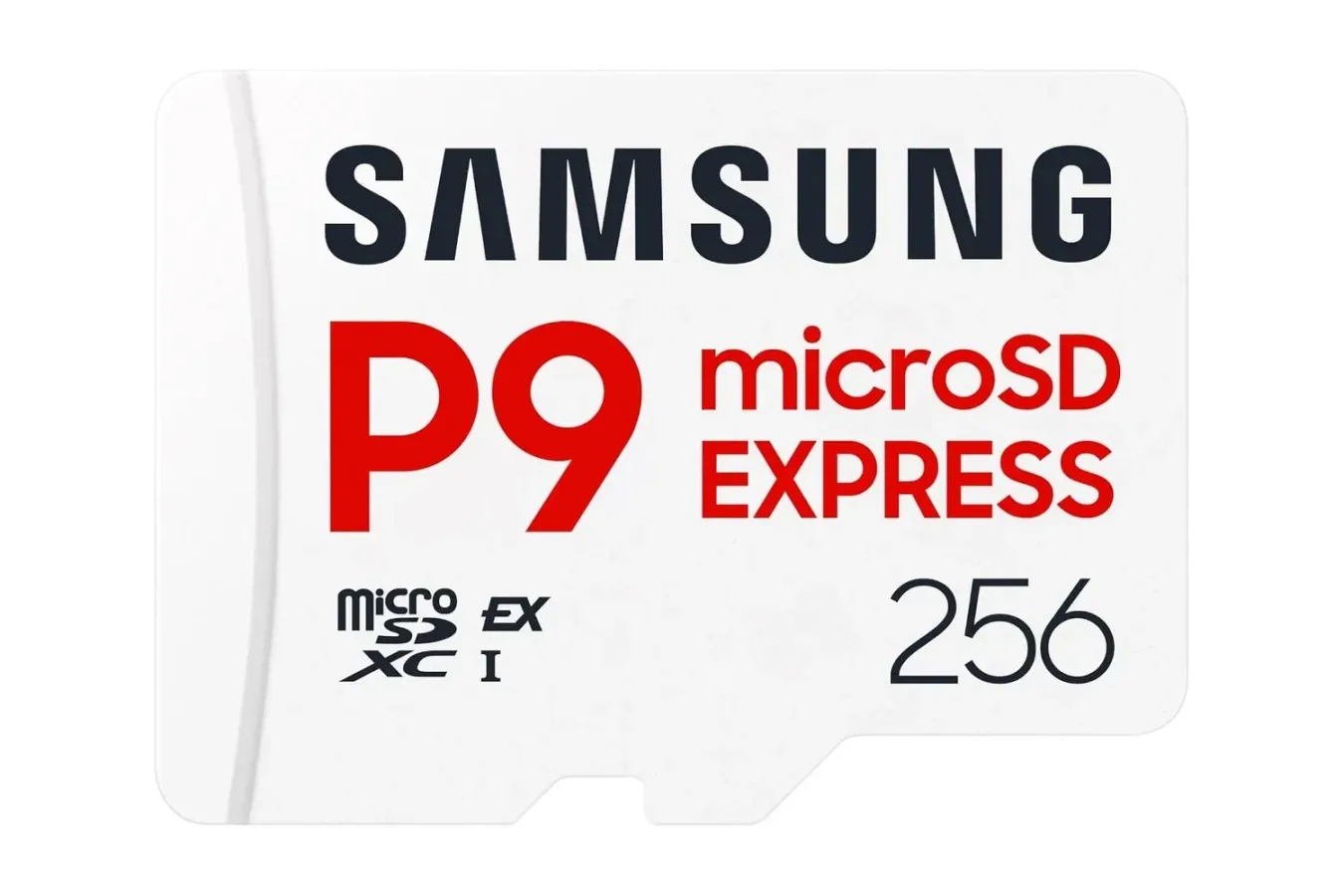
Nintendo Switch 2 owners looking to expand their console storage without paying the full premium for a microSD Express card have a notable option to consider. Samsung's P9 Express microSDXC 256GB card is currently listed for $45, reduced from $80. That is a $35 reduction, or roughly 44% off the stated regular price.
The discount matters because expandable storage is becoming a more important part of managing a digital game library. Modern games, downloadable content, patches, and system updates can steadily reduce the space available on a console. A 256GB card does not eliminate every storage decision for players with especially large collections, but it can create considerably more breathing room for keeping several games installed at once.
Samsung positions the P9 Express as a card designed for Nintendo Switch 2, using the newer microSD Express standard rather than treating storage expansion as a simple capacity upgrade. Its headline specification is sequential read performance of up to 800MB per second. The company also lists random read performance of up to 65,000 IOPS and random write performance of up to 52,000 IOPS.
What the $45 deal includes
This particular model provides 256GB of capacity in the standard microSD form factor, measuring 15mm by 11mm by 1mm. It is intended to fit directly into the Switch 2's card slot, giving players room for downloaded titles, game updates, additional content, screenshots, and captured video.
For useful background on this topic, read Walmart's Early Black Friday Pokémon TCG Discounts Bring Select Packs Closer to Market Value.
At its discounted $45 price, the card is aimed at buyers who want to add capacity while retaining the performance benefits associated with the Express specification. Storage pricing can change quickly, especially during major shopping periods, so the listed price and availability may not remain in place indefinitely.
The basic appeal is straightforward: less time deciding which game needs to be removed to make room for another download. For players who move between multiplayer games, long role-playing games, smaller indie releases, and frequently updated titles, having more local storage can make the console easier to use day to day.
It can also be useful for households sharing one system. A larger installed selection means fewer repeated downloads when different players return to different games. That convenience may be especially welcome for people with limited download speeds or restrictive data arrangements, where reinstalling a large game is more than a minor annoyance.
Why microSD Express speed is important
Capacity is only one part of the equation. The P9 Express uses a PCIe Gen 3.0 x1 interface and supports the NVMe 1.3 specification, technologies more commonly associated with high-speed solid-state storage. Samsung rates the card for sequential reads of up to 800MB/s.
In practical terms, faster storage can help reduce the time spent waiting for data to be read when launching software, loading areas, or moving between installed games. Actual results will depend on the console, the game being played, the type of data being accessed, and the system's own storage behavior. The advertised maximum read speed is a specification rather than a guarantee that every game or task will reach that figure.
Still, microSD Express is a meaningful change from conventional microSD storage when used in hardware designed to take advantage of it. Players buying storage for Switch 2 should pay attention to the standard rather than assuming every microSD card offers identical performance. A standard UHS-I card may still have uses in other electronics, but it is not the same class of product as a microSD Express card built around PCIe and NVMe technology.
The P9 Express is also designed to support quicker downloads and transfers where the rest of the setup can take advantage of its performance. That will not overcome the limits of an internet connection, of course. A slow broadband connection remains the main bottleneck for many downloads. But fast storage can help ensure that the memory card itself is not unnecessarily holding back the process.
A more practical way to manage a digital library
Storage expansion is often most valuable not because it lets someone install an unlimited number of games, but because it reduces routine maintenance. Without enough spare space, players can find themselves deleting a game they may want to revisit, then waiting for it to download again later. Updates make that situation more complicated, since an existing title can grow after its initial installation.
A 256GB expansion card creates a useful middle ground. It is large enough to hold multiple substantial games alongside a wider selection of smaller releases, while typically costing less than higher-capacity Express cards. The exact number of games will vary widely because file sizes differ dramatically. A collection built around compact independent games will fit far more titles than one made up mostly of large-scale releases with extensive downloadable content.
For travel, extra storage can be particularly helpful. Downloading a game ahead of time means it is ready to play without relying on hotel Wi-Fi, mobile data, or a public connection. It also allows players to keep more of their regular rotation available when taking the handheld system away from home.
Captured screenshots and video clips can add to storage demands over time as well. Players who save highlights, share moments with friends, or document progress in lengthy games may appreciate having more room without constantly reviewing old media to clear space.
Thermal monitoring and durability features
Samsung includes Dynamic Thermal Guard in the P9 Express. The feature is intended to monitor the card's temperature and help it maintain steady operation during extended use. Heat management is a relevant consideration for compact, high-speed storage, particularly in a handheld system that may be used for long sessions or carried between different environments.
The card is also described as resistant to water, magnets, and X-rays. Those protections are aimed at the kinds of hazards portable storage may encounter while traveling or being moved among devices. No memory card is invulnerable, and important save data or media should still be handled carefully, but physical resilience adds reassurance for something small enough to be easily misplaced or exposed to everyday wear.
Samsung's Magician software is another part of the package. The company says the software can be used to check the card's health and performance, while also assisting with authenticity verification. That may be more relevant to users who plan to use the card across multiple compatible devices, but it is a useful option for monitoring storage over time.
Compatibility beyond Switch 2
Although the P9 Express is being marketed around Switch 2 storage, Samsung also lists compatibility with devices that have a standard UHS-I microSD slot, including cameras, drones, tablets, and laptops. In those devices, the card can operate at UHS-I speeds of up to 90MB/s.
That backward compatibility gives the card a secondary role beyond gaming. It may be used for photos, 4K video, and general file transfers in compatible hardware. Buyers should keep the distinction in mind: the card's much higher Express-class performance depends on using a device that supports the newer interface. In a conventional UHS-I slot, it will work within the lower speed ceiling of that older standard.
For a Switch 2 owner, the wider compatibility can still be valuable. If the card is later repurposed for a camera, tablet, drone, or laptop, it remains useful rather than becoming a single-purpose accessory. Conversely, someone purchasing it for another device could potentially move it into a Switch 2 in the future, provided their storage needs and system setup make that worthwhile.
Is 256GB the right capacity?
The answer depends on how games are bought and played. Players who primarily purchase physical releases, focus on a few games at a time, or have fast and reliable internet may find 256GB more than sufficient. Players with large all-digital libraries, frequent purchases, or a preference for keeping many games ready to launch may eventually prefer a larger card.
That said, the current $45 price makes this capacity tier more appealing as a balanced upgrade. It adds meaningful space without reaching the higher costs often associated with larger microSD Express options. For someone starting with the Switch 2, it could be a sensible first storage purchase; for an existing owner, it could be an efficient way to reduce the need for regular deletions.
The Samsung P9 Express 256GB microSDXC card's combination of microSD Express performance, up to 800MB/s sequential read speeds, thermal monitoring, and compatibility with standard UHS-I devices gives it a broader feature set than a basic capacity-focused card. At the currently listed $45 price, it is a storage deal worth considering for Switch 2 players who want more of their library installed and ready to play.
Community
Discussion
Start the conversation.
No comments have been posted yet.