

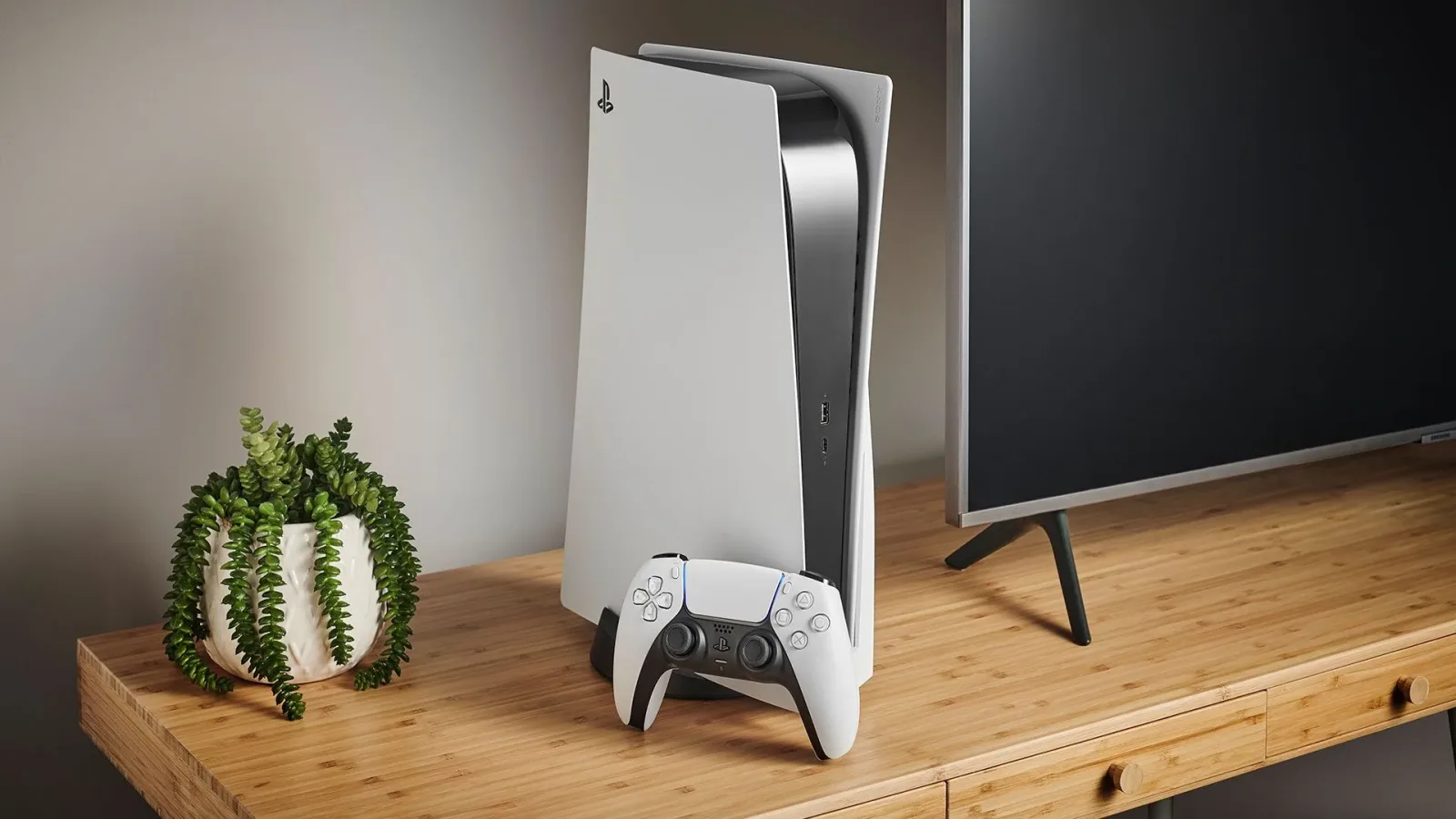
Former PlayStation executive Shawn Layden has renewed his criticism of the industry's movement away from physical game discs, arguing that the issue extends well beyond collector preferences. In remarks made on the The Expansion Pass podcast, Layden questioned what players are actually purchasing when they cannot resell, transfer, or independently retain access to a game bought through a digital storefront.
Layden, who joined Sony in 1987 and later served as chairman of Sony Interactive Entertainment Worldwide Studios before retiring in 2019, acknowledged the obvious appeal of digital distribution. Downloading a game is quick, convenient, and increasingly familiar to a large portion of the console audience. But he believes PlayStation risks underestimating the value of the customers who still buy physical releases--particularly as the company moves toward what has been described as an all-digital direction for its hardware future.
His central concern is not simply whether a plastic case, printed cover, or disc is worth preserving. It is whether consumers can reasonably describe a digital transaction as ownership when the product is controlled by licensing terms, storefront availability, account access, and platform policies.
Convenience Does Not Settle the Ownership Question
Layden's comments do not reject digital games outright. Digital purchases have become a major part of the modern games business, and they solve genuine problems for players. They remove the need to travel to a shop, make preloading possible before launch, reduce shelf space, and allow publishers to keep selling titles without manufacturing and distributing additional discs.
For useful background on this topic, read GTA 6 Narrative Lead Says Jason's Army Past Is Not Meant as a Statement.
Yet Layden stressed that the remaining physical audience should not be treated as an irrelevant minority. He offered a rough illustration in which 80% of customers may download games while 20% buy physical copies, then argued that the latter group remains especially important. These are often highly committed players: people who build libraries, seek special editions, give games as gifts, revisit older releases, and in some cases purchase more than one copy of a title for their collection.
That segment may be smaller than the total digital audience, but it can be disproportionately loyal. For platform holders, loyalty matters in ways that are not always captured by a single transaction. A player who trusts a platform to respect their purchases, preserve their library, and offer choices in how games are bought may be more likely to remain in that ecosystem over many years.
Layden said he does not agree with the decision to abandon discs, while also making clear that he does not have access to Sony's internal financial calculations or the detailed business reasons behind the shift. That qualification is significant. Manufacturing physical products involves costs, retail relationships, inventory risk, shipping, returns, and regional supply concerns. A digital store gives a hardware manufacturer more direct control over distribution and can simplify parts of the commercial process.
Even so, Layden's position is that the financial case does not erase the larger consumer question. If a player cannot sell something, he argued, that player does not truly own it. From there comes the more uncomfortable follow-up: if the customer does not own the game, what exactly are they buying?
Buying a Game Versus Buying Access
For decades, buying a console game generally meant obtaining a tangible item. Players could keep it, lend it to a friend, trade it toward another release, sell it later, or leave it on a shelf for years before returning to it. Physical media did not guarantee flawless preservation--discs can be damaged, consoles can fail, and many modern games still depend heavily on patches and online services--but it gave buyers a greater degree of practical control.
Digital storefronts operate differently. A customer typically receives a license tied to an account and subject to the rules of the platform. In ordinary use, that can feel very similar to ownership: the game appears in a library, can be downloaded again, and can be played whenever the platform and its services permit it. But the legal and practical distinction becomes clearer when a game is delisted, a license expires, an account is lost, or a service changes.
Players also cannot generally resell a digital console game after finishing it. Nor can they lend it as freely as they can a disc. Those limitations are why the wording surrounding digital purchases has become increasingly contentious. Calling something a "purchase" creates an expectation of permanence and control, while the underlying arrangement may be closer to access granted under specific conditions.
"If you can't sell a thing, that means you don't own a thing," Layden said, framing the debate around the difference between possession and access.
That difference may sound technical, but it has major consequences for consumer confidence. A physical-game buyer can make decisions without needing to consider the long-term status of a particular storefront account. A digital-only buyer must place more trust in the platform holder's policies, infrastructure, and willingness to preserve access over time.
For many players, that trade-off is acceptable. They value convenience more than resale rights, and they may have no interest in storing boxes or maintaining a collection. Others see the inability to transfer or sell a purchase as a fundamental loss. Neither position is unusual, which is why removing physical options entirely can become a more consequential decision than merely offering digital purchases alongside discs.
A Reputation Risk for PlayStation
Layden characterized the ownership issue as the more insidious part of the transition away from discs. His concern is not limited to a vocal group of collectors being disappointed. He suggested that consumers naturally imagine a worst-case outcome when they believe their purchases are becoming more restricted, and that anxiety can damage a brand's reputation.
That reaction is understandable in an era when games can disappear from stores, online features can be shut down, and older digital platforms can become difficult to access. Even when a game remains downloadable, players are increasingly aware that access may rely on systems beyond their personal control. The more games become digital-only, the more important those concerns become.
There is also a broader cultural preservation issue. Physical releases have never been a complete solution to preserving video games, especially for titles requiring servers or major post-launch updates. Still, discs can provide an archival starting point and can keep older games circulating in private collections and second-hand markets. A fully digital marketplace places far more responsibility for preservation in the hands of publishers and platform owners.
For PlayStation, the challenge is especially visible because physical games remain meaningful to its identity in many regions. Big boxed releases, premium editions, retail launch displays, and collector-oriented franchises have long been part of the brand's relationship with its audience. Moving away from that model may make operational sense internally, but it also risks sending a message that the preferences of longtime customers no longer carry much weight.
The Next Console Generation Could Intensify the Debate
The conversation around discs is likely to become more heated as the next console generation approaches. Layden has previously expressed skepticism about a discless PlayStation future, noting that consumers have continued to buy physical games. He has also suggested that PlayStation's approach could influence how Xbox and Nintendo handle physical media in the years ahead.
That possibility matters because platform choices rarely exist in isolation. If one major console manufacturer concludes that a digital-only strategy is commercially viable, competitors may feel pressure to follow. Conversely, a rival that continues to support physical games could turn that support into a point of differentiation for players who value ownership, used-game sales, lending, and collecting.
Price will be another essential factor. A new console needs to communicate why players should upgrade, particularly if improvements are seen as incremental rather than transformative. The concern raised around a potential high-cost successor is that consumers may be less willing to accept a premium hardware price if it also removes the flexibility and resale value associated with physical media.
There is no confirmed formula for how the next PlayStation system will ultimately balance digital distribution and discs. Business realities, manufacturing decisions, consumer response, and technical design will all shape that outcome. But Layden's argument highlights why the issue cannot be reduced to a simple question of whether downloads are popular. Digital games clearly are popular. The harder question is whether popularity justifies removing the alternative entirely.
Why Choice Still Matters
The strongest case for preserving physical games may be choice. Digital distribution is useful, and many players prefer it. Physical copies offer benefits that digital licenses do not, including resale, lending, collecting, and a greater sense of personal possession. A platform that supports both allows customers to decide which trade-offs suit them.
Layden's criticism suggests that PlayStation should be cautious about assuming that digital convenience automatically replaces every value attached to a disc. The final sale of a physical game is not just a retail transaction. For some players, it represents independence from a closed digital ecosystem. For others, it is an object worth keeping. And for the industry at large, it remains one of the clearest ways buyers can retain control over the games they pay for.
As consoles continue to evolve, the debate will not disappear. It will likely become a defining consumer issue: whether a game purchase is a durable part of a personal library, or access that lasts only as long as a platform's terms, services, and infrastructure allow it to last.
Community
Discussion
Start the conversation.
No comments have been posted yet.