

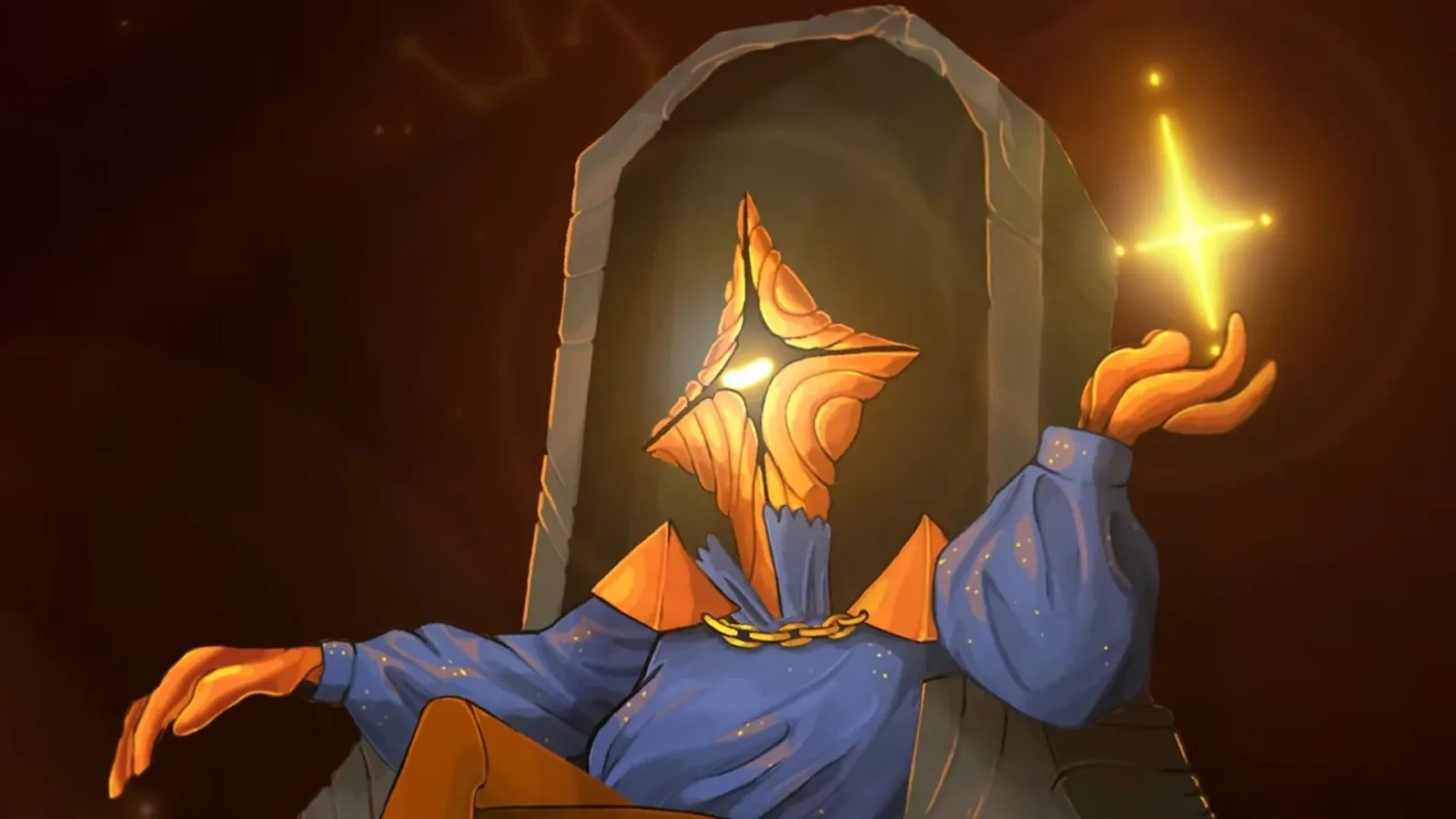
Slay the Spire 2 appears to be turning its early-access run into one of PC gaming's most remarkable engagement stories. Mega Crit's roguelike deckbuilder is estimated to have sold roughly 7.9 million copies through Steam, and the more startling statistic may be the amount of time its audience is spending climbing the Spire.
Rhys Elliott, head of market analysis at Alinea Analytics, estimates that about 1.9 million people have played Slay the Spire 2 for more than 100 hours. Using a player-base figure of approximately 7.8 million, that would mean around 24% of its players have passed the 100-hour threshold. For a game that remains in early access and is currently available on just one platform, it is an unusually powerful demonstration of repeat-play appeal.
The exact sales total should still be treated as an estimate rather than a number formally announced by Mega Crit. SteamDB owner estimates place the game in a broadly similar range, between 6.8 million and 7.8 million owners. Even allowing for the uncertainty inherent to third-party tracking, the available figures point to an enormous audience for the sequel.
A Huge Audience Is Actually Playing
High sales are important, but they do not automatically mean a game has become a lasting part of players' routines. Steam libraries are full of purchases that go uninstalled, games sampled for a few minutes, and acclaimed releases left unfinished after an initial burst of interest. In that context, the reported hours for Slay the Spire 2 stand out.
For useful background on this topic, read Wuthering Waves Version 4.0 Arrives December 22 With a New Year-Long Story Arc.
Elliott's analysis puts the average playtime at nearly 84 hours. Average figures can be affected by a particularly dedicated group of players, but the breakdown beyond that number provides a clearer sense of how broad the game's committed audience may be. An estimated 1.9 million people clearing 100 hours suggests the devotion is not restricted to a small competitive elite or a narrow set of superfans.
There is also a small difference between copy estimates and the counted player base. Roughly 100,000 Steam purchasers are estimated to own the game without having launched it yet. That is a normal pattern for a major Steam release, especially one bought during a period when players may already have extensive backlogs. It also means that the number of active or previously active players is not necessarily identical to the number of copies sold.
At the far end of the scale, the data estimates that around 65,000 players have gone beyond 500 hours. That group represents close to 1% of the estimated player base. For almost any game, retaining tens of thousands of people for that kind of time investment is formidable. For a roguelike deckbuilder built around repeat runs, escalating difficulty, experimentation, and gradual mastery, it captures exactly how strongly its central loop is landing.
The defining appeal of the Spire formula has always been simple to describe and hard to resist: one more run can become a whole evening.
The Fool Update Has Rekindled Momentum
The latest surge is tied in part to the update introducing The Fool, a new character that expands the game's roster and gives experienced players another set of cards, synergies, and decisions to learn. New playable characters are especially meaningful in a deckbuilder like Slay the Spire 2. They do more than add a fresh cosmetic option or a single new build path; they can change how players evaluate encounters, relics, risks, and the value of individual cards across an entire run.
The update did not stop at a character. It also added two full game modes, providing further reasons for established players to return even if they had already spent significant time with the existing content. That kind of addition can be particularly effective in early access, where a community is already accustomed to revisiting a game as it evolves but still needs meaningful new reasons to do so.
Before the update, daily players were reportedly sitting around 500,000. Afterward, the game climbed back to about 1.1 million daily players. It is described as the highest daily-player figure in roughly six months and equates to roughly 14% of the estimated 7.8 million-player audience returning in a single day.
That distinction matters because daily active players and concurrent players are different measures. Daily activity counts unique people who play at some point over a 24-hour period. Concurrent activity measures how many people are in-game at the same moment. A game can have an enormous daily population without putting all those players online simultaneously, particularly when its runs are easy to fit around individual schedules and when its audience spans multiple regions.
Either way, a return of this scale is a significant signal. Many games experience large launch numbers and then face a steep decline once the initial rush is over. Slay the Spire 2 has instead reportedly maintained at least 2.5 million active players in every month since its March launch. The Fool update appears to have pushed that already substantial base into another major spike.
Why the Sequel's Loop Keeps Working
Roguelikes are designed around repetition, but repetition by itself is never enough. The most successful examples make each attempt feel distinct while preserving clear rules and meaningful consequences. Players need to understand why a run succeeded or failed, believe they can make better choices next time, and see enough possible combinations to remain curious about the next attempt.
Slay the Spire 2 is well positioned to satisfy those needs. Its combat is turn-based and readable, but the choices stack quickly: which route to take, which card to accept, whether to remove a weak card, when to rest, when to upgrade, which relic changes a deck's priorities, and whether a dangerous elite fight is worth the potential reward. A player can lose and immediately identify several decisions worth reconsidering. That makes defeat feel less like a hard stop and more like research for the next climb.
The Ascension system deepens that relationship further. Higher Ascension levels give players long-term goals after they have learned a character's basics, while also forcing them to abandon comfortable assumptions. Strategies that work at lower difficulties may become unreliable once enemies hit harder, resources become scarcer, or individual mistakes carry greater cost. For devoted players, this creates a ladder of mastery that can support hundreds of hours without requiring a traditional endgame chase.
A new character such as The Fool can renew that process for veteran players. They are no longer merely optimizing known choices; they are testing unfamiliar interactions and discovering which instincts carry over from the rest of the roster. That learning period is ideal fuel for a community that enjoys discussing builds, comparing approaches, and attempting increasingly difficult runs.
An Early-Access Giant With More Room to Grow
The scale of the game's current performance is notable because this is not the finished, broadly distributed version of Slay the Spire 2. It is still in early access on Steam. Mega Crit therefore has a large audience engaging with an in-progress build, opting into updates, and returning as content expands.
Early access can be a difficult balancing act. Developers need to give players enough depth to justify buying in early while preserving a sense that the project is moving forward. For a game with strong systemic foundations, however, the model can work especially well. Each update gives players new material to investigate, and feedback from highly engaged users can help guide refinement before version 1.0.
The reported response to The Fool update suggests that the game's audience is not merely waiting passively for completion. A substantial number of people are willing to come back now, explore the new character and modes, and sink more time into a version that Mega Crit still considers unfinished.
That leaves considerable potential ahead. A full 1.0 release and any future expansion to additional platforms would place the game in front of players who have not joined the Steam early-access audience. No release date or further platform availability has been specified here, so it remains too early to attach firm expectations to those possibilities. Still, the current figures establish a very high baseline.
The Meaning Behind 100 Hours
For Slay the Spire 2, the headline sales estimate of nearly 8 million copies is undeniably impressive. Yet the playtime data is the stronger indication of why the sequel matters. Selling a game reflects anticipation, reputation, and visibility. Convincing nearly a quarter of an estimated multi-million-player audience to stay for more than 100 hours reflects something more durable.
It suggests players are finding fresh decisions after the novelty fades, returning after updates, and continuing to test themselves against the game's higher difficulties. The estimated 65,000 players beyond 500 hours offer an extreme example, but the wider 100-hour group is the real story: a massive share of the audience is not just visiting the Spire. They are making it part of their regular gaming life.
With The Fool and new modes driving daily activity upward again, Mega Crit's sequel is showing the kind of retention most live-service games would envy--despite being a single-player-focused deckbuilding roguelike in early access. The numbers may be estimates, but the conclusion is difficult to miss: players are not simply buying Slay the Spire 2. They are staying.

Community
Discussion
Start the conversation.
No comments have been posted yet.