


Sony has published a patent describing an ambitious use of machine learning in video games: non-player characters and bosses that can potentially change their behavior in response to the way an individual player performs. The proposal raises fascinating possibilities for more reactive worlds, more expressive companions, and encounters that evolve beyond fixed combat scripts. It also raises a difficult question for players who love mastering demanding action games: how much adaptation is too much?
The filing, titled AI-adapted non-player character for video game system and identified as US-20260295429-A1, was filed in the United States in March 2026 and published on October 1, 2026. Patents are not product announcements, and Sony has not confirmed that the system is being used in a released or upcoming game. Still, the document offers a detailed look at one possible direction for AI-assisted game design.
A system built around player and game data
The patent frames its proposal around the growing technical demands of modern games. As virtual worlds become larger and more detailed, developers face pressure to support advanced rendering, real-time physics, and non-player characters that behave in more believable ways. Sony's proposed solution involves gathering data from gameplay and using it to train a machine-learning model capable of generating or modifying NPC-related content.
In broad terms, the concept is not limited to one moment in a game. The filing suggests generated content could be prepared before a player starts the game, created while the game is running, or produced after a gameplay session has concluded. That means an implementation could range from pre-generated variations tailored to broad player profiles to systems that react immediately to a player's decisions in a live encounter.
For useful background on this topic, read Warhorse CEO Says AI Cannot Replace Developers, but Could Help Teams Build Bigger Games.
The breadth is important. A patent is intended to protect a set of potential technical applications, rather than serve as a promise that every listed feature will appear together in a final commercial product. Sony's filing covers a number of possible uses, with adaptive bosses being only one of the most attention-grabbing examples.
NPCs could react with more emotional range
One major area covered by the patent is the behavior and presentation of ordinary non-player characters. The document discusses NPC data that can include emotional characteristics, opening the door to characters whose delivery and reactions may shift depending on circumstances.
For example, an NPC voice could vary in pitch, loudness, and rhythm to convey different feelings or states. Urgency, calm, fear, aggression, warmth, encouragement, and connection are among the types of expression contemplated in the filing. In theory, this could make conversations feel less static than dialogue assembled from a small number of rigidly triggered lines.
There are practical design questions attached to that idea. A more dynamic NPC may create the impression that a character is responding naturally to events, but games still need writing consistency, performance standards, accessibility options, and predictable storytelling beats. Even if machine learning can make a delivery sound more anxious or reassuring, developers would need to decide where that flexibility helps a scene and where it risks undermining a carefully directed narrative.
There is also a distinction between an NPC seeming reactive and being genuinely useful to the player. A companion who acknowledges repeated failures at a difficult objective could feel considerate. The same companion becoming excessively chatty, changing tactics in confusing ways, or misreading a player's intentions could quickly become frustrating. The patent outlines technical possibilities, not a finished answer to those design challenges.
The boss-fight concept is the most intriguing--and intimidating
For action-game fans, the most striking section concerns bosses and combat encounters. The filing describes collecting information about a player's reaction time to NPC or boss attacks, as well as environmental dangers. It can also consider the timing of player actions, including attacks, defensive moves, and counters.
Other examples of relevant data include the frequency and success rate of dodges, blocks, and parries. The system could additionally consider boss interaction data, such as attack patterns, how often those attacks were avoided or countered, changes in the boss's health, and the player's use of environmental elements.
Put simply, a game using such a system might know that a player regularly relies on one safe punish after a particular swing, consistently succeeds at parries, or repeatedly escapes danger with the same dodge direction. A sufficiently adaptive boss could potentially alter its priorities or tactics in response.
That concept immediately suggests both exciting and alarming scenarios. A boss could recognize a dominant strategy and introduce a countermeasure, forcing the player to use more of the game's combat toolkit. It might become less vulnerable to a repeatedly exploited opening, reposition more aggressively when a player relies on ranged attacks, or create pressure against a defensive approach that has trivialized earlier enemies.
Used carefully, that kind of design could discourage one-note play without simply making enemies stronger. Rather than increasing health totals or damage values, a game could ask the player to observe, improvise, and adapt. An encounter could feel closer to facing an opponent who is also studying the match.
Why unpredictability may clash with Souls-style learning
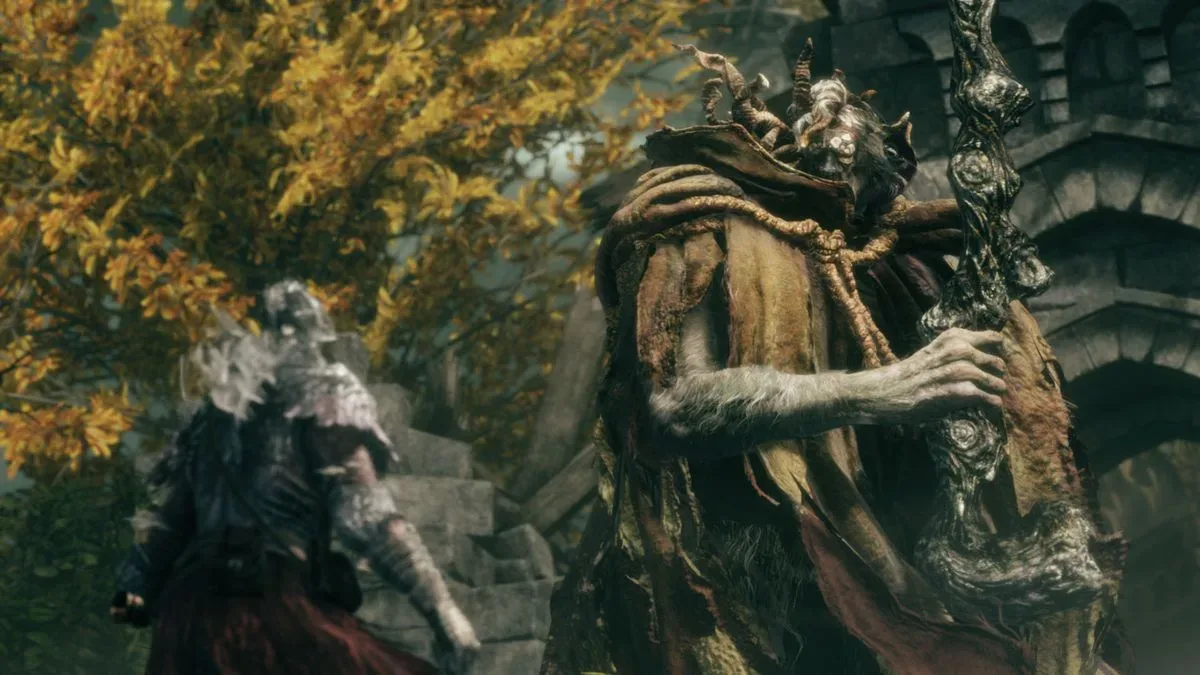
The same strengths could become serious drawbacks in a game built around repeated attempts and memorization. In Souls-style action RPGs, difficult bosses are commonly designed as intricate but learnable challenges. Players study telegraphs, identify attack chains, discover safe positions, and gradually improve their responses. The boss may be punishing, but its rules are stable enough that failure communicates something useful.
If an enemy changes too radically or too often based on player behavior, players may lose confidence in that learning process. A defeat can feel fair when a player sees the missed dodge, mistimed parry, or greedy attack that caused it. It can feel far less satisfying if the player believes the opponent is continually rewriting the test after every successful answer.
Consider a player who finally learns to stagger a boss reliably at a certain point in its attack cycle. In a traditional encounter, that knowledge is a reward for observation and practice. In an aggressively adaptive version, the boss might begin avoiding the setup once it notices the pattern. That could create a memorable surprise, but it could also make the player feel punished for mastering the intended mechanics.
Adaptation can make a boss feel intelligent, but a hard encounter still needs rules players can understand, test, and overcome.
This does not mean adaptive bosses and satisfying mastery are incompatible. The key would be limits. A boss might have a few clearly readable responses to repeated tactics rather than an unlimited ability to counter everything. It could adapt between attempts instead of changing behavior in the middle of a carefully learned phase. Alternatively, higher difficulty modes could enable stronger adaptation while standard modes retain more traditional, consistent patterns.
Developers could also communicate the system openly through animations, dialogue, or combat feedback. If a boss visibly changes stance after repeatedly being parried, players can understand that their behavior prompted a response. That creates a new layer of strategy rather than an invisible system that seems arbitrary.
Potential applications beyond punishing players
Adaptive technology does not have to exist solely to make games harder. The same kind of player modeling could potentially support accessibility and pacing. A game might identify when a player is struggling with reaction-heavy sequences and offer subtler hints, adjust tutorial emphasis, or alter the presentation of useful information. It could notice that a player frequently uses defensive mechanics and tailor optional instruction around more advanced counters.
Likewise, an adaptive system could help encounters avoid becoming repetitive for highly skilled players without forcing every user into the same escalating difficulty. It may be possible to create variation that maintains an encounter's identity while preserving its core rules.
Of course, any system that relies on player data introduces further considerations around transparency, privacy, storage, and player control. The patent describes gameplay and game-related information as inputs for machine-learning processes, but it does not establish how a consumer product would communicate data practices or what choices players would receive. Those details would matter greatly in any real-world implementation.
A patent is not a roadmap
It is important to keep the speculation in perspective. Companies file patents for many reasons, including protecting research ideas that never become consumer-facing features. A published filing can describe broad technical territory years before a product exists, and sometimes no product appears at all.
There is currently no confirmed Sony game attached to US-20260295429-A1, no announced release window for an AI-adaptive boss system, and no indication that a specific PlayStation studio is building a game around it. The filing should therefore be read as an exploration of possibilities rather than evidence that players will soon face bosses that learn every habit in real time.
Even so, the idea points toward a meaningful design debate. Games have long adjusted themselves through difficulty settings, dynamic enemy placement, rubber-banding systems, and scripted state changes. Machine learning could make those adaptations more granular and personal. Whether that results in richer worlds or needlessly evasive bosses will depend less on the patent itself than on the discipline of the designers using the technology.
For players who value tough but comprehensible combat, the ideal future may not be an opponent that always knows the perfect answer. It may be one that occasionally surprises, reacts convincingly, and still leaves enough consistency for every defeat to teach a lesson--and every victory to feel earned.
Community
Discussion
Start the conversation.
No comments have been posted yet.