

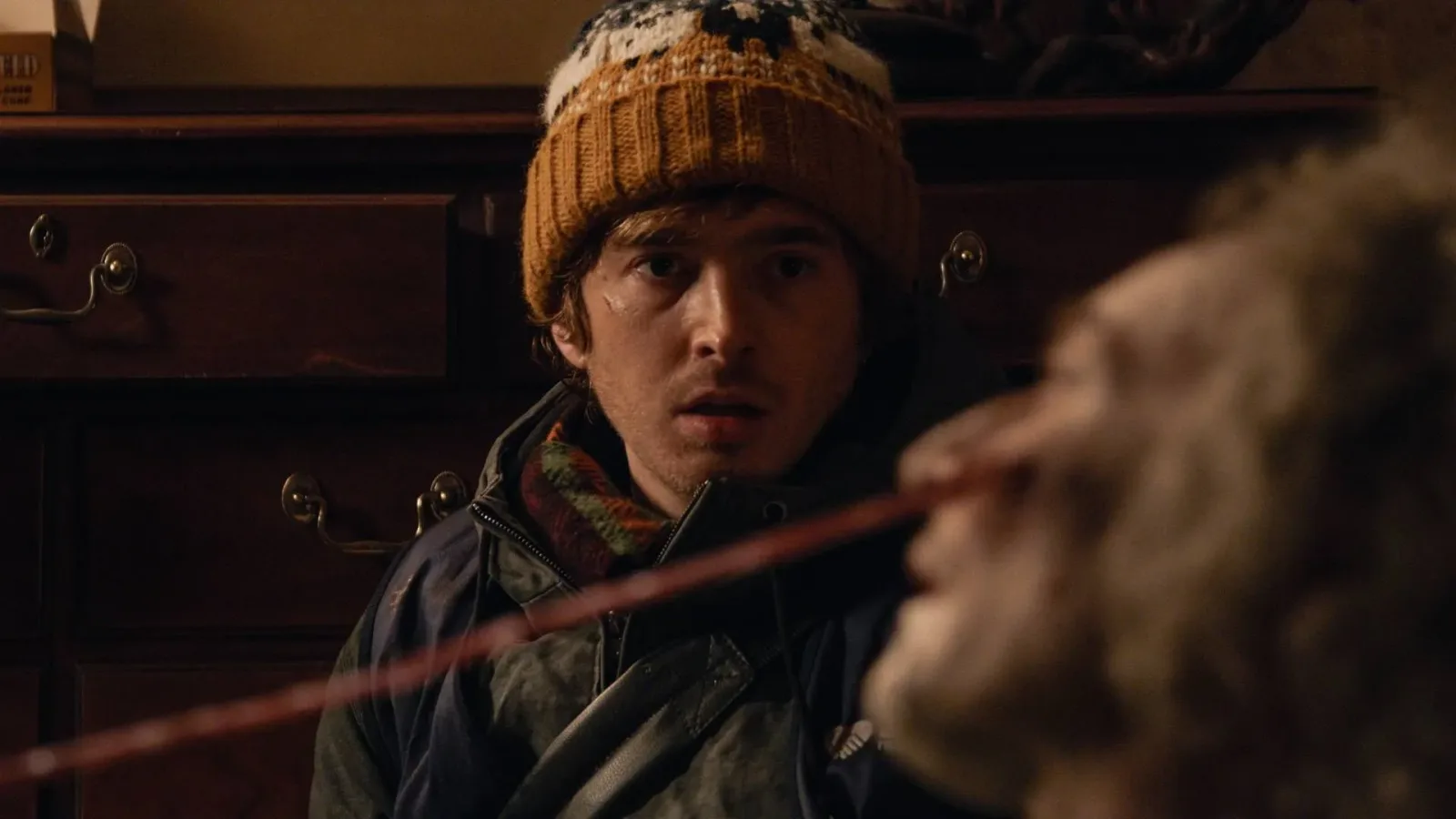
The Game Awards 2026 has revealed a notably formidable lineup for its Best Adaptation category, with five major projects based on video game properties competing for the honor. The nominees are Resident Evil, Mortal Kombat 2, Fallout season 2, Cyberpunk: Edgerunners season 2, and The Super Mario Galaxy Movie.
It is an unusually broad group, spanning theatrical horror, action spectacle, animated science-fiction, prestige-minded streaming television, and family animation. Just as importantly, every nominee comes from a franchise with a distinct identity and a deeply invested audience. That makes Best Adaptation one of the more difficult Game Awards 2026 categories to call ahead of the ceremony on December 10.
The group also reflects how much game adaptations have changed. The medium's screen translations once carried a reputation for struggling to capture the tone, characters, or appeal of their source material. This year's contenders instead show studios taking very different routes: some pursue direct genre thrills, some expand existing game worlds, and some aim to introduce decades-old gaming icons to huge new audiences.
A crowded field for Best Adaptation
The five nominees each arrive with a different kind of momentum. The Super Mario Galaxy Movie is the category's commercial giant, having earned more than $1 billion at the box office. That figure alone demonstrates the exceptional scale of Mario's continued reach beyond games, and it follows the enormous mainstream visibility Nintendo's mascot has gained through previous animated success.
For useful background on this topic, read Duck Side of the Moon Lands on PS5 Alongside Free Homegrown Update.
At the other end of the tonal spectrum sits Resident Evil, a horror-comedy from director Zach Cregger. The film has drawn particularly strong critical response, holding a 96% Rotten Tomatoes score. Its blend of scares, dark humor, and graphic violence has helped it stand apart in a field full of adaptations that must balance the expectations of established fans with the needs of viewers who may know little about the games.
Fallout season 2 brings television's biggest audience numbers into the race. The second season became Amazon's second most-watched returning show of all time, reaching 83 million viewers across 13 weeks. That performance underscores the staying power of the post-apocalyptic setting and the confidence audiences have placed in its live-action version after the first season established its take on the wasteland.
Meanwhile, Cyberpunk: Edgerunners season 2 and Mortal Kombat 2 reinforce the category's genre variety. The animated return to the Cyberpunk universe currently holds an 80% Rotten Tomatoes score, while the latest Mortal Kombat film has a 63% score, which is still classified as fresh. Together, those projects represent two contrasting ways to carry a game franchise forward: animation that can push visual stylization and world-building, and a live-action fighting-game adaptation built around combat, personalities, and heightened spectacle.
Resident Evil's critical case
Resident Evil may be one of the most intriguing contenders because it is competing in a category filled with enormous brands while bringing a sharply defined creative voice of its own. Zach Cregger's film has been praised as a horror-comedy that embraces fear, humor, and bloody excess rather than sanding down the series' stranger genre qualities.
That approach matters for a property as flexible as Resident Evil. Across games, the franchise has moved between survival horror, action, conspiracy thriller, monster movie, and campy B-movie energy. A successful screen adaptation does not necessarily need to replicate every storyline or mechanic from Capcom's games. It does, however, need to understand the tension between dread and absurdity that has long helped define the series.
The film's 96% Rotten Tomatoes score gives it the strongest stated critical standing among the nominees. Awards voters may respond to that reception, especially if they see the movie as proof that a game adaptation can succeed as a genre film in its own right instead of relying solely on recognition of its title.
Fallout season 2 brings a massive audience
Fallout season 2 has a compelling awards argument rooted in scale and audience response. Its 83 million viewers in 13 weeks put it among Amazon's most successful returning series, placing it second on that particular platform ranking. Those numbers indicate that the series has not simply attracted game fans curious about a familiar setting; it has become a major continuing television event.
The franchise presents a unique adaptation challenge. Bethesda's modern Fallout games are known for player freedom, branching choices, environmental storytelling, retro-futurist imagery, bleak satire, and a world where tragedy and absurdity coexist. Television cannot duplicate the player's ability to decide where to go or whom to trust. Instead, an adaptation has to create its own characters and dramatic path while preserving the setting's atmosphere and moral unpredictability.
Season 2's success suggests that approach has continued to connect. There is also more Fallout ahead: a third season is already part of the conversation. Walton Goggins, who plays the Ghoul, has said the creative team feels a responsibility to honor how meaningful the property is to its audience if the show continues into a potential fourth season.
"I feel confident that we've done that in season three, and if we get the opportunity to come back for season four, that would continue to honor how sacred this is to people. It's not something that we take lightly," Walton Goggins said.
That perspective highlights one of the central themes behind this year's adaptation conversation: recognizable names may draw the initial attention, but long-term success depends on treating the original material as more than a collection of references.
Mario's billion-dollar achievement
The Super Mario Galaxy Movie enters the race with a clear advantage in cultural reach. Passing $1 billion worldwide is an extraordinary result and places the film among the year's most commercially significant releases. Mario remains one of gaming's most universally recognizable figures, but turning that recognition into sustained theatrical attendance on such a scale is still a major accomplishment.
The nomination also reflects the continued potential of animation for game adaptations. Mario's worlds have always been defined by bold colors, imaginative locations, kinetic movement, and creatures that often make more immediate sense in stylized animation than in live-action. The cosmic premise suggested by the Super Mario Galaxy name gives the film an especially expansive canvas, one built for visual invention and all-ages spectacle.
Commercial performance is not the only factor in an awards vote, of course. Still, a movie that reaches this audience size can make a powerful case that it successfully translated the appeal of an interactive icon into an event audiences wanted to experience together.
Cyberpunk and Mortal Kombat show the category's range
Cyberpunk: Edgerunners season 2 represents the animation side of a franchise better known for its dense, open-world role-playing game. With an 80% Rotten Tomatoes score, the new season has maintained a positive critical response while returning to a setting built around corporate power, technological transformation, social inequality, and personal survival.
Animation is particularly well suited to the heightened visual language of Cyberpunk's world. It can portray its city, augmentation, combat, and emotional extremes with a freedom that does not require realism to be convincing. The challenge is ensuring that style supports character and theme rather than replacing them. Its Best Adaptation nomination indicates that the second season has remained a meaningful entry in the broader Cyberpunk universe.
Mortal Kombat 2, in contrast, is built from one of gaming's defining fighting franchises. The series has long thrived on instantly recognizable combatants, supernatural mythology, rivalries, outrageous finishing moves, and a willingness to embrace spectacle. The sequel's fresh 63% Rotten Tomatoes score gives it a solid reception in a genre where translating interactive combat into a satisfying film narrative has never been simple.
A successful Mortal Kombat adaptation must make room for fan-favorite fighters and big action while also establishing stakes that work away from a controller. Its nomination suggests the sequel has done enough to stand alongside projects with radically different goals and formats.
What the nominations say about game adaptations
This Best Adaptation lineup is not evidence that every screen project based on a game will work. Nor does it mean that games need film or television versions to validate their stories. What it does show is that studios and creative teams are increasingly finding formats that fit the properties they are adapting.
There is no single winning formula visible in the nominees. Fallout uses serialized television to explore a massive world over time. Resident Evil leans into genre filmmaking. Cyberpunk: Edgerunners uses animation's expressive possibilities. Mortal Kombat 2 pursues action-driven franchise entertainment. The Super Mario Galaxy Movie turns an iconic game universe into a huge animated theatrical event.
That diversity is ultimately what makes the category so strong. Each nominee is trying to translate a different aspect of game culture, from player-driven role-playing worlds and survival-horror tension to colorful platforming fantasy and competitive fighting-game spectacle.
The winner will be announced when The Game Awards takes place on December 10. Until then, Best Adaptation remains a genuinely open contest between critical acclaim, major streaming reach, animation craft, action appeal, and unprecedented box-office power.
Community
Discussion
Start the conversation.
No comments have been posted yet.