

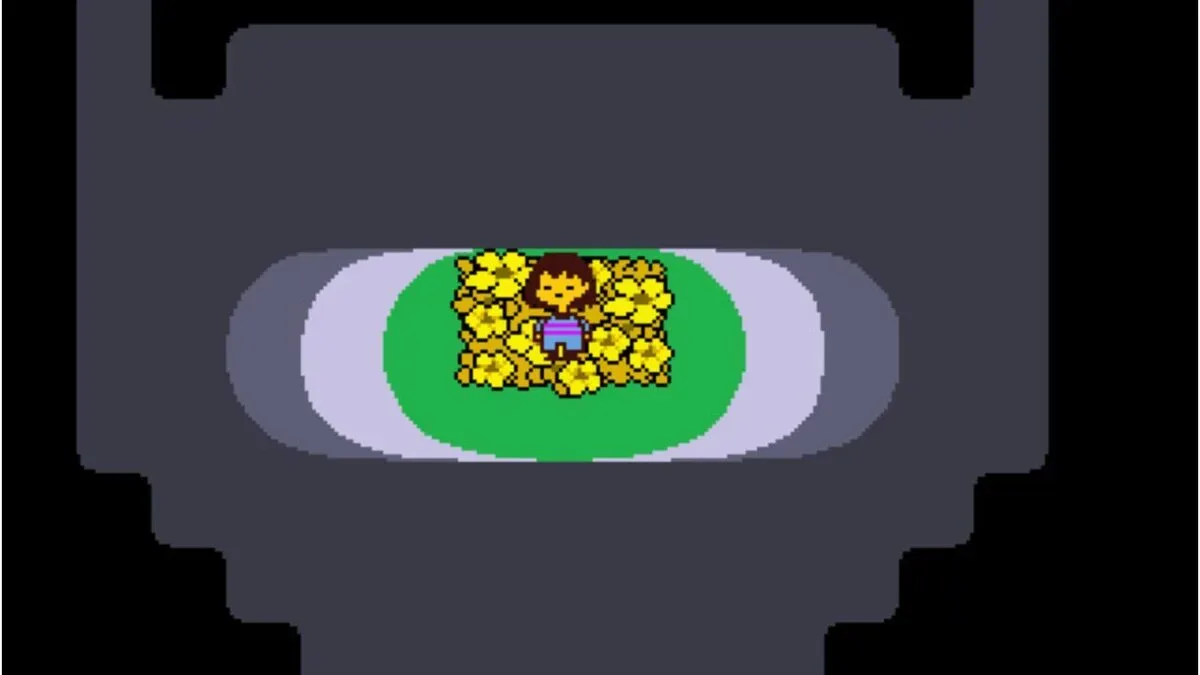
Roblox has long been a place for fan games, unofficial tributes, and experiences clearly inspired by well-known games. That is not new. What is increasingly alarming, however, is the emergence of Roblox experiences that appear to go well beyond inspiration or recreation. Reports have identified playable uploads that seem to contain the games themselves: highly faithful versions of Undertale, all five currently available chapters of Deltarune, and what appears to be PaRappa the Rapper, running within Roblox.
The distinction matters. A fan-made Roblox version built with original blocky environments, reinterpreted characters, and newly made mechanics is one thing. A project that presents the original game's content, dialogue, visuals, structure, and play flow inside a different platform is another entirely. The latter creates major copyright concerns, particularly when the uploads can be discovered by large player audiences and potentially monetized.
It also arrives at an awkward time for Roblox. The company is publicly discussing technology intended to help legitimate developers bring existing games to its ecosystem. Those tools are described as requiring rights verification and partner agreements at present. Yet the apparent presence of unauthorized full-game imports shows how difficult the line between approved publishing and infringement could become if the platform's game-import capabilities grow more accessible.
Embedded X/Twitter post
Not simply Roblox-inspired remakes
The reported Deltarune upload was found after discussion on Reddit and was not readily surfaced through a straightforward search for the game's name. After locating it, testing reportedly included roughly the opening half-hour of Chapter 1 and launching the other available chapters. The conclusion was that the experience was recognizably Deltarune, rather than a lookalike project borrowing a few familiar ideas.
For useful background on this topic, read The Blood of Dawnwalker Patch 1.2 Makes New Game+ a Fresh Test of Its 30-Day Clock.
There were technical blemishes consistent with a rough port. Audio problems and screen tearing were observed, for example. One early Susie line had also been altered, changing "Quiet people piss me off" to "Quiet people tick me off." That change may have been made to fit Roblox's content requirements, but it also highlights the unusual nature of the upload: it appears to preserve the original game closely enough that a small language edit stands out.
A similarly labeled but difficult-to-find version of Undertale was reportedly published by the same creator. Early testing suggested that it likewise resembled the actual game rather than a Roblox-native adaptation. A community associated with the uploader also appeared to include a version of PaRappa the Rapper. Based on its opening minutes, that project also looked like it was presenting the original title rather than merely invoking its rhythm-game premise.
These examples are especially concerning because they involve wildly different rights holders and genres. Undertale and Deltarune are closely associated with independent developer Toby Fox, while PaRappa the Rapper is a Sony property. The apparent availability of works from both independent and major corporate creators suggests that the issue is not limited to one game community or one particularly determined uploader.
Counter-Strike questions show the spectrum of copying
A Roblox game resembling Counter-Strike 2 has also circulated online. Examination of one version found that it looked, sounded, and played substantially like Valve's competitive shooter, though it used different character models and a different map. That makes it less direct than an apparent full upload of a single-player game, but it still raises questions over how closely an experience can imitate another title's audiovisual identity and systems.
The shooter project appears to change over time, including alterations to models and restrictions on access. Such changes may make it harder for moderators, players, and rights holders to identify a specific infringing experience and track its history. At various points, players online have described versions as being difficult to distinguish from Counter-Strike 2.
That variability is central to the problem. Roblox has an enormous catalogue that changes constantly, with new games and updates arriving at a scale no small rights holder could reasonably review by hand. If titles are intentionally named vaguely, described vaguely, or placed behind social discovery channels rather than obvious search terms, a rights holder may not even know a copy exists until it has already reached a substantial audience.
The Deltarune experience was reportedly being played alongside approximately 58,000 other users at the time it was checked. Separately, a Roblox take on Deltarune battles released in August had reportedly drawn nearly 200 million plays. The latter is a different kind of fan project, but the numbers illustrate Roblox's scale and the potential audience for anything connected to a recognizable game.
Roblox puts rights enforcement tools in creators' hands
Roblox's stated policy is clear: users are expected to respect intellectual-property rights, and the company says it does not permit infringement. Its Community Standards also prohibit content that is confusingly similar to another Roblox creator's work, as well as repetitive or misleading material. The company says it can act on copied games and misleading Roblox clones through its moderation systems.
For rights holders outside Roblox, the company points to two central tools. License Manager is intended to allow IP owners to grant and manage permissions at scale, while Rights Manager gives owners a path to report material they believe infringes their rights. Both systems can also accept reference material designed to help Roblox identify matching content. Roblox says it responds quickly to valid removal requests, including DMCA notices.
Roblox says creators remain responsible for the content they choose to publish, and that any published game is subject to the platform's IP and clone policies.
Those systems may be useful for a large publisher with a legal team and staff dedicated to platform compliance. Sony, Valve, Nintendo, Microsoft, and other major companies have resources that many individual developers do not. But a smaller creator faces a markedly different burden. Searching a massive service for disguised copies, gathering evidence, filing notices, and repeating that work when another upload appears is a substantial task.
That burden is particularly notable in the case of a developer such as Toby Fox. The challenge is not just finding a game named Deltarune; the reported uploads were not easily found by searching the obvious names. If discoverability is being deliberately minimized to evade direct searches while recommendations and community sharing still bring in players, reactive reporting becomes far less dependable as a safeguard.
AI import technology makes the timing more complicated
Roblox has recently discussed an initiative called The Universal Player, part of a broader set of AI-driven plans. The stated objective is ambitious: enabling existing console, PC, and mobile games to be imported into Roblox, allowing developers to reach Roblox users and potentially monetize their work across more than one environment.
The technology currently under development is not being presented as the mechanism behind the reported Undertale or Deltarune uploads. Roblox says it is beginning with a select group of partners that own the rights to games released on major storefronts. Applicants are subject to a multi-step review that includes ownership checks, and selected partners must sign an agreement before proceeding.
Still, the eventual goal is broader. Roblox has described a new AI-based import system capable of converting a developer's existing console, PC, or mobile game into a Roblox version. For legitimate developers, that could be a significant distribution opportunity. A studio could reach Roblox's audience without rebuilding its entire game from scratch for a separate ecosystem.
But automation can also lower the barrier for abuse when a person does not own the material being converted. The central question is not whether authorized ports should be possible; rights holders may welcome that option. The question is whether Roblox can reliably distinguish authorized projects from unauthorized ones before copied games gain players, visibility, and revenue.
A moderation challenge with real financial stakes
Unauthorized ports are not only a matter of fandom or technical experimentation. Roblox creators can monetize their experiences, meaning a project built from someone else's game may generate money for its uploader and for the platform. That changes the stakes considerably. The original developer or publisher may have no involvement in the upload, no control over its quality or presentation, and no share in any income it produces.
Gaming storefronts and platform holders are already confronting a rising volume of low-effort, AI-assisted, misleading, or derivative submissions. Roblox's planned import technology could become a valuable tool for properly licensed releases, but it will also intensify scrutiny of how quickly the company detects and removes unlicensed copies.
For now, the reported games demonstrate that policy statements and takedown mechanisms do not necessarily prevent players from encountering what appear to be direct ports. The issue is likely to remain important as Roblox expands its creation tools: a platform built around making game development easier must also make ownership verification, reporting, and proactive enforcement strong enough to protect the developers whose games are being copied.
Community
Discussion
Start the conversation.
No comments have been posted yet.