

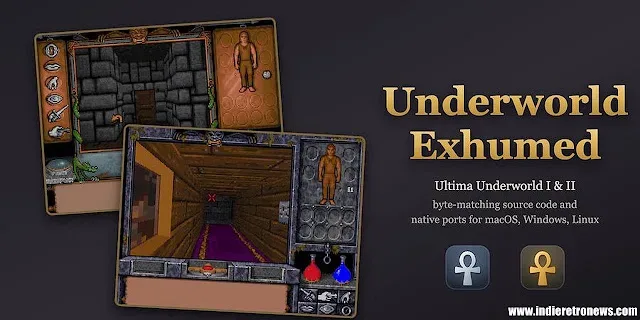
Underworld Exhumed is giving two landmark first-person role-playing games a carefully reconstructed route onto modern computers. The ongoing preservation project, created by developer abedegno, has reverse-engineered and rebuilt the code for Ultima Underworld: The Stygian Abyss and its sequel, Ultima Underworld II: Labyrinth of Worlds. The result is more than a compatibility layer: it is a source-code reconstruction designed to match the original DOS releases as closely as possible while enabling native versions for Windows, macOS, and Linux.
The two games originally arrived in 1992 and 1993 respectively, at a time when first-person RPGs were still defining many of the ideas that later became genre standards. Their combination of real-time exploration, simulated dungeon spaces, environmental interaction, character progression, combat, and player freedom made them hugely influential. Revisiting them today, however, can mean dealing with DOS-era setup requirements and the technical quirks of software built for a very different PC landscape. Underworld Exhumed is intended to preserve the games' original identity without asking players to remain locked to that old environment.
A reconstruction built around accuracy
At the heart of the project is a decompilation effort focused on the original DOS executables. Rather than merely altering an existing release, abedegno has reconstructed the full source code for both games by reverse-engineering the shipped programs. The work has also been organized for readability, with clearer names, shared headers, and documentation explaining the purpose of individual files.
That kind of cleanup matters for preservation. Old commercial games were often released without public source code, leaving future maintenance dependent on emulation, patches, fan-made wrappers, or difficult binary-level investigation. A reconstructed codebase can make it substantially easier to understand how a game behaves, identify platform-specific assumptions, and keep it operational as operating systems and hardware continue to change.
For useful background on this topic, read Underworld Revisited Brings Ultima Underworld 1 and 2 Back in Unity.
Underworld Exhumed's stated standard for this reconstruction is particularly demanding. When compiled using the original Borland development tools, the rebuilt projects can produce versions of UW.EXE and UW2.EXE that are byte-for-byte identical to the original shipped executables. That does not simply suggest that the games feel similar or that their major systems have been approximated; it is a technical demonstration that the recreated code aligns with the original output at an exceptionally granular level.
For game-history projects, that level of verification is significant. It provides a strong foundation for later ports because developers are not starting from an interpretation of what the old software probably did. They are working from a reconstruction that has been tested against the original executable behavior. It also helps separate preservation work from the temptation to quietly modernize, rebalance, or redesign a classic game under the banner of accessibility.
Native ports for current desktop operating systems
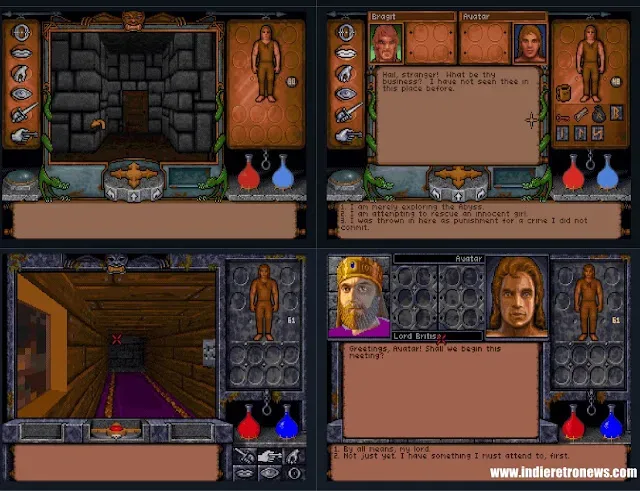
Using the reconstructed code, Underworld Exhumed has produced native builds for Windows, macOS, and Linux. These versions let players run the two dungeon adventures in a window while retaining their original speech, music, and sound effects. For players accustomed to launching older games through DOSBox or another emulation solution, a native port can reduce the amount of configuration required and offer a more straightforward way to return to Britannia's subterranean corners and the sequel's connected worlds.
The project's approach is deliberately conservative. Changes made for the modern builds are checked against recorded DOS gameplay sessions in an effort to preserve authentic behavior. That verification process is important because even apparently harmless adjustments can change the feel of an old game. Timing, movement, audiovisual cues, input handling, and unusual edge cases can all be part of the experience players remember, especially in games whose systems emerged from a specific technical era.
There is always a balancing act in ports of this kind. A modern operating system may require different approaches to displays, audio devices, file handling, and window management, but every such adaptation creates a possible opportunity for drift from the original program. Underworld Exhumed's emphasis is not on turning the games into remasters. Instead, it aims to make the existing games practical to run today while treating the DOS versions as the central reference point.
Underworld Exhumed is preservation-minded modernization: the convenience comes from how the games run, not from rewriting what the games are.
Players must provide the original game data
The project does not include the copyrighted game assets required to play. Anyone using its native ports will need to supply their own data files from a legitimate copy of each game, such as the versions available through GOG. This distinction is an important part of how projects based on reverse-engineered engines and code can remain focused on technical preservation rather than distributing commercial material without authorization.
In practical terms, Underworld Exhumed provides the rebuilt technology around the games, while the player supplies the original content. The approach will be familiar to PC preservation enthusiasts who have used source ports for older titles: the engine or executable framework is made available separately, but the copyrighted levels, audio, art, dialogue, and other assets remain tied to an owned release.
That arrangement also means the project can serve people who already have the games in their libraries and want an alternate way to experience them. Rather than replacing the original releases, it offers another path for using the data they already own. For newcomers, it reinforces that the classic games themselves still need to be acquired before the native builds can be used.
A browser option lowers the barrier further
For those who would prefer not to install or configure a local build, Underworld Exhumed also has a separate WebAssembly version. This browser-based implementation is designed to make both games accessible with no conventional installation process. The availability of a web version is especially notable for software of this vintage, as it offers a quick route to testing or revisiting games that were originally made for a DOS PC setup.
WebAssembly has become an increasingly useful tool for software preservation because it can bring older applications into a current browser environment without requiring users to understand the platforms on which they first ran. In the case of Underworld Exhumed, the browser build complements the Windows, macOS, and Linux versions rather than replacing them. Players who want a local native application have that choice, while players who value immediacy can use the web-based version.
The project's existence also highlights the long-term value of archival-minded technical work. Ultima Underworld is widely remembered for its ambition and influence, but influential games do not automatically remain easy to access. Operating systems evolve, hardware conventions change, and compatibility assumptions disappear. A detailed reconstruction that can reproduce original binaries while also supporting current platforms gives these games a stronger chance of remaining playable and studyable in the future.
Why Ultima Underworld still matters
The Stygian Abyss and Labyrinth of Worlds stand out because they attempted a highly interactive first-person RPG experience long before such design became commonplace. Their worlds encouraged experimentation: players could explore complex environments, manage RPG stats and equipment, engage with characters, and approach obstacles in ways that felt unusually open for their time. The games' technical ambition was inseparable from their appeal, making them important not only as RPGs but as milestones in immersive game design.
That legacy makes faithful preservation especially worthwhile. A heavily altered remake may be interesting in its own right, but it cannot fully replace the original experience or document how the original technology and design choices worked. Underworld Exhumed preserves the possibility of engaging with those choices directly, including the qualities that newer games may have moved away from.
For veteran players, the project offers a more convenient chance to revisit two demanding DOS classics. For historians, modders, programmers, and curious RPG fans, the reconstructed source and accompanying documentation provide a rare window into software that helped shape later generations of first-person adventures. And because the work is built around repeatable verification against the original releases, its modern accessibility comes with an unusually strong commitment to authenticity.
Underworld Exhumed therefore represents both a playable update and a substantial act of preservation. With native desktop ports, a WebAssembly browser version, and a reconstructed codebase capable of reproducing the original executables, the project helps ensure that Ultima Underworld and Labyrinth of Worlds can continue to be explored well beyond the DOS era.
Community
Discussion
Start the conversation.
No comments have been posted yet.