

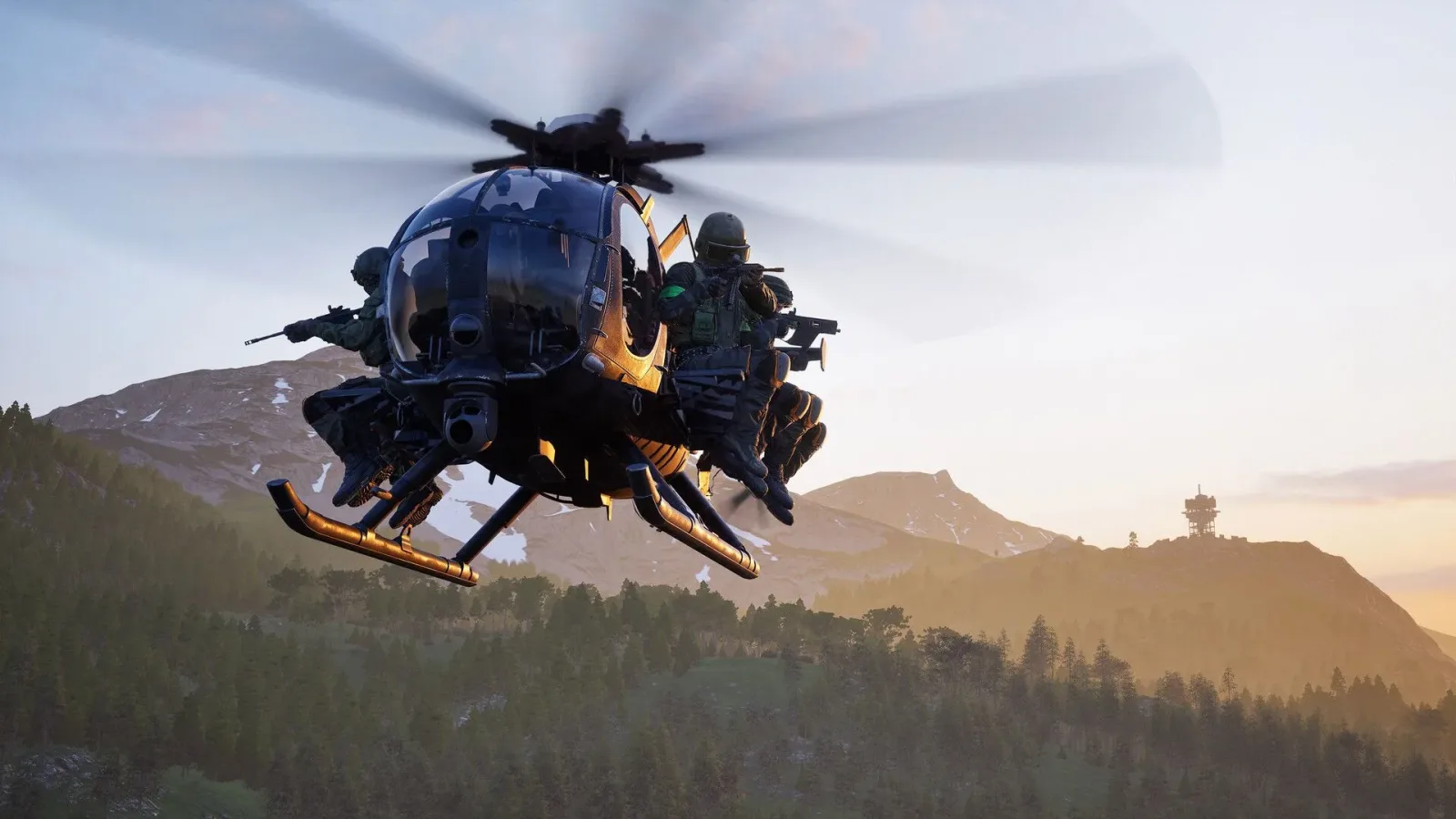
Wardogs has emerged as one of 2026's more notable military-shooter successes, and Bulkhead co-founder and CEO Joe Brammer believes part of that momentum comes from giving players a more firmly defined experience than Battlefield 6. In remarks discussing the two games' approaches to community involvement, Brammer argued that Battlefield's developers risked losing a sense of direction by placing too much emphasis on what players were asking for.
The comparison comes after Wardogs built a substantial audience following its public launch in September. Bulkhead's team-based spin on the battle royale format has regularly attracted hundreds of thousands of players, while Battlefield 6's PC audience has declined from its stronger launch period to concurrent Steam figures generally sitting in the 20,000 to 30,000 range.
Those figures are not insignificant for a multiplayer FPS, and player counts alone do not explain a game's health across all platforms. Still, Brammer sees the contrast as evidence that a shooter needs more than an aggressive feedback program and a highly visible community-testing initiative. In his view, developers need to know when to listen, when to clarify their plans, and when not to reshape a game around every popular request.
A question of direction, not simply feedback
Battlefield 6 arrived with a major community-facing push that included Battlefield Labs, a testing program intended to bring players into the development and feedback process. Brammer's position is not that developers should avoid community participation outright. Instead, he questioned whether such programs matter if the final game does not substantially change in ways participants can recognize.
For useful background on this topic, read Black Friday 2026 Toy Deals Spotlight Interactive Toy Story Figures, Nerf Rebel Ops and Doctor Doom Plush.
Speaking to Hivemind World, Brammer said he did not think Battlefield Studios had fundamentally taken a different approach, suggesting that the presentation around the process had changed more than the underlying development philosophy. He pointed to messaging built around Discord communities, large-scale player outreach, and test sessions, but argued that the value of those efforts depends on how visibly they affect the finished product.
That is a difficult standard to judge from outside a studio. Development teams routinely gather feedback that is helpful for identifying bugs, readability problems, balance concerns, and friction in menus or matchmaking, while choosing not to implement wider requests about game modes, progression, map design, pacing, or core mechanics. A player may feel their view was ignored even when the team considered it closely and decided it conflicted with the project's goals.
At the same time, a public test environment creates heightened expectations. When players are invited into a formal feedback channel, they are likely to expect both a chance to influence the game and clear communication about which suggestions were adopted, rejected, or still being evaluated. The distance between those expectations and the final product can quickly become a source of frustration.
Bulkhead's willingness to say no
Brammer described a more selective framework at Bulkhead. He said the Wardogs team repeatedly makes clear that it will not automatically turn player feedback into development decisions. Some feedback is useful, he acknowledged, but not all of it should dictate the direction of the game.
That stance can sound severe in an era when live-service games frequently frame communities as direct collaborators. Yet it reflects a familiar challenge for multiplayer developers: players are experts in their own experience, but they do not always share a single objective for the game. One group may want slower, more tactical rounds. Another may want immediate action and looser rules. One audience may ask for realism, while another values accessibility and room for experimentation. Meeting every demand is impossible, particularly when the demands conflict.
A development team therefore has to make choices beyond a vote count. It must consider the audience it wants to serve, the rules that distinguish its game from rivals, the technical cost of a change, and the likelihood that a short-term request would create a larger problem later. A community can identify issues rapidly, but a studio still needs a coherent answer to the question of what its game is supposed to be.
For Wardogs, Brammer believes that clarity has been valuable. Its team-oriented battle royale structure gives it a recognizable position in a crowded shooter market, where players have many alternatives but often struggle to find a game that consistently supports the style of combat they prefer. The game's player performance on Steam, where it has tended to draw roughly twice Battlefield 6's daily audience, has made that position more visible.
The "homeless" Battlefield audience
Brammer said Bulkhead internally refers to some Battlefield players as "homeless," describing an audience that drifts between games rather than settling on one long-term multiplayer home. In his framing, players who are not satisfied by Battlefield 6 can scatter toward Wardogs, Escape from Tarkov, or other shooters that better match their current tastes.
The phrase is provocative, but it points to a genuine pattern in the genre. Modern FPS communities are highly mobile. Players shift when a new game launches, when an update changes the balance, when queues worsen, or when a title's seasonal content does not meet their expectations. They can also divide along surprisingly specific preferences: large maps versus close-quarters arenas, extraction stakes versus battle royale survival, simulation-inspired gunplay versus more arcade-like movement, or objective-based teamwork versus solo-friendly progression.
Battlefield has historically appealed to a broad coalition because its identity has combined large-scale battles, vehicles, squad play, destruction, and a relatively accessible military-action format. Serving that wide audience is a strength, but it can become complicated when different parts of the community want the series to lean in different directions. The more a game tries to satisfy every branch of that audience, the greater the risk that none of them feel it was built with their priorities in mind.
There is also an apparent contradiction around Battlefield 6's player feedback: some players believe their concerns have gone unheard, while Brammer argues that the game may have been too willing to follow community demands. Both perceptions can coexist. A studio can act on a large number of requests while declining the particular changes one segment considers essential. In a major franchise, the loudest conversations are rarely representative of every player, and no update plan will feel equally responsive to all groups.
What the Steam numbers can and cannot say
Steam's concurrent-player data provides a useful snapshot of activity on PC, but it is not a complete picture of either game. It does not account for players elsewhere, it cannot establish why someone stopped playing, and it does not measure satisfaction among the people who remain active. Battlefield 6 maintaining 20,000 to 30,000 concurrent players on Steam means there is still a sizable PC community in the game, even if that level is less dramatic than its opening period.
Wardogs' stronger day-to-day Steam showing nevertheless gives Bulkhead a meaningful point of comparison. Sustained activity matters for multiplayer titles because it affects matchmaking, community visibility, streaming interest, and the sense that a game is worth investing time into. A healthy daily population can also create momentum of its own, encouraging more players to try a title when they see that matches are active and discussion is ongoing.
Whether Wardogs can maintain that advantage over a longer period will depend on more than its initial identity. Live multiplayer games must continue to address technical problems, preserve competitive trust, introduce new reasons to play, and manage balance without undermining the characteristics that attracted their audience. Bulkhead's selective attitude toward feedback will be tested over time, especially as Wardogs' player base becomes larger and more varied.
Battlefield's next challenge
Brammer's criticism ultimately centers on leadership rather than the existence of player feedback. Community testing, Discord discussions, and public response can all be valuable tools. But they do not replace a studio's responsibility to set priorities and communicate them plainly. The strongest version of that process may be one where players can see that they are being heard, even when the answer is not the change they wanted.
For Battlefield Studios, the task is to give existing players a convincing reason to stay while making the franchise's broader direction easier to understand. That does not necessarily mean abandoning Battlefield Labs or reducing community engagement. It may mean being more explicit about what feedback can change, what is non-negotiable, and how individual updates fit a larger design goal.
Meanwhile, Wardogs has an opportunity to turn its breakout attention into lasting loyalty. Brammer's comments make Bulkhead's philosophy clear: player opinion is an important input, not a replacement for a developer's vision. In a genre where audiences can rapidly move from one shooter to another, that confidence may be as important as any individual feature.
For now, the competition highlights a broader multiplayer lesson. Communities want to be respected, but they also want a game with a purpose. Listening matters; knowing what not to change may matter just as much.
Community
Discussion
Start the conversation.
No comments have been posted yet.