

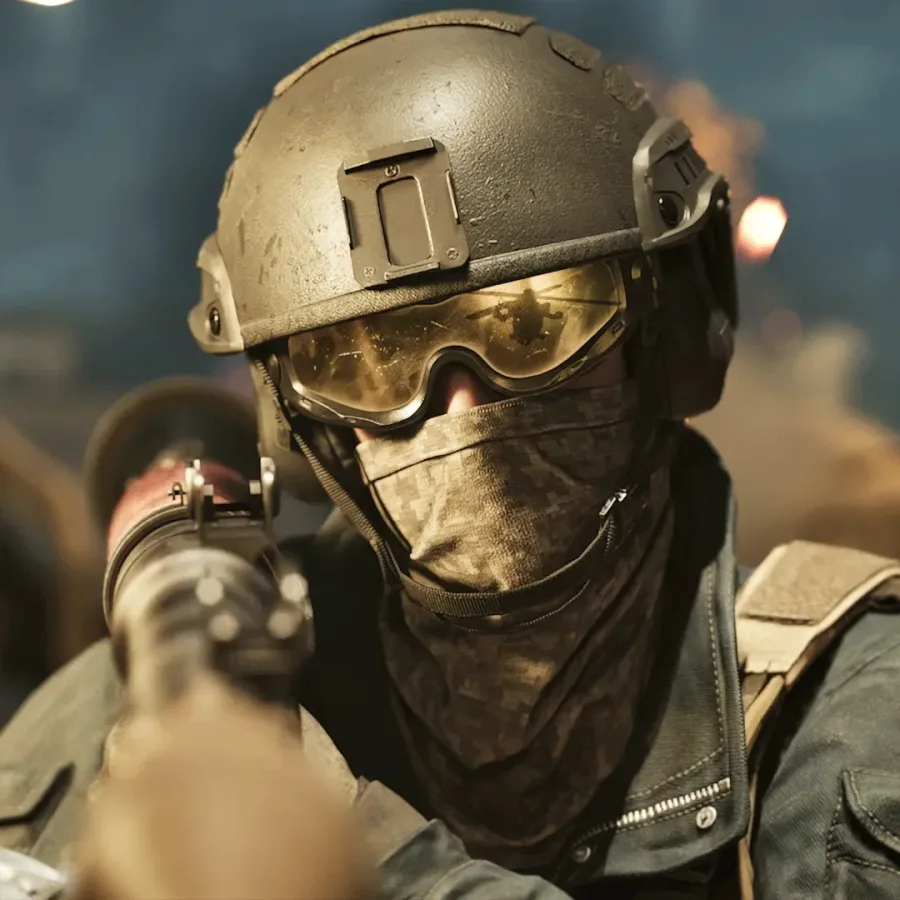
Wardogs may divide its players into three visually distinct factions, but an unexpected community hierarchy is already taking shape. Lonestar, the game's blue team, has become the faction many players are actively trying not to join. It is not because the group has a confirmed mechanical disadvantage or an intentionally weaker toolset. Instead, Lonestar has developed a player-created reputation: it is seen as the side most likely to be filled with inexperienced teammates and, as a result, the most likely to lose.
The perception is spreading quickly enough that it is beginning to affect how matches form. Some players are reportedly refusing to select Lonestar at all, while others race to occupy slots on Wardogs' red Valkyra or green Manticore teams. The resulting imbalance can be more than a joke about blue-team misfortune. In some cases, it can delay the start of a game when there are not enough players willing to fill Lonestar's available positions.
It is a familiar multiplayer phenomenon, but one that is particularly visible in a fast-growing game with a large number of fresh recruits. Wardogs has arrived to major attention, having sold one million copies before launch and climbed near the top of Steam's most-played games. That success gives the game a substantial audience, but it also means the player base is still learning its systems, its maps, its objective priorities, and the unspoken social rules emerging around its factions.
Embedded X/Twitter post
Three teams, but one unwanted pick
Wardogs has three playable groups: Lonestar in blue, Valkyra in red, and Manticore in green. The factions do not appear to have meaningful gameplay differences that would inherently make one team less capable than another. There is no established indication that Lonestar's equipment, abilities, objectives, or balance values leave it at a built-in disadvantage.
For useful background on this topic, read Doom: The Dark Ages Drops to a Permanent $50 Price as Doom Anthology Is Updated.
Yet players have increasingly treated Lonestar as though it is the weakest choice in the game. The team's reputation comes down to results and perception rather than a documented faction imbalance. Lonestar is commonly viewed as the home of the newest, least coordinated, or least effective players, creating a situation where players who want a reliable match experience would rather pick another color.
That distinction matters. A faction can become statistically weaker in practice even if it is perfectly equal in design. If a larger share of newcomers consistently joins one side, the team may struggle more with basic coordination, objective awareness, positioning, and knowing when to regroup. Those rough games then reinforce the belief that the faction itself is a bad choice, encouraging experienced players to steer clear of it. The more veterans avoid the team, the more likely its roster is to remain disproportionately inexperienced.
It is a self-reinforcing cycle. Lonestar loses because it has a reputation for losing, and that reputation grows with each uneven match.
Why Lonestar may be attracting new players
Players have put forward several explanations for why the blue faction became the target of this stigma. One practical theory is simple interface design: Lonestar may be the first option players see when they reach the team-selection screen. New players who are eager to enter a match may select the first available team without knowing that a community preference has formed around the other two options.
That explanation becomes more convincing once the stigma itself takes hold. Valkyra and Manticore can fill quickly when returning players and more informed newcomers avoid Lonestar. Anyone who arrives late, does not know the team's reputation, or simply wants to start playing may find that blue is the only available option. In that sense, the social pressure around Lonestar can effectively funnel inexperienced players into the faction even if they would have preferred another choice.
There is also the usual randomness of online play. A faction's early run of bad matches can become memorable, especially when players share clips, complaints, and stories that confirm a running joke. Players are more likely to remember a disastrous blue-team push than a routine Lonestar win, and they may interpret ordinary mistakes more harshly when they are already expecting them. That does not mean the team's poor reputation is entirely imagined; many players clearly feel they have experienced a noticeable difference. It does mean that the story surrounding the faction can grow bigger and more influential than any single match result.
One circulating clip has helped illustrate the sort of chaos that players associate with Lonestar. The appeal is not a technical breakdown of faction balance, but the absurdity of a team struggling to organize itself in a high-pressure multiplayer situation. These moments travel well through community discussion, and every viral example gives the meme another reason to persist.
A stigma that can interfere with matches
The most significant consequence is not merely that players make jokes about a particular color. A faction stigma can alter matchmaking behavior. Reports from the community indicate that some matches have been held up because players declined to choose Lonestar, leaving the lobby without enough blue-team participants to begin.
That is a warning sign for any team-based multiplayer game. Even if only a minority of players refuses the faction, the behavior can make queueing and lobby formation more frustrating for everyone. Players who do take Lonestar may enter a match feeling that they have already been handed a disadvantage. Players on the favored teams may have a smoother selection process but contribute to the very imbalance they complain about. And newcomers who end up on blue can be treated as the cause of the problem rather than as players still trying to learn Wardogs.
There is an irony in that outcome. Experienced players are usually the people most capable of stabilizing a struggling team, teaching newer teammates through example, and turning an uncoordinated group into a competitive one. If they universally avoid Lonestar, they remove exactly the kind of experience that could challenge the faction's losing image.
At the same time, no individual player is obligated to volunteer for a frustrating match. A player who has repeatedly had poor results on Lonestar may reasonably decide that they would rather spend their limited gaming time with Valkyra or Manticore. The issue is larger than any one person's choice. It is the collective result of thousands of those choices that can turn an equal faction into an unpopular one.
Can Lonestar break the pattern?
Despite the jokes and the reputation, Lonestar is not incapable of winning. Players have shared examples of the blue faction overcoming expectations, and the existence of those wins is important: it undercuts the idea that the team is doomed by its identity. Strong communication, a group of players who understand the objectives, and a few experienced teammates can change the shape of any match.
The longer-term question is whether Wardogs' expanding audience will dilute the stigma or deepen it. As more players learn the game, the general skill level should rise. Newcomers who initially join Lonestar may eventually become capable regulars, and more balanced team populations could make faction choice feel less consequential. A larger pool of players also creates more opportunities for friends and organized groups to select the blue side deliberately, rather than leaving it to people who were late to the lobby.
However, community narratives can be remarkably durable. Once a multiplayer game labels one group as the "bad team," it may take a long run of visible successes to make players rethink that assumption. Wardogs' developers may not need to adjust the faction mechanically, but quality-of-life measures could potentially reduce the incentive to dodge a particular side if the issue persists. The game's current situation is primarily social, so any lasting solution may depend as much on player behavior and team-selection systems as on balance changes.
Wardogs' popularity makes the problem more visible
The Lonestar debate is happening while Wardogs continues to benefit from strong word of mouth. Its early sales and Steam activity have made it one of the more visible multiplayer releases around, bringing in both highly engaged players and people trying the game for the first time. The game is currently also available with a slight discount through Fanatical, a factor that may help bring in still more newcomers.
For now, Wardogs is a PC-focused experience. Console players will have a much longer wait: versions for Xbox and PlayStation 5 are planned for 2028. By then, the blue-team stigma may be a distant early-life anecdote, or it may become one of the game's enduring community memes.
In the immediate future, Lonestar's fate is in the hands of the people entering each match. Players can keep treating it as the faction to avoid, ensuring that its reputation remains intact, or they can see it as an opportunity to prove that a team color is not a prediction of skill. Until that perception changes, selecting blue in Wardogs may be less a cosmetic preference than a willingness to take on the game's most notorious challenge.
Community
Discussion
Start the conversation.
No comments have been posted yet.