

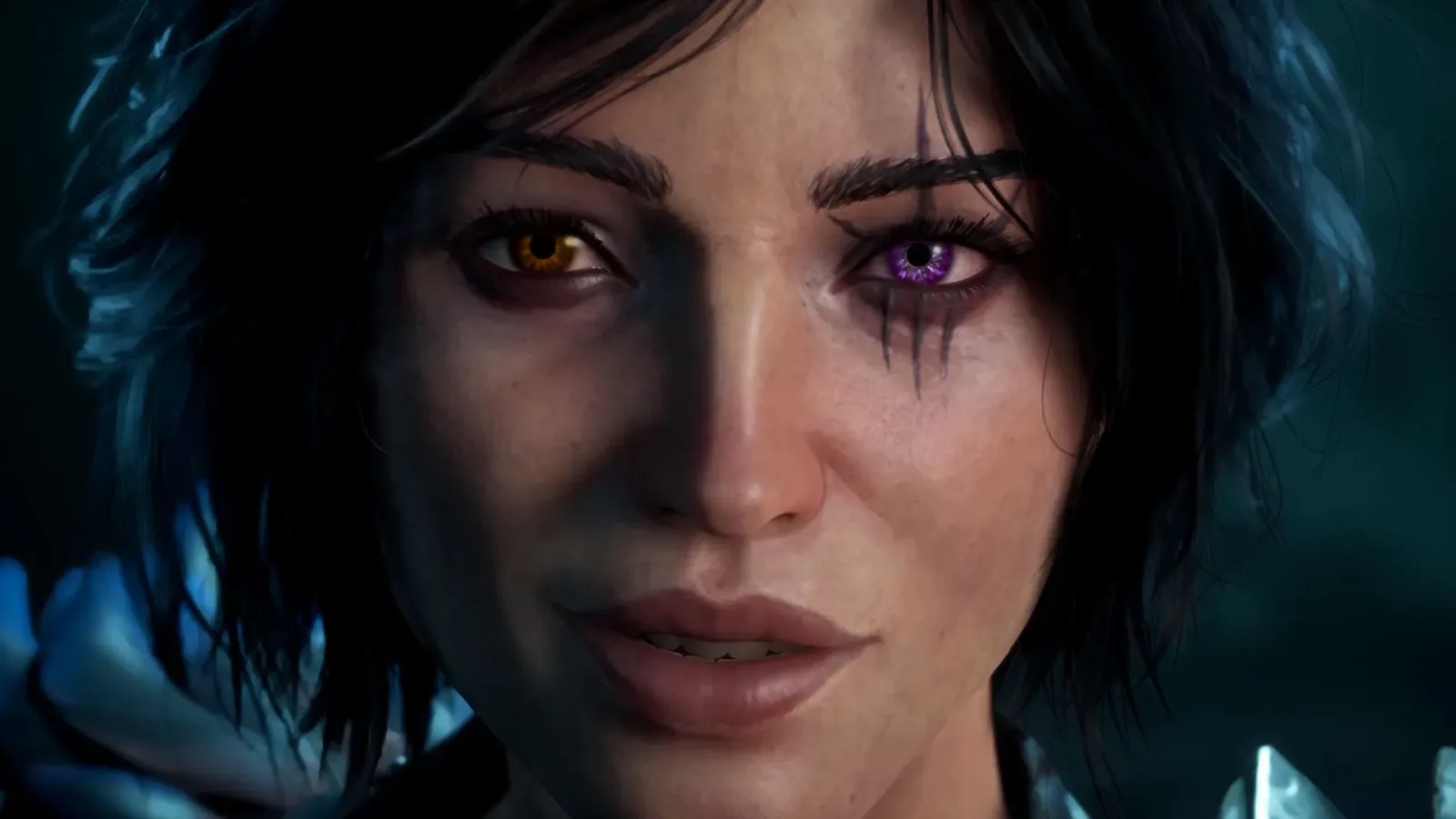
Warlock, the upcoming open-world Dungeons & Dragons RPG from Wizards of the Coast and Invoke Studios, is taking a deliberately different approach to scale. Rather than attempting to match the vastness of genre landmarks such as The Elder Scrolls V: Skyrim, the game's developers are building a smaller version of Darkon with a greater concentration of discoveries, spells, and reasons to venture away from the obvious route.
That approach is not simply a matter of making a more compact map. Invoke Studios head Dominic Guay has explained that the team's goal is to make exploration a central part of the experience. The studio wants players to read the world, investigate interesting locations, and make their own decisions instead of spending their time moving from one waypoint to the next.
For players weary of heavily signposted open worlds, that design philosophy may be one of Warlock's most promising ideas. A smaller map can still feel substantial when it is filled with meaningful places, optional discoveries, and systems that encourage experimentation. In Warlock's case, the stated ambition is to use density as a way to reduce handholding without leaving players with an empty or directionless world.
A smaller Darkon, built for discovery
Warlock is set in Darkon, a setting with a grim reputation in the wider Dungeons & Dragons universe. The game features Tasha, the famous archmage and demonologist known to tabletop fans, placing an established and unusually powerful figure at the heart of its premise. While many specifics about the game's narrative and structure remain unannounced, the project has already shown a sizeable slice of gameplay and established its interest in real-time magical combat.
For useful background on this topic, read Borderlands Online Returns in English Through Fan-Led Restoration.
Guay's comments make clear that Invoke does not view a smaller world as a compromise. Instead, the scale is connected directly to the studio's priorities. If a world is designed around exploration, players need room to notice things for themselves. They need landmarks that spark curiosity, paths that feel worth taking, and rewards that are not always placed directly in front of them.
That can be difficult to accomplish in enormous open worlds. Bigger maps frequently need stronger navigation tools, repeated activities, or highly visible guidance to ensure players do not lose track of the main path. Those conveniences can make a game accessible, but they can also turn discovery into a checklist. Warlock appears to be pursuing a different balance: fewer miles of terrain, but more opportunities to encounter something worthwhile within those miles.
"By having a bit more density, we can afford to pull back a little bit on the handholding," Guay said.
The phrase "handholding" will resonate with anyone familiar with the recurring conversation around modern open-world design. Players have often criticized visual cues, persistent markers, and aggressively guided objectives that make every secret feel pre-announced. At the same time, completely removing direction can be frustrating when the world provides too little information to support independent exploration.
Warlock's success will likely depend on where it lands between those extremes. Less guidance is only rewarding when the environment itself offers clues. A distinctive ruin on the horizon, an unusual enemy patrol, a rumor, a magical effect, or a route that looks difficult but possible can all motivate players without requiring a floating icon. The game's smaller footprint may allow the team to devote more attention to that kind of environmental communication.
Missing a spell may be part of the point
One particularly notable detail is the way Warlock is expected to handle spells. Guay has indicated that there will be many interesting magical abilities to find, and that players may not locate every one of them during a playthrough. That is a meaningful departure from the expectation that an RPG should always provide every tool through a clearly mapped progression.
In a game based on Dungeons & Dragons, spells are more than standard upgrades. They can transform the way players approach combat, traversal, problem-solving, and character expression. If a spell is hidden in an out-of-the-way location, tied to an optional challenge, or simply overlooked, the result could be that two players finish major portions of Warlock with notably different magical toolkits.
That possibility creates a natural reason to explore, but it can also support replayability. A second journey through Darkon would not necessarily be about repeating the same route more efficiently. It could mean looking for a spell missed the first time, trying a different set of powers, or taking another approach to the world's challenges. Guay's description suggests that missing certain abilities is not intended to be a failure state. Players who fail to uncover one discovery may find another instead.
There is an appealing Dungeons & Dragons logic to that idea. Tabletop campaigns are full of diverging choices, overlooked clues, unexpected detours, and solutions that arise from what a particular party happens to have prepared. A video game cannot reproduce every part of a tabletop session, but allowing players to walk away with different discoveries can capture some of that feeling of personal adventure.
Real-time magic is central to Warlock's identity
Warlock's exploration goals are paired with an action-focused combat concept. Guay has described its controls as a "real-time expression of magic," emphasizing an experience that should feel quicker and more immediate than systems where abilities are selected at a slower pace. Footage shown in August drew comparisons to Dragon's Dogma, pointing to a game where spectacle, positioning, and active combat play an important role.
That distinction matters because Warlock is arriving after the immense success of Baldur's Gate 3, another recent game based on Dungeons & Dragons. Invoke has acknowledged that Larian Studios' RPG is a great game, while also stressing that Warlock is pursuing something very different. The contrast is easy to understand. Baldur's Gate 3 is built around turn-based tactical encounters and a highly reactive, region-based structure. Warlock is aiming for open-world exploration and real-time magic in Darkon.
Neither direction is inherently more authentic to Dungeons & Dragons. The tabletop game has supported tactical combat, improvisation, story-heavy roleplaying, dungeon exploration, and high-powered magical fantasy across countless campaigns. What matters is whether Warlock's individual pieces reinforce each other. Its combat needs to make spells exciting to use in the moment, while its world needs to make players want to seek out more of those spells.
If the game delivers on that loop, the smaller map could become one of its strengths. A dense environment full of potential magical discoveries has the chance to make exploration feel mechanically valuable rather than cosmetic. Going off the main road would not just provide another collectible or a scenic detour; it could change how a player fights and interacts with the world.
Density over sheer map size
Open-world games are often judged first by size, but size alone says little about the quality of exploration. A huge map can be memorable when its geography, activities, and stories invite curiosity. It can also become exhausting if long travel distances separate repetitive content. Conversely, a compact world can feel vast if it layers routes, secrets, verticality, and distinct encounters in ways that keep players questioning what lies beyond the next hill or behind the next door.
Warlock is making a clear bet on the latter model. Its developers are not promising an endlessly sprawling Darkon. They are promising a more concentrated space in which the player is trusted to search, experiment, and occasionally miss something. That is an ambitious proposition, especially for a Dungeons & Dragons game whose audience may bring very different expectations from prior digital adaptations.
Many questions remain. Warlock does not yet have announced release details in the information available so far, and the full extent of its character progression, quest design, companions, and world systems has not been detailed. But the direction outlined by Invoke Studios is distinct. Rather than treating navigation assistance as the answer to open-world complexity, the team wants density and player curiosity to do more of the work.
For an RPG about dangerous magic, hidden abilities, and a forbidding Dungeons & Dragons setting, that may be an especially fitting foundation. Darkon does not need to be the biggest fantasy map on the market. It needs to be a place where heading into the unknown feels like a decision worth making.
Community
Discussion
Start the conversation.
No comments have been posted yet.