

Xenogears is remembered as one of the PlayStation era's most audacious role-playing games, not because every piece of it is smooth, but because so few games were willing to reach this far. Its story pulls from science fiction, religion, psychology, political control, giant robots, ancient conspiracies, and personal trauma. The result can be overwhelming, especially as revelations pile up faster than the game can pause to explain them. Yet that density is also why its strongest sections still invite discussion decades later.
Among them, the journey through Solaris may be the clearest example of what makes Xenogears special. Arriving near the close of Disc 1, the supposedly glorious city in the sky is not merely another JRPG capital or a late-game dungeon. It is a deliberately suffocating portrait of a society built on hierarchy, spectacle, and the conversion of human lives into resources. Solaris takes ideas that might otherwise remain abstract in Xenogears' sprawling mythology and makes them immediate: people are sorted, watched, processed, fed lies, and taught to view one another as disposable.
It is an uncomfortable place to visit, and that is precisely the point.
A hidden empire above a world of conflict
By the time Fei and his companions reach Solaris, Xenogears has already established a world where surface nations such as Aveh and Kislev remain trapped in conflict. Secret factions manipulate events, religious authority carries political weight, and Fei's unexplained memories and fractured identity suggest that the protagonist is tied to something far older than the current war.
For useful background on this topic, read Killzone Reportedly Set for a PlayStation Revival After 13 Years.
Solaris sits above all of it, physically and socially removed from the people below. The city has quietly backed organizations including Ethos and Gebler, encouraging divisions among the surface population, who are contemptuously called "lambs." That language matters. It immediately reveals that the ruling society does not view the people it controls as equals, citizens, or even opponents deserving dignity. They are livestock: useful, manageable, and expendable.
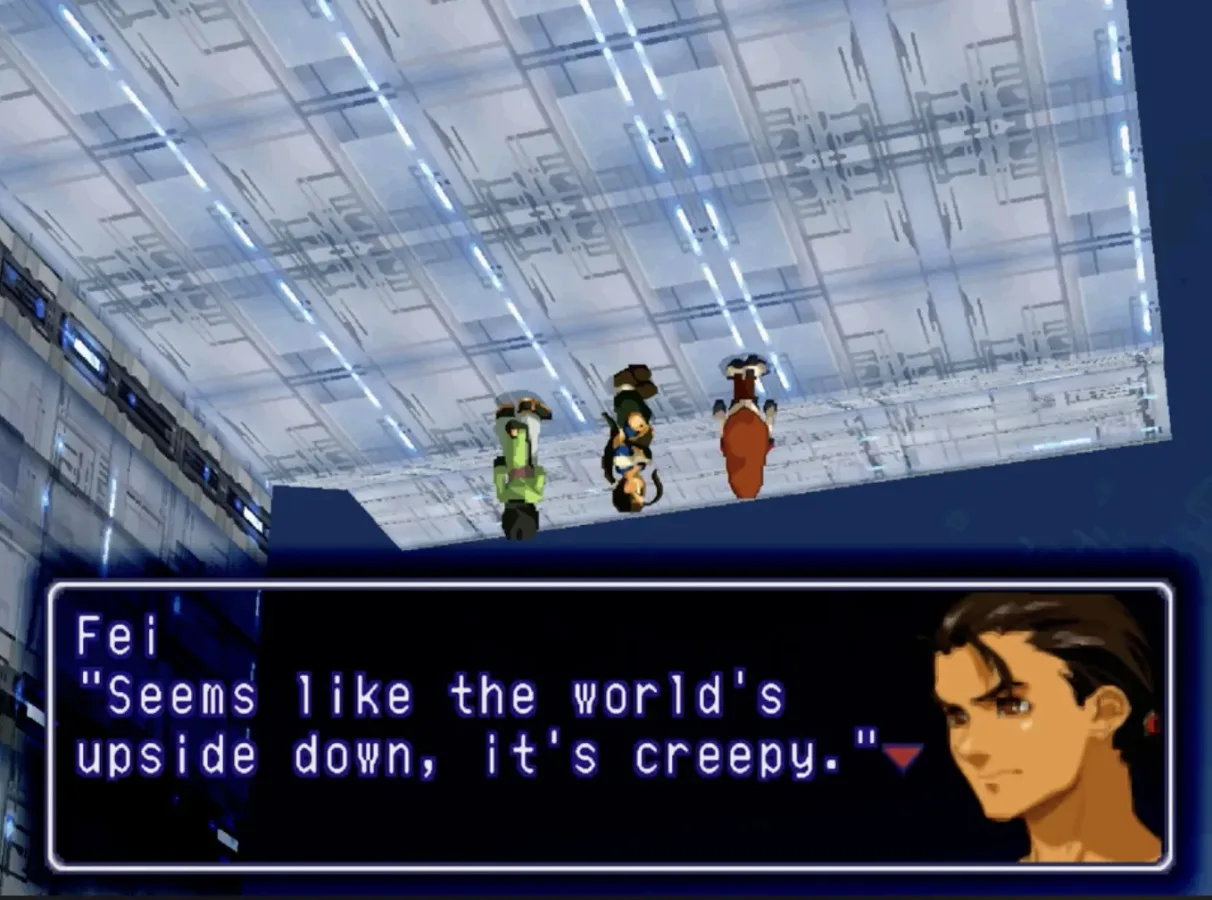
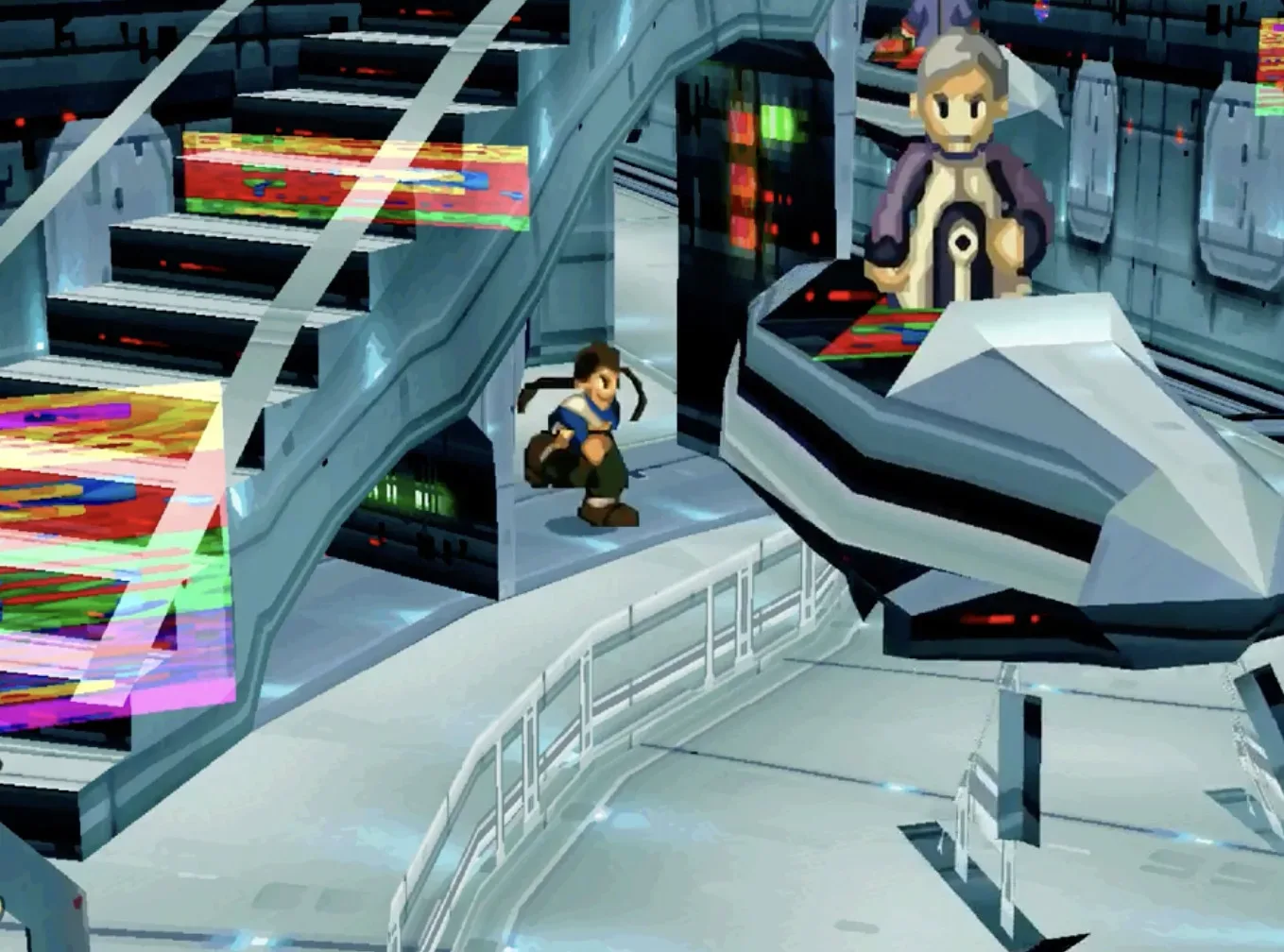
The party's arrival is striking in more ways than one. They initially move through an inverted section of the floating city, walking upside down. It is a memorable visual gimmick, but it also works as fitting preparation for what follows. The assumptions that Fei and the player bring into Solaris are about to be overturned. A society that presents itself as advanced, orderly, and secure is exposed as a machine for maintaining power.
The Honeycomb and the language of control
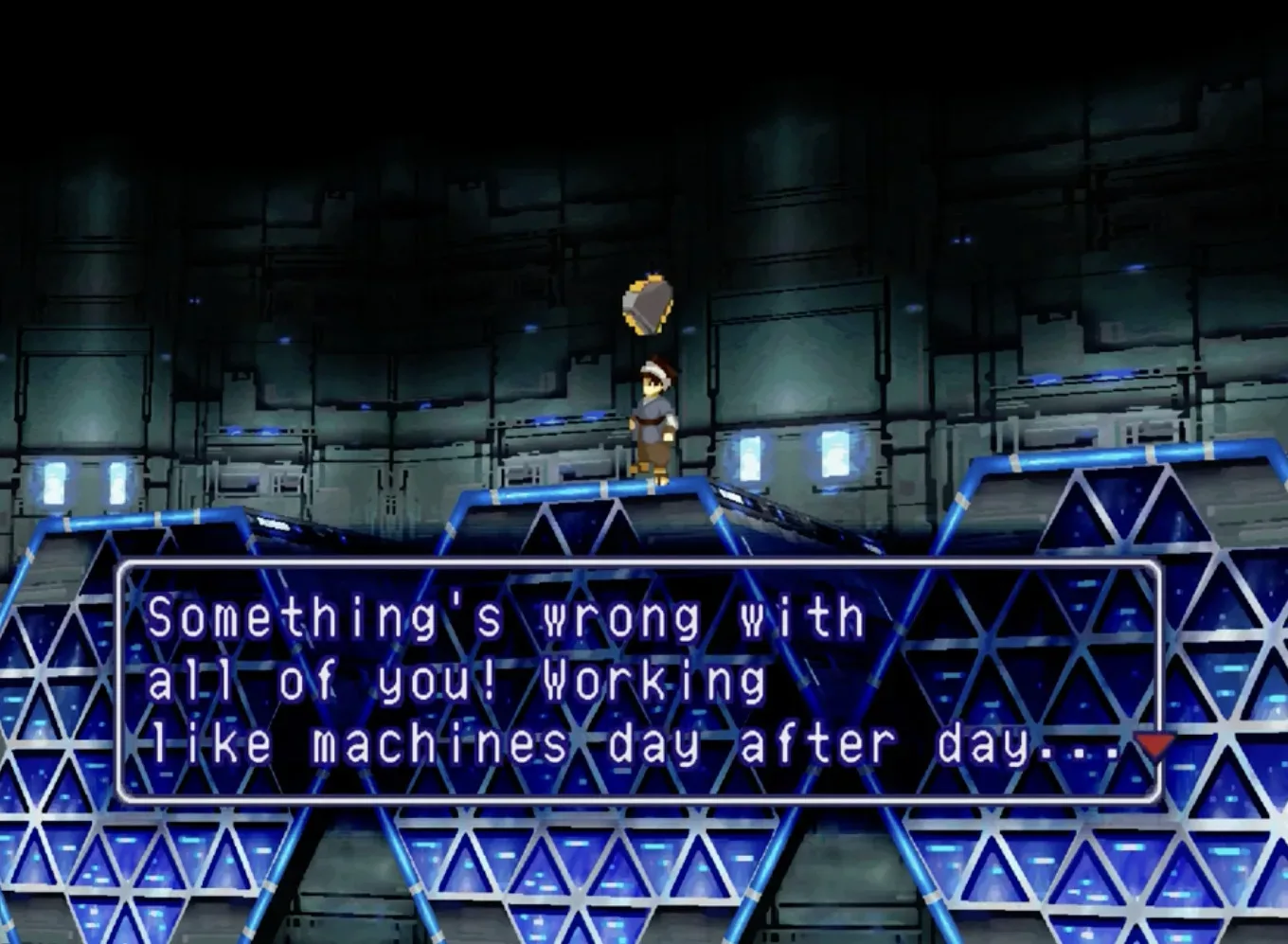
Fei becomes separated from the group and awakens in the lowest tier of Solaris, 3rd Class F Block, commonly known as the Honeycomb. The people here are called Worker Bees. Their labor supports Solaris' core, but they receive neither comfort nor respect in return. They live in cramped conditions and are encouraged to focus on obedience, productivity, and the slim possibility of climbing the social ladder.
One early incident reveals the city's cruelty with chilling efficiency. A citizen protests the deadening routine imposed on the workers and is seized by a Security Cube. Rather than mounting a rescue or even objecting, the surrounding residents worry that his dissent will damage their block's status. The victim is then discarded into a pit.
Solaris understands that oppression is more stable when people police each other. Fear of falling further, combined with the promise of marginal advancement, redirects anger sideways. The Worker Bees have been taught to resent disruption more than the system responsible for their misery.
The city's bureaucratic vocabulary is equally important. Those deemed troublesome may be "rearranged," a euphemism that strips away any acknowledgment of violence. The term sounds like maintenance rather than punishment, imprisonment, or psychological destruction. Later information makes clear that rearrangement involves methods such as memory loss and brainwashing, especially for those who attempt escape. Solaris does not just control bodies. It controls the words people have available to describe what is happening to them.
Comfort, consumption, and manufactured indifference
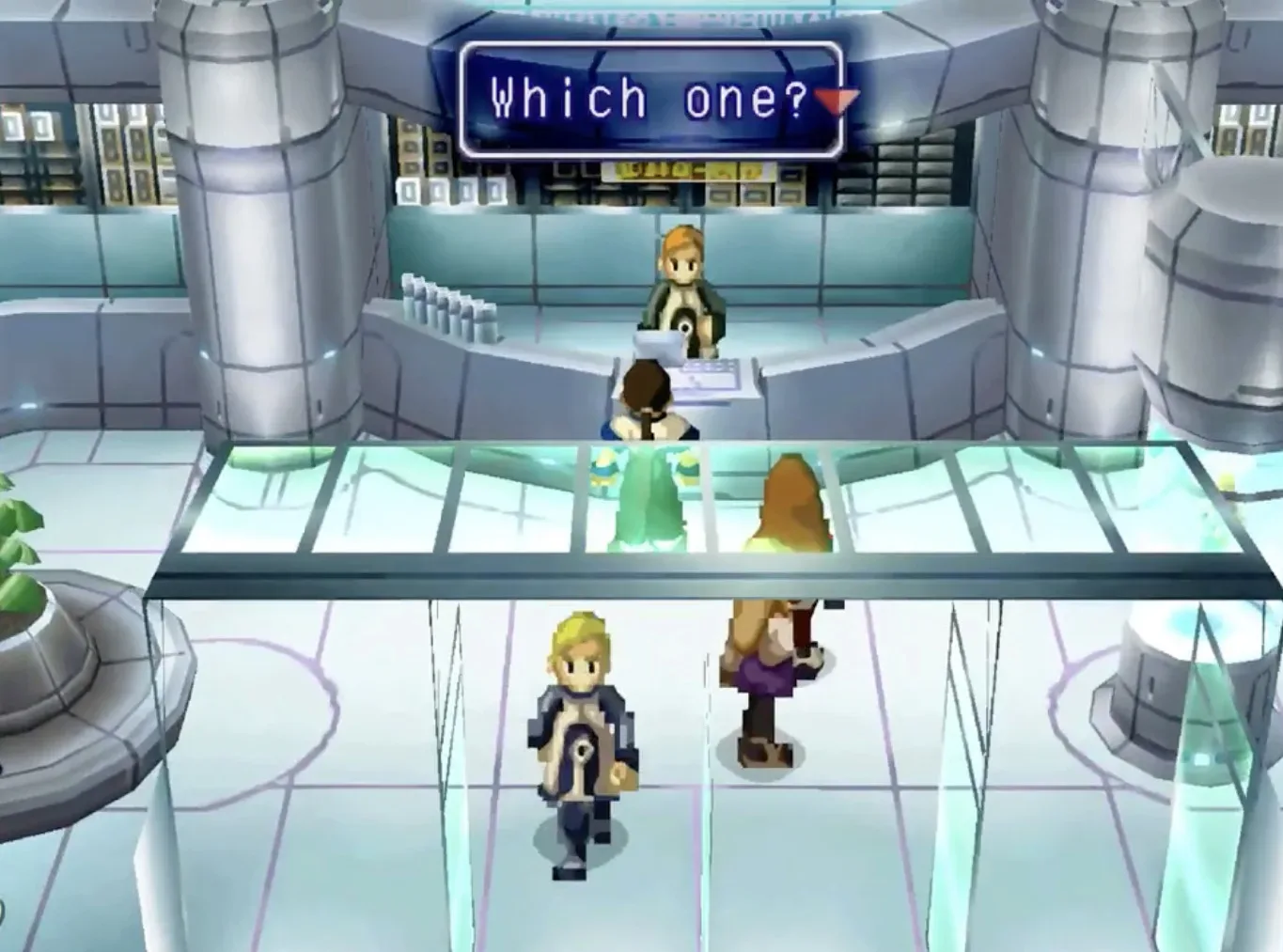
The transition into Solaris' 2nd Class district is one of Xenogears' most effective uses of environmental storytelling. With Elly's identification, Fei can enter Etrenank, where shopping districts, holographic advertising, leisure, and polished public spaces create the appearance of prosperity. It is a dramatic contrast to the packed cells of the Honeycomb.
But this is not freedom. Security systems still patrol the streets, social mobility remains regulated, and the government exerts control over intimate aspects of life. The Central Control Bureau arranges marriages under the logic that approved pairings produce better descendants. In other words, even family is managed as an arm of state planning.
Residents boast that Solaris has escaped the wars, disasters, and crime of the surface. They enjoy consumer comforts while insisting that the suffering below has nothing to do with them. Children absorb the ideology through toys and casual talk of purging the lambs. The city's class divisions are reinforced architecturally as well as politically: the player literally ascends through restricted levels to approach wealth and authority.
This arrangement makes Solaris more disturbing than a simple military dictatorship. Its rulers do not rely only on visible force. They use consumption as a sedative, offer a carefully limited version of comfort, and foster a social environment where privileged citizens can avoid confronting the violence that enables their lifestyle.
The emperor's spectacle and the absence of justice
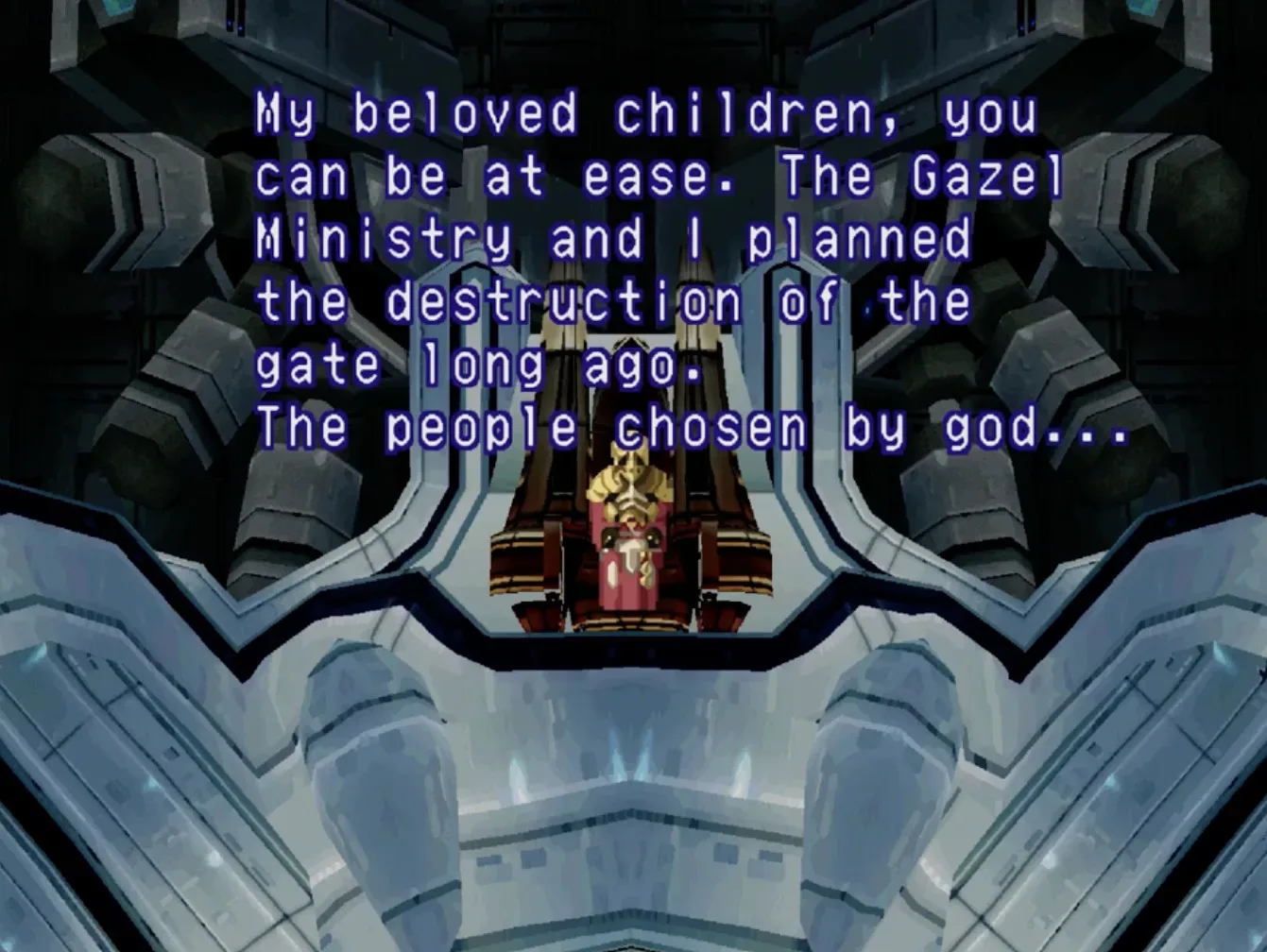
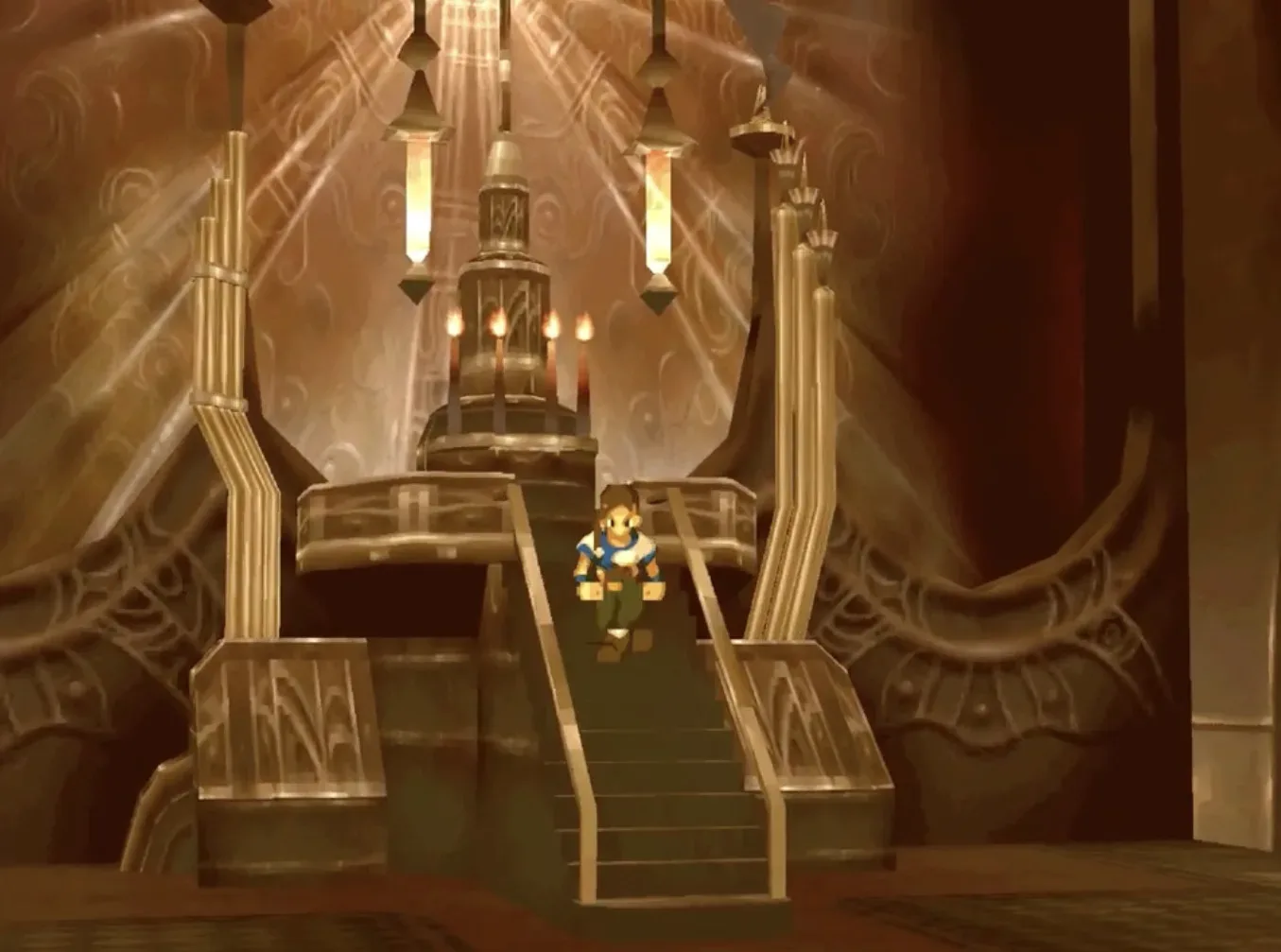
When the destruction of Solaris' surface gates threatens the empire's aura of invulnerability, the Emperor stages a Dedication ceremony. The response is not an honest accounting of danger but a choreographed display of national confidence, religious imagery, military power, and celebration. The public is promised a grand future, while the people of the surface are framed as inferior beings who will witness Solaris' true strength.
The Emperor calls the crowd his children, a phrase that gains added menace in a society where marriage, reproduction, and class status are tightly supervised. The state wants to become the family structure. It promises safety and belonging in exchange for obedience.
At the same time, Xenogears repeatedly shows that Solaris has little interest in justice as a consistent public principle. Security Cubes can decide who is detained, altered, or killed with no meaningful process. Automated enforcement is especially unnerving because it leaves the citizens with no clear human decision-maker to challenge. The machine acts, and everyone accepts that its action must be legitimate.
Class determines how this power is applied. In the upper levels, human guards may appear and officials can receive warnings before consequences arrive. In the lower city, people vanish into systems designed to erase them. Even Solaris' elites are not safe, however. Elly's father, Erich, fears being reduced to 3rd Class status more than conventional imprisonment. The possibility of descent holds everyone in place.
The Soylent System turns horror into infrastructure
The darkest revelation comes beneath the clean surface of the sky city. Fei, Elly, and Citan travel through Solaris' refuse and reach the Soylent System, a facility connected to food production, experimentation, disposal, and the creation of Wels. Before discovering the truth, Fei and Elly eat canned food found inside. The game soon reveals that the material is produced from human bodies and Wels.
It is one of the most infamous moments in Xenogears, and its horror goes beyond shock value. The system's products are distributed in ways that help keep the surface population docile and limited. Human beings are not only consumed after death; their bodies become part of the machinery that suppresses others. Solaris has industrialized exploitation so completely that victims can be unknowingly made complicit in sustaining the structure that enslaves them.
The facility also underlines the scale of the city's dehumanization. Captives are transformed, discarded, or treated as biological inputs. A mutated subject such as Dorothy, whose unusual battle behavior reverses the expected effects of damage and healing, gives the horror a personal and surreal dimension. These are not faceless monsters in a routine dungeon. They are evidence of a world where scientific advancement has been cut loose from empathy.
A city built for someone else's ambition
Solaris becomes even more tragic when its deeper purpose emerges. The Gazel Ministry, preserved as data after an earlier catastrophe, seeks restoration and a path back to the stars. The city, its population, its surveillance apparatus, and its cruelty are ultimately tools in a project much larger than the people living within it. The rulers do not simply govern badly. They regard the entire society as expendable infrastructure.
That discovery makes the fall of Solaris devastating rather than purely triumphant. Fei's unleashed Id destroys the city after a chain of betrayals, killings, and attempts to exploit his power. The destruction is spectacular, but it also represents the collapse of a place full of people who were themselves shaped, intimidated, and misled by an inhuman system.
The sequence closes Disc 1 with the kind of escalation Xenogears is famous for. Citan's loyalties become more complicated, Krelian's plans remain ominous, Fei's identities become harder to untangle, and the story turns toward even larger questions about God, humanity, cycles of violence, and freedom.
Why Solaris remains so powerful
Solaris endures because it does not offer a simplistic explanation for authoritarianism. Its citizens are not all monsters. Some are frightened, distracted, conditioned, or trying to protect what little stability they have. Some benefit from the system. Some cannot imagine an alternative. The city's rulers exploit all of those conditions.
Xenogears also refuses to isolate its ideas from the player's journey. The class structure is expressed through level design. Political messaging appears in casual dialogue and public ceremonies. Surveillance is built into save-point technology. The horror of the Soylent System is discovered through exploration rather than delivered as a detached lore entry.
Disc 2's abrupt shift toward a more narration-heavy presentation remains divisive, a result of the development team working under severe time and budget pressure. But Solaris demonstrates why so many players remain willing to forgive Xenogears' rougher edges. At its best, the game combines its enormous ambitions with a focused, unforgettable setting. The floating empire is a warning about what happens when a society confuses order with justice, comfort with freedom, and power with the right to treat people as raw material.
That warning has not lost its force.

Community
Discussion
Start the conversation.
No comments have been posted yet.