

Thanksgiving board game time can be a wonderful family tradition, but it also has a way of defaulting to the same familiar boxes every year. There is nothing inherently wrong with Monopoly or Clue, of course. Yet a modern board game can offer the same easy social energy while giving players more meaningful choices, shorter stretches of downtime, and outcomes that feel less predetermined by a lucky early roll.
For families looking to change the routine, so-called gateway games are an excellent place to start. These are tabletop games designed with rules that newcomers can grasp without a long rules explanation, but they still contain enough tactical depth to remain interesting after the first play. The best of them work across generations: children can take part, adults are not left bored, and experienced players have room to make smart decisions rather than simply going through the motions.
The following five games cover a wide range of moods. One is a calm tile-laying puzzle, another is built around silly answers and reading the room, while the others lean into wordplay, rail networks, and resource-driven settlement. Each is approachable, highly regarded, and well suited to the unpredictable mix of attention spans that comes with a large holiday gathering.
Carcassonne: Build a kingdom one tile at a time
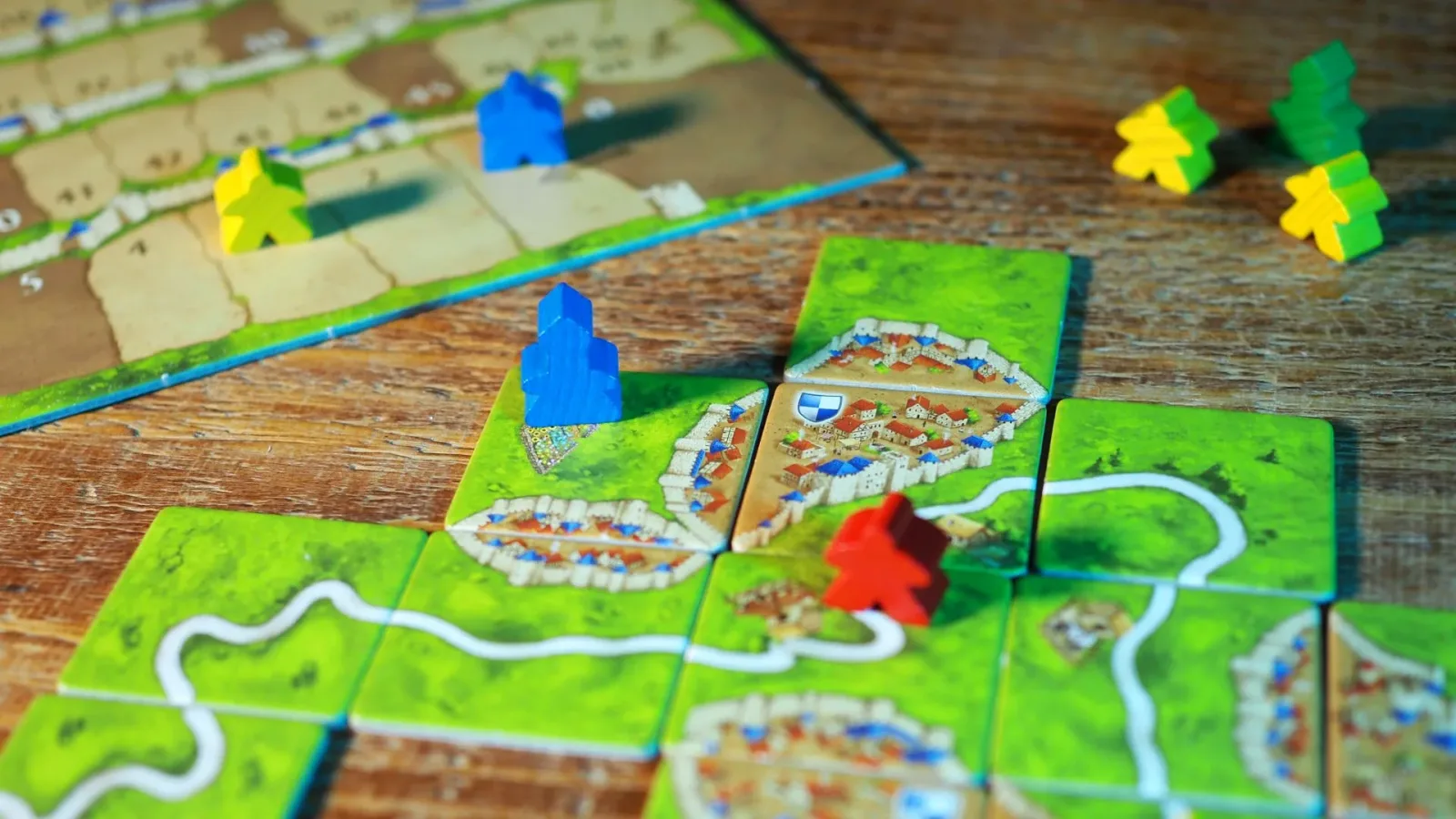
Carcassonne is often one of the first recommendations for people who want a board game that feels immediately welcoming. Players take turns drawing a single landscape tile and placing it beside tiles already on the table. Roads must connect to roads, cities to cities, and fields to fields, gradually creating a shared medieval landscape that looks different every game.
For useful background on this topic, read Persona 4 Revival Is Built From Golden, Developers Confirm After Teaser Clues Were Missed.
The basic action is exceptionally simple: draw a tile, place it legally, and optionally place one of your limited wooden followers on the feature you just created. A follower placed in a city, road, monastery, or field can potentially score points. The catch is that followers remain committed until the relevant feature is completed. Start a city that never gets finished, and that piece may be unavailable when a better opportunity appears later.
That small restriction is where Carcassonne gains its lasting appeal. Players must judge whether to claim a modest score now, save followers for later, help finish another player's project, or place a tile that makes an opponent's grand plan more difficult. The game introduces those decisions naturally rather than asking beginners to learn a large list of special powers or exceptions.
It is also an especially good fit for a quieter group. Carcassonne has interaction, including the occasional battle over where a road or city should go, but it is not inherently confrontational. Families can talk while playing, admire the map taking shape, and enjoy a complete game without needing everyone to perform, bluff, or think at the same speed.
Herd Mentality: The party game where being ordinary wins
If the family wants something light after dinner, Herd Mentality goes in the opposite direction. This is a social game about trying to give the answer that everyone else is most likely to choose. A prompt might ask for the best sauce, a popular pet, or another everyday topic. Everyone writes an answer privately, reveals it, and scores if they are part of the majority.
The crucial distinction is that players are not trying to be clever or correct. They are trying to predict the group. The answer that is objectively best may be a poor choice if nobody else writes it down. That gives the game a very low barrier to entry: there is no board state to study, no specialized knowledge to bring, and no complicated strategy to master before joining.
Its appeal comes from the conversations that follow each reveal. Why did nearly everyone choose one response? How did a player arrive at an answer that nobody else even considered? The game's playful premise encourages teasing and discussion without putting someone under the pressure of delivering a joke or defending a difficult trivia answer.
Herd Mentality is particularly useful as a warm-up game or a palate cleanser between longer sessions. It can accommodate a relaxed, chatty crowd and works well when players are tired, distracted, or drifting in and out of the room. For groups that tend to enjoy casual conversation more than intense competition, it may be the easiest recommendation on this list.
Codenames: One clue can change the whole board
Codenames is a staple of party-game collections for good reason. It divides players into two teams facing a grid of words. On each team, one player acts as the spymaster and knows which words their teammates need to select. The spymaster cannot simply explain the answers. Instead, they give a one-word clue followed by a number indicating how many words they believe relate to that clue.
A clue such as "Ocean, two," for example, might be intended to point teammates toward two words associated with the sea. The team then discusses possibilities and decides what to select. Finding the intended words moves them toward victory, but selecting the opposing team's words can help rivals. There is also an assassin word that ends the game immediately for the team that chooses it.
The rules are compact, but the decisions are wonderfully tense. A good clue needs to connect several targets while avoiding misleading associations. Team members must consider not only what the clue could mean, but what their spymaster would expect them to infer. Even a simple grid can become an entertaining puzzle full of second-guessing.
Codenames shines at family get-togethers because it turns a larger group into an active conversation rather than leaving people to wait for their individual turn. It rewards creativity and shared knowledge, and spectators often become invested in the debate even before they join a team. It is worth noting that some word combinations can be challenging for younger children, so teams may want to balance ages and vocabulary levels. Still, its pick-up-and-play structure makes it one of the strongest choices for a mixed group.
Ticket to Ride: Simple rules, satisfying strategy
For players ready for a little more structure, Ticket to Ride is a modern tabletop classic. The core goal is to build rail routes across North America. Players collect colored train cards, then spend matching sets to claim routes printed on the board. Longer routes are worth more points, while secret destination tickets offer additional scoring for connecting particular cities.
On a turn, the options are easy to understand: draw cards, claim a route, or take more destination tickets. That clarity makes the game accessible to newcomers. The strategy emerges because tracks are limited. A route that looks available early can disappear when another player claims it, forcing a detour that costs extra cards and extra turns.
This creates a satisfying balance between quietly building a personal network and watching the wider board for danger. Players need to plan ahead, but they also need to adapt when somebody takes the corridor they were counting on. It has the feel of a puzzle, with just enough competitive interference to make every route claim matter.
Ticket to Ride is an excellent step up from the gentlest games on this list because it teaches players to think about timing, resource collection, hidden objectives, and opponents' intentions without burying them in complicated rules. It also has a visual clarity that helps newer players follow the action. By the end of a game, everyone can see the rail map they helped create and understand the choices that shaped it.
Catan: Trading, planning, and multiple paths to victory
Catan is the most tactical pick here, but it remains a defining recommendation for newcomers who want to see why modern board games became such a major hobby. Players settle an island by building roads, settlements, and cities. Different terrain spaces produce resources, and those resources are traded and spent to expand.
Its central idea is easy to grasp: collect what you need, exchange what you have too much of, and build toward victory points. However, Catan becomes compelling because the board setup changes from game to game and resources are not distributed evenly. One player may have plenty of brick but lack grain, while another has exactly the reverse problem. Suddenly, negotiation matters.
Trading makes Catan unusually social for a strategy game. Players are constantly evaluating deals, deciding whether an exchange will help an opponent too much, and attempting to persuade the table that their offer is fair. The dice-driven resource production adds uncertainty, but success is not just a matter of luck. Where players build, which resources they prioritize, how they use ports, and when they expand can all alter the course of a match.
It also offers more than one route toward success. A player can focus on expanding their road network, developing settlements into cities, pursuing development cards, or adapting to the resources that become available. That variety is a major reason Catan continues to reward repeat plays. The same group can sit down again and face different geography, different trading relationships, and different problems to solve.
Choosing the right game for the table
The best Thanksgiving game is not necessarily the one with the highest strategic ceiling. It is the one that matches the room. Choose Herd Mentality when the aim is laughter and easy participation. Pick Codenames for teams, discussion, and a little verbal puzzle-solving. Put out Carcassonne when the group would enjoy building something together at a comfortable pace.
If everyone wants a longer game with accessible rules and a stronger sense of planning, Ticket to Ride is a dependable choice. And if the table is interested in trading, negotiation, and a more involved strategy experience, Catan remains an influential introduction to the hobby.
All five prove that a family-friendly board game does not have to mean a shallow one. A few clear rules, a shared table, and the right balance of chance and choice can produce the kind of stories people remember long after the leftovers have been packed away.
Community
Discussion
Start the conversation.
No comments have been posted yet.