

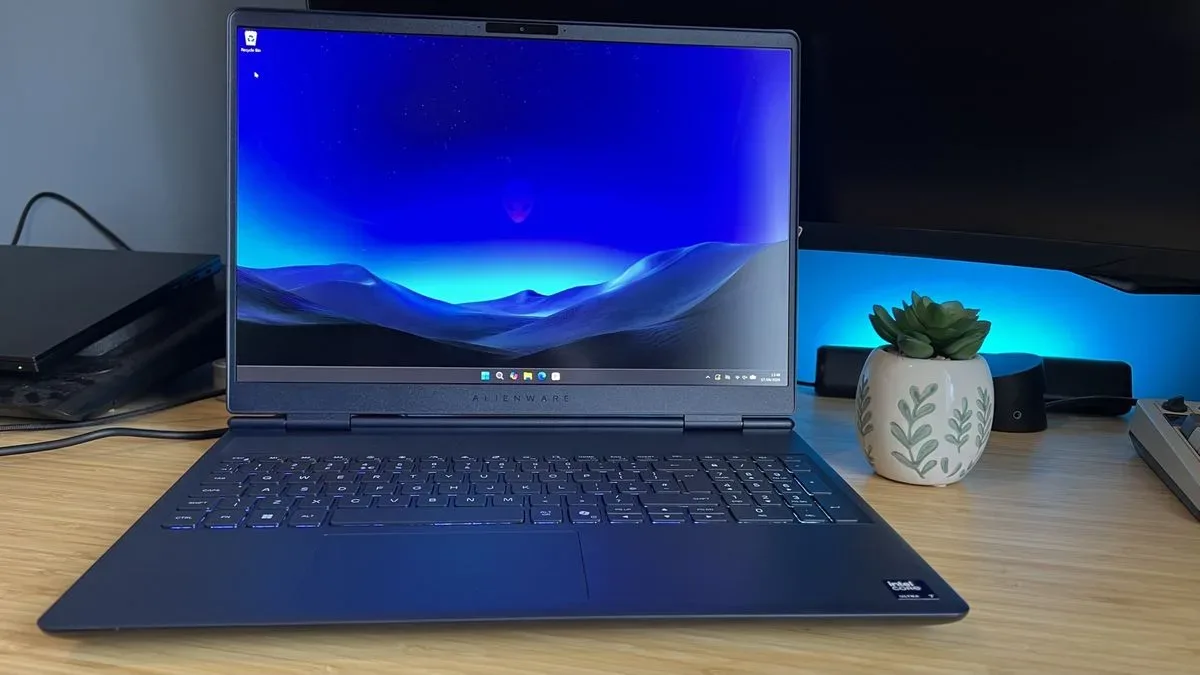
Alienware's 2026 16X Aurora is a much more compelling proposition than its predecessor. The updated 16-inch gaming laptop addresses two of the most notable gaps in last year's model: it now offers an OLED display, and its graphics options extend to the GeForce RTX 5070 Ti. Those changes alone make it a more credible choice in the crowded upper-mid-range gaming laptop market, but the refresh also arrives at a particularly awkward time for buyers. Laptop prices have climbed, RAM is expensive, and a machine equipped with only 16GB of memory can feel like a compromise before it has even left the store.
Alienware's answer is not to make that compromise disappear. Instead, the 16X Aurora makes it comparatively easy to address later. With accessible DDR5 memory slots and M.2 storage bays, the laptop is positioned as a system that can start at a more attainable specification and be expanded when component pricing is less painful. That practicality complements a genuinely impressive new screen, solid RTX 5070-class performance, and better-than-expected battery endurance. It does not solve every issue, however: the 16X Aurora is notably heavy, its keyboard falls short of Alienware's better recent efforts, and the tested configuration sits slightly above the going rate for similarly equipped competition.
Where the 16X Aurora fits in Alienware's range
The 16X Aurora occupies a middle position in Alienware's current portable PC lineup. It is more powerful than the company's newer 15-inch hybrid-oriented systems and the lower-cost Alienware 16 Aurora, which did not receive the OLED treatment. At the same time, it is not intended to replace the bigger, more aggressive Area-51 models, which can be configured with higher-tier graphics hardware.
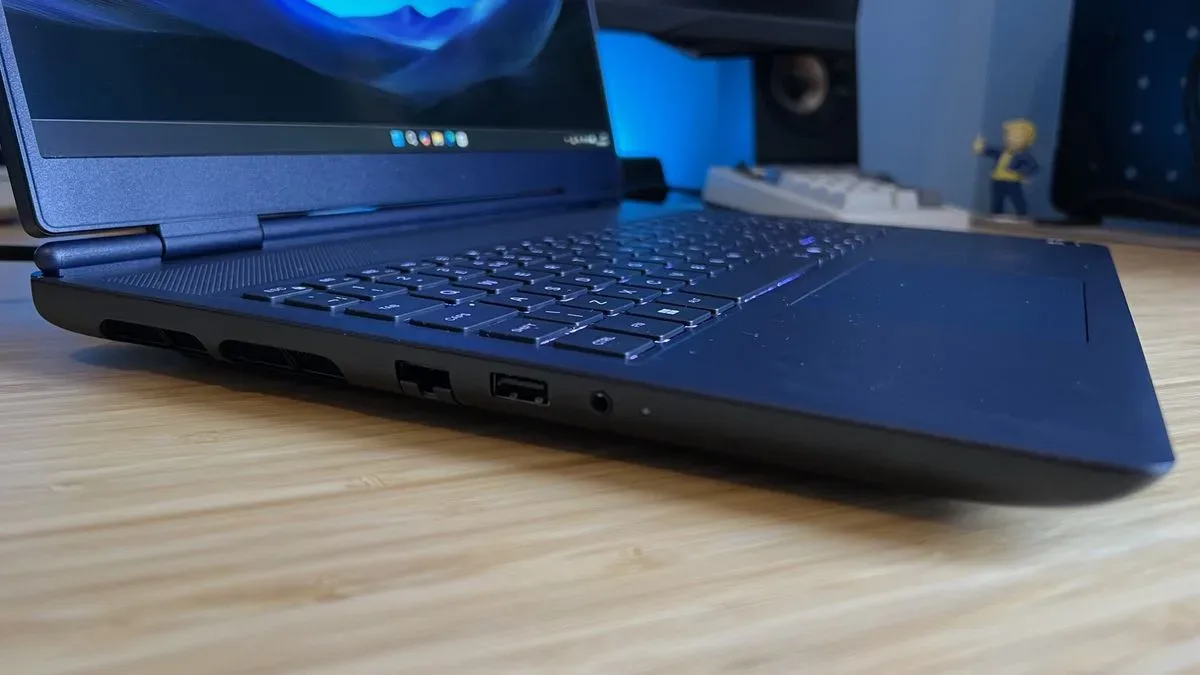
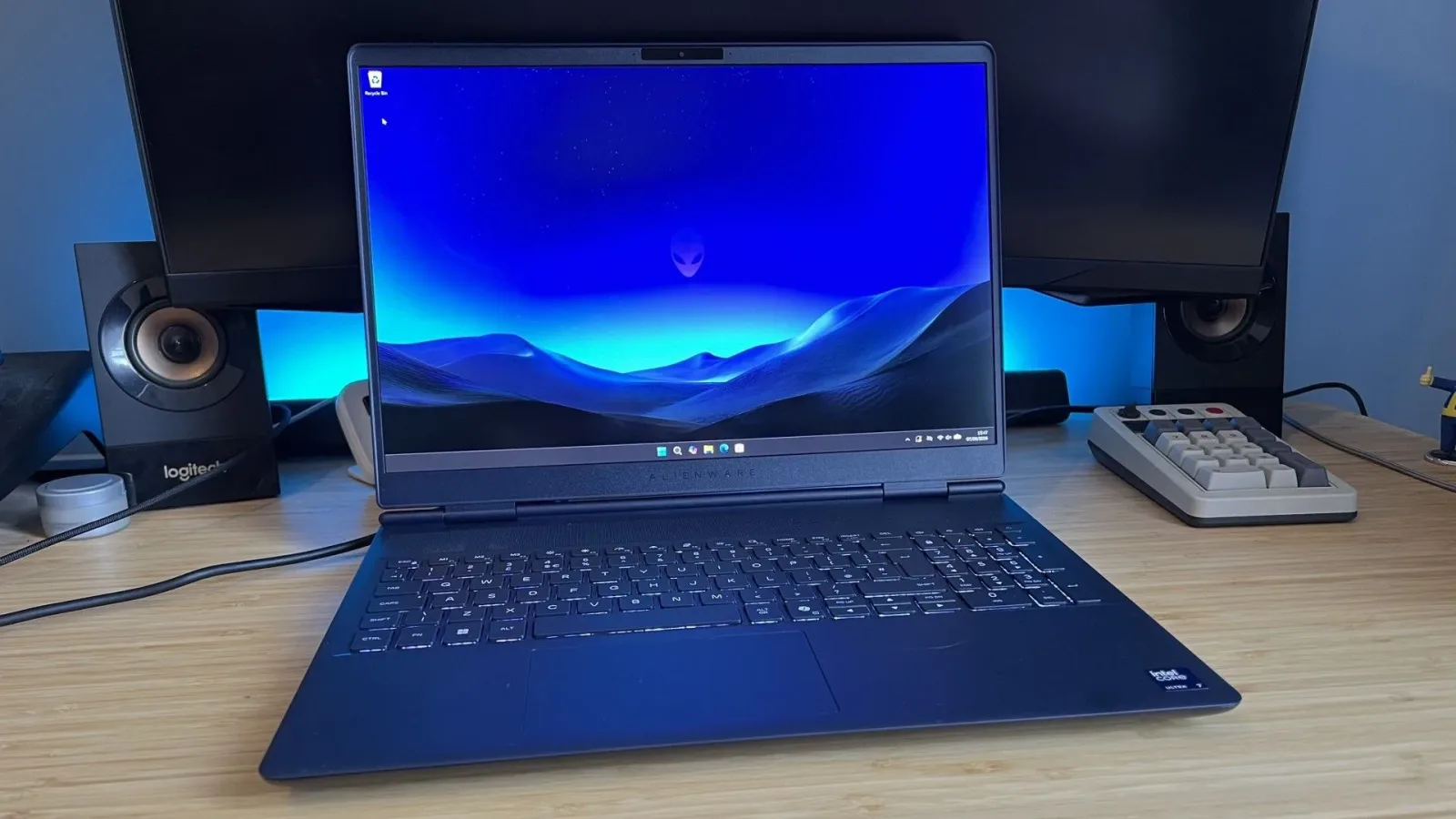
That leaves the 16X Aurora aimed at players upgrading from RTX 30-series or RTX 40-series machines who want substantial gains without committing to the cost and bulk associated with RTX 5080 or RTX 5090 laptop hardware. Its chassis is still a dedicated gaming-laptop design rather than a thin work-first notebook, but rounded edges and a soft-touch interior make it less intimidating than a full flagship desktop replacement.
For useful background on this topic, read Miyazaki Says FromSoftware Avoids a Fixed Formula to Keep Its Games Exciting.
Available configurations span a wide range. Entry builds begin at $1,529.99 in the US, while the highest-end options rise to $5,279.99 in the US and £6,549 in the UK. Buyers can choose between RTX 5060, RTX 5070, and RTX 5070 Ti graphics, with Intel Core Ultra 7 270HX Plus and Core Ultra 9 290HX Plus processors available depending on the model. Memory options run from 16GB to 64GB of DDR5 RAM, while storage can range from a 512GB Gen4 NVMe SSD to dual 2TB Gen5 drives in a 4TB RAID 0 arrangement.
The reviewed setup included an Intel Core Ultra 7 270HX Plus, an RTX 5070 with 8GB of VRAM, 16GB of RAM, and a 1TB Gen4 SSD. It was priced at $2,679.99 / £2,499.99. The RTX 5070 Ti option is especially important because it raises available VRAM to 12GB, offering more breathing room for demanding games at higher resolutions.
The matte OLED display is the headline feature
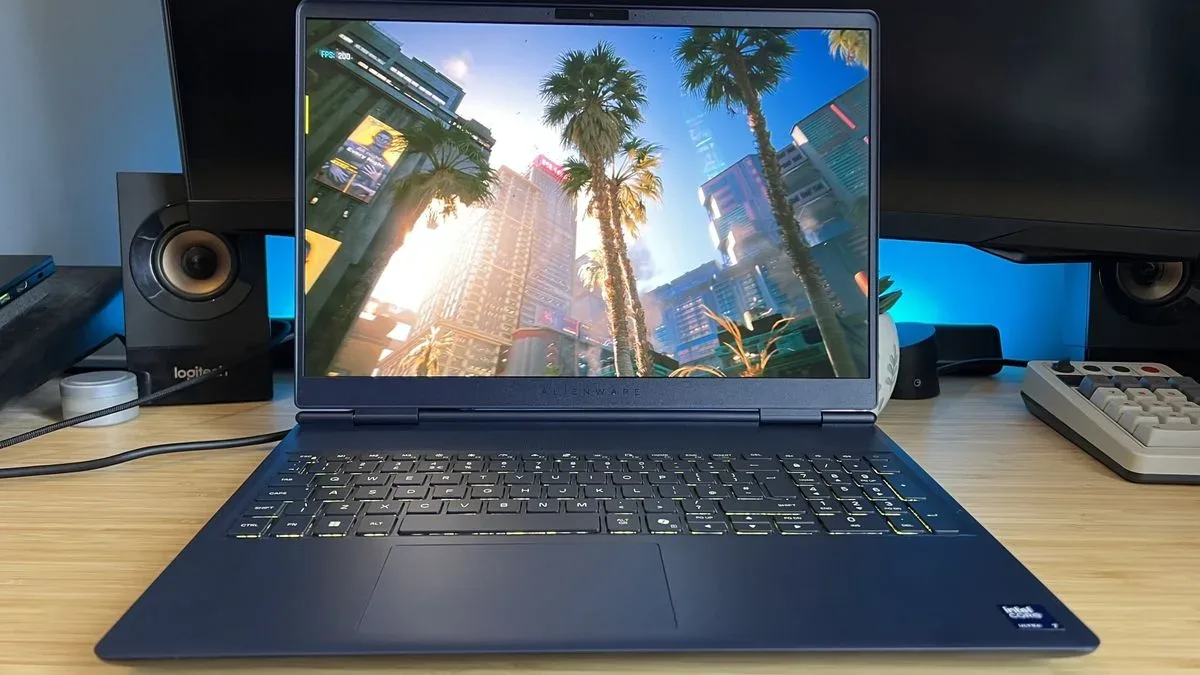
The most meaningful improvement is the 16-inch WQXGA anti-glare OLED panel, which combines a 240Hz refresh rate with a matte surface. OLED technology is already well known for deep blacks, strong contrast, and vibrant color, but many gaming laptops use glossy panels that can become frustratingly reflective in bright rooms. Alienware's approach changes that equation.
At first glance, a matte OLED can look less immediately flashy than a glossy alternative because there are no reflections adding a sheen to the picture. In use, however, the lack of glare becomes a major benefit. Dark details remain easier to see in daylight, and the panel retains sharpness and rich color at high brightness. The result is not a muted OLED experience; it is an OLED experience that is more comfortable to use outside of a carefully controlled dark room.
Games with extreme lighting contrast appear particularly well suited to the display. The interior spaces and neon-heavy streets of Cyberpunk 2077 benefit from the screen's ability to hold onto shadow detail while still allowing bright colors to stand out. This is a major step forward for an Alienware laptop line that has not always been defined by its displays. For buyers who regularly contend with lamps, windows, or office lighting, the anti-glare finish may be more valuable than another modest processor uplift.
RTX 5070 performance remains competitive with 16GB RAM
The newer Intel Core Ultra Plus processors do not appear to make a transformative difference to day-to-day gaming performance. Graphics hardware and cooling remain much more important, and the 16X Aurora's RTX 5070 results place it where expected among comparable machines.
Across synthetic testing, the laptop kept pace with other RTX 5070 systems in 3DMark Steel Nomad. It performed particularly well in Fire Strike, while landing slightly behind the Asus ROG Strix G16 in Time Spy. In practical game tests, it generally outpaced slimmer machines such as the Razer Blade 14 and Acer Predator Triton 14 AI, while tracking closely with the more similarly built Strix G16.
The more interesting point is that the Aurora achieved these results with 16GB of RAM, whereas the comparison Strix G16 was equipped with 32GB. In 2026, reduced memory capacity may be an unavoidable trade-off for some laptop buyers due to component pricing. At RTX 5070 power levels, though, the figures suggest the cut does not automatically produce a major immediate performance problem.
At 1080p, the Alienware remained comfortably above 60 frames per second in demanding scenarios, including Cyberpunk 2077 with full ray tracing at Ultra settings. It was a little behind the 32GB Strix G16 in lighter and heavier workloads, but the gap was not enough to undermine smooth play. At 1600p, the system still delivered credible results in demanding games, though titles with larger simulation or strategy demands may benefit more noticeably from additional memory. In Total War: Three Kingdoms at Ultra settings, for example, the Aurora averaged 62fps, while the 32GB Asus system reached 68fps.
That distinction matters for long-term ownership. Sixteen gigabytes is workable today for this performance tier, but it is not the most reassuring specification for players hoping to keep a laptop for years while games demand more memory. Fortunately, upgradeability is one of the Aurora's most practical strengths.
Built for upgrades when the market improves
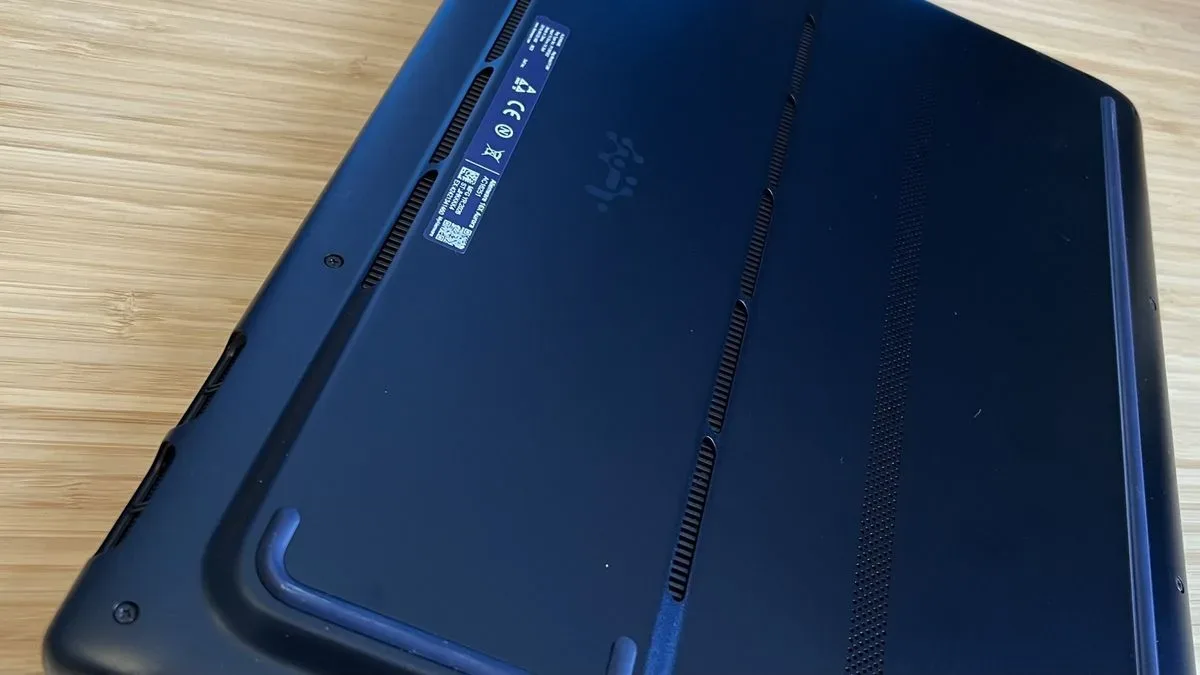
The bottom panel is secured with standard Phillips-head screws, and removing it provides access to two DDR5 memory slots and two M.2 bays supporting 2230 and 2280 drives. The system supports up to 64GB of RAM. This is a welcome design decision at a time when a 32GB or 64GB preconfigured laptop can become dramatically more expensive than the base model.
Buyers can start with 16GB and expand later rather than paying inflated pricing immediately. Storage can be handled similarly, with the option to add or replace drives down the line. The reviewed model used a 1TB Gen4 SSD, while Gen5 storage is reserved for configurations with 2TB or more. This will not make the base specification feel future-proof by itself, but it turns the machine into a more flexible long-term investment than laptops with soldered memory or limited internal expansion.
Battery life is stronger than expected
Gaming laptops in this size and weight category are rarely bought for all-day unplugged use, and the 16X Aurora does not overturn that reality. Gaming battery life was around three and a half hours, which is broadly in line with slimmer performance systems. For productivity, though, it proved unusually capable. It managed a full eight-hour workday on a single charge multiple times during testing.
That result makes the laptop more versatile than its bulky dimensions initially suggest. It can serve as a work machine away from an outlet for a day, provided it is not spending that time rendering games. Still, battery endurance and portability are separate concerns, and the Aurora has a clear weakness in the latter category.
Weight, keyboard feel, and price complicate the recommendation
Depending on configuration, the 16X Aurora weighs between 2.57kg and 2.61kg. That is substantial for a modern 16-inch laptop. It is heavier than systems including the MSI Cyborg, Acer Nitro V16 AI, Lenovo Legion 7 Gen 10, and Acer Predator Helios Neo 16S AI. Only much more unusual designs, such as the dual-screen Asus ROG Zephyrus Duo, exceed it among comparable machines.
This is not necessarily a problem for players who mostly use the Aurora at home or carry it only occasionally. It is far less appealing for anyone seeking a laptop that travels daily between work, school, and home. The robust battery life helps, but it cannot reduce the strain of carrying a 2.6kg device and its charger.
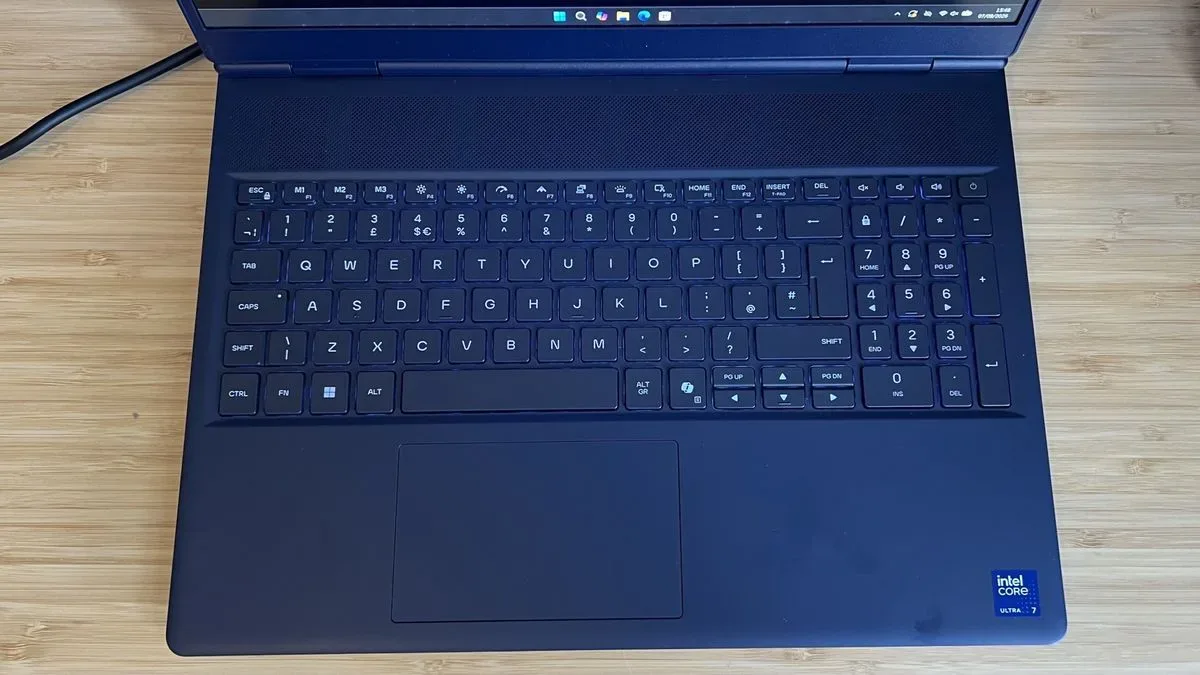
The keyboard is also merely good rather than exceptional. It offers respectable travel, responsive repeated presses, and no unpleasantly soft or mushy behavior. Yet it lacks the especially satisfying tactile character seen in some earlier Alienware models. The keys feel slightly loose, while the trackpad has more depth to its click than ideal. Neither issue ruins the experience, but both stand out because Alienware has demonstrated it can do better.
Finally, there is pricing. The reviewed RTX 5070 model costs $2,679.99, placing it a little above an estimated $2,500 average MSRP for RTX 5070 gaming laptops observed when newer 12GB RTX 5070 systems arrived. Alienware has long carried a premium, and the difference is not enormous, but it is harder to ignore when an older 16X Aurora with RTX 5070 graphics was available for under $1,600. The increase reflects wider market movement rather than one manufacturer alone, yet buyers should still wait for discounts where possible.
Verdict
The 2026 Alienware 16X Aurora is easy to recommend to the right kind of buyer. Its anti-glare 240Hz OLED is one of its strongest reasons to exist, delivering OLED contrast and color without the usual glossy-panel distractions. RTX 5070 performance is competitive even with 16GB of RAM, the RTX 5070 Ti offers a useful 12GB VRAM upgrade path, and the simple access to memory and storage makes the system unusually sensible during a period of high component costs.
It is not the ideal all-purpose travel laptop. The chassis is heavy, the keyboard does not fully live up to Alienware's best work, and pricing sits toward the costly side of its category. But for someone who wants a powerful 16-inch gaming system primarily for home use, values a glare-resistant OLED screen, and wants the option to upgrade RAM later, the 16X Aurora is a significantly stronger machine than the model it replaces.

Community
Discussion
Start the conversation.
No comments have been posted yet.