

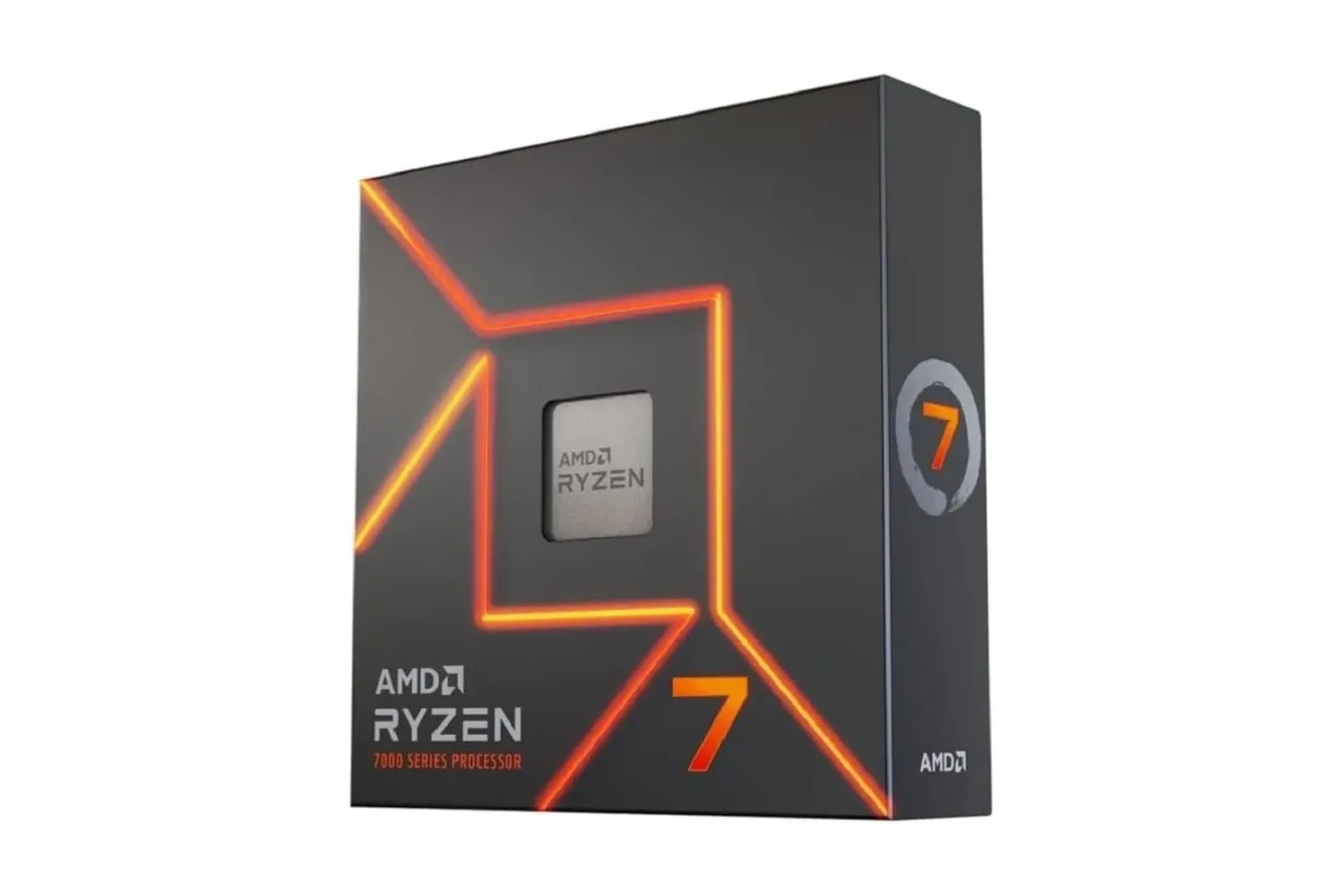
AMD's Ryzen 7 9800X3D has dropped to a notably low price during Black Friday week, with an Amazon product-page coupon bringing the high-end gaming processor down to $369. The listed price sits at $411 before the coupon is applied, while the chip's stated regular price is $479.
That means prospective PC builders should pay close attention to the checkout path rather than stopping at the initial product listing. The additional coupon activation is the difference between a solid CPU discount and a price that could materially change the budget for the rest of a gaming build. As with many retailer promotions, availability, coupon eligibility, and pricing can change quickly.
The discount arrives at a time when building a desktop has become more complicated for buyers trying to balance performance against rising component costs. DDR5 memory pricing has increased sharply as demand for DRAM has been pulled toward AI data-center infrastructure. For anyone assembling a new AM5 machine, or refreshing an existing system, a substantial saving on the processor can be redirected toward memory capacity, graphics hardware, storage, cooling, or a higher-quality power supply.
At $369 after the coupon, the Ryzen 7 9800X3D is positioned as a particularly consequential deal for players whose priority is high frame-rate gaming performance rather than core counts aimed at heavily parallel professional workloads.
For useful background on this topic, read Logitech G920 Racing Wheel Drops to $199 for Black Friday.
Why the Ryzen 7 9800X3D remains a major gaming CPU
The Ryzen 7 9800X3D is built around AMD's Zen 5 architecture and includes eight cores and 16 threads. On paper, that configuration is familiar territory for an enthusiast-oriented gaming processor. Its defining feature is not simply the core count, however. It is AMD's second-generation 3D V-Cache design, which gives the CPU 96MB of L3 cache.
Large cache capacity can make an outsized difference in games that repeatedly access large sets of data and are constrained by CPU performance. Keeping more information close to the processor cores can reduce the need to retrieve it from slower parts of the memory hierarchy. In practical gaming terms, that can improve average frame rates in suitable titles, but it can also matter for frame-time consistency: the smoothness players notice when a game is under heavy simulation, streaming, or multiplayer load.
That is particularly relevant in competitive shooters played at very high refresh rates, where the graphics card may not be the only limit on performance. It also applies to demanding strategy games, city builders, management simulations, and open-world releases that can become more CPU-intensive as a save file grows or as the number of active entities increases.
AMD has described the Zen 5 generation as delivering a double-digit instructions-per-clock improvement over its prior generation, alongside efficiency gains. The 9800X3D pairs those architectural changes with the expanded cache that has made AMD's X3D models common recommendations for premium gaming PCs. Even two years after its launch, it remains a prominent choice for builders seeking top-tier gaming results on the AM5 platform.
Cooling changes could help overall build costs
The 9800X3D also changes the physical arrangement of its cache compared with the Ryzen 7 7800X3D it superseded. AMD placed the cache beneath the processor cores rather than above them. That design is intended to improve thermal behavior, allowing heat generated by the cores to be transferred more effectively to the integrated heat spreader and then to the cooler.
The result is meaningful beyond benchmark charts. The chip can boost as high as 5.2GHz, while its improved thermals make it less likely that a builder will feel compelled to buy an expensive all-in-one liquid cooler solely to manage temperatures. A capable mid-range air cooler can be a sensible pairing, depending on case airflow, ambient temperatures, BIOS settings, and the user's noise preferences.
That does not mean cooling should be treated as an afterthought. High-performance processors still benefit from a well-ventilated case and a cooler installed correctly with appropriate mounting pressure and thermal paste. But being able to use a less elaborate cooling solution can reduce the total cost of an AM5 gaming system and simplify installation and long-term maintenance.
For a buyer looking at a complete parts list, those savings can add up. A lower processor price plus a more modest cooler requirement may leave enough room for a larger SSD, more RAM, or a better graphics card tier. In most gaming systems, the GPU remains the dominant factor at higher resolutions and demanding visual settings, so maintaining balance across the entire build is important.
Memory costs make the discount more useful
The current memory market is a major reason this processor promotion stands out. New AM5 builds require DDR5, and buyers who expected memory to be one of the easier components to purchase have instead had to contend with considerably higher kit prices than a year earlier.
For gaming, 32GB is increasingly a comfortable target for a new premium desktop. Many games continue to run well on 16GB, but modern releases, background applications, browser tabs, capture tools, mods, and multitasking can make additional capacity valuable. A machine built around a Ryzen 7 9800X3D is also likely to be paired with a powerful graphics card and expected to remain useful for several years, making memory headroom a more defensible investment.
Saving $110 from the stated $479 price, or $42 compared with the uncouponed $411 listing, does not erase the broader rise in component costs. It can nevertheless soften the impact. Rather than compromising on a memory kit immediately, builders may be able to preserve a more balanced specification while still choosing a CPU designed for demanding gaming workloads.
The most valuable PC deal is not always the part with the largest percentage reduction. It is often the one that creates flexibility across the entire component budget.
AM5 owners have the simplest upgrade path
Existing AM5 users are in the strongest position to take advantage of the Ryzen 7 9800X3D. The CPU is compatible with AM5 motherboards, though a BIOS update may be required before installation. Buyers should check the motherboard manufacturer's CPU support list, identify the required firmware version, and confirm whether their board supports BIOS flashback if they do not have an older compatible processor available.
For those already using AM5 and DDR5, retaining the motherboard and current memory can make this a relatively straightforward processor upgrade. It also helps mitigate the effect of high RAM prices because there is no need to buy a new kit simply to move to the platform.
There are still a few practical checks worth making before ordering. A motherboard's power delivery, BIOS maturity, cooler mounting hardware, case clearance, and memory stability settings can all affect the upgrade experience. Updating firmware before swapping CPUs is generally the least stressful approach when possible. It is also wise to reset or review overclocking and memory-profile settings after installing new hardware, then test stability with games and other workloads.
AM4 users need to weigh the platform jump
The calculation is different for players coming from AM4. Moving to the Ryzen 7 9800X3D means purchasing an AM5 motherboard and DDR5 memory in addition to the processor. That makes the $369 coupon price welcome, but it is only one part of a wider upgrade bill.
Still, AM5 offers a longer-term path than a one-generation platform change. AMD has committed to continued AM5 support, giving builders reason to expect additional processor options in future generations. For someone putting together a new gaming PC or replacing an aging AM4 foundation, that prospective upgrade runway may help justify the initial cost.
Whether the move makes sense depends on the current system. A gamer with a capable AM4 X3D chip and a GPU-limited setup at 4K may see less immediate benefit than a player using an older processor with a high-refresh 1080p or 1440p display. CPU upgrades tend to matter most when the graphics card is waiting on the processor, when simulation-heavy games are a priority, or when inconsistent frame times are undermining an otherwise powerful system.
What to check before buying
- Activate the coupon: The $369 figure depends on selecting the coupon shown on the product page. Without it, the listed price is $411.
- Confirm motherboard support: AM5 compatibility does not remove the need for the right BIOS version.
- Budget for the full platform: AM5 upgraders can reuse their board and DDR5, while AM4 owners need to account for both.
- Match the CPU to the GPU and display: The 9800X3D is especially compelling for high-refresh and CPU-limited gaming scenarios.
- Do not neglect cooling and airflow: A sensible air cooler may be enough, but case configuration and installation quality still matter.
For builders already committed to AM5, this is a rare opportunity to buy one of AMD's most sought-after gaming processors at a price well below its stated regular cost. For everyone else, the promotion is a reminder to evaluate an upgrade as a complete system rather than a single component. The Ryzen 7 9800X3D's coupon discount may be the headline, but the real benefit is the room it can create for the memory and supporting parts a modern gaming PC needs.
Community
Discussion
Start the conversation.
No comments have been posted yet.