

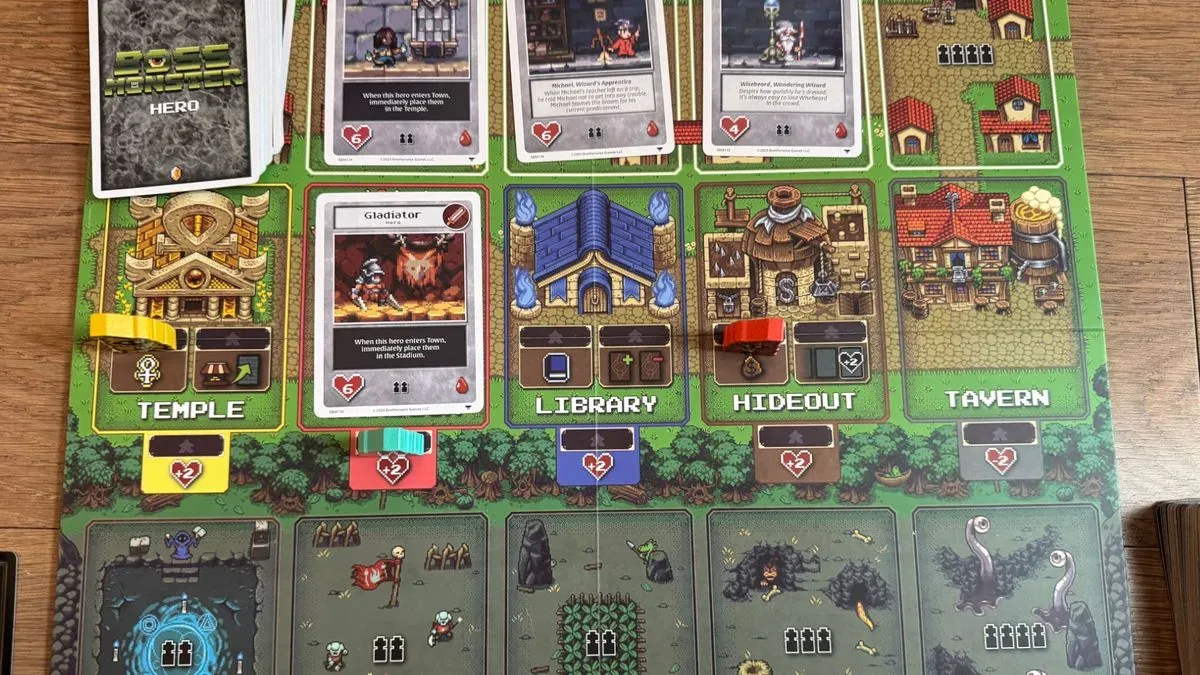
Super Boss Monster takes the core premise of Boss Monster and gives it a welcome upgrade. Players are not brave adventurers pushing into a monster-filled dungeon; they are the monsters, constructing deadly rooms, tempting heroes through the door with glittering treasure, and hoping those intruders do not survive long enough to reach the boss.
The original Boss Monster arrived in 2013 and developed into a larger card-game line through expansions that added spells, rooms, and extra possibilities. Super Boss Monster does not throw that foundation away. Instead, it refreshes the presentation from 8-bit pixel art to a Super Nintendo-style 16-bit look while smoothing some of the rougher systems. It also remains compatible with earlier Boss Monster material, making it an inviting new starting point for newcomers and a practical upgrade for longtime fans with an existing collection.
The result is a quick, low-complexity dungeon tableau builder that generally lasts around 30 minutes. It is easy to learn, full of playful retro-game flavor, and more even-handed than its predecessor. It is not a deeply strategic contest, however, and its disruptive cards can still produce the sort of table politics where the apparent leader becomes everyone else's target.
Verdict: A Better Way to Be the Final Boss
Super Boss Monster succeeds because it preserves what makes the series appealing: simple room placement, visible pixel-art personality, and the satisfying reversal of a classic dungeon crawl. Rather than trying to rescue heroes, players build the obstacle course designed to defeat them.
For useful background on this topic, read Beyond GTA 6: Better Ways to Start a Gaming Conversation This Thanksgiving.
Its most meaningful improvement is the new town board. This shared area gives players additional ways to influence where heroes go, reducing the helpless feeling that could arise when a dungeon's treasure mix failed to attract the right adventurers. That added flexibility does not transform the game into a heavyweight strategy experience, but it gives players more useful decisions and makes unlucky drafts less punishing.
There are still caveats. The base set can feel somewhat limited once its cards become familiar, although compatibility with older releases offers a clear route to more variety. More importantly, players who dislike Munchkin-style interference may find the game frustrating. Spells and town actions can be used to hit rivals, and a player in front can be collectively attacked until they are no longer in contention. For the right group, that chaos is part of the fun. For others, it can feel unfair.
Building a Dungeon One Room at a Time
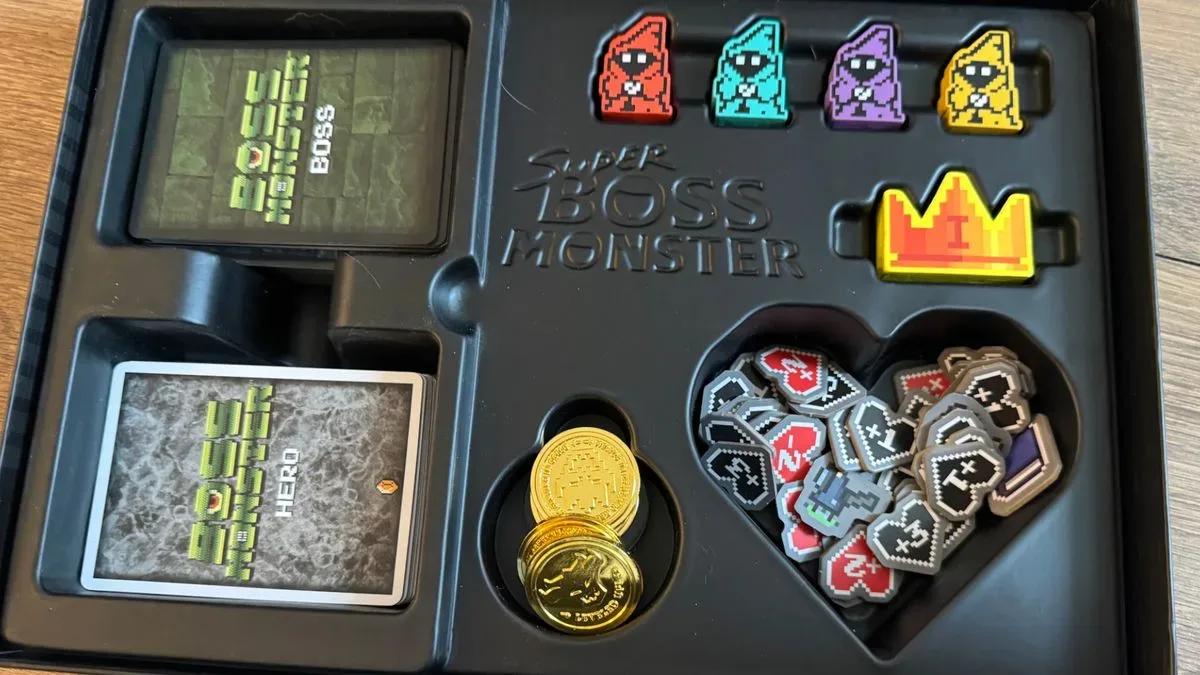
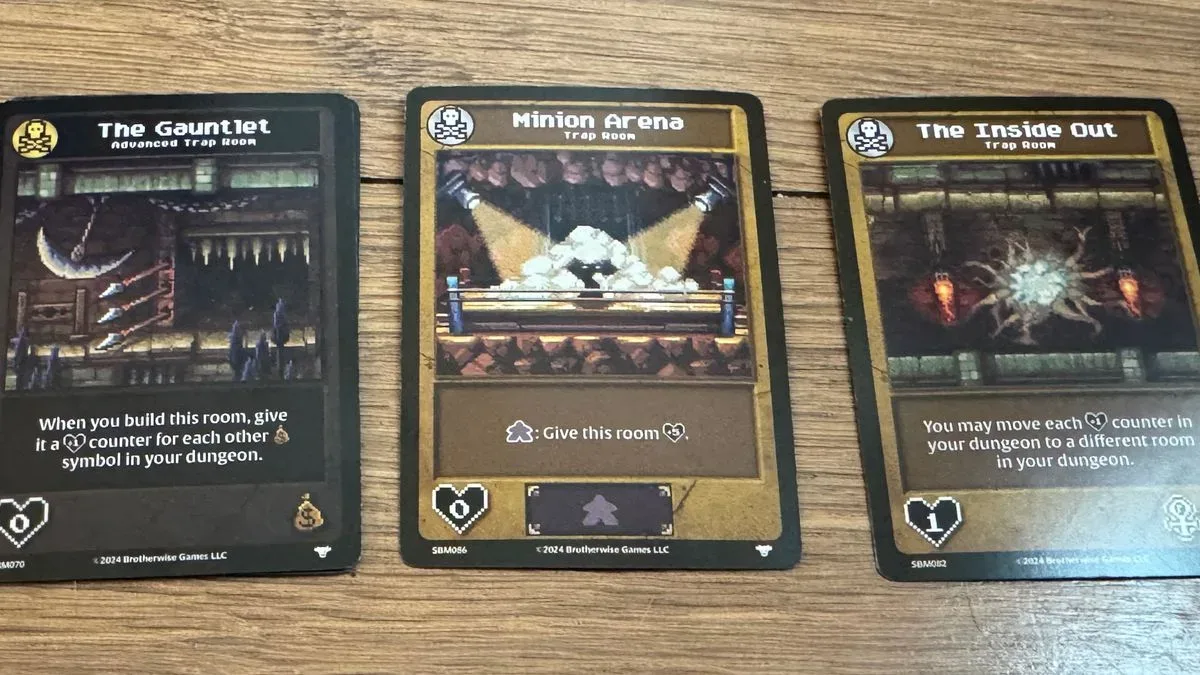
The game uses three major decks: Rooms, Spells, and Heroes. Room cards form each player's dungeon and are divided between trap rooms and monster rooms. Every room displays damage and treasure icons. Damage determines how much punishment a hero takes in that room, while treasure is the bait that determines which dungeon a hero prefers to enter.
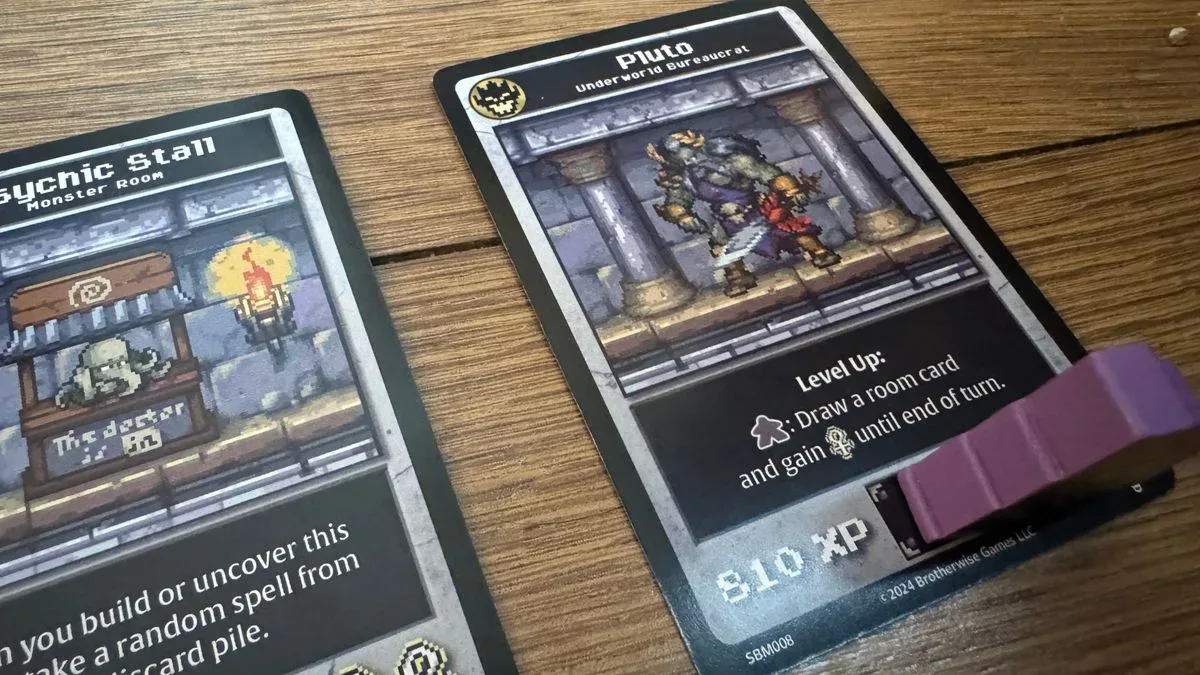
Players begin with a modest one-room dungeon and expand it over the course of the game until they reach five rooms. Once a dungeon reaches that limit, its Boss Monster levels up and gains additional abilities. This creates a pleasing progression arc without bogging the game down in complicated resource systems. Basic trap and monster rooms can be placed freely, so building does not require spending currency or jumping through unnecessary hoops.
Advanced rooms provide the next layer of consideration. These more powerful cards must be placed on an existing room with a matching treasure icon. They often deliver greater treasure rewards and stronger abilities, but upgrading a room effectively resets that space by removing its existing buffs. That trade-off is one of the game's better small decisions: a powerful replacement may be tempting, but it is not always worth losing the setup already in place.
Spells provide much of the game's direct confrontation. They are generally immediate-use effects, often played during the adventure portion of a round. Some can strengthen a hero, negate elements of a dungeon, or otherwise interfere with an opponent's careful plans. There are beneficial spells too, but the deck largely supports Super Boss Monster's mischievous, competitive edge. Players should expect plans to be disrupted, especially once someone looks poised to collect enough souls for victory.
The Town Board Makes a Major Difference
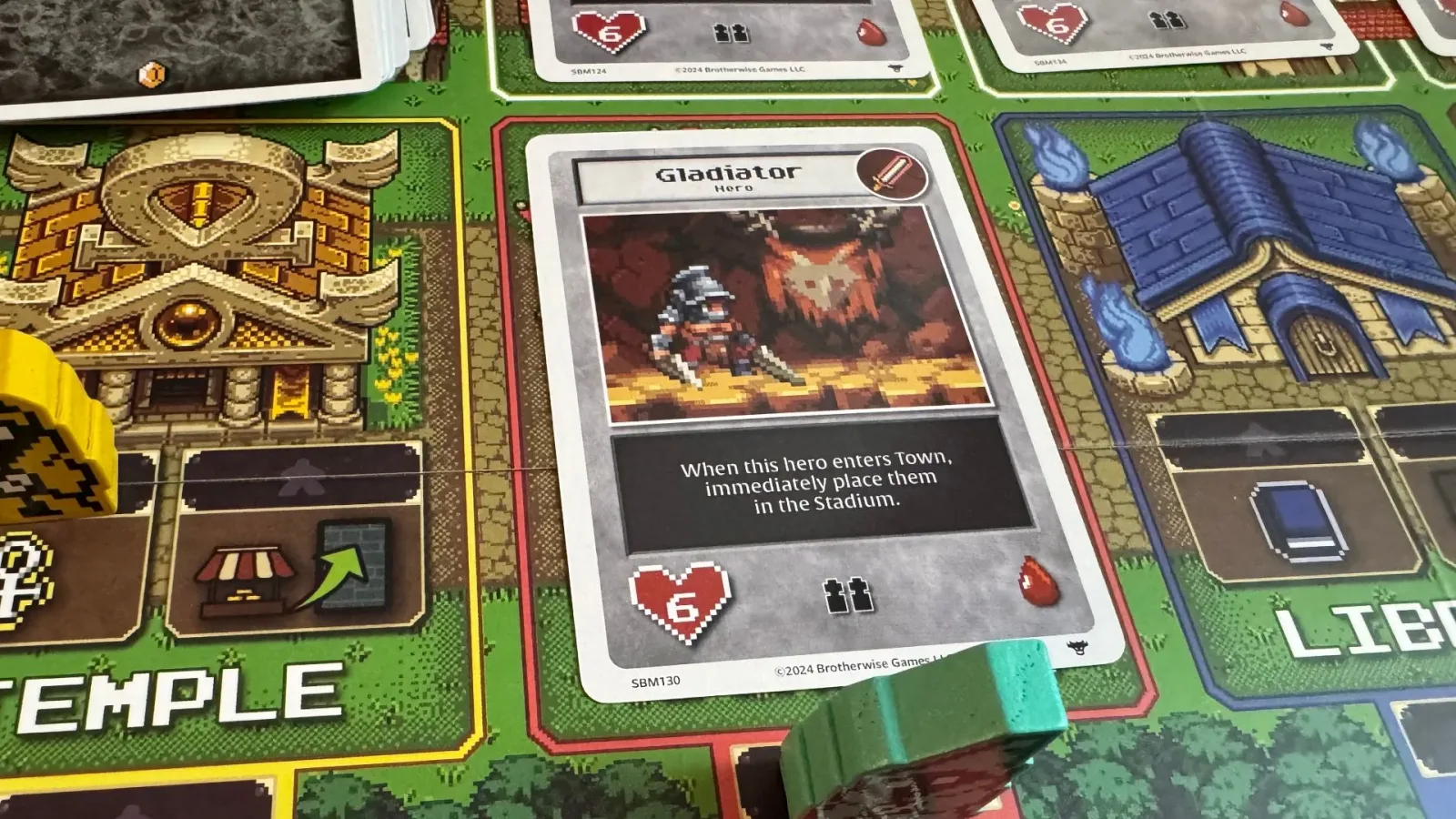
The new town board is Super Boss Monster's defining addition. Heroes gather in town before heading toward a dungeon, and the board includes special buildings with slots for minions. During the opening Town Phase, heroes arrive and the market is restocked with new rooms and spells. Players take turns placing a minion in a town location, or occasionally in their own dungeon, while drafting a card from the market.
One slightly unintuitive point is that minion benefits do not resolve right away. Their effects wait for the separate Minion Phase, which can initially make the sequence harder to follow than it needs to be. Once understood, though, the system adds flexibility without adding much overhead.
Minion benefits range from extra cards to temporary treasure, which can break ties when heroes choose a destination. One particularly impactful effect allows a player to give a hero two additional health and send that hero to any dungeon. Naturally, that can be used to burden an opponent with a tougher intruder. But it can also be used to send a hero into a player's own dungeon, especially when too many heroes have appeared who are not naturally interested in its treasure.
This is a substantial improvement over relying exclusively on treasure dominance. Players can still specialize in one or two treasure types to attract the heroes they want, or they can build a more balanced dungeon and use minion powers carefully to steer traffic. Specialization may be easier at higher player counts, but both approaches are viable enough to make the town board feel like a real system rather than a decorative extra.
Heroes, Souls, and Damage
After building rooms and resolving minion effects, heroes enter the dungeons. Each hero is drawn toward the dungeon displaying the most of its preferred treasure type. Then the heroes travel through room by room. Rooms deal damage first, followed by their individual effects, creating a clear and flavorful miniature dungeon crawl.
Early rounds feature standard heroes with lower health and simpler abilities. Later, epic heroes arrive. These tougher foes have more health, can negate entire rooms, and are much more difficult to defeat. They are also worth more points, making them a lucrative but dangerous challenge.
Defeated heroes become soul gems, placed beneath a player's Boss Monster. Heroes who survive the dungeon instead become damage dealt to that boss. The game ends when a player has collected ten soul gems or when the hero deck runs out. Soul gems count positively, while boss damage counts against the final score.
The core resolution is straightforward, but tracking effects can become mildly fiddly. Damage counters are permanent and use markers, whereas other cards grant temporary damage boosts that usually last for only one round. The difference matters, so players need to read carefully and keep the board state organized. It is not a major obstacle, but it is one of the few moments where the otherwise breezy design can create avoidable confusion.
Retro Presentation and Long-Term Value
Super Boss Monster's 16-bit art direction is more than a coat of paint. It is central to the game's appeal. The card illustrations evoke an era of Super Nintendo-style role-playing games and dungeon crawlers, while references to classic gaming culture give the game a knowingly nostalgic voice. Anyone drawn to old-school pixel art will find a lot to appreciate in its visual identity.
Players familiar with Boss Monster will also appreciate that the new game remains fully compatible with previous cards and expansions. That compatibility matters because the standalone deck can begin to feel repetitive after repeated plays. The base game has enough material for a satisfying run of sessions, but its relatively limited range is noticeable compared with card games built around huge, self-contained pools. Older expansions and a planned Super Boss Monster expansion provide ways to broaden the experience.
Who Should Play Super Boss Monster?
Super Boss Monster is best suited to players who want a fast, approachable tableau builder with a competitive streak. It works well for groups that enjoy drafting cards, building combinations, and watching their opponents' plans unravel under a well-timed spell. Its 1-4 player count, 13+ age recommendation, and roughly half-hour playtime make it a comfortable choice for a lighter game night slot.
It is also an easy recommendation for fans of the original Boss Monster. The game retains the familiar structure while making hero attraction less dependent on favorable treasure draws. The town board does not reinvent the franchise, but it makes its central system more reliable and gives players more opportunities to respond to the state of the table.
Those seeking complex long-term planning may want something deeper. The central decisions are largely about where and when to place rooms, how to pursue treasure types, and when to interfere. Likewise, players who strongly dislike being singled out by a table may not enjoy the leader-bashing that can emerge late in a game.
Final Takeaway
Super Boss Monster is a polished and entertaining update to a proven card-game formula. The town board solves a meaningful frustration by giving players more control over luring heroes, while the 16-bit presentation makes the entire experience feel warm, playful, and appropriately villainous. It does not eliminate the series' chaotic take-that tendencies, and its strategy remains on the lighter side, but it is a strong choice for anyone who wants to build a pixel-art deathtrap and turn overconfident heroes into points.
Community
Discussion
Start the conversation.
No comments have been posted yet.