

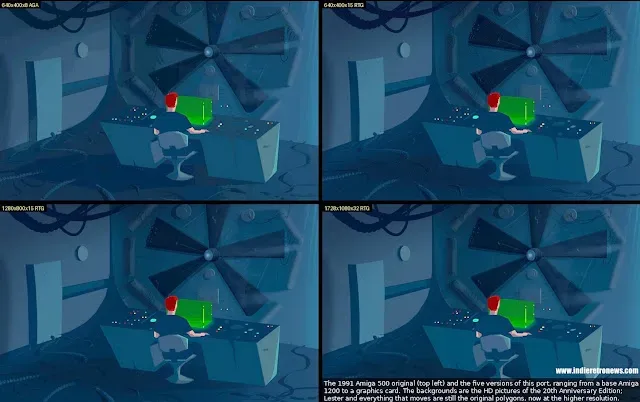
Another World: 20th Anniversary Edition has made an unexpected return to the Commodore Amiga through a new port from AmiKit. More than three decades after the cinematic action adventure first appeared on the machine in 1991, this release adapts the later anniversary remaster for classic Amiga hardware and expanded RTG-equipped systems.
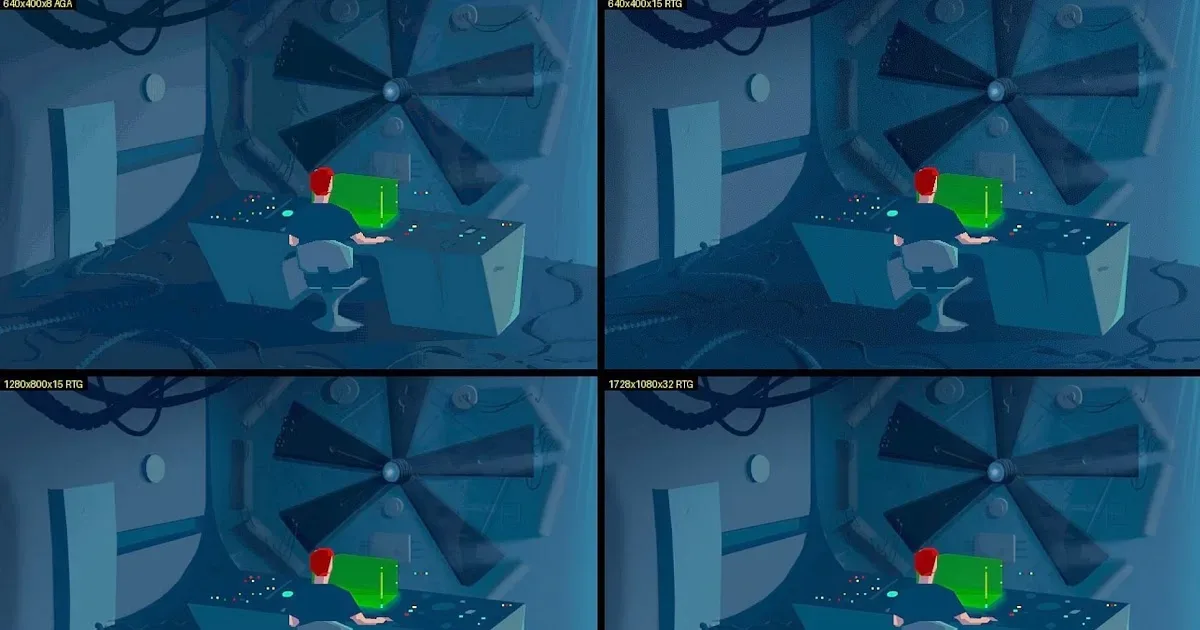
The project is designed to bring the remastered edition's audio and redrawn high-definition artwork to Amiga configurations spanning a notably broad range of capabilities. At one end, it can run on a standard Amiga 1200 in a 640x200 display mode. At the other, owners of powerful Amiga systems with RTG graphics hardware can push the presentation as high as 1728x1080 in 32-bit colour.
It is a fitting homecoming for a game with a particularly important place in Amiga history. Known in some territories as Out of This World, Another World introduced players to scientist Lester Chakin after an experiment goes catastrophically wrong, transporting him to an unfamiliar and hostile alien planet. Its sparse storytelling, rotoscoped animation, striking visual design and unforgiving trial-and-error progression made it one of the defining cinematic games of its era.
A Return to the Platform Where It Began
The original Amiga release arrived in 1991, before the game travelled to an enormous number of computers, consoles and handheld systems over the years. The 20th Anniversary Edition later refreshed the experience for modern platforms, including a PC release in 2013, with redrawn visual assets and improved audio while retaining the distinctive structure and identity of Éric Chahi's original game.
For useful background on this topic, read WD 20TB Elements External Hard Drive Falls to $550, Matching the 12TB Model.
AmiKit's new Amiga version closes a long loop: a later remaster of a celebrated Amiga game has now been adapted back to the hardware that helped establish its reputation. Rather than simply recreating the original 1991 presentation, the port specifically uses material from the anniversary edition. That means the goal is not historical preservation alone, but an enhanced version built around the capabilities of upgraded Amiga setups.
The release comes in five versions, intended to accommodate different hardware arrangements. This is important because the Amiga is not a single fixed target in the way many console platforms are. Systems can vary widely in processor speed, graphics support, memory and screen modes. The project therefore aims to serve both users close to a baseline Amiga 1200 configuration and enthusiasts operating heavily expanded machines.
HD Art Meets Classic Polygonal Characters
The most visible change is the inclusion of the anniversary edition's redrawn high-definition background artwork. Players will still see Lester, alien wildlife, guards and other animated objects rendered through the familiar angular polygonal style that gave Another World such a distinctive look. In this port, however, those moving elements are presented as high-resolution versions of their classic forms while the surrounding environments receive the newer artwork.
That balance matters. The game's animation and silhouettes are inseparable from its atmosphere: Lester's awkward scramble to survive, the sudden attacks of alien creatures and the memorable partnership with the unnamed alien prisoner all depend on clear motion and visual readability. Preserving those shapes while placing them against sharper scenery avoids turning the adaptation into a wholly different-looking remake.
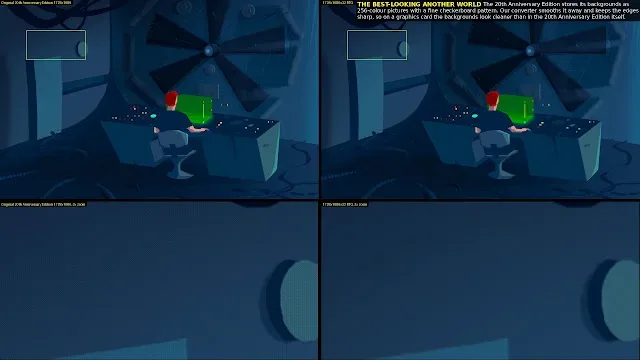
The conversion process also addresses a technical characteristic of the 256-colour PC backgrounds. Fine checkerboard dithering was often used in older art to suggest additional shades or smoother colour transitions within limited palettes. AmiKit's converter removes that fine dithering while maintaining sharp edges. The intended result is a cleaner image for RTG displays, with more direct colour presentation and clearer background detail.
For Amiga players who have spent years refining their systems around larger monitors, graphics cards and higher-colour desktop environments, the RTG option is likely to be the headline feature. A 1728x1080, 32-bit colour mode is far removed from what players would have associated with an Amiga release in 1991. It also demonstrates how the platform's modern enthusiast community continues to explore software that takes advantage of accelerated and expanded configurations.
AGA and RTG Options Explained
The port supports both AGA and RTG paths. AGA, short for Advanced Graphics Architecture, is associated with later Commodore Amiga machines such as the Amiga 1200. It represented a major step beyond the earlier chipset used by the Amiga 500, enabling broader colour capabilities and more flexible display possibilities.
RTG, or retargetable graphics, refers to the graphics-card-based setups used by expanded Amiga computers. These configurations can provide higher resolutions and colour depths than the machine's native video hardware. The difference is central to the release's appeal: it can offer a version suitable for a relatively standard later Amiga, while also giving high-end systems a chance to display the remastered artwork at resolutions more commonly associated with contemporary PCs.
The 640x200 mode on a stock Amiga 1200 establishes the lower end of the supported spectrum. The 1728x1080 32-bit RTG mode illustrates the upper end. Between those points are the remaining supplied variants, allowing users to select a version that better fits their particular configuration rather than treating every Amiga owner as if they have the same hardware.
There is an especially interesting contrast in seeing this degree of scaling applied to Another World. The original game's visual language was celebrated precisely because it accomplished so much with economical shapes, restrained interface design and a carefully controlled palette. The new port does not replace that visual philosophy; it gives it more room to breathe on modernized Amiga equipment.
Owners Supply the Anniversary Edition Files
This is not presented as a standalone Amiga package containing the full game data. Players need their own copy of Another World: 20th Anniversary Edition from Steam. The included Prefs program handles the conversion of the required assets into the Amiga-ready form.
That approach makes the port dependent on legitimate ownership of the PC release, while allowing it to use the anniversary edition's updated content rather than distributing that material directly. It also means prospective users should factor in the conversion step before expecting to play.
Hardware performance is a significant consideration. The asset conversion requires a very fast CPU, and the process may take an extremely long time on slower hardware. Emulation is recommended for carrying out the conversion, which may be the most practical route even for users who intend to play the finished result on physical Amiga equipment. A fast emulated configuration can complete the demanding preparation work, after which the generated files can be used with the desired Amiga setup.
This requirement is worth emphasizing because the port's broad playback range should not be confused with effortless conversion on every system. A stock Amiga 1200 may be able to run an appropriate version, but preparing the converted assets is a separate task with much steeper CPU needs. Planning around emulation can prevent a lengthy and frustrating wait.
A Sign of Continued Amiga Ambition
The project is another reminder that the Amiga scene remains active long after Commodore's original hardware era. New games, ports, tools, hardware expansions and operating-system developments continue to appear because the platform supports several overlapping communities: preservationists interested in original configurations, developers working within old technical limits, and enthusiasts pursuing accelerated systems that dramatically exceed the expectations of the early 1990s.
Another World is especially well suited to symbolize that continuity. Its 1991 debut was a landmark moment for the Amiga, and the game has never truly disappeared from public view thanks to its many subsequent releases and remasters. Bringing the 20th Anniversary Edition back as an AGA and RTG project ties those different eras together: original hardware heritage, later official remastering and present-day enthusiast engineering.
Whether it becomes the preferred way to experience the game will naturally depend on a player's hardware, display preferences and tolerance for the initial conversion process. The sharp redrawn backgrounds, cleaned-up dither treatment, remastered sound and high-resolution RTG output nevertheless make a compelling case for owners of capable Amiga systems. For those who remember Lester's first desperate steps into an alien world on an Amiga monitor, this is a rare chance to revisit that journey in a form built specifically for the platform's evolving afterlife.
The port is available in five hardware-targeted versions and requires a personally owned Steam copy of Another World: 20th Anniversary Edition for asset conversion. Users should ensure they have access to a sufficiently fast CPU, preferably through emulation if necessary, before beginning the setup process.
Community
Discussion
Start the conversation.
No comments have been posted yet.