

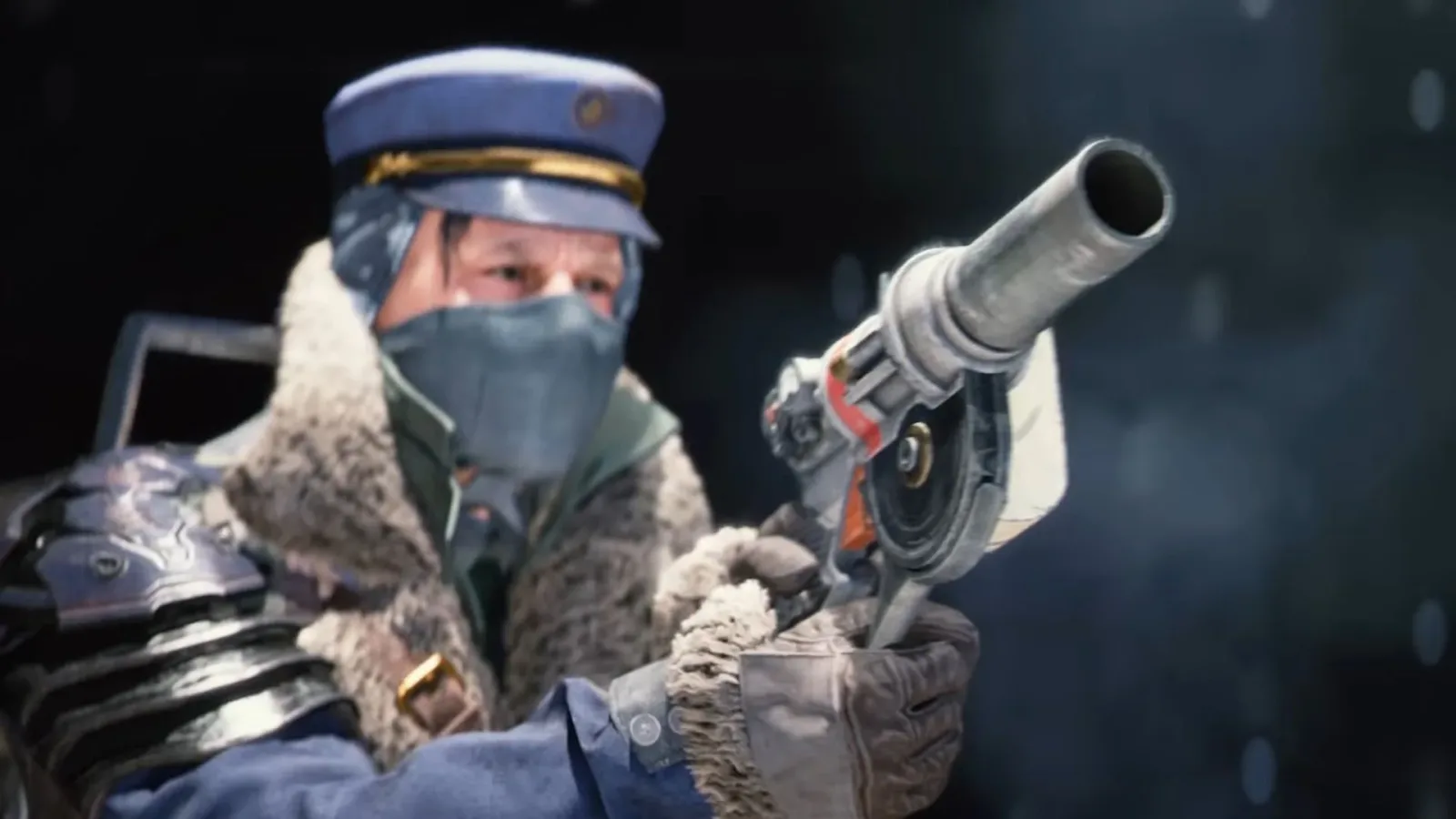
Arc Raiders has received its substantial Frozen Trail 2.0 update, bringing wintry new content alongside a dense list of gameplay refinements that could have an equally important effect on the extraction shooter's everyday rhythm. New locations, skills, weapons, gadgets and ARC threats will understandably command much of the initial attention. Yet several smaller adjustments in the patch notes address frustrations and requests that have persisted among players for much of the game's first year.
From opening the map while downed to placing loot directly on the ground from containers, Frozen Trail appears designed to reduce needless friction without removing the tension that defines a successful--or disastrous--run. The update also changes how some of the game's most valuable enemies distribute rewards, revisits a particularly effective hand cannon, expands player storage, and introduces movement and presentation touches that make raiders feel more responsive and more grounded in the hostile world around them.
A larger stash answers a familiar extraction-shooter problem
One of Frozen Trail's clearest quality-of-life additions is an increase to the maximum stash capacity. Two new stash levels have been added, raising the maximum to 328 slots without Expedition bonuses. That may sound like a simple numerical change, but storage is often one of the most meaningful forms of progression in a loot-driven game.
A larger inventory lets players hang onto more crafting components, equipment options and hard-won finds between raids. It also means fewer difficult decisions about whether a potentially useful item is worth keeping when a stash is approaching capacity. With Frozen Trail introducing still more items to collect, the timing is particularly notable.
For useful background on this topic, read Maria Angelidou-Smith Named New CEO of Minecraft Studio Mojang.
The increase will not eliminate inventory management, nor should it. Deciding what to bring, what to save and what to risk remains fundamental to the extraction format. However, more room can make that management feel strategic rather than purely restrictive. It gives players greater flexibility to stock equipment for different situations, preserve resources for future projects and avoid dismantling items solely because a storage limit has become the immediate obstacle.
At the same time, the arrival of new gear and materials means the extra space may eventually be absorbed by the expanding loot pool. Frozen Trail provides welcome breathing room, but the long-term pressure on stash space will likely remain a subject of discussion as Arc Raiders continues to grow.
Queen and Matriarch rewards are being redistributed
Frozen Trail also alters the loot logic for the formidable Queen and Matriarch ARC enemies. Higher-tier loot has been moved from the armor pieces on their legs to the leg pieces themselves. In practical terms, that closes off a method where players could focus on stripping armor to obtain valuable cores with less commitment to the full encounter.
The adjustment changes the risk-reward calculation around these targets. Players seeking the best rewards will seemingly need to destroy the legs more completely or stay engaged through the fight rather than treating the outer armor as a quick harvesting opportunity. That will not please everyone, especially those who had adopted the prior approach as an efficient way to collect rare components.
Still, the new arrangement has a logical gameplay purpose. A major machine's critical physical structure should be more valuable than simply removing a layer of plating, and deliberately targeting legs now carries a clearer payoff. It also encourages squads to make more deliberate decisions: take what they can and escape, or commit ammunition, time and exposure to secure the more significant rewards.
The change may spark further debate about the overall loot output from Queen and Matriarch encounters. These are high-threat enemies, and their rewards will be closely watched as players determine whether the additional danger and expenditure justify a full kill. Frozen Trail does not settle every question around high-end ARC farming, but it clearly reshapes one of the game's most established methods.
Anvil rarity rises as the weapon is reevaluated
Another balance move affects the Anvil hand cannon. The weapon has been moved up to blue rarity after performing better than weapons both at its previous rarity level and above it. Rarity changes can have a broad impact in a game where accessibility, ammunition use and weapon power all influence what players are willing to carry into a raid.
The Anvil's elevation recognizes that it has been punching above its intended place in the arsenal. When a weapon reliably competes with equipment that should be more difficult to obtain, it can narrow meaningful loadout variety. Moving it to blue rarity should better align its availability with its effectiveness, while preserving the hand cannon's role for players who value its stopping power.
It is not necessarily a direct statement that the Anvil is no longer worth using. Rather, it acknowledges that obtaining and risking one should carry a different weight than before. The real test will come after players spend time with the revised loot ecosystem and compare the Anvil against the rest of Frozen Trail's expanding weapon selection.
Downed players can finally check the map
Among the most immediately appreciated changes is a small but overdue survival tool: players can now open the map while downed. In the chaos following an ambush, a player on the ground is often still a vital source of information for teammates. Being able to check the map can help them identify their position, communicate nearby landmarks, assess a route to extraction or guide allies attempting a rescue.
It is a modest addition, but it improves a moment when agency is usually at its lowest. A downed player remains vulnerable and cannot simply solve the situation alone. The new access instead makes them more useful to the squad and less dependent on memory when explaining where help is needed.
Looting receives another practical improvement. Players can now drop loot to the ground directly from containers. This should simplify sharing finds with teammates, clearing unwanted objects and managing space during a tense scavenging stop. Previously, extra steps in an inventory interface could turn a simple handoff into an awkward interruption. In an extraction game, seconds spent sorting gear can matter, especially when enemy machines or rival raiders may be closing in.
The ping system has also gained more contextual information for ARC and assorted objects. Better pings strengthen nonverbal coordination, which is valuable for established groups and especially helpful for players matched with strangers. Clearer callouts can reduce confusion without requiring every player to use voice chat.
Stealth, traversal and exhaustion receive more attention
Frozen Trail adds a useful option for players trying to remain unnoticed: visible light sources on backpacks can now be toggled off. For anyone building around concealment, or simply attempting to cross a dangerous space with less visual exposure, the feature offers a more intentional approach to stealth.
It is a situational tool rather than an automatic advantage. Turning off a light may reduce visibility to others, but it can also make navigation and awareness more difficult for the player using it. That trade-off is exactly what makes it appropriate for Arc Raiders' tense scavenging spaces. The best stealth mechanics create decisions, not guarantees.
Movement has been expanded with Scrambling. When sprinting into steep slopes, raiders can scramble upward for a short time. Alongside wall-running and mantling additions referenced in the update, that could substantially change how players read the landscape and escape danger. A slope that was previously a hard barrier may now become a narrow route to high ground, cover or a last-second getaway.
The movement changes may become particularly interesting in combination with a skill tree that puts greater emphasis on agility. Players who invest in mobility could find new ways to reposition during fights, approach loot sites or break line of sight. As always, the ultimate value of new traversal options will depend on map design and whether opponents can anticipate the most useful routes.
Small animations and audio adjustments reinforce the atmosphere
Not every worthwhile change is mechanical. Frozen Trail adds character animations for interacting with maps and inventories, as well as mouth animation when players speak through proximity chat. Context-sensitive details include brushing dust away after a slide and visibly heaving after running out of breath for an extended period.
These additions do not change damage numbers or extraction odds, but they add physicality to the experience. Arc Raiders is built around human scavengers enduring a world dominated by machines. Seeing a character recover after exhausting themselves or react naturally while interacting with gear can make that vulnerability more believable.
Audio has also received attention through adjustments to how character sounds are blocked by walls and obstacles. The goal is more natural sound positioning, an important improvement for indoor combat and crowded firefights. Directional audio can be decisive when players are trying to determine whether footsteps, shots or voices are on the other side of a wall, above them or moving through an adjacent room.
Pendola Pass tests a more dynamic approach to loot
The new Pendola Pass map is also being used to test dynamic loot zones. Rather than making scavenging hotspots behave the same way from match to match, the system is meant to shift where valuable opportunities are found. That could make repeated runs less predictable and discourage players from relying too heavily on a single rehearsed route.
If early feedback and implementation prove successful, the system could be applied to Arc Raiders' existing maps as well. That prospect is significant. Even familiar environments can regain some uncertainty when the places worth contesting vary between sessions. Dynamic loot zones could create new flashpoints, encourage broader exploration and make veterans reconsider routines that have become too safe or efficient.
Frozen Trail is a large update because of its new content, but its quieter changes may prove just as enduring. More stash space, clearer team communication, smarter loot handling, improved traversal and better situational awareness all affect the minute-to-minute decisions that make Arc Raiders work. Whether players are chasing a Queen, attempting a stealthy escape or simply trying to tell a teammate where they were downed, version 2.0 gives them more tools to respond.

Community
Discussion
Start the conversation.
No comments have been posted yet.