

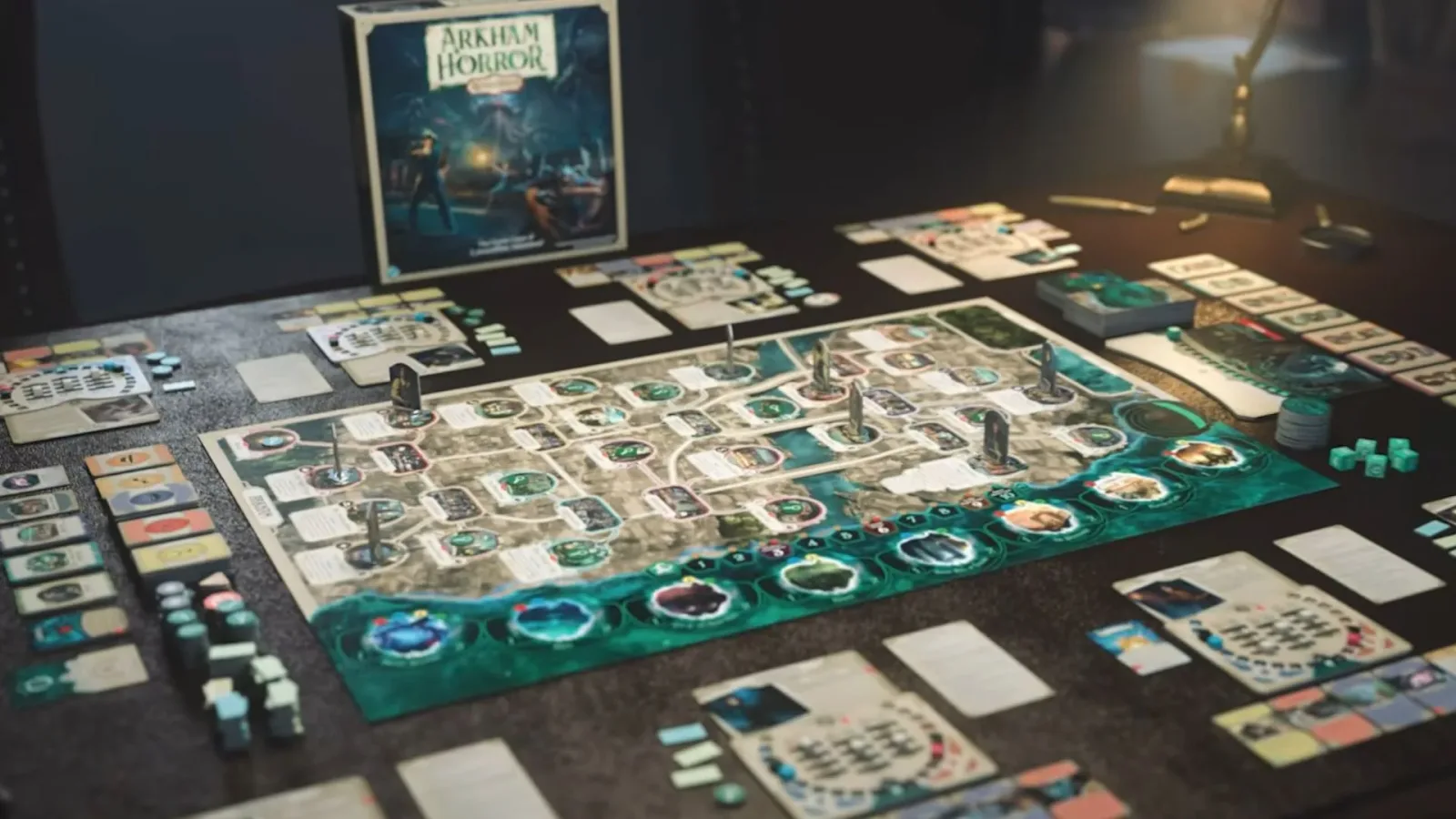
Arkham Horror Remastered has proven unusually difficult to put to rest. The Gamefound campaign for the tabletop revival has continued for an additional 108 hours beyond its original endpoint, driven by an Endgame mechanic that gives backers direct control over how long the project remains open. The extended finale has helped push total pledges past $5.7 million, with roughly $803,000 added after the extra period began.
The project had already built major momentum shortly after its crowdfunding launch, reaching its funding target quickly. However, the final stretch has become an event of its own. Rather than closing at a fixed time, the campaign's Endgame mode uses a rolling 10-minute clock. Each new pledge resets that clock, meaning the campaign only concludes once 10 minutes pass without another person backing it.
That simple system has turned the final hours into a long-running community effort. As long as supporters keep arriving before the timer expires, the campaign continues. More than four days into that extended period, interest has remained high enough to keep the clock repeatedly refreshed.
A Return to the 2005-Style Arkham Horror
Arkham Horror Remastered revisits the 2005 edition of the Lovecraft-inspired board game. That is an important distinction for longtime players, because the currently available incarnation of Arkham Horror is not simply the same game in newer packaging. The modern version is generally considered quicker and more streamlined, while the 2005 design is remembered for a denser, more sprawling style of cooperative investigation.
For useful background on this topic, read Hallmark gaming Keepsake ornaments Hit Record-Low Prices for Zelda, PlayStation and Xbox Fans.
In the older format, players take on the roles of investigators attempting to protect the city of Arkham from supernatural threats. The experience is built around exploration, encounters, monsters, escalating dangers, and the ever-present possibility that an Ancient One will awaken. It is a game with a reputation for elaborate setups, a substantial collection of cards and tokens, and sessions that can develop into unpredictable stories.
That complexity is part of its appeal. For some tabletop groups, the heavier 2005-era approach offered a particular kind of all-night horror adventure: messy, thematic, dramatic, and packed with small moments that can become memorable tales around the table. Arkham Horror Remastered is aimed at players who have missed that specific version of the formula, rather than those looking only for the more streamlined experience associated with the current retail edition.
The campaign's response suggests there is a sizable audience for a return to that earlier style. Nostalgia is clearly a factor, but so is the prospect of preserving a version of Arkham Horror that has been out of print for a long time. The remaster gives fans a route back to a game that has held an important place in modern hobby board-game history.
Why the Endgame Has Lasted So Long
The rolling-timer finale is not just extending the window for late pledges. It is also tied to additional rewards. Every 24-hour milestone reached during Endgame introduces a new gameplay element, giving the community a reason to keep the campaign active for another day. Meanwhile, each six-hour interval adds an exclusive art postcard.
That structure makes each reset meaningful. A pledge does more than secure a copy for the individual backer; it also helps maintain access for everyone still deciding and moves the campaign closer to further extras. The result is a collective push where people are effectively sustaining the finale one pledge at a time.
Several stretch goals have already been unlocked over the course of the campaign. These include new characters and monsters, along with physical upgrades intended to enhance the tabletop presentation. Among the more distinctive additions are token holders designed to resemble eldritch gates, fitting the game's cosmic-horror theme while also addressing the practical reality of organizing a component-heavy board game.
Additional items remained in view as the campaign continued, including an Arkham Asylum postcard and another investigator, Louis Brown. With the Endgame timer determined by ongoing pledges rather than a conventional fixed deadline, there is no precise way to say when the campaign will finally stop. It will end only when the stream of new supporters pauses for long enough.
Campaign-Only Availability Raises the Stakes
One major reason for the intense finish is that Arkham Horror Remastered is planned as a crowdfunding-exclusive release. It is not expected to arrive through normal retail channels later. For prospective buyers, that changes the usual decision process around a board-game campaign.
With many crowdfunding projects, players can choose to wait, read post-launch impressions, or see whether a store release follows. In this case, waiting carries the risk of missing the game entirely. That exclusivity likely helps explain why so many people are still entering during the extended final stage, even after the project has already surpassed its goal by a considerable margin.
It also places added importance on the campaign's unlocks. Backers are not merely deciding whether to join a preorder for a product that may eventually become easy to find. They are deciding whether to take part in what is currently presented as the only opportunity to obtain this particular remastered edition. The growing list of characters, monsters, accessories, and postcards makes that choice more compelling for collectors as well as players.
What the Funding Total Says About Tabletop Nostalgia
Passing $5.7 million is a striking result for a revival of a heavyweight board game, especially one rooted in an older design philosophy. It demonstrates that a substantial part of the tabletop audience remains enthusiastic about games that prioritize scope and atmosphere over speed. Modern board games have increasingly embraced smoother teaching experiences, reduced setup time, and shorter sessions, but there is still clear demand for grander, more demanding event games.
Arkham Horror occupies a notable position within that conversation. Its name is closely tied to cooperative horror gaming, and the 2005 edition helped define what a large-scale, narrative-driven adventure board game could feel like. A remaster does not need to replace newer interpretations of the series to justify its existence. Instead, it gives players a choice between different approaches to the same mythos-laden premise.
For returning fans, the appeal may lie in revisiting a familiar system with refreshed production and campaign additions. For newer players, it may be an opportunity to experience a celebrated older design that was not readily accessible in print. Either way, the Endgame extension has turned that interest into a visible demonstration of community enthusiasm.
An Uncertain Finish for an Unstoppable Finale
The unusual conclusion to the campaign remains its most interesting feature. A normal crowdfunding finale creates urgency through a countdown that cannot be changed. Arkham Horror Remastered has instead made the countdown participatory. The remaining time is always short, but the community can keep renewing it.
That has helped the project gather hundreds of thousands of additional dollars during the extension and has created more time for unlocks to accumulate. It also means there is no reliable final-hour forecast. The campaign could close after a quiet 10-minute gap, or it could continue as more supporters arrive to restart the timer.
For now, Arkham Horror Remastered's Endgame is a fittingly eerie conclusion for a game about resisting threats that refuse to stay buried. The campaign has already exceeded expectations, crossed the $5.7 million mark, and remained active for 108 extra hours. Its ultimate stopping point will depend on the moment the backers finally allow the clock to run out.

Community
Discussion
Start the conversation.
No comments have been posted yet.