

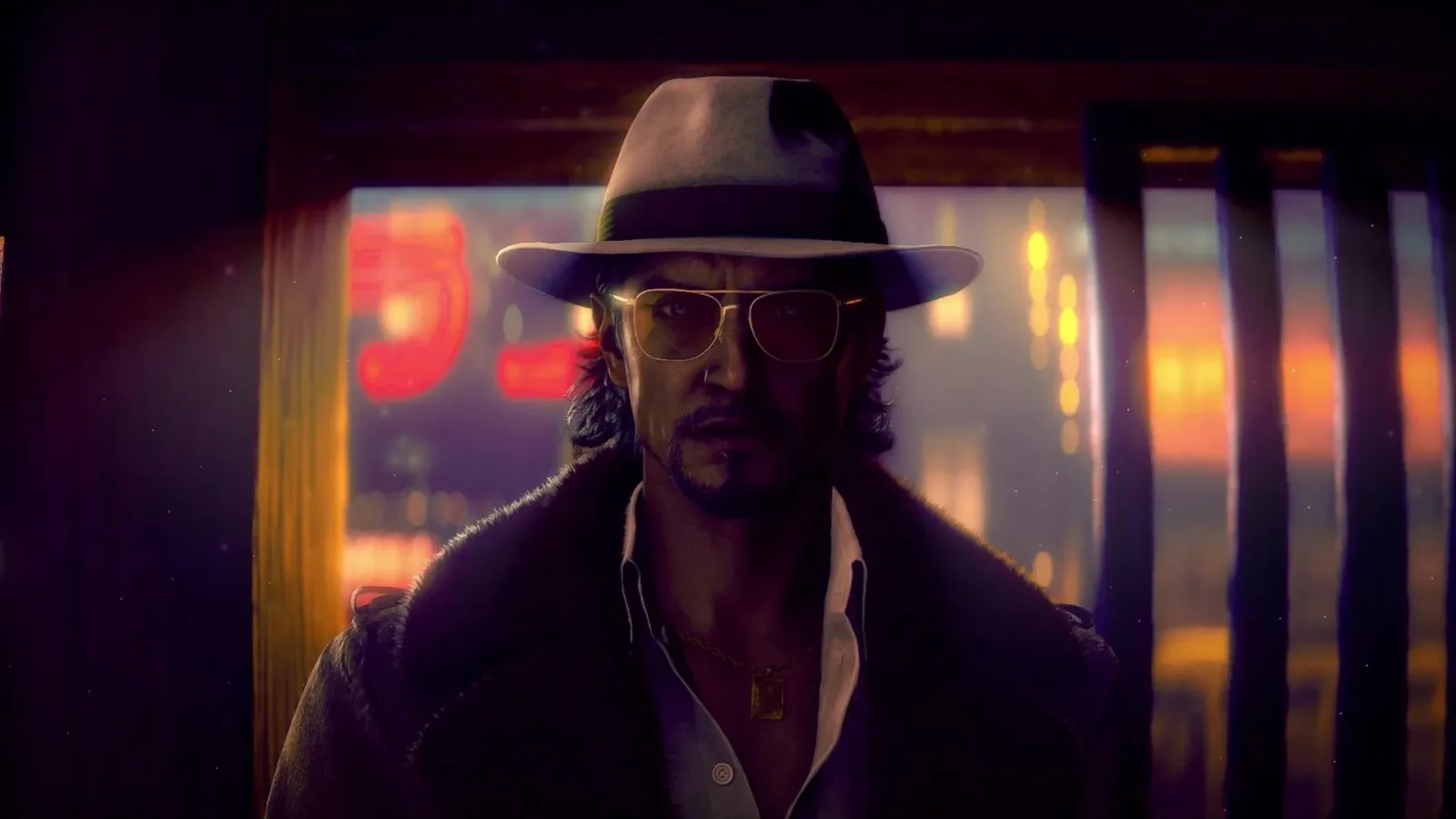
Stranger Than Heaven is shaping up to be a substantial change of direction for RGG Studio. Known for the energetic street fights of the Yakuza and Like a Dragon games, the studio is taking a more grounded approach with its next action title, including a combat system that asks players to think about a controller in a different way.
At the center of that approach is a deceptively straightforward idea: the left side of the controller relates to protagonist Makoto Daito's left side, while the right side relates to his right. A left bumper input can produce a quick jab from Daito's left arm, while using the right trigger results in a heavier strike from his right. It is a layout that may initially sound unconventional to players accustomed to standard light-attack and heavy-attack button assignments, but RGG Studio head and executive director Masayoshi Yokoyama views it as an intuitive starting point rather than a radical reinvention.
"If you've never touched a controller before, you don't have any pre-established notions," Yokoyama said. "So I think it's fairly common sense that if you hit the left button, you'd expect the left side of the character to move."
That distinction is important. Stranger Than Heaven is not merely changing controls for novelty's sake. The system appears designed to make the player consider the physicality of Daito's movement, including which arm is being used and how forceful a particular action should be. Instead of treating the controller as a familiar collection of abstract commands, the game is attempting to tie each input more directly to the body on screen.
For useful background on this topic, read Casualties: Unknown Wins Over Steam Players With a Brutal Cave Survival Challenge.
A Different Kind of Fight for RGG Studio
The change is especially notable because RGG Studio has spent years refining a recognizable style of action. Its games have often balanced dramatic storytelling with fast, expressive brawling, letting players flow between punches, grabs, special moves, environmental attacks, and improvised chaos. Stranger Than Heaven appears interested in something more deliberate and weighty, favoring fights that feel rougher and more grounded than the freewheeling encounters associated with the studio's past brawlers.
Early hands-on reactions have not been uniform. Some players and commentators who have tried the game have responded positively to its combat, while others have found the fighting less immediately satisfying. That split is understandable when a game challenges muscle memory. A combat system can feel awkward in a brief demonstration, particularly when players arrive with years of learned expectations about how action-game buttons are supposed to work.
The real question is whether the control layout will become natural over the course of the full experience. Stranger Than Heaven is expected to launch in January, and its complete campaign should provide the clearest test of whether the left-and-right mapping evolves from an initial hurdle into a meaningful connection between player and character.
There is historical precedent for action games experimenting with controls based on a character's body rather than a conventional set of attack categories. The original Assassin's Creed, for example, used face buttons to correspond with different parts of protagonist Altaïr's body. Inputs could produce context-dependent actions: a button associated with the legs might lead to jumping, sprinting, or dodging depending on the situation. Later Assassin's Creed games moved toward a more traditional control language, but the earlier design remains a reminder that even major series have tried to reframe how players interpret a gamepad.
Stranger Than Heaven's system is not identical to that approach, but it shares the same willingness to ask whether long-established action-game standards are actually the only sensible option.
Questioning the Familiar
Yokoyama connected the game's control design to a larger creative belief: good game makers should interrogate things that other people accept without much thought. In explaining that idea, he posed a seemingly unrelated question: "Why are jeans blue?"
It is the kind of ordinary observation that can sound trivial until someone stops to examine it. Blue jeans have become so culturally familiar that most people rarely consider why denim took on that color in the first place. Yet there are practical reasons behind it. Indigo dye was historically affordable, blue fabric concealed dirt effectively, and the dye could form a durable bond with denim fibers. What now looks like an unquestioned default emerged because it addressed multiple needs at once.
For Yokoyama, the larger point is not fashion history. It is the creative instinct to look at a standard convention and ask why it exists. "Nobody really thinks about this," he said, before arguing that people who question what they see and wonder why things work the way they do are naturally suited to making games.
"People who doubt everything they see, and [wonder], 'Why is this the way it is?' -- I have the conviction that those people are natural game creators."
That philosophy can apply to far more than a fighting system. Every game is built from conventions, including camera placement, control mappings, mission structures, user-interface icons, progression loops, and the visual shorthand used to tell players what is dangerous or useful. Many conventions exist for good reasons; they may be clear, accessible, or simply proven through years of iteration. But a convention can also persist because it has become invisible. The challenge for designers is deciding which familiar ideas are genuinely useful and which are only familiar because no one has seriously reconsidered them.
RGG Studio's work has regularly shown an interest in contrast. Its games can pair heightened melodrama with comedy, emotionally serious character arcs with absurd side activities, and densely detailed city spaces with exaggerated combat. Stranger Than Heaven's control experiment suggests that the studio is extending that willingness to take risks into the basic act of playing the game.
Controls as Character Development
The unusual inputs also serve a narrative purpose. Yokoyama has previously explained that the team wants Daito's story to be expressed through the combat system itself. Stranger Than Heaven follows the character across 50 years of his life, beginning when he is young and not yet an accomplished fighter. The player, meanwhile, begins without complete mastery of the game's systems.
That parallel is central to the design. As Daito grows, changes, and gains experience, the player is meant to grow more comfortable and capable alongside him. Rather than presenting combat proficiency as something granted immediately through a familiar button layout, the game seems to want players to earn their understanding in tandem with the protagonist.
"We want to tell the story of Daito through our combat system," Yokoyama said. "When the game starts, Makoto is quite young and he's not a great fighter -- this story takes you through 50 years of his life -- in the same way that when the player starts the game, they won't be that skillful with the systems either."
It is an ambitious concept because it makes mechanical learning part of the storytelling. In many action games, a character can be inexperienced in the narrative while the player is already performing elaborate combinations with total confidence. Stranger Than Heaven is trying to reduce that disconnect. If the controls initially demand conscious thought, that may help the player feel Daito's lack of polish rather than merely observe it through cutscenes.
Of course, there is a fine line between purposeful discomfort and frustration. A system intended to communicate inexperience must still give players enough feedback, responsiveness, and room to improve. If learning the controls feels rewarding, the relationship between Daito's development and the player's development could become one of the game's defining strengths. If it remains cumbersome, the same design could make the story harder to inhabit.
The January Test
Stranger Than Heaven's combat remains one of its biggest open questions. The game's early demonstrations have already generated differing opinions, and that is likely to continue until players can spend extended time with the finished version. Brief sessions are useful for identifying a first impression, but they cannot fully reveal how a system changes once its timing, progression, and broader context become clear.
Yokoyama's comments make it clear that RGG Studio is not treating the response as a reason to retreat to the safest possible arrangement. The studio's premise is that the controls are rooted in a form of direct logic, even if they initially clash with habits shaped by decades of action games.
Whether that logic feels as durable as the practical choices behind blue jeans will be decided when Stranger Than Heaven arrives in January. For now, its most interesting feature may be the question embedded in every punch: not simply whether players can adapt, but whether they ever needed to accept the old assumptions in the first place.
Community
Discussion
Start the conversation.
No comments have been posted yet.