

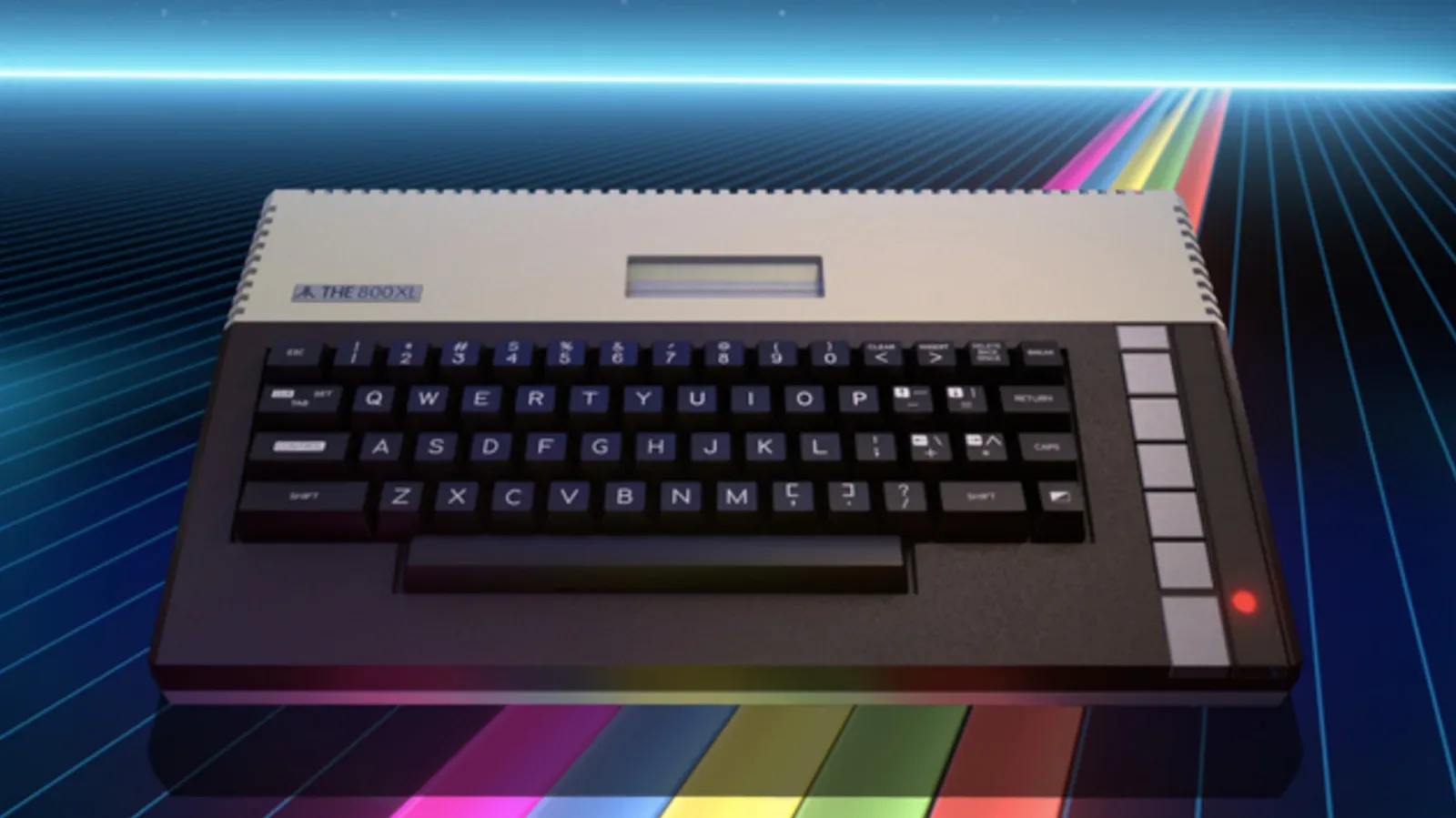
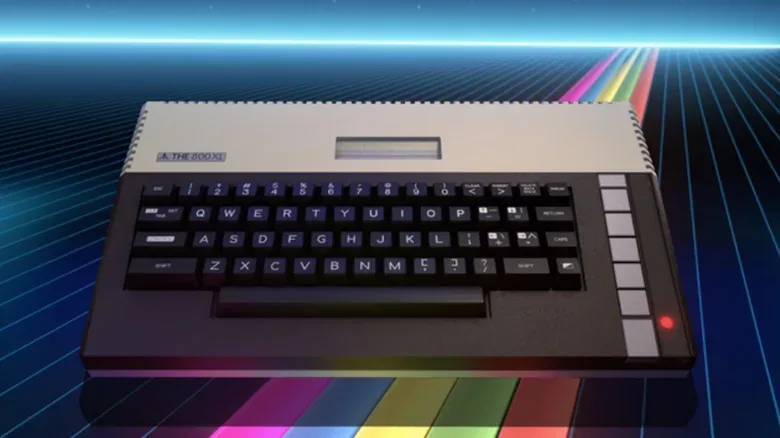
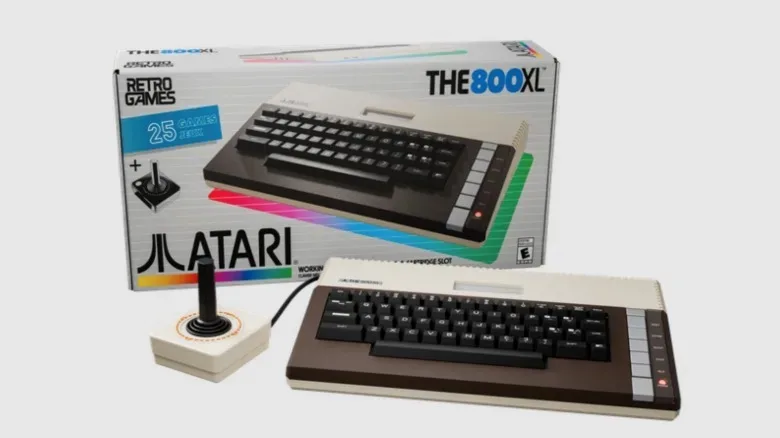
The Atari 800XL is returning in a new form that aims to preserve the character of one of Atari's most important home computers while making it far easier to use with modern displays and accessories. The revived system retains its dual identity as both a gaming machine and a programmable computer, but adds HDMI output, USB connectivity, a full-sized mechanical keyboard, bundled software, and a rechargeable joystick styled after the original era.
Preorders for the new Atari 800XL are now open at a listed price of $220. The system is scheduled to begin shipping on April 23, 2027. Its arrival represents a notable shift in the ongoing retro-hardware trend: rather than focusing exclusively on a famous cartridge console, this project revisits a machine that was built for games, learning, tinkering, and creating software at home.
A return for Atari's home-computer legacy
For many players, the Atari name immediately brings the Atari 2600 to mind. That console has remained one of the defining symbols of the early home-video-game business, and it is often the hardware most associated with Atari's legacy. The company's 8-bit computer line, however, was also a major part of that history.
The Atari 800 family began with the original Atari 800 in 1979. It combined game-playing capabilities with the flexibility of a home computer, providing users access to programming and a broad library that spanned arcade-style releases, educational software, utilities, and more ambitious games. THE 800XL later refreshed that concept with a larger physical design and a distinctive industrial look. Atari's 8-bit home-computer line was ultimately discontinued in the early 1990s, but it has retained an enthusiastic audience among collectors and hobbyists.
For useful background on this topic, read Paramount Developing Live-Action Cyberpunk 2077 movie.
This new model is positioned as a revival of the 800XL specifically. Its design embraces the original machine's purpose rather than treating the old hardware as only a vehicle for a curated classics collection. That means it is intended to function as a computer as well as a game platform, which helps separate it from many plug-and-play retro systems.
Modern connections without abandoning old software
The clearest convenience upgrade is HDMI. Original Atari computers were designed for televisions and displays from a very different era, often requiring older connections and additional equipment to look their best on current screens. HDMI should make the new Atari 800XL considerably more straightforward to connect in a modern living room, office, or retro-gaming setup.
USB is another central addition. The machine includes multiple USB ports for accessories, expanding options beyond the peripherals that were available during the 8-bit era. The included joystick is designed to look period-appropriate, preserving the feel of classic Atari hardware while avoiding the need for disposable batteries. It can be recharged through USB.
USB connectivity also supports loading games from other Atari systems, including the Atari 400 and Atari 5200. That opens the door to a broader slice of Atari's historical software catalog than a single-system reissue would normally offer. It is an especially useful feature for players who already have compatible files, collectors who want a convenient way to revisit old favorites, and enthusiasts interested in exploring the overlap between Atari's computer and console libraries.
The new hardware does not leave physical software behind, either. A cartridge slot is included for titles originally released for the Atari 800XL's system. Cartridge compatibility is a meaningful inclusion for retro fans who still own original games and prefer the physical ritual of selecting and inserting a cartridge over navigating a purely digital menu.
25 built-in games give players an immediate starting point
Out of the box, the Atari 800XL includes 25 pre-loaded games. The announced selection includes well-known Atari staples such as Centipede, Crystal Castles, Millipede, and Missile Command. These games represent several sides of Atari's arcade heritage, from score-chasing shooters and trackball-rooted action to strategic defense gameplay.
For newcomers, the bundled library removes the barrier of needing to track down compatible software before the system can be enjoyed. For returning players, it provides an immediate tour through familiar classics while the cartridge slot and USB options make room for deeper exploration later. It is a practical balance for a product that has to appeal to curious retro players as well as people with a pre-existing Atari collection.
Visually, users should still expect the character of an 8-bit machine. Its graphical capabilities are broadly in line with the early console era and are described as being roughly comparable to the original Nintendo Entertainment System. The appeal is not modern visual fidelity; it is the distinctive art, sound, responsiveness, and design sensibilities of games created within the limits of 8-bit hardware.
More than a mini console: Atari BASIC is part of the package
The most significant difference between the Atari 800XL and a typical retro console lies beneath the game library. Like the original, this hardware is also a usable computer with a full-sized mechanical keyboard and access to the Atari BASIC coding environment.
That functionality gives owners a chance to write their own programs and games. Creating an 8-bit game in BASIC will still demand patience, experimentation, and an interest in the older style of programming, but the possibility matters. The system is not solely asking players to consume old games. It also invites them to learn how software was made on machines like this one and to create something themselves.
For retro-computing enthusiasts, the ability to run older homebrew material is another major draw. Hobbyist-made projects from the 1980s can still be explored on the revived system, offering a window into the experimentation that took place outside commercial game development. Home computers encouraged users to share small programs, adapt existing code, make demos, and build personal projects. Preserving access to that side of the platform is important because it reflects what made these systems different from dedicated consoles.
The Atari 800XL revival is built around the idea that old hardware can remain a creative tool, not merely a display piece for a small selection of nostalgic games.
A hardware revival with an established retro pedigree
The new system was designed by Plaion Replai, a company that has previously worked on a Commodore 64 remake and is also behind an upcoming Neo Geo project. That background is relevant because recreating legacy hardware involves more than copying an old shell. The product needs to respect the original format, accommodate old software and accessories where possible, and solve the practical issues introduced by decades of changes in televisions, controllers, storage, and user expectations.
The Atari 800XL's feature set suggests an effort to serve several audiences at once. Longtime Atari owners can use cartridges and engage with historical homebrew. Players who simply want classic games have the pre-installed selection and HDMI output. Those interested in retro programming have the keyboard and BASIC environment. The USB support acts as a bridge between those groups, giving the system more flexibility than an entirely closed replica.
Why the 800XL still matters
Retro gaming hardware often concentrates on the most recognizable machines, which can make the return of a home computer particularly interesting. The 800XL was part of a period when the distinction between "game system" and "computer" was less rigid. A family could use the same device for arcade-style games, typing, educational programs, and early coding experiments.
That flexibility is exactly what the new release is trying to preserve. Its 25 games may make the first impression, especially for anyone eager to revisit Centipede or Missile Command, but the keyboard, cartridge slot, USB capabilities, and Atari BASIC support give it a longer-term role. It can be a straightforward nostalgia machine, a way to access a physical collection, or a modest entry point into retro-computing culture.
At $220, the Atari 800XL is positioned as a specialized piece of hardware rather than an impulse-buy mini console. Whether that price feels worthwhile will likely depend on how much a buyer values its computer functions and compatibility features alongside its bundled games. Still, its approach is more ambitious than simply placing a handful of classics in a replica enclosure. By bringing a historically important Atari computer back with modern display and accessory support, the new 800XL gives an 8-bit platform another opportunity to be played, programmed, and explored.
Community
Discussion
Start the conversation.
No comments have been posted yet.