

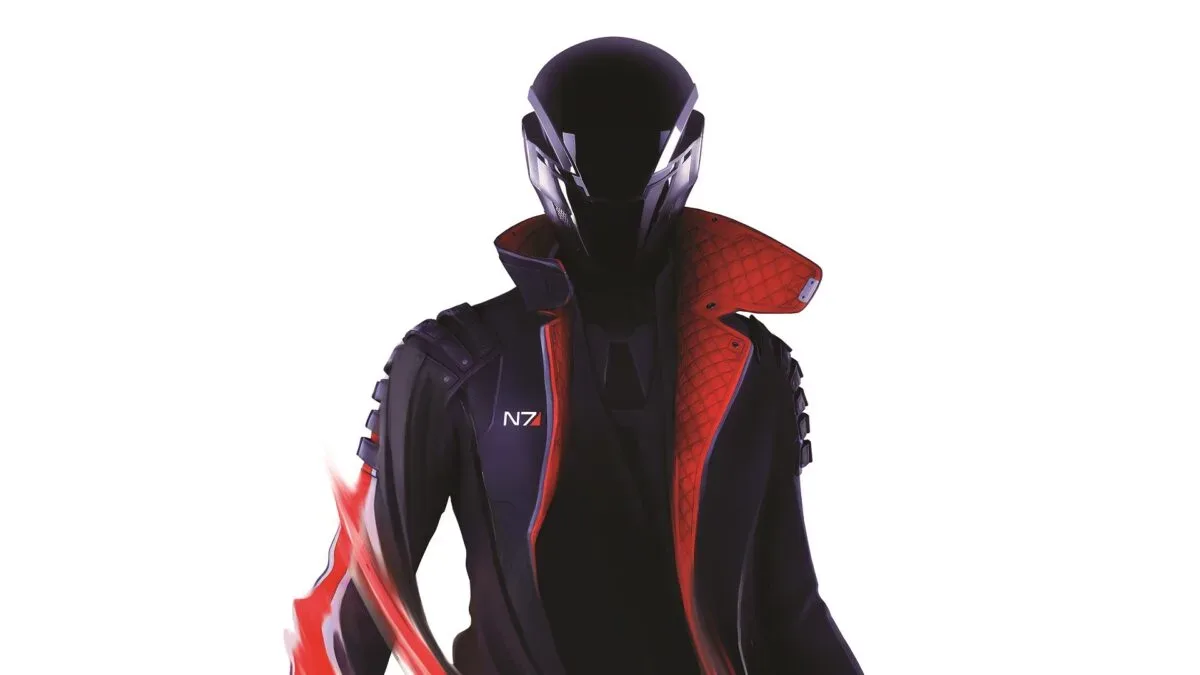
Another piece of the canceled Mass Effect: Universe has emerged, this time in musical form. Composer Austin Wintory has shared roughly 22 minutes of previously unheard material created while he was in discussions to score the next Mass Effect game. The recordings offer an unusually substantial look at an unrealized project: not gameplay, plot scenes, or character designs, but the atmosphere the team may have hoped players would feel when returning to BioWare's science-fiction universe.
Wintory, whose game credits include Journey, The Banner Saga, and Stray Gods, said he composed the concepts last year and recorded them with a Los Angeles orchestra. The arrangement was never finalized as the soundtrack for the game. That unfinished status is also said to be why a leaked internal trailer for the project used licensed music rather than an original Wintory score.
The newly released tracks arrive less than a week after EA announced the closure of BioWare and the end of further work on Mass Effect: Universe. In the days since, information from developers, collaborators, and consultants has gradually added to the picture of a game that had been in development but will now remain unfinished. Wintory's music does not reveal the game's narrative or confirm specific features, but it provides a powerful reminder that major creative work had already begun around the project.
A score designed to echo Mass Effect's musical identity
For longtime fans, the most immediate quality of Wintory's concepts may be how clearly they engage with the established sound of Mass Effect. The original trilogy is strongly associated with an electronic-orchestral style: synthesizers and futuristic textures support melodies that can feel lonely, heroic, mysterious, or quietly intimate. It is a sound that helps sell the scale of interstellar travel while also preserving the emotional focus of a story about people, crews, and difficult choices.
For useful background on this topic, read Calcifer's Yule Log Returns to HBO Max on November 1.
Wintory's unused material appears to approach that legacy with reverence rather than simple imitation. The pieces are evocative of the series' mixture of orchestral writing and electronic color, yet the strings are especially prominent. That emphasis gives the music a distinct profile, leaning into sweeping ensemble movement and a more pronounced acoustic emotional weight than some earlier entries in the franchise.
The composer described Jack Wall and Sam Hulick, key musical voices behind the original trilogy, as foundational influences for his approach. His goal was to use their work as a starting point and build outward from it. That is an important distinction for a sequel or successor project. Returning to a recognizable franchise sound can reassure an audience, but a new game also needs its own musical character. These concepts suggest Wintory was looking for a way to preserve the sonic DNA of Mass Effect while bringing his own sensibilities to it.
The recordings stand as concepts rather than a completed game score, but they show an attempt to connect familiar Mass Effect atmosphere with a heavier string-led sound.
Commander Shepard references were not story clues
Some of the track titles refer to Commander Shepard, the protagonist of the original Mass Effect trilogy. That detail will naturally attract attention from fans eager for any indication of what Mass Effect: Universe could have been. However, Wintory made clear that the titles should not be treated as confirmation of story content, character appearances, or plot direction.
He said he had not been told what the game's story was going to be when he wrote the material. The Shepard references were therefore driven by mood and creative association rather than by confidential narrative information. In other words, they reflect the emotional shorthand of Mass Effect as a series, not necessarily a plan to bring Shepard into the canceled game.
That context matters because soundtrack titles can easily become fuel for speculation, especially when a project has been canceled before it could properly explain itself. Music is often commissioned early, and composers commonly write around broad tonal direction, themes, visual references, or imagined scenes before a game's final structure is locked. In this case, Wintory's notes reportedly discuss the instrumentation used and the situations he pictured while shaping each piece. Those imagined moments helped guide the music, but they were not presented as a leaked outline of the game.
Why early music can matter so much
It can be tempting to see unused soundtrack work as a minor artifact beside screenshots, demos, or production documents. Yet music can be among the most revealing parts of an unmade game because it communicates intent without needing a finished build. A score tells listeners what kinds of feelings the creators wanted to prioritize: awe at the scale of space, dread inside an abandoned facility, camaraderie among crewmates, grief after a loss, or anticipation before a mission.
That is particularly true for Mass Effect, a series in which music has often carried as much of the world-building as futuristic architecture, alien designs, or galaxy maps. A few notes can immediately evoke a spaceship in transit, a crowded hub on a distant world, or the uneasy isolation of being far from home. The 22 minutes Wintory has released cannot replace a completed game, but they make it easier to imagine the tonal space that Universe might have occupied.
There is also a collaborative dimension to these recordings. Recording with a Los Angeles orchestra means the music had advanced beyond a sketch made privately on a computer. It had been performed, shaped, and committed to a form that could demonstrate the intended scale and texture of the score. Even without a finished agreement for Wintory to compose the full game, that work reflects the serious exploratory stage the project had reached.
An expanding record of what Mass Effect: Universe might have been
The cancellation of Mass Effect: Universe has been followed by a steady emergence of details from people connected to the project. Developers, outside collaborators, and consultants have described a team that was actively working and enthusiastic about its direction before EA ended the project. Each account adds another small fragment, though none can change the central outcome: there will be no completed version of this particular game.
Wintory's release is different from many of those fragments because it can be experienced directly. Rather than hearing that a feature, idea, or visual concept existed, listeners can play the recordings and form their own connection to them. They may hear echoes of the original trilogy's sound, notice the prominence of strings, or imagine the scenes suggested by Wintory's production notes. The value is not that the music finally answers the biggest questions surrounding Universe; it plainly does not. Its value is that it preserves a genuine creative response to the possibility of another Mass Effect.
There is an unavoidable sadness to that. The music was written to explore a future that will not arrive in the intended form. It was not merely retrospective fan work, nor was it a score created after the cancellation as a tribute. These were concepts developed during conversations about a real game, recorded as part of an effort to establish what that game could sound like.
A fittingly bittersweet release
For Wintory, publishing the unused material gives the recordings a life outside of the production that commissioned their exploration. For fans, it offers an opportunity to hear a possible new musical direction for one of gaming's most recognizable science-fiction series. The tracks do not establish whether Shepard would have appeared, what worlds players would have visited, or how the game would have connected to earlier entries. They do, however, preserve the sensation of reaching toward that future.
That makes the release both welcome and bittersweet. It is exciting to hear a respected composer engage with the musical legacy of Jack Wall and Sam Hulick, especially through full orchestral recordings. At the same time, every melodic swell and electronic pulse is a reminder that the larger work it was meant to support is no longer moving forward.
In the absence of a new trailer, a final story reveal, or a playable build, these 22 minutes may be one of the clearest surviving expressions of Mass Effect: Universe. They are not a replacement for the game, and they were never intended to be its complete score. But as a document of an ambitious project that did not make it to release, they offer something rare: a chance to hear the emotional outline of what might have been.
Community
Discussion
Start the conversation.
No comments have been posted yet.