

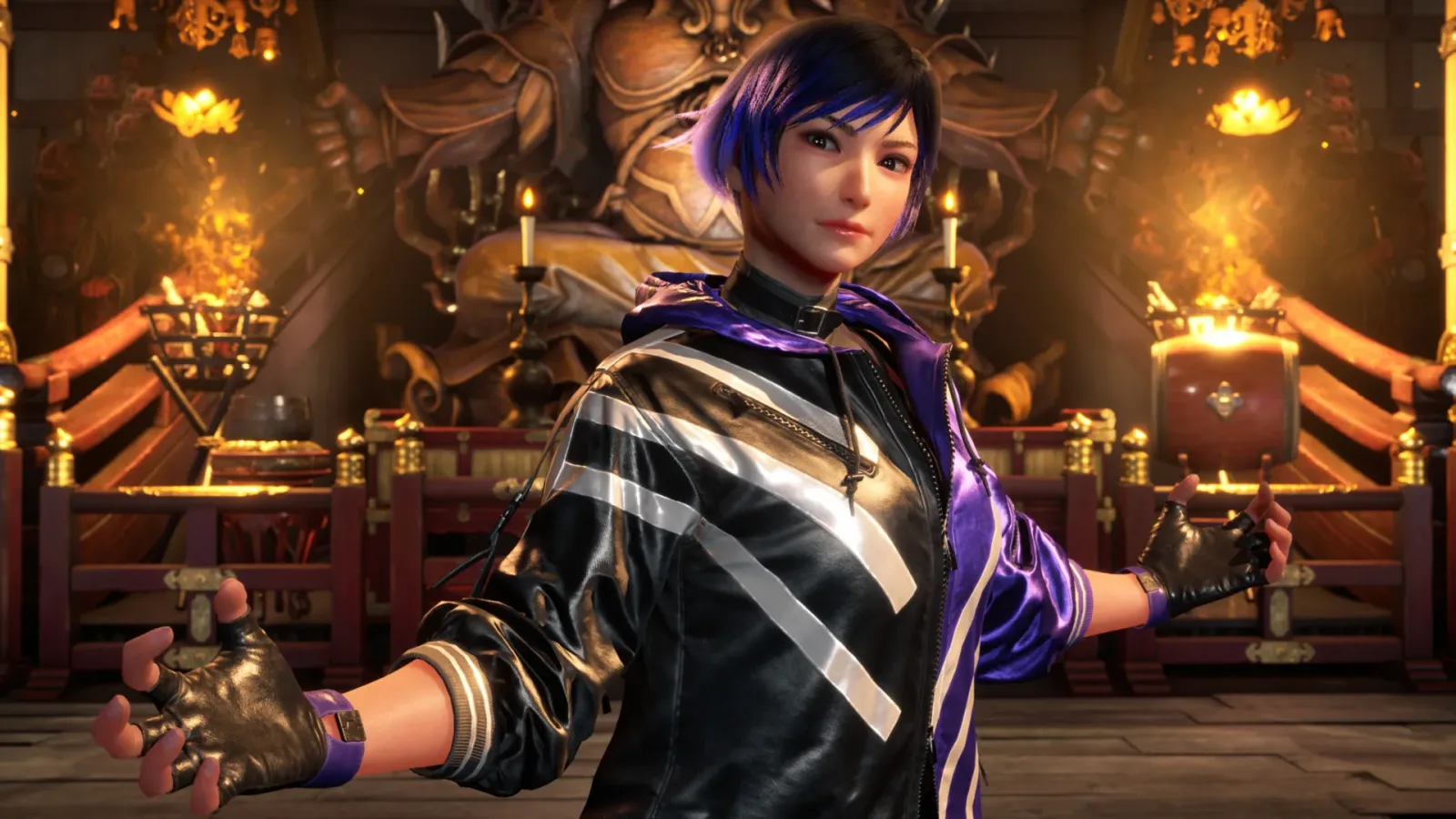
Bandai Namco is making a renewed case for internally developed game technology. The publisher and developer has highlighted its proprietary SOL-AVES engine as a key part of its future development strategy, emphasizing that its rendering-speed optimizations are particularly important for fighting games.
The comments arrive after the engine's first public use in Kirby Air Riders, the 2026 project co-developed with Nintendo and Masahiro Sakurai. Development on that game appears to have served as both a major production test and a period of active technical improvement for SOL-AVES, with the game and the engine evolving side by side.
While Bandai Namco has not announced a specific future fighting game using SOL-AVES, the company's description naturally invites attention from fans of franchises such as Tekken. It has also identified RPGs as another genre the technology can support, an area especially relevant to Bandai Namco's long-running Tales series. For now, those connections remain implications rather than formal project announcements, but the company's stated goals give a clearer indication of where its engine investment could matter next.
A Modern Push for Proprietary Technology
There was a time when major game makers routinely built and maintained their own engines. Through much of the 2000s and early 2010s, proprietary technology was often viewed as a foundational part of a large studio's identity. A custom engine could be shaped directly around a team's recurring needs, preferred art direction, target hardware, and technical ambitions.
For useful background on this topic, read Final Fantasy Resonance Producer Calls Ocarina of Time a Remake Masterclass.
That approach has become less common as game production has grown more costly and complex. Building an engine is not a one-time expense: it requires specialized engineers, ongoing maintenance, tools for artists and designers, documentation, technical support, compatibility work, and continued investment as platforms evolve. Widely available third-party engines such as Unreal Engine and Unity offer many teams a way to begin from a mature baseline rather than bearing all of those responsibilities internally.
Even so, proprietary engines remain valuable when a company has enough projects, enough technical expertise, and enough shared needs across its teams to justify them. Capcom's RE Engine is a prominent recent example of an internal technology initiative supporting a broad range of releases. Bandai Namco is now presenting SOL-AVES as an effort with similarly long-term potential inside its own organization.
SOL-AVES was publicly announced in 2022, although work on it began in 2019. Its purpose is not merely to replace external software with a single technical product. Bandai Namco has described the engine as a way to reduce its dependence on third-party tools while also bringing together tools that had been developed across different internal studios. In theory, that can make knowledge and technology more reusable from project to project instead of keeping useful solutions isolated within individual teams.
Kirby Air Riders Became the Engine's First Public Test Case
At CEDEC 2026, a game development conference held in Yokohama, Bandai Namco discussed how SOL-AVES was used during work on Kirby Air Riders. The presentation painted a picture of a project confronting a difficult technical target: creating an experience that conveyed a strong feeling of speed while maintaining performance at a high visual standard.
Early in development, the team reportedly struggled to sustain 15 frames per second at 720p resolution. That starting point underscores the scale of the optimization work ahead. Fast-moving games can expose technical shortcomings quickly. Motion, effects, environmental detail, lighting, and rapid camera movement all need to work together without undermining responsiveness or visual clarity.
Through new SOL-AVES techniques for lighting and rendering, alongside the use of upscaling, the team ultimately reached 60 frames per second at 1440p. The figures represent a substantial improvement in both frame rate and output resolution from the early state described during the presentation. Just as importantly, the process was not framed as a finished engine being dropped into a game. The engine itself was enhanced through the demands of production.
That kind of development loop can be one of the strongest arguments for owning the underlying technology. A team making a specific game finds bottlenecks, tests solutions, and adds capabilities that can remain available after the project is complete. The next team does not necessarily need to solve every same problem from scratch. Of course, the value of that model depends on whether those improvements are adaptable to later games rather than being too closely tailored to a single title.
Bandai Namco's comments suggest it believes SOL-AVES has now reached a point where it can support a much wider development slate. The company has specifically pointed to a range of genres that includes fighting games and RPGs.
Why Frame-Time Performance Matters in Fighters
Rendering-speed optimization carries special weight in fighting games. The genre depends on precision, consistency, and readable action. Every animation, attack, reaction, effect, and camera choice must communicate useful information to players at speed. A missed visual cue can change how a player responds in the moment, while inconsistent performance can affect the feel of an experience built around timing.
Bandai Namco said that SOL-AVES' rendering-speed optimizations are essential for fighting games. That statement is significant because it identifies a concrete category of work rather than offering only a broad claim that the engine is faster or more flexible. Fighters have their own demands, including a need for stable performance amid elaborate character models, stages, lighting, particle effects, and highly scrutinized combat animations.
Competitive play makes those requirements even more visible. Fighting-game communities pay close attention to responsiveness and to the clarity of on-screen information. Whether a player is practicing alone, playing casually online, or competing in a tournament, the game needs to present actions reliably and promptly. Engine-level efficiency may not be as immediately marketable as a new character or a redesigned combat system, but it can shape the quality of the foundation those features are built upon.
There is still a major distinction between an engine being technically suited to fighters and a confirmed franchise moving to that engine. Bandai Namco has not identified a particular Tekken installment or another fighting game as a SOL-AVES project. The company's remarks should therefore be understood as a statement of capability and intent, not confirmation of a new game or a platform plan.
RPG Potential Could Be Equally Important
The mention of RPGs broadens SOL-AVES' possible role. Role-playing games often place very different pressures on technology than one-on-one fighters. They can require large environments, extensive cinematic scenes, many gameplay systems, large sets of assets, menus, progression mechanics, and varied combat encounters. A versatile internal engine must be capable of accommodating those needs without forcing every project into the same creative mold.
Bandai Namco's portfolio makes that flexibility meaningful. The company is closely associated with the Tales franchise, among other role-playing properties, so an engine designed to work across both RPGs and fighters could be useful to multiple parts of the business. Shared technology does not mean shared visual style or identical game structure. Instead, it can mean teams have access to common rendering systems, production tools, and optimization techniques while retaining the ability to build games around their own requirements.
That is also where the consolidation goal behind SOL-AVES becomes important. Large publishers can contain many teams with different pipelines and histories. Combining internally made tools under a common framework can potentially reduce duplicated effort, though the transition itself can be demanding. Developers need tooling that is dependable and practical in day-to-day production, not simply powerful on a technical feature list.
No Announcements Yet, but a Clearer Direction
For players, the most immediate evidence of SOL-AVES is Kirby Air Riders and the technical journey described for that project. Its shift from an early build struggling at 15 FPS and 720p to a 60 FPS, 1440p result illustrates why Bandai Namco sees value in continuing to invest in the engine.
The larger story is about future readiness. Bandai Namco is building an internal technology base intended to serve multiple genres, consolidate tools from across the company, and lessen reliance on outside engine software. Its emphasis on fighting-game performance makes the technology particularly noteworthy for the publisher's competitive-action pedigree, while its stated RPG support indicates a potentially broad remit.
There are still many unanswered questions. Bandai Namco has not revealed which future games will use SOL-AVES, how extensively it will be adopted across internal teams, or what games will demonstrate its next set of upgrades. It has not tied the engine to a release date, a particular franchise installment, or a list of platforms.
But the company has made its position clear: SOL-AVES is no longer simply an internal initiative announced several years ago. After its use on Kirby Air Riders, Bandai Namco is presenting it as technology prepared for larger ambitions, including the exacting performance needs of future fighting games.
Community
Discussion
Start the conversation.
No comments have been posted yet.