

Battlefield 6 has launched its Season 5 update, titled Siege of Vegas, and the response has been divided. Players have found plenty to like in the new Area 51 map, which has quickly earned praise in community discussion. But a separate part of the seasonal rollout has become the focus of a much less enthusiastic conversation: several battle pass operator cosmetics whose gear, text, and visual construction have prompted fresh accusations of generative-AI use.
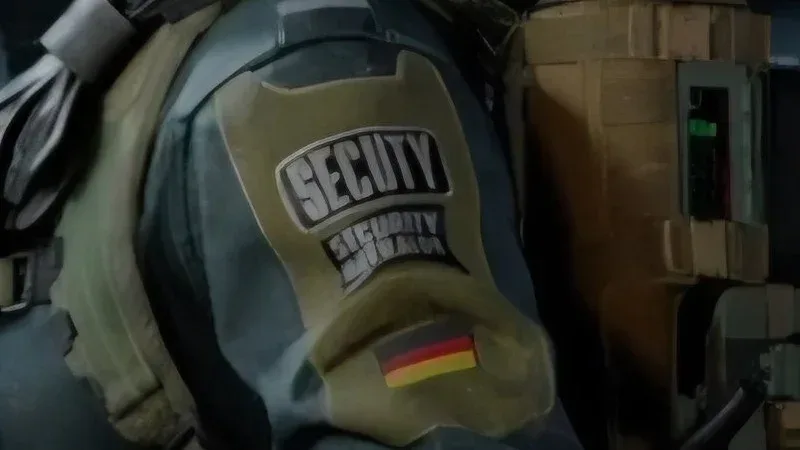
Images of the disputed character skins have spread widely across Battlefield communities. One operator appears to carry five matching pistols in holsters across their equipment, while another has an unusually arranged set of magazines attached to a vest. The detail attracting perhaps the most attention is a patch apparently meant to refer to a security role. It reads "Secuty," despite the words "security operator" appearing directly below it.
None of those observations alone proves that generative AI was used to create the cosmetics. There has been no confirmation establishing how these specific designs were produced. Still, the combination of duplicated-looking weapons, impractical equipment layouts, and obvious text errors has led many players to say the assets resemble the kinds of mistakes commonly associated with AI image generation.
Embedded X/Twitter post
A paid battle pass makes the backlash sharper
The criticism is heightened because the designs are attached to Season 5 battle pass content rather than being freely distributed novelty items. Players who dislike the skins are not merely reacting to a stray background asset or an isolated environmental texture. They are looking at cosmetics presented as part of a paid progression offering.
For useful background on this topic, read Control Resonant Reaches 1 Million Sales in Three Weeks, Setting Remedy Record.
That distinction has shaped much of the response. Community posts questioning the designs have accumulated thousands of upvotes and comments, with players arguing that paid cosmetics should receive careful review for visual consistency, readable text, and believable military-inspired loadouts. Even people who are not convinced the images were generated by AI have questioned how the assets passed approval with so many conspicuous details intact.
The operator with five pistols has become an especially easy target for criticism. Battlefield has always mixed serious military aesthetics with more stylized player customization, and a game does not need strict realism to justify every cosmetic choice. However, players argue that five identical handguns strapped to one character do not read as an intentional exaggeration or a coherent style. Instead, they see a design that looks assembled without someone stopping to ask whether the resulting loadout makes sense.
The magazine arrangement on another skin has prompted a similar reaction. Ammunition storage, magazine orientation, and placement of tactical gear are details players frequently scrutinize in shooters, especially in a franchise with Battlefield's history. Fans do not necessarily expect a perfect simulation, but they do expect equipment to look functional enough that it does not break the fantasy. In screenshots being discussed by the community, that standard is precisely what players believe the cosmetics fail to meet.
The spelling error is difficult to ignore
Of all the issues, the "Secuty" patch may be the clearest example of why the season's cosmetics are receiving so much attention. Small lettering can be overlooked in a fast-moving multiplayer match. Yet a misspelled word on a prominent uniform patch is the kind of error that becomes impossible to unsee once shared in a close-up image.
The problem is compounded by the label below it. The patch's larger text omits letters from "security," while "security operator" remains visible underneath. That makes the error look less like an invented faction name or deliberate in-universe terminology and more like a simple mistake that should have been caught during review.
Text rendering has been one of the more recognizable weak spots in AI-generated images, although it is far from exclusive to AI. Human-made game assets can contain typos, placeholder text, translation errors, and rushed revisions. What has angered Battlefield 6 players is the broader context: the patch is being discussed alongside several other apparent oddities in the same batch of cosmetics. Together, they have created an impression of insufficient quality control, whether AI tools were involved or not.
For players, the central complaint is not only that a patch contains a typo. It is that a premium cosmetic can appear unfinished while being offered within a paid seasonal system.
Earlier controversy has made fans more suspicious
This is not the first time Battlefield 6 has faced questions about the look and quality of its cosmetic content. Earlier in the game's life, players highlighted other items that they believed appeared to be AI-generated or otherwise poorly assembled. Those cosmetics remained in the game for months before they were patched out.
That history matters because it changes how the current skins are being received. A single strange model or spelling mistake might ordinarily lead to jokes and a request for a quick fix. Instead, Season 5 has revived a broader debate over the studio's art pipeline, the level of human oversight applied to cosmetic production, and whether players can trust premium content to meet a consistent standard.
Generative AI has become a particularly sensitive subject across games. Publishers and developers have explored AI-assisted tools in areas ranging from concept work and localization to testing and customer support, while artists and players have raised concerns about labor, transparency, training data, quality, and the possibility of replacing creative workers. For many consumers, a suspicious-looking visual asset now carries meaning beyond whether it is attractive. It can signal fears that a publisher is reducing investment in artists and review processes while continuing to charge for cosmetic content.
In Battlefield 6's case, the reaction is also landing after layoffs affecting some developers earlier in the year. Those cuts have sharpened criticism from players who see signs of rushed work in the game while prominent executives have received substantial payouts amid EA's highly leveraged sale to Saudi Arabia. The seasonal cosmetic dispute has therefore become connected, fairly or not, to a larger frustration about priorities: players want the people making and checking game content to have the time and support to avoid basic errors.
Stylization is not the same as sloppiness
There is room for disagreement over the artistic direction of Battlefield cosmetics. Some players prefer grounded military equipment, while others welcome masks, unusual outfits, and more expressive operator looks. Season passes are built in part around giving regular players fresh visual rewards, and cosmetic design does not need to adhere to real-world tactical doctrine to be effective.
But the response to these Season 5 items shows that players make a distinction between deliberate stylization and accidental-looking construction. A bold mask may be divisive but still communicate a clear creative decision. A character carrying five copies of the same pistol, on the other hand, can look like an unexamined duplication. Likewise, unconventional magazine placement can be a fashion choice, but it will draw criticism if it appears physically unusable or visually incoherent.
That is why simply leaving the cosmetics in place may not settle the issue. A change to a patch's text would be relatively straightforward in principle, but players may still want clarity about the wider process that allowed the typo and other details to make it into a prominent seasonal release. Fixing one word without addressing the underlying concerns could leave the perception of low-quality premium content intact.
Area 51 shows why the season is not being dismissed outright
The complaints around cosmetics have not erased the positive reception to all of Siege of Vegas. Area 51 has been singled out by players as one of Battlefield 6's stronger maps, helping ensure that conversation around Season 5 is not entirely negative. Its favorable response illustrates that fans remain eager to praise additions they believe improve the shooter's multiplayer experience.
That contrast also makes the cosmetic problem more frustrating for the community. When a major map is seen as a successful addition, players expect the surrounding seasonal package to feel equally polished. The operator skins have instead become a distraction from the content that many players were prepared to celebrate.
For now, the most important unanswered question is whether any changes will be made to the disputed cosmetics. Battlefield 6's developers could adjust the visible spelling error, revise equipment layouts, or leave the designs as they are. Without confirmation of their production process, claims that the skins are definitively AI-generated remain speculation. The screenshots and models nevertheless provide a clear quality-control issue in the eyes of a sizable part of the player base.
Season 5's reception may ultimately depend more on maps, balance, progression, and ongoing support than on a handful of operator outfits. Yet premium cosmetics are highly visible and often used as a measure of how much care is being put into a live-service game. For Battlefield 6, five pistols and one misspelled patch have become symbols of a larger concern: players want seasonal content that looks intentional, polished, and worthy of the money and time they are asked to spend.
Community
Discussion
Start the conversation.
No comments have been posted yet.