

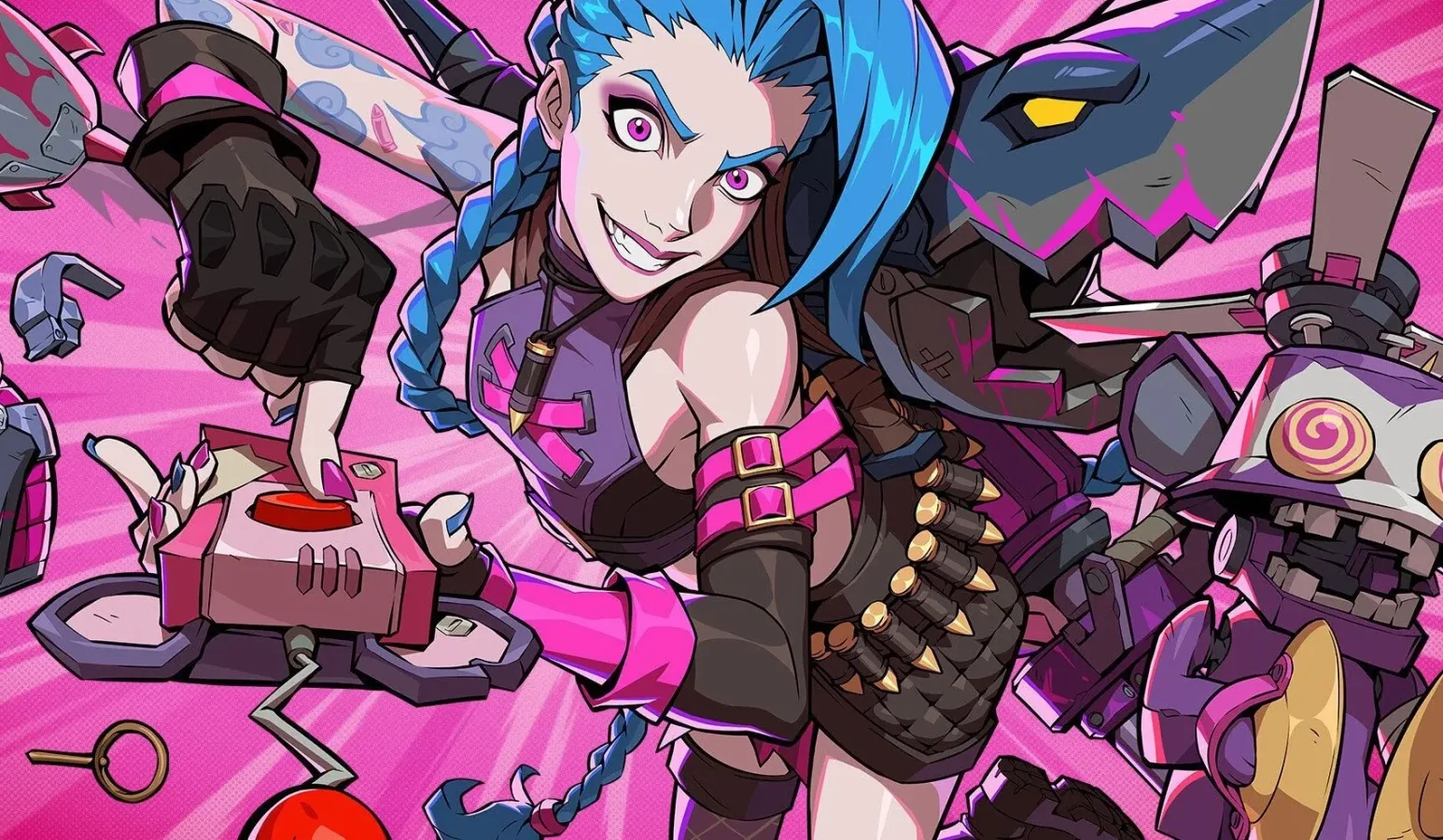
The Best Fighting Game category at the 2026 Game Awards should be a celebration of a genre built on rivalry, mastery, communities, and the long-term appeal of one more match. Instead, this year's five-game shortlist has prompted a much less flattering conversation: whether the fighting-game business outside its biggest names is becoming too fragile to sustain.
The nominees are Marvel Tokon: Fighting Souls, Invincible Vs, 2XKO, Avatar Legends: The Fighting Game, and My Hero Academia: All's Justice. On paper, that is a varied lineup. It includes comic-book properties, anime, Avatar, and an original project connected to one of competitive gaming's largest companies. In practice, the group illustrates how few fighting games have established a secure foothold this year--and how quickly even high-profile releases can find themselves in trouble.
That tension matters because fighting games do not simply launch and move on. Their health is visible every day through matchmaking pools, tournament attendance, community discussion, patch support, downloadable content, and the willingness of players to keep learning difficult systems. A game can be technically solid and still struggle if it cannot maintain enough active players for rivals to find meaningful competition.
A nominee list with difficult context
Of the five nominees, 2XKO carries perhaps the starkest asterisk. Active development on the game is set to end at the close of December, only weeks after the awards ceremony. Recognition from a major awards show may be meaningful to its developers and fans, but it also creates an unusually awkward situation: a title being honored in a genre where continued support is often central to the experience is approaching the end of active development.
For useful background on this topic, read Former Take-Two CEO Says AI Games Need a 'Toy Story Moment' to Win Over Players.
Invincible Vs has also faced a reduced development situation, with its team reportedly cut down to a skeleton crew. That does not automatically mean that all updates or maintenance have stopped, nor does it invalidate the game's achievements. But it does raise the same uncomfortable question. What does a nomination mean for a competitive game when the staff responsible for improving, balancing, and expanding it has been substantially reduced?
Avatar Legends: The Fighting Game arrives amid uncertainty of a different kind. Its development situation sits within a shrinking Paramount Games operation following the Skydance merger. The project's team has also included a developer who has been accused of sexual harassment. Those circumstances hang over discussion of the game beyond its mechanics, roster, or visual presentation, and they make it difficult to regard the nomination as uncomplicated good news.
Then there is My Hero Academia: All's Justice, a game with a massive underlying franchise but comparatively little apparent presence in the broader fighting-game conversation. Its nomination has led to questions about whether it was selected because the category needed a fifth contender, rather than because it had generated a large competitive or critical footprint. That is not a verdict on the game itself, but it is revealing that the nomination can feel surprising even to observers who routinely follow the genre.
The obvious standout is Marvel Tokon: Fighting Souls. It has the strongest aura of an eventual winner, helped by the enduring reach of Marvel and the excitement that accompanies a new major fighting-game project. Yet even that apparent favorite is not immune from the economic and population challenges facing the field. Sales performance and concurrent-player interest remain crucial for any modern multiplayer game, and a recognizable license alone is no guarantee of a lasting audience.
Why fighting games feel the pressure so quickly
Every live-service-minded multiplayer release has to contend with retention. Fighting games, however, are especially exposed to population decline. A shooter can sometimes keep players engaged across large modes, casual playlists, cooperative content, progression systems, and frequent limited-time activities. A fighting game's central promise is more direct: it needs people of roughly comparable skill who are ready to play, repeatedly, over time.
When the community is healthy, that simplicity is a strength. Players can spend years refining a character, meeting opponents, traveling to events, sharing matchup advice, and watching elite players redefine what is possible. But when the player base falls, the same structure can become punishing. Newcomers encounter veterans too quickly. Matchmaking waits lengthen. Regional pools thin out. Online play feels less reliable as the number of potential opponents shrinks. The community's momentum can reverse with alarming speed.
This is why a fighting game's launch window is so consequential. It must persuade longtime specialists that it has depth, while also giving new players enough tools, tutorials, and approachable modes to avoid being overwhelmed. It must provide stable online infrastructure, communicate patches clearly, and build confidence that support will continue. It must do all of that while competing not only against other new releases, but against years-old games whose players have already formed friendships, habits, local scenes, and character loyalties.
There is also a harsh commercial reality. The largest fighting franchises have the benefit of legacy. Street Fighter and Tekken remain the genre's most dependable pillars, able to command attention through decades of brand recognition and established competitive ecosystems. Their audiences know what they are buying into. New challengers must convince players to leave familiar games, learn fresh mechanics, and trust that the investment will not be stranded a year later.
The competitive scene is not a guarantee
Even established series can stumble. Mortal Kombat 1 was met with favorable player sentiment at its 2023 release, but its momentum faded sharply in the years that followed. EVO 2026 became the first time since 2011 that a NetherRealm game was not part of the event's main lineup. That absence is notable not because tournament selection is the only measure that matters, but because EVO's featured games are a useful indicator of where competitive interest is concentrated.
The result is a genre in which brand awareness and launch excitement can prove far less durable than expected. MultiVersus is another prominent reminder of how a fighting game can struggle to maintain its footing despite a powerful collection of recognizable characters. These examples do not suggest that fighting games are creatively exhausted. They show that making one viable at scale has become extraordinarily difficult.
There is an important distinction here between a game being unsuccessful and a game being unworthy of appreciation. Plenty of fighting games have inventive mechanics, excellent animation, thoughtful accessibility features, or passionate communities without becoming major commercial or esports fixtures. Awards categories, though, inevitably place those games in a larger industry narrative. This year's nominees make that narrative difficult to ignore because the uncertainty is so visible around several of the contenders.
An awards category can reveal scarcity
The Best Fighting Game category is supposed to identify the year's strongest work. It also quietly demonstrates how much work was available to choose from. In a flourishing year, the debate would revolve around clashes between multiple thriving releases, each backed by an active scene and a convincing road map. The 2026 list instead feels shaped by attrition: a project nearing the end of development, another operating with reduced staffing, a game connected to corporate contraction and serious allegations involving a developer, and a nominee whose selection has surprised many fans.
That does not mean the nominees should be dismissed. Awards can still recognize craft, ambition, and the effort of teams that worked under challenging circumstances. Nor does it mean the genre's future is predetermined. Fighting games have always endured cycles of expansion and retreat, and smaller scenes can preserve games long after publishers move on. Community organizers, modders, tournament operators, local venues, and dedicated players regularly keep competitive traditions alive.
But the category does suggest that the middle of the market has weakened. There is room for giants, and there are passionate niches, yet the route between those two points is increasingly dangerous. A developer cannot rely on a popular license, a known studio name, or an initial burst of curiosity. The game must create a durable reason for players to stay, and it needs support structures capable of responding when the audience begins to drift.
What the shortlist says about 2026
If Marvel Tokon: Fighting Souls takes the prize, it will likely be seen as the most straightforward outcome. Its nomination reflects both the excitement around its potential and the weight carried by a new Marvel fighting game. Still, its longer-term prospects will be judged on factors no trophy can settle: sustained interest, competitive adoption, post-launch decisions, and whether players remain present months and years later.
For the rest of the field, the nominations are reminders that development conditions and corporate decisions can shape a competitive game as much as its combo system or character design. A fighting game needs a future in order to ask players to invest in one. When that future appears uncertain, even praise at an awards show can feel bittersweet.
The 2026 shortlist is therefore more than a collection of five titles. It is a snapshot of a genre confronting its most familiar challenge in a harsher modern environment: building not just a good game, but a community that can survive long enough for that game to become great.
Community
Discussion
Start the conversation.
No comments have been posted yet.