

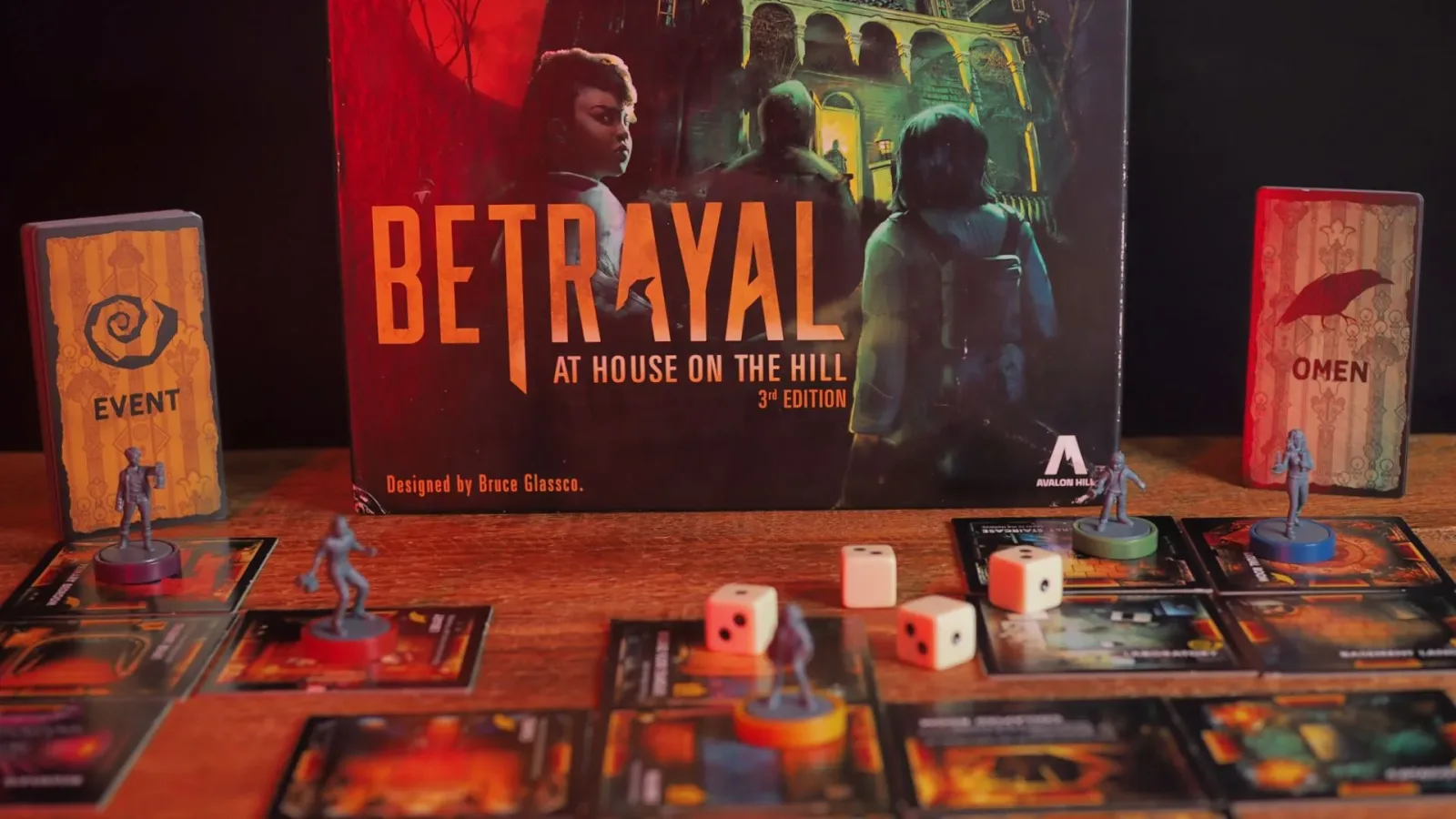
Betrayal at House on the Hill has spent years earning its place in the Halloween board-game rotation, and its appeal is easy to understand once the mansion starts coming together on the table. It does not rely on elaborate miniatures, a soundtrack, or a screen full of visual effects to create a sense of dread. Instead, it turns uncertainty into its greatest tool: nobody knows what the house will look like, when the real danger will begin, or which player might soon become everyone else's enemy.
That structure has helped the game remain a memorable choice more than a decade after many players first encountered it. Avalon Hill's current third edition is the newest version, while the older second edition is still widely available. Both present a horror experience built around exploration, escalating weirdness, and a dramatic mid-game reversal known as the Haunt. For groups looking for an accessible tabletop centerpiece for spooky season, it remains one of the most reliable haunted-house games around.
A house that never stays the same
The central idea is wonderfully simple. Players choose from a cast of familiar horror-story archetypes, including figures such as the athletic jock and the unsettling child, then enter a mansion for one of several randomly selected reasons. The setup may involve a paranormal investigation, a strange invitation, or another suitably suspicious excuse to step through the front door.
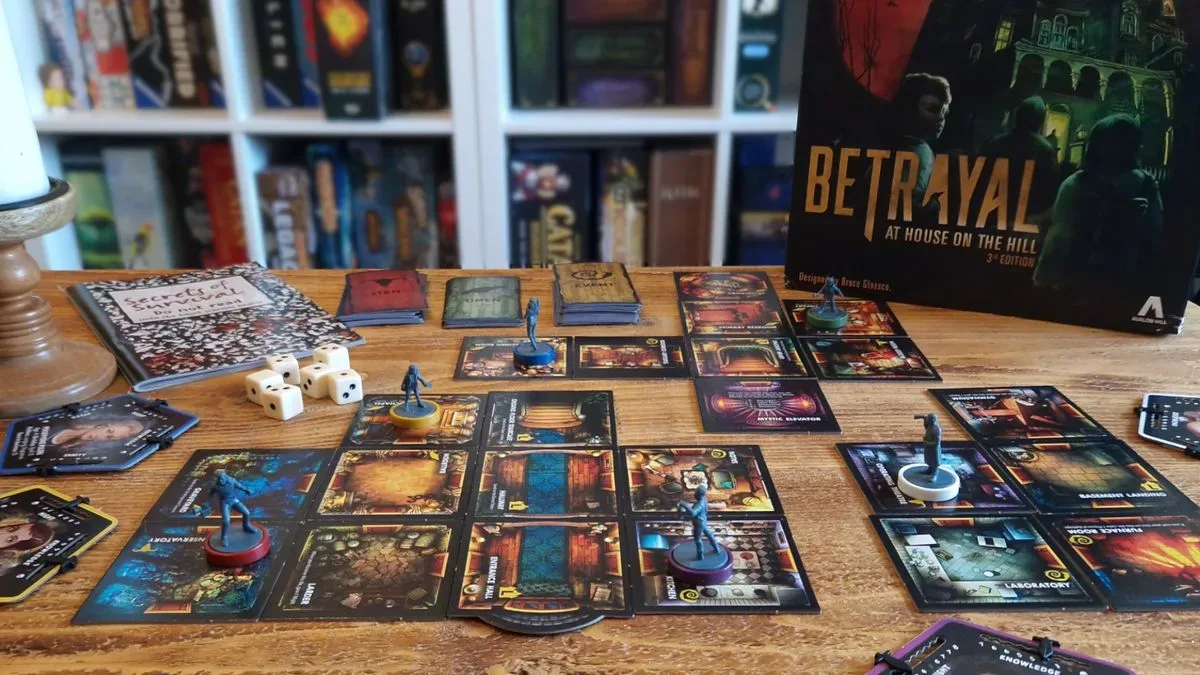
Once inside, the mansion is not represented by a fixed board. Every new doorway can lead to a room tile drawn from a deck, gradually building the house as the game proceeds. A game might create a relatively compact layout one night and a sprawling, inconvenient maze the next. Important spaces can appear close together or at opposite ends of the growing structure. That variation immediately gives each session its own rhythm.
For useful background on this topic, read Alix Wilton Regan Discusses Filming Lara Croft Action Scenes During Her Period.
Room tiles frequently bring consequences with them. Some produce Events that can damage, disorient, frighten, or otherwise complicate an explorer's plans. Others reveal Items that might offer a valuable advantage, though horror fiction has taught everyone to be cautious about apparently useful objects found in abandoned mansions. The game's mixture of risk and reward makes even a basic decision to open another door feel charged with possibility.
That emergent map is more than a novelty. It is what lets the game evoke the feeling of being lost in a place that should not make sense. Players may spend turns trying to reach a friend in trouble, searching for a particular room, or getting separated by the mansion's awkward geometry. A tabletop game cannot produce a cinematic jump scare in the usual sense, but it can make a group collectively worry about what lies behind the next tile.
The Omen roll changes everything
Exploration is only the first act. The real tension comes from Omen cards, special discoveries that often grant a notable benefit while moving the game closer to its turning point. Whenever an Omen is found, the group makes a Haunt roll. The number of Omens already discovered affects the roll, meaning danger becomes increasingly likely as the expedition continues.
When the Haunt roll reaches 5 or more, the game pivots. One of its many horror scenarios is selected based on the circumstances of that session, including the room in which the trigger occurred and the Omen involved. There are 50 alternate scenarios in the second edition, and the variety in these stories is a major reason the system has such long-term value.
In many Haunts, one player becomes the traitor. The remaining explorers and the traitor then receive separate instructions and pursue different secret objectives. Suddenly, the person who was helping search the mansion moments ago may be possessed, transformed, or working for an unseen force. The game turns from cooperative exploration into a frantic confrontation where both sides are trying to work out how best to use the house, their abilities, and the limited information they possess.
This betrayal is where the title delivers on its promise. The house is not merely spooky scenery; it becomes the setting for a desperate chase. A player might be trying to escape a threat, complete a ritual, hold off a former ally, or locate the means to defeat something stalking the corridors. The fear comes less from graphic imagery than from seeing the group's plans collapse at the exact moment the stakes become clear.
Built from horror's best familiar ideas
Betrayal at House on the Hill is not interested in a single, unified mythology. Its scenarios draw from a wide range of horror traditions, shifting between ghost stories, slasher films, supernatural mysteries, monster features, and knowingly goofy B-movie concepts. One game may put the group at odds with a serial killer's lingering spirit. Another can involve an unknowable pursuer whose name is key to banishing it. Elsewhere, the mansion may flood and invite frightening things in from the water below.
That flexibility makes it particularly effective as a party game for Halloween. Players do not need to arrive with an extensive knowledge of one franchise or a dense rulebook already memorized. They only need to be willing to lean into the premise. The stories create easy conversation, memorable failures, last-second victories, and the kind of absurd moments that become long-running jokes within a gaming group.
Its tone is also a strength. Betrayal can be creepy, but it does not demand total seriousness. A given scenario may produce genuine suspense as a player races through the mansion with a threat closing in, while another may embrace horror's sillier side. That range means the game can work for groups who want a chilling evening and those who simply want a theatrical, chaotic romp with a seasonal theme.
Imperfection is part of the package
Anyone approaching Betrayal at House on the Hill should understand that its scenario-driven design can be uneven. Not every Haunt is balanced in exactly the same way, and some can be more immediately clear than others. Because each side reads its own rules after the twist, there can also be moments when players need to pause and interpret an interaction. Those rough edges are real, particularly for people seeking the precision of a tightly tuned strategy game.
Yet the game's enduring reputation comes from what it does well rather than from flawless competitive balance. It is a generator of stories. The most successful sessions are often not the ones where every rule interaction is perfectly elegant; they are the ones where the mansion creates a ridiculous obstacle course, the traitor reveal lands at the perfect time, and the final turn leaves everyone talking about what happened.
Groups that value atmosphere, surprise, and social drama will generally get more from the game than groups focused solely on optimization. The hidden objectives after the Haunt are especially good at creating uncertainty. Players must make decisions without fully knowing their opponent's plan, and the traitor has opportunities to exploit the fact that their former teammates are still trying to understand the new threat.
Why it remains an easy recommendation
There are horror board games with heavier rules, harsher survival elements, and more sustained terror. Nemesis, for example, offers a more demanding and intense kind of sci-fi horror. Betrayal at House on the Hill succeeds by choosing a different lane. It offers a comparatively approachable route into thematic tabletop horror without sacrificing the feeling that anything could happen.
The current third edition has a recommended retail price of $60 in the US and £45 in the UK, though it is often sold below that figure. The older second edition remains an option for those who find it, and it includes its own set of 50 scenarios. Which edition best suits a group can depend on availability and personal preference, but the core appeal remains consistent: build the house, uncover terrible secrets, and survive the consequences if possible.
For a Halloween gathering, that formula is difficult to beat. The game begins with an inviting sense of exploration, layers on supernatural danger one room at a time, and culminates in a twist that can turn friends into enemies. Its modular mansion means no two visits feel quite alike, while the extensive Haunt selection ensures there is always another nightmare waiting behind the next door.
Betrayal at House on the Hill remains a standout choice because it understands that tabletop horror is not only about being scared. It is about shared anticipation, sudden reversals, suspicious glances across the table, and stories that outlive the session itself.
Community
Discussion
Start the conversation.
No comments have been posted yet.