

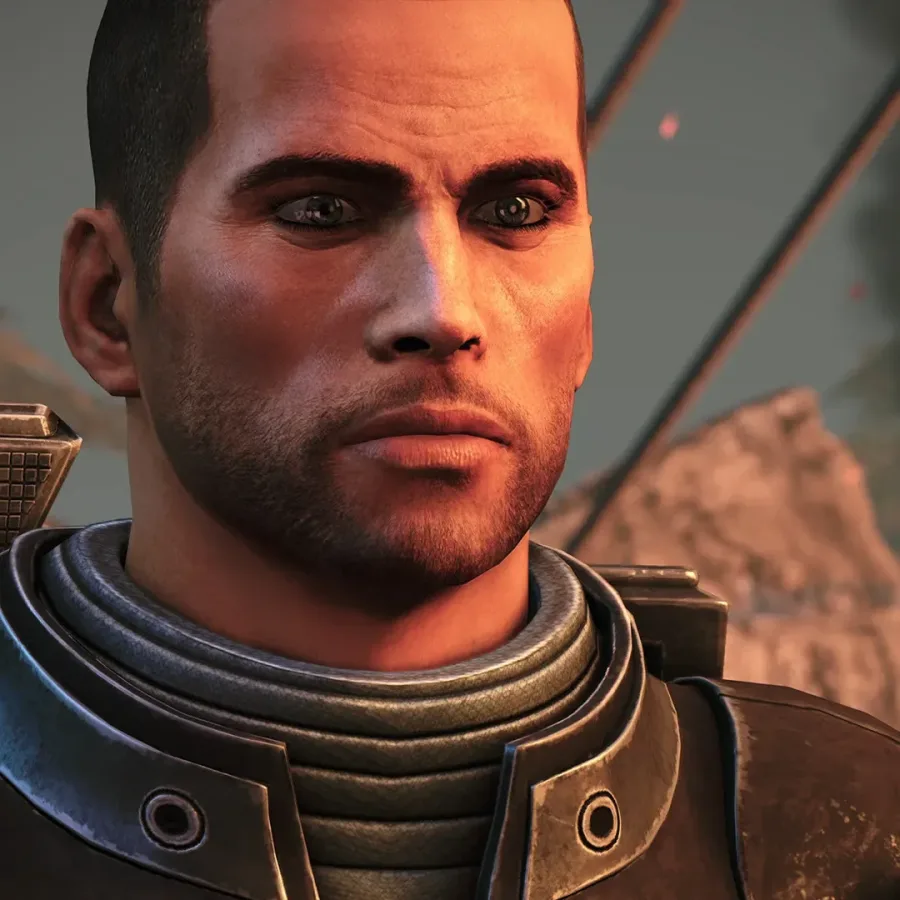
BioWare, one of the most influential names in role-playing game history, is closing after more than 30 years. EA announced the move on October 21 as part of a broader restructuring of its studios and active projects, confirming at the same time that it will not continue development on the next Mass Effect.
The announcement ends a period of anticipation for the science-fiction RPG series, whose next entry had been in early development. For many players, the news has landed as more than the cancellation of one unreleased game: it is the loss of the studio behind formative role-playing experiences, enduring fictional worlds, and generations of player-made choices.
EA's internal memo placed the BioWare decision within a wider effort to focus its development resources on larger opportunities. Cam Weber, EA's president and chief studios officer, and David Tinson, the company's president and COO, said a small BioWare team had been working on the early Mass Effect project, but EA had elected not to move forward. The decision closes both BioWare and its Edmonton workspace.
The executives described BioWare as a legendary developer that helped define the role-playing genre, while stressing that the decision was not made lightly. Even so, the brief treatment of a studio with such a long legacy only intensified the emotional response from fans, particularly as the company's closure arrives alongside the end of a new chapter for Mass Effect before it could properly begin.
For useful background on this topic, read Xbox Insiders Can Buy Cloud Playtime Without Game Pass in New Preview.
A studio that shaped modern RPG expectations
BioWare's importance reaches far beyond a single series. Across three decades, the studio became closely associated with cinematic storytelling, party-based adventures, consequential dialogue, romance systems, and player decisions that carried emotional weight. Its work helped establish a model that countless RPGs and narrative-driven games would later adapt, reinterpret, or challenge.
Its legacy includes landmark projects such as Baldur's Gate and Baldur's Gate II, as well as the worlds of Dragon Age and Mass Effect. The studio's games were often remembered not simply for combat systems or technical presentation, but for the relationships players built with companions and the versions of themselves they created through difficult decisions.
Mass Effect, in particular, became a major touchstone for players on PC and console platforms. Its original trilogy connected science-fiction spectacle with intimate character moments, giving fans an expansive galaxy while asking them to live with choices across multiple games. That connection explains why the ending of early development on the next project has been met with such raw disappointment.
Many fans had been looking ahead to N7 Day, the annual November celebration tied to the franchise, hoping for signs that the series' future was taking shape. Instead, social-media posts in the hours after EA's announcement were filled with shock, sadness, and anger. Players spoke about discovering the trilogy during childhood or adolescence, replaying it over the years, and feeling as if a permanent part of gaming history had suddenly been removed.
Fans ask what happens to Mass Effect and Dragon Age now
One recurring response has been a call for EA to sell the Mass Effect and Dragon Age intellectual properties to another company. Those messages reflect fears that the worlds BioWare built could remain dormant indefinitely, rather than being continued by a new team. There has been no indication in the announcement that EA plans to sell either franchise, and no future game, release window, platform plan, or successor studio has been announced.
That uncertainty is central to the reaction. The canceled project was still early in development, meaning the public had not been given a finished vision of what the next Mass Effect would become. Players are therefore mourning both a studio and a possibility: a return to a universe that had continued to inspire theory crafting, fan art, character debates, and replay campaigns long after its previous major releases.
The closure also brings renewed focus to the people who made these games. Behind every beloved BioWare character, mission, soundtrack cue, and dialogue choice were writers, artists, programmers, designers, producers, quality-assurance staff, and numerous collaborators. While fans understandably grieve for the games, the immediate consequences are most severe for the workers facing an abrupt transition.
BioWare addressed that human impact in its own statement, saying its immediate focus is on its talented team and on supporting one another through the change. The studio characterized itself as more than a developer, describing a home for storytellers, developers, and the players who made its worlds meaningful through their participation.
The message thanked players for debating choices, forming attachments to characters, and making BioWare's settings their own. It is a fitting description of the relationship the studio built with its audience. For decades, its games invited players to invest in people and places that were fictional but rarely felt disposable.
Developers remember BioWare's influence and generosity
Tributes have also come from across the game-development community. Michal Nowakowski, co-CEO of CD Projekt Red, recalled BioWare's direct importance to his company's history. He said CD Projekt Red first connected with BioWare while localizing and selling the Baldur's Gate games in Poland, the Czech Republic, and Slovakia.
Nowakowski also pointed to BioWare's assistance during development of the first The Witcher. He said the studio lent its engine, shared knowledge, and even provided CD Projekt Red space at its E3 booth. His recollection serves as a reminder that a studio's influence is not measured only through shipped games. It can also be seen in the expertise, tools, encouragement, and professional relationships that help other creators find their footing.
Brian Fargo, the head of inXile Entertainment and founder of Interplay Entertainment, shared another perspective on BioWare's early years. Fargo remembered BioWare as a smaller team that made Shattered Steel for Interplay, before going on to create the first two Baldur's Gate games and establish itself as a legendary RPG developer. He called the situation a sad day and offered his thoughts to everyone affected.
Those memories underline the length of BioWare's journey. The studio did not simply arrive as an established giant. It grew through early collaborations, took creative risks, and eventually produced games that helped alter expectations for the entire genre. Its closure is therefore being viewed as a loss not only for its own franchises, but for an era of RPG development.
A difficult moment amid EA's changing direction
The decision comes during a turbulent year for EA. In August, the company was taken private in a $55 billion acquisition by an investor group comprising Saudi Arabia's Public Investment Fund, Silver Lake, and Affinity Partners. Reporting around that transaction indicated that the group's financial outlook depended in part on artificial intelligence substantially reducing EA's operating costs, helping manage the debt associated with the deal.
That broader context has fed into the online frustration surrounding BioWare's shutdown. Fans and developers have raised concerns about the tension between long-term creative development and corporate efforts to reduce costs or concentrate resources. Major RPGs often require years of iteration, a large range of specialist talent, and the willingness to support projects before their commercial shape is fully visible. The cancellation of an early-stage Mass Effect project has become an especially stark symbol of that pressure.
It is important, however, not to infer details that have not been announced. EA has confirmed the studio closure and the end of early development on the next Mass Effect, but it has not provided a detailed public roadmap for the future of the franchise or explained every factor behind the decision. It has also not announced a sale of BioWare's properties or a replacement project.
The legacy will outlast the studio
BioWare's closure does not erase the work its teams made or the influence those games have had. Players will continue to revisit the Normandy, Thedas, and the worlds that came before them. They will keep arguing over favorite companions, alternative choices, endings, romances, and the decisions that defined their own personal versions of these stories.
But preservation of a legacy is not the same as replacing an active creative community. What many players are grieving is the knowledge that BioWare's particular combination of talent, experience, and institutional history has been broken apart. The next generation of developers may carry lessons from its work elsewhere, just as BioWare once helped other teams develop their own paths, but that does not lessen the immediate sense of loss.
For now, the future of Mass Effect remains unknown. What is certain is that October 21 marks the end of BioWare as a studio and the end of the currently planned return to its celebrated sci-fi universe. The response from players and peers makes clear that BioWare's impact will be remembered for much longer than the announcement that brought its story to a close.
Community
Discussion
Start the conversation.
No comments have been posted yet.